PART 3
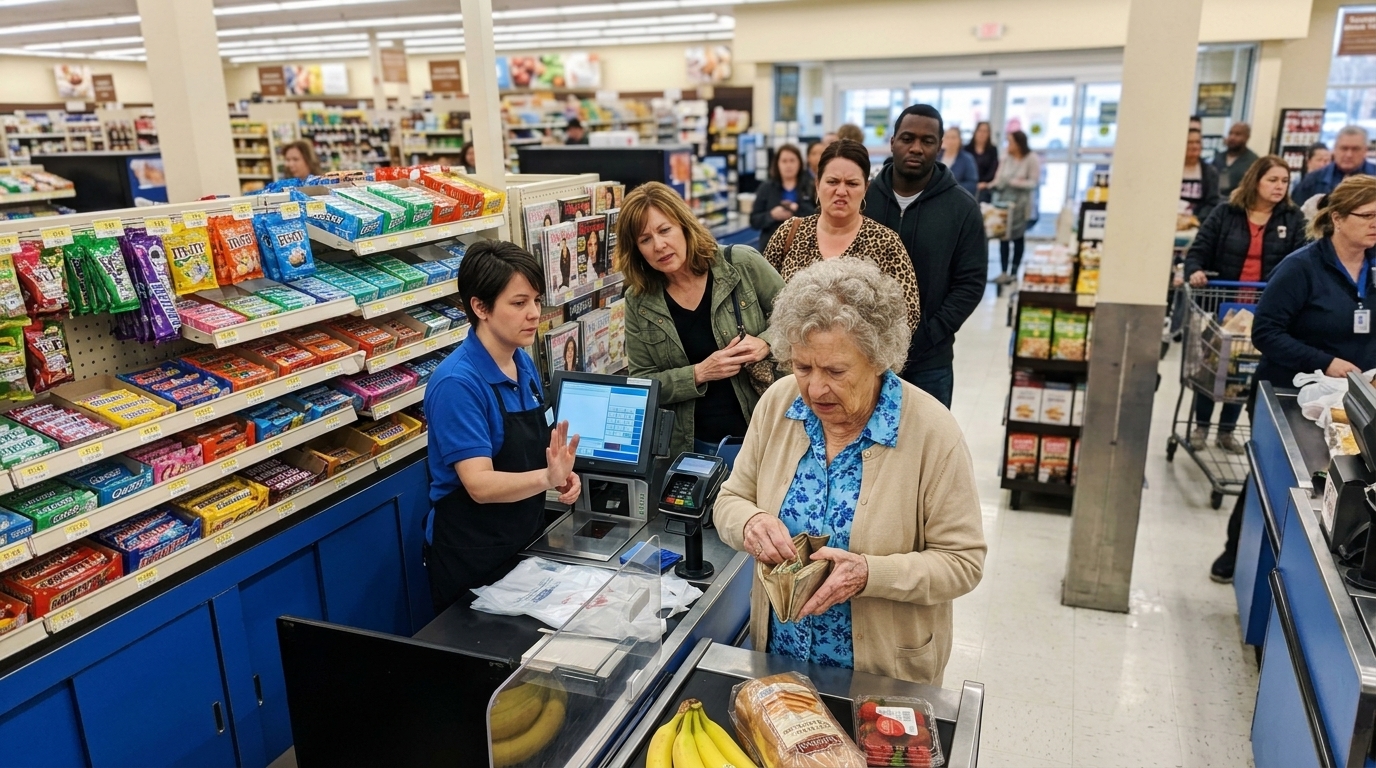
The store manager held the faded envelope with both hands,
as though he were carrying something fragile enough to break.
My mother stared at it.
“I’m sorry,” she whispered. “I don’t understand.”
The manager swallowed.
“My name is Thomas Bennett. My father was Michael Bennett.”
Mom’s expression changed.
She pressed one hand against her chest.
“Michael?”
Thomas nodded.
He was seven years old when he came to St. Andrew’s Children’s Hospital.
Mom’s eyes filled.
“The little boy with the red baseball cap?”
Thomas smiled through his tears.
“Yes, ma’am.”
I looked between them.
I’d known my mother had worked as a pediatric nurse for thirty-eight years.
I’d heard stories about children she’d cared for, families she’d comforted,
and nights she’d spent sleeping in hospital chairs because she couldn’t bear to leave a frightened patient alone.
But I’d never heard about thirty-seven children.
And I’d certainly never heard about an envelope she’d been missing for twenty years.
Thomas looked toward the checkout line.
“Ladies and gentlemen, I apologize for the interruption. We’re going to open another register so everyone can finish their shopping.”
The woman who had insulted Mom folded her arms.
“Finally.”
Thomas turned toward her.
His expression remained professional.
“Ma’am, I’ll ask you to stop making personal remarks about our customers.”
She scoffed.
“I haven’t done anything wrong.”
“You’ve repeatedly insulted an elderly woman who was simply trying to pay for groceries.”
The woman looked around.
Nobody defended her.
Thomas continued.
“You’re welcome to finish your shopping respectfully at another register. Otherwise, I’ll have to ask you to leave.”
Her face reddened.
She pushed her cart toward another checkout lane without another word.
Then Thomas turned back to Mom.
“Mrs. Wilson, would you mind coming to my office? There’s something I think you should see.”
Mom looked at me.
I squeezed her hand.
“Only if you want to, Mom.”
She nodded slowly.
“I think I do.”
Rebecca stepped away from her register after another cashier took over.
She walked beside us as Thomas led the way through the store.
Mom moved slowly, leaning on her cane.
I noticed her hands were still trembling.
I wanted to take her home.
Make her tea.
Let her sit in her favorite chair.
But there was something in her expression I hadn’t seen in years.
Recognition.
Curiosity.
And beneath it, an emotion I couldn’t quite identify.
Thomas opened the office door.
Inside was a small desk, two chairs, a filing cabinet, and a framed photograph of a young boy wearing a red baseball cap.
Mom stopped walking.
“Oh, my goodness.”
Thomas followed her gaze.
“That’s my father.”
She moved closer.
The photograph showed a smiling child with dark hair and enormous brown eyes.
Mom touched the edge of the frame.
“Michael Bennett,” she whispered.
Thomas nodded.
“He passed away four years ago.”
Mom closed her eyes.
“I’m so sorry.”
Thomas smiled sadly.
“He lived to be fifty-three. He had a wife, three children, and five grandchildren.”
Mom’s eyes filled.
“He had a family?”
“Yes.”
She covered her mouth.
“Oh, thank God.”
I looked at her.
“Mom, what happened to him?”
She sat down carefully.
Then stared at the photograph.
“Michael was one of the children we nearly lost during the winter of 1984.”
Thomas nodded.
“That winter changed everything.”
Mom looked at me.
“You were still little, sweetheart. You probably don’t remember how bad things were.”
I shook my head.
She folded her hands.
“St. Andrew’s was a small hospital. We served families from three rural counties. Some children arrived terribly ill, and their parents had almost nothing.”
Rebecca sat beside her.
Mom continued.
“One winter, we had several children who needed specialized treatment we couldn’t provide.”
Thomas opened the envelope.
Inside were old photographs, a folded letter, and a small silver object wrapped in tissue paper.
He placed the letter on the desk.
“My father wrote this shortly before he died.”
Mom stared at it.
Thomas continued.
“He wanted me to find you.”
“Why?”
“Because he believed you never knew what happened after you helped him.”
Mom shook her head.
“I was only doing my job.”
Thomas smiled.
“That’s exactly what he said you’d say.”
He unfolded the letter.
The paper was covered in careful handwriting.
Then he began reading.
“Dear Mrs. Wilson, if this letter reaches you, I hope you know that the little boy you once called Captain Michael grew up.”
Mom gave a soft gasp.
“Captain Michael.”
Thomas smiled.
“He remembered that nickname his entire life.”
Mom wiped her eyes.
“I called him that because he insisted he was going to become a ship captain.”
Thomas continued reading.
“He remembered the night the hospital lost power during the storm. He remembered being frightened because the machines stopped making their familiar sounds. And he remembered a nurse who sat beside him with a flashlight and told him stories about ships sailing through thunderstorms.”
Mom lowered her head.
I stared at her.
I’d never heard this story.
Thomas’s voice trembled.
“He remembered you telling him that being brave didn’t mean he wasn’t afraid. It meant he could be afraid and still keep going.”
Mom began crying.
Thomas paused.
Then continued.
“He remembered that when the hospital arranged his transfer, his mother couldn’t afford the trip. He remembered you finding a way to get them to the specialist.”
Mom whispered, “The church van.”
Thomas nodded.
“Yes.”
She looked at me.
“We borrowed a van from the church. One of the volunteers drove through the snow.”
Thomas continued.
“My father wrote that you gave his mother money for food and a place to stay.”
Mom looked embarrassed.
“It wasn’t very much.”
Thomas shook his head.
“It was enough.”
He read the final paragraph.
“Mrs. Wilson, I became a teacher because of you. I wanted children to know that one caring adult can change the direction of a life. Every year, I told my students about the nurse who helped me when I was frightened. I hope you know that your kindness did not end in that hospital room. It continued through every child I taught, every person I encouraged, and every life I had the privilege of touching.”
Thomas stopped.
His eyes were wet.
Then he whispered the final sentence.
“Thank you for giving me a future.”
Mom covered her face.
I put my arm around her.
For several minutes, nobody spoke.
Eventually, Mom looked at Thomas.
“Your father was a wonderful little boy.”
Thomas smiled.
“He became a wonderful man.”
She nodded.
“I wish I’d known.”
He reached into the envelope.
“That’s why he left this.”
He carefully unwrapped the small silver object.
It was a medal.
Not an expensive one.
Not something covered in jewels.
Just a small silver medal attached to a faded blue ribbon.
On the front was an engraved image of a lighthouse.
On the back were four words.
YOU WERE MY LIGHTHOUSE.
Mom stared at it.
Thomas placed it in her hand.
“My father had this made when he was twenty-five.”
She looked up.
“He wanted to give it to you, but the hospital had closed by then, and he couldn’t find your address.”
Mom touched the engraving.
Thomas continued.
“He kept it in his desk for years. When he became ill, he gave it to me and asked me to find you.”
My mother began crying again.
Then she whispered, “I never knew he remembered.”
Thomas knelt beside her chair.
“Mrs. Wilson, he never forgot.”
Rebecca reached into her handbag.
“I have something too.”
Mom looked at her.
Rebecca smiled through tears.
“Annie wanted me to give you this if I ever found you.”
She showed us a photograph.
A woman in her late forties stood outside a hospital wearing a white coat.
Beside her were two teenage boys.
Mom leaned forward.
“That’s Annie?”
Rebecca nodded proudly.
“Dr. Annabelle Carter. Pediatric cardiologist.”
Mom stared at the photograph.
“Oh, my goodness.”
Rebecca laughed softly.
“She has three children. She’s been married twenty-one years. And she still remembers the nurse who brought her a stuffed rabbit before surgery.”
Mom’s face brightened.
“Mr. Whiskers.”
Rebecca covered her mouth.
“You remember his name?”
Mom smiled.
“Of course.”
Rebecca began crying.
“Annie kept that rabbit until she went to medical school.”
I watched my mother.
Her hands had stopped trembling.
Her face looked younger.
For a moment, she wasn’t an eighty-three-year-old woman struggling to find her wallet.
She was Nurse Margaret Wilson again.
The woman who had spent decades caring for frightened children.
Then Thomas opened a second folder.
“Mrs. Wilson, there’s one more thing.”
Mom looked up.
He hesitated.
“My father spent years trying to learn what happened to the other children.”
She frowned.
“The other children?”
“The ones from that winter.”
Mom nodded slowly.
Thomas continued.
“He found twenty-nine of them before he died.”
My heart began pounding.
“He kept their letters,” Thomas said. “And some of them wanted to find you too.”
Mom stared at him.
“What do you mean?”
Thomas smiled.
“Mrs. Wilson, my father didn’t just leave you a medal.”
He opened the folder.
Inside were dozens of letters.
Photographs.
Thank-you cards.
And one handwritten list.
Thirty-seven names.
Mom stared at the pages.
Then whispered, “I thought most of them had forgotten me.”
Thomas shook his head.
“No, ma’am.”
He turned the folder toward her.
“They’ve been looking for you.”
PART 4
I drove Mom home that afternoon with the folder resting on her lap.
She barely spoke.
Every few minutes, she touched the medal.
Then she looked through another photograph.
At one red light, she whispered, “I can’t believe Michael became a teacher.”
I smiled.
“He sounded like a wonderful one.”
She nodded.
“He was always curious. Even when he was sick, he asked a thousand questions.”
I glanced at her.
“Mom, why didn’t you ever tell me about those children?”
She looked out the window.
“I told you stories.”
“Not like this.”
She was quiet.
Then she said, “I didn’t think they were my stories to tell.”
I frowned.
“What do you mean?”
She looked down at the folder.
“Those children were fighting for their lives. Their parents were frightened. The doctors were working miracles with what little we had.”
She smiled faintly.
“I was just the nurse who happened to be there.”
I shook my head.
“Mom, you helped save lives.”
She sighed.
“Sweetheart, people use that phrase too easily.”
I looked at her.
She continued.
“I didn’t perform the surgeries. I didn’t invent the medicines. I didn’t cure anybody.”
Then she touched the medal.
“But I could sit beside a frightened child.”
Her voice softened.
“I could make sure a mother had something to eat. I could call a church and ask whether somebody had a van. I could stay after my shift because a little boy didn’t want to be alone.”
She looked at me.
“Sometimes that’s all a person can do.”
My throat tightened.
“And sometimes that’s everything.”
That evening, I sat beside Mom in her living room and began reading the letters aloud.
The first came from a woman named Patricia.
She had been eight when she arrived at St. Andrew’s with a serious infection.
She remembered Mom bringing her a little yellow blanket because the hospital sheets were cold.
The second came from a man named Robert.
He remembered Mom teaching him how to count backward from one hundred when he was frightened before a procedure.
The third came from a woman named Denise.
She remembered a nurse who sat beside her mother and explained that asking questions was not disrespectful.
Then came a letter from a man named Samuel.
He wrote that he had spent most of his childhood believing he was a burden because of his medical condition.
Mom had told him that needing help didn’t make him less valuable.
He’d carried those words into adulthood.
He became a social worker.
For thirty years, he’d helped families navigate difficult situations.
Mom listened quietly.
Sometimes she smiled.
Sometimes she corrected a detail.
Sometimes she remembered something the writer hadn’t mentioned.
And sometimes she cried.
Halfway through the folder, I found a photograph of a young girl standing beside Mom.
The girl wore a pink hospital gown.
Her hair was tied in two crooked ponytails.
Mom smiled immediately.
“That’s Eleanor.”
I looked at the letter attached to the photograph.
Eleanor had become a librarian.
She wrote about spending months in the hospital and how Mom had brought books from the public library every Thursday.
One paragraph made me stop.
When I was sick, I thought the world had forgotten me. Nurse Margaret made sure I always had somewhere else to go, even if it was only inside a book.
I swallowed.
Mom smiled.
“She loved mysteries.”
I laughed softly.
“Of course she did.”
Mom looked at the photograph.
“Her mother worked nights. Sometimes she couldn’t visit until very late.”
She sighed.
“Eleanor used to wait by the window.”
I looked at Mom.
“What did you do?”
She shrugged.
“I sat with her until her mother came.”
I stared at her.
“Every night?”
“Whenever I could.”
I thought about my childhood.
The nights Mom came home exhausted.
The dinners Dad reheated.
The mornings she slept late because she’d worked a double shift.
As a child, I’d sometimes resented her absence.
I hadn’t understood that she was sitting beside someone else’s frightened child.
Now, forty years later, I finally did.
Over the next week, Thomas helped us contact several people from the list.
Some had moved.
Some had passed away.
Others were difficult to locate.
But many responded.
And their reactions were extraordinary.
A woman in Ohio cried when she heard Mom’s name.
A retired firefighter in Arizona asked whether she still wore the little silver cross around her neck.
A grandmother in Tennessee remembered Mom singing quietly during thunderstorms.
And a man in Oregon sent a photograph of his three grown children.
He wrote that none of them would exist if the medical team at St. Andrew’s hadn’t helped him survive childhood.
Mom sat beside me as I read the message.
Then she whispered, “Look at those beautiful children.”
I smiled.
“Mom, they’re adults.”
She laughed.
“They’re still somebody’s children.”
Three days after our grocery store encounter, Rebecca called.
“Mrs. Wilson?”
Mom smiled.
“Hello, dear.”
Rebecca sounded excited.
“Annie wants to speak with you.”
Mom’s eyes widened.
“Oh!”
A second voice came onto the phone.
“Mrs. Wilson?”
Mom covered her mouth.
“Annie?”
There was a pause.
Then the woman began crying.
“Oh, Mrs. Wilson.”
Mom’s face crumpled.
“Sweetheart.”
I watched her.
She closed her eyes.
“You grew up.”
Annie laughed through tears.
“I did.”
Mom shook her head.
“I remember you were so tiny.”
Annie’s voice trembled.
“You used to tell me that one day I’d be big enough to help other children.”
Mom smiled.
“And you are.”
“Yes, ma’am.”
They spoke for nearly an hour.
Annie told Mom about medical school.
Her husband.
Her children.
Her work with young heart patients.
Then she said something that made both of us cry.
“Every time I sit beside a frightened child, I try to remember how safe you made me feel.”
Mom whispered, “Oh, Annie.”
The doctor continued.
“I can’t always fix what’s wrong. But I can make sure they don’t feel alone.”
Mom covered her face.
“That’s all I ever wanted.”
A few days later, Thomas called me privately.
“I have an idea,” he said.
I smiled.
“What kind of idea?”
He hesitated.
“My father always wanted to organize a reunion for the St. Andrew’s children.”
I sat up.
“A reunion?”
“Yes. He wanted to bring together the people who survived that winter and the staff who helped them.”
I looked toward Mom’s bedroom.
She was taking her afternoon nap.
Thomas continued.
“He never managed it. But now that we’ve found your mother…”
He paused.
“I think we could do something special.”
My heart began pounding.
“What are you thinking?”
“A small gathering. Nothing overwhelming. Maybe a community hall.”
I smiled.
“Mom would love that.”
Thomas hesitated.
“There’s something else.”
“What?”
“The local historical society has been collecting stories about St. Andrew’s Hospital.”
I listened.
“They’re planning an exhibit about rural healthcare.”
I smiled.
“That’s wonderful.”
Thomas continued.
“I spoke with the director. She’d like to include your mother’s story.”
I was silent.
Then I whispered, “Really?”
“Yes.”
I looked toward the hallway.
My mother had spent most of her life believing she was ordinary.
She’d never asked for recognition.
Never displayed awards.
Never expected anybody to remember the small acts of kindness she’d offered.
And now, decades later, those acts were returning to her.
One letter at a time.
I wanted to surprise Mom.
But I also knew she disliked large gatherings.
So I told her the truth about the proposed reunion and asked whether she’d be comfortable attending.
She stared at me.
“All those people?”
I nodded.
“Some of them.”
She looked nervous.
“Oh, sweetheart, I don’t know.”
I smiled.
“We can keep it small.”
She touched the medal.
“What would I say?”
I laughed softly.
“Whatever you want.”
She shook her head.
“I was never good at speeches.”
I looked at her.
“Mom, you spent thirty-eight years talking to frightened children.”
She smiled.
“That’s different.”
“How?”
She thought for a moment.
“Children don’t need fancy words.”
I reached for her hand.
“Neither do people who love you.”
She looked down.
Then whispered, “All right.”
The reunion was scheduled for the first Saturday in June.
Thomas arranged the community hall.
Rebecca contacted families.
Annie helped locate former patients.
The historical society prepared a small display.
And I spent several evenings helping Mom choose photographs.
She insisted we include the other nurses.
“Not just me,” she said firmly.
I nodded.
“Of course.”
She named them from memory.
Nurse Helen Porter.
Nurse Dorothy Mills.
Nurse Caroline James.
Nurse Agnes Fletcher.
Some were no longer living.
Others had moved away.
But their families provided photographs and stories.
Mom also insisted that the doctors, ambulance drivers, volunteers, and hospital support staff be acknowledged.
“Those children didn’t survive because of one person,” she reminded me.
I smiled.
“I know, Mom.”
She looked serious.
“Make sure everybody else knows too.”
Two weeks before the reunion, something unexpected happened.
The woman from the grocery store contacted me.
Her name was Brenda Lawson.
She had apparently learned Mom’s identity after a local newspaper published a short article about the planned event.
I was surprised when she called.
“Is this Margaret Wilson’s daughter?”
“Yes.”
She hesitated.
“My name is Brenda.”
I recognized the voice immediately.
My stomach tightened.
“What do you want?”
She swallowed.
“I was the woman at the checkout.”
I didn’t answer.
She continued.
“I wanted to apologize.”
I looked out the window.
Mom was sitting in the garden, trimming her roses.
Brenda’s voice trembled.
“I saw the article. I didn’t know who your mother was.”
I took a slow breath.
“Brenda, she shouldn’t have needed to be someone important for you to treat her kindly.”
Silence.
Then she whispered, “You’re right.”
I waited.
She continued.
“My father died last year. He had dementia. I spent three years caring for him.”
I listened.
“Sometimes he took a long time to do simple things. Sometimes he forgot where he was. I got impatient.”
Her voice cracked.
“And after he died, I hated myself for it.”
I closed my eyes.
She continued.
“When I saw your mother struggling with her wallet, I think I was angry about things that had nothing to do with her.”
I swallowed.
“That doesn’t excuse what you said.”
“I know.”
She began crying.
“I know it doesn’t.”
For a moment, I felt the familiar temptation to comfort her.
But I remembered Mom standing at the register with trembling hands.
I remembered Brenda humiliating her in front of strangers.
So I said, “I appreciate your apology. But whether my mother wants to hear it is her decision.”
Brenda nodded.
“I understand.”
Then she whispered, “Please tell her I’m sorry.”
That evening, I told Mom about the call.
She listened quietly.
Then asked, “Did she sound sincere?”
I nodded.
“I think so.”
Mom looked toward the garden.
“People can be unkind when they’re hurting.”
I sighed.
“Mom, that doesn’t make it right.”
She smiled.
“No, sweetheart. It doesn’t.”
She thought for a moment.
Then said, “Tell her I accept her apology.”
I stared at her.
“Just like that?”
Mom shrugged.
“I’m eighty-three. I don’t have enough time left to carry every stranger’s bad afternoon around with me.”
I laughed through my tears.
Then she added, “But tell her to be kinder to the next old lady.”
I smiled.
“I will.”
The morning of the reunion, Mom woke before sunrise.
When I arrived, she was already dressed.
She wore a pale blue dress.
A pearl necklace Dad had given her on their thirtieth anniversary.
And the silver lighthouse medal pinned just above her heart.
I stopped in the doorway.
“Mom.”
She turned.
“What?”
I smiled.
“You look beautiful.”
She laughed.
“Oh, stop.”
I walked over and hugged her.
She smelled like lavender soap and the rose-scented lotion she’d used for decades.
For a moment, I was a little girl again.
Safe in my mother’s arms.
Then she whispered, “I’m nervous.”
I squeezed her hand.
“Me too.”
She looked surprised.
“Why?”
I smiled.
“Because I think you’re about to find out how much you mattered.”
PART 5
The community hall was already crowded when we arrived.
Cars lined the street.
People stood outside talking.
Inside, volunteers arranged chairs around small tables decorated with blue ribbons and white flowers.
At the entrance hung a large photograph of St. Andrew’s Children’s Hospital.
Beneath it were the words:
THE CHILDREN OF ST. ANDREW’S — A REUNION OF GRATITUDE
Mom stopped walking.
“Oh, my goodness.”
I squeezed her arm.
“Ready?”
She looked at me.
“Not even a little.”
I laughed.
“Then we’ll go slowly.”
Thomas met us at the door.
He wore a dark suit and a blue tie.
When he saw Mom, his face brightened.
“Mrs. Wilson!”
She smiled.
“Hello, Thomas.”
He looked at the medal pinned to her dress.
His eyes filled.
“My father would have loved that.”
Mom touched it.
“I wanted him to be here somehow.”
Thomas swallowed.
“Thank you.”
Then he offered his arm.
“May I escort you inside?”
Mom smiled.
“I’d be honored.”
The moment we entered, conversations began to fade.
People turned.
Some recognized her immediately.
Others stared for a moment, trying to reconcile the elderly woman before them with the young nurse in their memories.
Then a woman near the front stood.
“Margaret?”
Mom looked toward her.
The woman began crying.
“It’s Eleanor.”
Mom covered her mouth.
“Little Eleanor?”
The woman laughed through tears.
“Not so little anymore.”
She hurried forward.
They embraced.
Then another person approached.
And another.
Within minutes, Mom was surrounded by people who had once been children in hospital beds.
People who had spent decades building lives she knew nothing about.
A retired firefighter.
A librarian.
A social worker.
A grandmother.
A teacher.
A doctor.
And several others who had traveled hundreds of miles simply to say thank you.
Not all thirty-seven children were there.
Some had passed away.
Some couldn’t travel.
Others had never been located.
But twenty-one former patients attended in person.
Several families represented loved ones who had died.
And others sent letters, photographs, or recorded messages.
Mom greeted every person as though she’d been waiting for them.
Sometimes she remembered their names immediately.
Sometimes she needed a reminder.
But she remembered details that astonished everyone.
One man approached wearing a baseball cap.
Mom looked at him.
“Robert?”
He laughed.
“Yes, ma’am.”
She pointed toward the cap.
“You used to hide toy cars under your pillow.”
Robert began crying.
“I did.”
Mom smiled.
“And you never wanted the green gelatin.”
The room erupted in laughter.
Robert wiped his eyes.
“I still hate green gelatin.”
Then Annie arrived.
She wore a simple cream-colored dress.
Rebecca walked beside her.
Mom looked up.
For a moment, neither woman spoke.
Then Annie whispered, “Nurse Margaret?”
Mom’s eyes filled.
“Oh, sweetheart.”
Annie rushed forward.
They embraced.
I watched the doctor hold my mother as though she were still that frightened six-year-old girl.
Annie began crying.
“I’ve wanted to do this for forty-two years.”
Mom stroked her hair.
“Look at you.”
Annie laughed through tears.
“I’m all grown up.”
Mom smiled.
“You certainly are.”
Annie stepped back.
Then reached into her handbag.
She removed a small stuffed rabbit.
Its fur was worn.
One ear had been carefully stitched.
The faded ribbon around its neck was barely visible.
Mom gasped.
“Mr. Whiskers?”
Annie nodded.
“I kept him.”
Mom covered her mouth.
Annie smiled.
“He came with me to college. Medical school. My first apartment.”
She held the rabbit gently.
“And when I had my first child, I told him about the nurse who gave me this.”
Mom began crying.
Annie continued.
“I wanted you to know that I never forgot.”
The program began at two o’clock.
Thomas stood at the podium.
He welcomed everyone.
Then he spoke about his father.
“My dad used to tell me that when he was seven years old, he believed he might never leave the hospital.”
The room grew quiet.
Thomas continued.
“He was frightened. His mother was frightened. And their family had almost nothing.”
He looked toward Mom.
“But there was a nurse who made him feel that he was more than a patient.”
Mom lowered her head.
Thomas smiled.
“She called him Captain Michael.”
Soft laughter filled the room.
He continued.
“She told him stories about ships and storms. She helped his family reach the care he needed. And she made him believe that his future was worth fighting for.”
Thomas paused.
“My father grew up to teach children for nearly thirty years.”
His voice trembled.
“And every year, he told them about Nurse Margaret.”
He looked toward the audience.
“My father isn’t here today.”
He swallowed.
“But his children are.”
Then he gestured toward the front row.
His two sisters stood.
Their children stood beside them.
Thomas’s voice broke.
“And his grandchildren are.”
Mom began crying.
Thomas looked directly at her.
“Mrs. Wilson, because my father lived, all of us are here.”
I had never seen my mother cry so openly.
She pressed a handkerchief against her face.
Her shoulders trembled.
I reached for her hand.
She squeezed it tightly.
Then Annie stepped onto the stage.
She spoke about becoming a pediatric cardiologist.
About the children she treated.
About the parents who sat beside hospital beds praying for good news.
She described how Mom had helped her family when they were overwhelmed.
Then she said something that made the room completely silent.
“When I was six, I thought the most important person in a hospital was the doctor who performed my surgery.”
She smiled.
“And that doctor was incredibly important.”
She looked toward Mom.
“But as I grew older, I realized that surviving an illness is not the only thing a child needs.”
She paused.
“A child also needs to feel safe.”
Mom wiped her eyes.
Annie continued.
“Mrs. Wilson gave me that feeling.”
Her voice cracked.
“She made me believe I was worth comforting.”
Then she smiled.
“And every time I sit beside one of my patients, I try to give them a little of what she gave me.”
The room erupted in applause.
Several other former patients spoke.
Eleanor described the books Mom brought her.
Samuel spoke about learning that needing help didn’t make him weak.
Robert told a funny story about Mom confiscating a toy frog he’d hidden in a doctor’s coat pocket.
The audience laughed.
Mom laughed hardest of all.
Then a former hospital volunteer named Helen Porter Jr. approached the podium.
Her mother had worked alongside Mom.
She held an old photograph.
“My mother passed away eight years ago,” she began.
“She used to tell me about the winter of 1984.”
Mom looked up.
Helen continued.
“She said the staff were exhausted. The roads were dangerous. The hospital was struggling.”
She held up the photograph.
“But she remembered something Margaret said during one particularly difficult night.”
The room grew quiet.
Helen smiled.
“She said, ‘We may not be able to fix everything, but nobody should have to be frightened alone.’”
Mom covered her face.
Helen’s voice trembled.
“My mother carried those words for the rest of her life.”
Then the historical society director stepped forward.
Her name was Caroline Mitchell.
She explained that the society had been gathering records from the hospital’s early years.
The reunion had provided new photographs, letters, and personal accounts.
She announced that a permanent exhibit would be created to honor the hospital staff and the families who had relied on them.
The exhibit would include the stories of nurses, doctors, volunteers, drivers, maintenance workers, and other people who kept the hospital operating.
Then she turned toward Mom.
“Mrs. Wilson, we would be honored to include your story.”
Mom looked overwhelmed.
Caroline smiled.
“And we would like to name a section of the exhibit after the words you taught so many children.”
A screen behind her lit up.
Across it appeared a photograph of young Nurse Margaret Wilson standing beside a hospital bed.
Beneath the photograph were the words:
NO ONE SHOULD BE FRIGHTENED ALONE
Mom stared at the screen.
Then began crying again.
After the speeches, Thomas approached the microphone one final time.
“Before we finish, there’s one more thing.”
I looked at him.
He smiled.
“My father wanted this reunion to happen, but he also wanted something lasting to come from it.”
He paused.
“Over the past several months, several former St. Andrew’s patients have been discussing ways to help families facing medical hardship.”
Annie stood beside him.
Thomas continued.
“We’re establishing a charitable fund to help families with practical expenses connected to children’s medical treatment.”
Mom looked surprised.
Thomas smiled.
“Transportation. Meals. Temporary lodging. The little things that can become enormous burdens when a child is sick.”
Annie stepped forward.
“We’re calling it the Margaret Wilson Family Comfort Fund.”
Mom gasped.
“Oh, no.”
The audience laughed gently.
She shook her head.
“You don’t need to do that.”
Annie smiled.
“We know.”
Thomas nodded.
“But we want to.”
Mom covered her mouth.
He continued.
“The fund will be administered through an established local nonprofit, with proper oversight and assistance based on families’ needs.”
Annie looked toward Mom.
“You helped our families when we needed it. We want to help other families in the same spirit.”
Mom began crying.
And this time, I couldn’t hold back my tears either.
When it was Mom’s turn to speak, she almost refused.
She looked at me.
“I can’t.”
I squeezed her hand.
“You don’t have to.”
She stared at the audience.
Then slowly stood.
Thomas offered his arm.
She accepted it.
And together, they walked toward the podium.
The room became completely quiet.
Mom adjusted the microphone.
Then smiled nervously.
“Well,” she began, “I certainly didn’t expect all this when I went out to buy bread and bananas.”
The audience burst into laughter.
Mom smiled.
“I’ve spent most of my life trying to avoid making speeches.”
She looked toward Annie.
“And apparently, I haven’t been very successful.”
More laughter.
Then her expression softened.
“I want to thank you all for coming.”
She paused.
“But I need to tell you something.”
The room grew quiet.
Mom looked around.
“I didn’t save thirty-seven children by myself.”
She shook her head.
“There were doctors who worked through the night. Nurses who missed Christmas dinners. Drivers who traveled dangerous roads. Volunteers who brought food. Parents who never gave up.”
Her voice trembled.
“And there were children who were much braver than they knew.”
Annie wiped her eyes.
Mom continued.
“I was lucky enough to be there for some of those moments.”
She looked toward Thomas.
“Michael was a wonderful boy.”
Then toward Annie.
“And little Annie had the biggest eyes I’d ever seen.”
The room laughed softly.
Mom smiled.
“I never expected you to remember me.”
She paused.
“I certainly never expected to see all of you again.”
Her eyes filled.
“But I’m grateful.”
She looked toward the audience.
“I’m grateful you grew up.”
Her voice broke.
“I’m grateful you had families and careers and ordinary days.”
She swallowed.
“Because ordinary days are what we were hoping to give you.”
The room fell silent.
Mom gripped the podium.
“Not awards.”
She shook her head.
“Not recognition.”
“Just the chance to grow up.”
For several seconds, nobody moved.
Then someone began clapping.
Others joined.
Soon the entire room was standing.
Mom looked startled.
She shook her head, smiling through tears.
But the applause continued.
Thomas stepped beside her.
Annie joined him.
Rebecca approached from the front row.
Then the former patients began moving toward the stage.
One by one, they embraced Mom.
I stood beside my chair watching.
And suddenly, I remembered the grocery store.
My mother struggling to find her wallet.
Her trembling hands.
Her quiet apology.
The woman who had humiliated her.
And the cashier who had recognized her face.
That afternoon had begun with cruelty.
But it had uncovered something beautiful.
As the gathering ended, a woman approached me.
She was about sixty.
She held a small photograph.
“Are you Margaret’s daughter?”
I nodded.
“Yes.”
She smiled.
“My name is Laura. My younger brother was treated at St. Andrew’s.”
I looked at the photograph.
A little boy stood beside a Christmas tree.
Laura’s eyes filled.
“He didn’t survive.”
My heart sank.
“I’m so sorry.”
She nodded.
“It was a long time ago.”
I squeezed her hand.
She continued.
“But your mother was there.”
I looked at her.
Laura smiled sadly.
“She sat beside my parents when the doctors told them there was nothing more they could do.”
My throat tightened.
“She stayed with us.”
Laura wiped her eyes.
“She didn’t try to say something clever. She didn’t tell us everything would be okay.”
She looked toward Mom.
“She just stayed.”
I began crying.
Laura continued.
“My parents talked about her for the rest of their lives.”
She swallowed.
“They said she made the worst night of their lives a little less lonely.”
I looked at the photograph.
Then whispered, “Thank you for telling me.”
Laura smiled.
“I wanted you to know that her kindness mattered even when there wasn’t a happy ending.”
I nodded.
And that was when I understood something I’d been missing.
Mom’s legacy wasn’t measured only by the children who survived.
It was also found in the families she’d comforted when medicine couldn’t save someone they loved.
That evening, Mom and I returned home exhausted.
I helped her change into comfortable clothes.
Made her tea.
And placed the silver lighthouse medal beside her favorite chair.
She sat quietly for a long time.
Then looked at me.
“Sweetheart?”
“Yes, Mom?”
She smiled.
“Wasn’t that something?”
I laughed through tears.
“It certainly was.”
She looked toward the photographs spread across the coffee table.
“All those children.”
I nodded.
“All those lives.”
She sighed.
“I wish your father could have seen it.”
Dad had passed away eleven years earlier.
He’d always been proud of Mom.
But I don’t think even he understood how many people she’d touched.
I squeezed her hand.
“He would have been so proud.”
Mom smiled sadly.
“He used to say I brought half the hospital home with me.”
I laughed.
“You practically did.”
She nodded.
Then whispered, “I was happy.”
I looked at her.
“What?”
She smiled.
“All those years. Even when I was tired. Even when things were difficult.”
Her eyes filled.
“I loved being a nurse.”
I hugged her.
“I know, Mom.”
The following Monday, we returned to the grocery store.
Mom insisted.
She said we still needed milk, eggs, and coffee.
I offered to go alone.
She refused.
“I’m eighty-three, not helpless.”
I laughed.
“Yes, ma’am.”
When we entered, Rebecca spotted us immediately.
“Mrs. Wilson!”
Mom smiled.
“Hello, dear.”
Rebecca came around the counter and hugged her.
Thomas appeared a few minutes later.
He asked about the reunion.
Mom showed him photographs on her phone.
They laughed together.
Then we approached the checkout.
Mom placed her groceries on the conveyor belt.
Rebecca scanned them.
And when it was time to pay, Mom began searching through her handbag.
I watched her hands.
They were trembling slightly.
Just as they had the previous Saturday.
But this time, nobody sighed.
Nobody rolled their eyes.
Nobody insulted her.
Rebecca waited patiently.
The customer behind us, a young man holding a carton of milk, smiled.
“Take your time, ma’am.”
Mom looked up.
“Thank you, dear.”
She found her wallet.
Paid for her groceries.
And smiled proudly.
It was such a small moment.
Ordinary.
Unremarkable.
Exactly the kind of moment that should never have been difficult in the first place.
As we walked toward the exit, Mom stopped.
She looked at me.
“Do you know what I liked most about the reunion?”
I smiled.
“What?”
She thought for a moment.
“Seeing everybody happy.”
My eyes filled.
She continued.
“Not the speeches. Not the photographs. Not even the medal.”
She smiled.
“Just seeing those children grown up.”
I nodded.
Then she added, “And knowing they were kind to other people.”
I looked at her.
She squeezed my arm.
“That’s what matters, sweetheart.”
Mom is eighty-four now.
She still shops for her own groceries whenever she feels up to it.
She still complains when I fuss over her.
She still insists on making Sunday dinner, although I’ve finally convinced her to let me carry the heavy pots.
The Margaret Wilson Family Comfort Fund has begun helping families with transportation, meals, and temporary lodging.
The historical society exhibit opened last month.
Mom attended with Annie, Rebecca, Thomas, and several former patients.
She wore her pale blue dress.
And the lighthouse medal.
She cried again.
So did I.
Sometimes, when people hear this story, they focus on the rude woman at the grocery store.
They ask whether she was embarrassed.
Whether she apologized.
Whether she learned her lesson.
And I understand why.
It was painful watching someone humiliate my mother in public.
But that’s not the part I remember most.
I remember Rebecca’s face when she recognized Mom.
I remember Thomas opening the envelope.
I remember Annie holding a worn stuffed rabbit.
I remember twenty-one grown adults standing to applaud the nurse who had comforted them when they were children.
And I remember my mother whispering that she was grateful they’d grown up.
Last Sunday, I found Mom sitting beside the living room window.
The afternoon sunlight fell across her hands.
She was holding the photograph of Michael Bennett.
The little boy in the red baseball cap.
I sat beside her.
“What are you thinking about?”
She smiled.
“Michael.”
I nodded.
She looked at the photograph.
“He was so frightened that winter.”
Her voice softened.
“I used to tell him the storm would pass.”
I smiled.
“And it did.”
Mom nodded.
“Yes.”
Then she looked at me.
“Sweetheart, can I tell you something?”
“Of course.”
She took my hand.
“When you get old, people sometimes stop seeing you.”
My throat tightened.
She continued.
“They see the cane. The wrinkles. The slow hands.”
She looked toward the window.
“They forget you’ve lived a whole life before they met you.”
I squeezed her fingers.
Mom smiled sadly.
“But every old person you see has stories.”
She paused.
“People they’ve loved. Work they’ve done. Sorrows they’ve survived.”
Her eyes filled.
“And sometimes, if you’re patient enough, they’ll tell you.”
I leaned my head against her shoulder.
“I’ll remember that.”
She kissed my forehead.
“Good.”
That Saturday at the grocery store, a stranger saw an elderly woman taking too long to pay.
She saw trembling hands.
A slow movement.
An inconvenience.
But the cashier saw someone else.
She saw the nurse who had helped her daughter survive a frightening childhood.
The manager saw the woman his father had remembered for decades.
And the people who gathered weeks later saw a woman whose quiet kindness had followed them into adulthood.
My mother hadn’t changed between those moments.
She was the same person.
The same eighty-three-year-old woman.
The same trembling hands.
The same gentle smile.
Only the way people looked at her had changed.
And that’s what I want everyone to remember.
You never know whose hands once held a frightened child, whose voice once comforted a grieving parent, or whose small act of kindness helped someone find the courage to keep going.
So when you see an older person struggling at a checkout counter, be patient.
When someone moves slowly, give them time.
And when a stranger needs a little kindness, offer it without demanding to know whether they’ve done anything to deserve it.
Because dignity shouldn’t depend on an extraordinary past.
It should belong to everyone.
My mother spent thirty-eight years making frightened children feel seen.
At eighty-three, all she needed was someone willing to see her.
And thankfully, one cashier did.
THE END THANK YOU FOR READING !!!