PART 2
The ninety-ninth voicemail was the one that finally made me stop stirring my coffee.
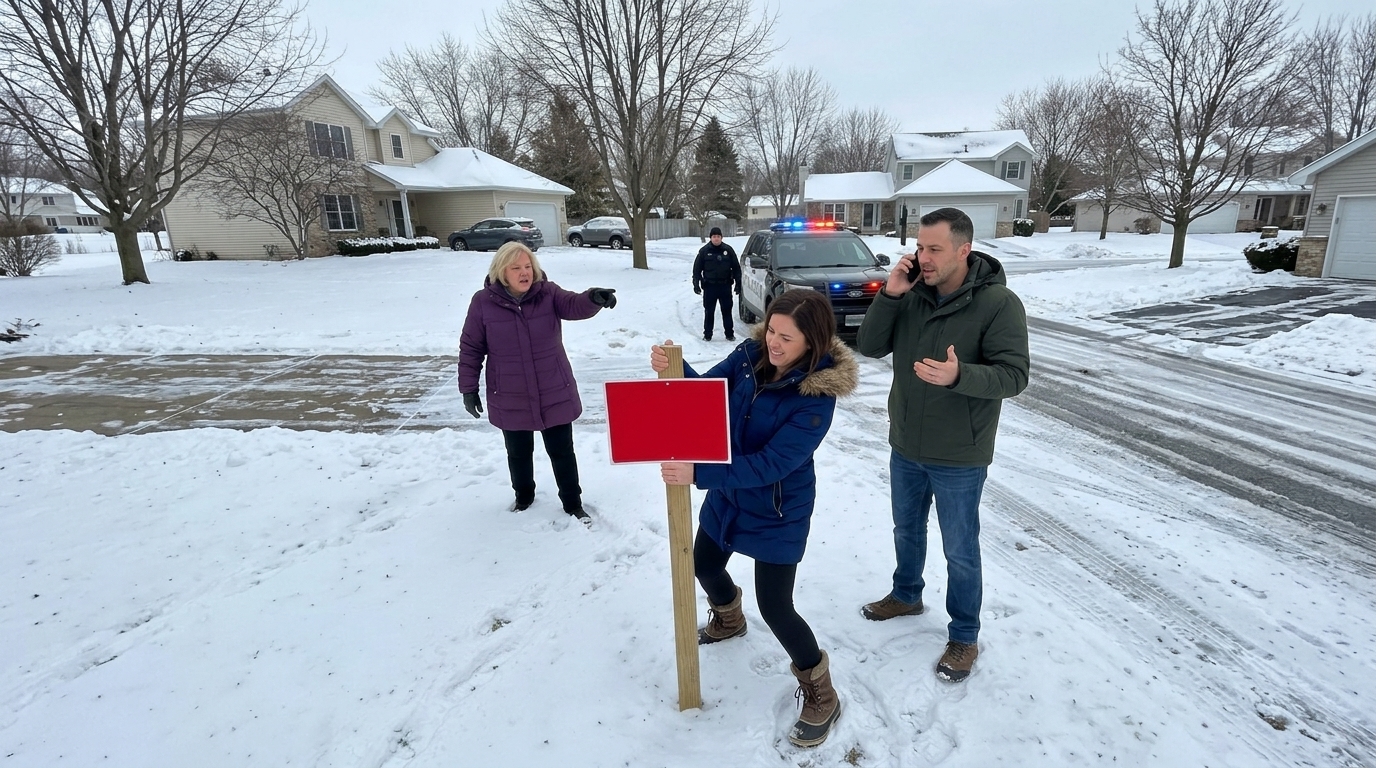
Mom, please! Pick up the phone! The police are standing in the living room,
Sarah’s crying, and they’re asking questions about the bank account.
What did you tell them?
My son David sounded nothing like the confident man
who had watched his wife lock me out of my own house.
His voice trembled.
Behind him, I could hear Sarah shouting.
“Tell them she’s lying! Tell them your mother is confused!”
Then another voice spoke.
“Sir, please put the phone down. We need to finish asking you some questions.”
The recording ended.
I stared at my phone.
Ninety-nine missed calls.
Twenty-seven text messages.
And one photograph from Sarah showing two police vehicles parked outside my house.
For a moment, I felt an ache in my chest.
Not because I regretted what I’d done.
Because I remembered the little boy who used to crawl into my lap whenever he heard a police siren.
That boy had grown into a man who could stand in my living room and listen while his wife suggested I sleep in my car.
And somehow, he had convinced himself that he was the victim.
I set down my coffee.
Then called Martha.
“They’re awake,” I said.
She gave a small laugh.
“I gathered that.”
“Has the officer called you?”
“Yes. Your attorney is handling the questions. The property inspection is documented, and the report concerning your missing belongings and account withdrawals has been opened.”
I looked toward the window.
Snow covered the trees outside the little inn where I’d spent the night.
“Good.”
Martha hesitated.
“Evelyn, are you alright?”
I swallowed.
“No.”
She remained silent.
Then I said, “But I think I will be.”
To understand what happened that Christmas morning, you need to understand the folder I’d carried out of my husband’s old safe.
My husband, Thomas Carter, had been a careful man.
He was an electrician by trade.
He could repair almost anything, from a broken washing machine to the wiring inside an old farmhouse.
But what I loved most about him wasn’t his skill with tools.
It was the way he prepared for problems before they happened.
Thomas kept copies of everything.
Insurance policies.
Bank statements.
Property records.
Warranty documents.
Tax receipts.
Even the instruction manual for our first dishwasher.
I used to tease him.
“Thomas, nobody needs twelve years of appliance receipts.”
He would smile.
“Maybe not. But when somebody asks for proof, it’s nice to have it.”
He was right more often than I liked to admit.
And twenty years after his death, his habit of keeping records was about to save me.
The folder contained the original deed to our home.
Thomas and I had purchased the property thirty years earlier, when David was just eight.
It was a modest two-story house on a quiet suburban street.
Nothing extravagant.
White siding.
Blue shutters.
A large kitchen.
A backyard with two maple trees.
Thomas built a wooden swing beneath one of them.
David spent countless afternoons there.
When he was little, he’d beg his father to push him higher.
“Higher, Dad! Higher!”
Thomas would laugh.
“Any higher and you’ll land on the moon.”
Those were the years I remembered most clearly.
Before the arguments.
Before the entitlement.
Before David married Sarah and began acting as though everything we’d built existed for his convenience.
Thomas died suddenly when David was twenty-four.
A heart attack.
He was fifty-six.
One moment, he was standing in our kitchen asking whether I wanted tea.
The next, I was sitting in a hospital corridor, praying for a miracle that never came.
After the funeral, I found myself alone in the house we’d spent decades building.
Every room reminded me of him.
His work boots by the garage door.
His reading glasses beside the bed.
His favorite coffee mug hanging above the kitchen sink.
I couldn’t bring myself to move anything.
For years, I lived surrounded by those memories.
And when David needed help, I gave it.
Because he was my son.
Because Thomas would have wanted him to be safe.
And because I believed family meant helping one another.
But somewhere along the way, David began confusing help with ownership.
Three months before Christmas, my sister Patricia underwent knee surgery in Florida.
She lived alone.
Her recovery was expected to take several weeks.
When she asked whether I could stay with her, I agreed immediately.
David and Sarah were between apartments.
Their lease was ending, and they’d been searching for a house to purchase.
David asked whether they could stay in my home while I was away.
“Just until we find something,” he promised.
Sarah smiled.
“We’ll take good care of everything, Evelyn.”
I hesitated.
Not because I didn’t love them.
Because I’d already noticed how easily Sarah treated other people’s belongings as her own.
But David was my only child.
And I wanted to believe him.
So I agreed.
Before leaving, I prepared a written occupancy agreement.
It stated that they could stay temporarily, that the house remained mine, that substantial alterations required my written permission, and that they were responsible for their personal expenses.
I also gave David limited access to a joint checking account containing approximately ten thousand dollars.
The money was intended for property taxes, utilities, and necessary maintenance.
Nothing else.
David signed the agreement.
Sarah signed as well.
Then they hugged me goodbye.
I flew to Florida believing my home was in safe hands.
By the time I returned, nearly everything had changed.
The first thing I noticed was the front door.
Thomas had painted it navy blue shortly before he died.
Sarah had painted it black.
I stood on the porch holding my suitcase.
When she opened the door, she smiled.
“Surprise!”
I looked past her.
The living room walls were gray.
My floral curtains were gone.
The antique oak table had disappeared.
So had the rug Thomas and I purchased on our twentieth anniversary.
My grandfather clock was missing from the hallway.
And the framed paintings Thomas had collected during our travels were nowhere to be seen.
I stared.
“Sarah, where are my things?”
She waved a hand.
“Oh, we put all that old stuff into storage.”
I felt my stomach tighten.
“Storage?”
She nodded.
“It was making the place look dated.”
I turned toward David.
He stood behind her.
“David?”
He looked uncomfortable.
“Mom, we thought you’d appreciate an update.”
I stared at him.
“You moved my furniture without asking?”
Sarah sighed.
“Evelyn, don’t make this difficult. We worked really hard.”
I wanted to scream.
Instead, I took a breath.
“Where is my bedroom?”
Sarah smiled.
“We converted it into my home office.”
I looked at her.
“What?”
“You can use the small guest room upstairs.”
I stared at my son.
He wouldn’t meet my eyes.
And that was when I should have understood.
They weren’t staying in my home anymore.
They were taking it over.
The next day, Sarah hosted a Christmas mixer for her coworkers.
She told me to remain upstairs during the event.
“I don’t want people getting confused about the living arrangements,” she explained.
I stared at her.
“What arrangements?”
She smiled tightly.
“You know what I mean.”
I didn’t.
Or perhaps I did, and I wasn’t ready to admit it.
When the guests arrived, I heard laughter downstairs.
Music.
Glasses clinking.
Sarah introducing people to “our beautiful new home.”
Our.
I sat upstairs listening.
Then, around nine, she knocked on my door.
“Evelyn, could you come downstairs and clean the kitchen?”
I looked at her.
“Excuse me?”
“The guests are leaving, and the dishes are everywhere.”
I stood.
“Sarah, I didn’t host this party.”
She blinked.
“I know, but you’re here.”
I stared at her.
Then said the word I’d avoided for years.
“No.”
Her smile disappeared.
“What?”
“No, Sarah. I won’t be cleaning up your party.”
She folded her arms.
“That’s incredibly selfish.”
I looked at her.
“In my own house?”
She rolled her eyes.
I picked up my coat.
Then walked past her.
“I think I’ll go out for pie.”
I drove to a diner near the highway.
Ordered cherry pie.
And sat quietly beside the window.
While I ate, David sent a message.
Mom, my card got declined. Did you move money?
I didn’t answer.
Because earlier that day, I’d discovered the joint account had been almost completely emptied.
Ten thousand dollars.
Gone.
The property taxes were unpaid.
And the transaction records showed thousands spent on renovations, furniture, and storage.
I had already contacted the bank.
The joint account had been closed according to the bank’s procedures, and access to my separate accounts had been revoked.
I wasn’t going to finance their takeover.
When I returned home, the keypad rejected my code.
That was when I entered through Thomas’s old garage door and heard Sarah say I could sleep in my car.
And that was when something inside me finally changed.
Martha understood the significance of the folder immediately.
She read the signed occupancy agreement.
Then examined the property records.
Then studied the bank statements.
Finally, she looked at me.
“Evelyn, they had permission to stay temporarily. They didn’t have permission to dispose of your belongings or spend your money on unauthorized renovations.”
I nodded.
“That’s what I thought.”
She tapped the documents.
“But there’s something else.”
I leaned forward.
“What?”
She pointed to the occupancy agreement.
“Did you notice this section?”
I looked down.
It was a paragraph Thomas had insisted we include in temporary family occupancy arrangements after a difficult experience with a relative years earlier.
It addressed unauthorized alterations, removal of personal property, and interference with the owner’s access.
I remembered signing it.
But I’d forgotten the exact wording.
Martha continued.
“This gives your attorney a strong starting point. It doesn’t mean you can simply throw them out overnight, but it clearly documents what they agreed to.”
I swallowed.
“Can I get my home back?”
She reached across the desk.
“Yes, Evelyn. We just have to do it properly.”
That afternoon, Martha contacted my attorney, Richard Bennett.
Richard had handled my estate planning for years.
He was sixty-two, silver-haired, and so calm that I’d once joked he could negotiate peace between two angry hurricanes.
When I told him what happened, he listened without interrupting.
Then he asked one question.
“Evelyn, do you have proof that they changed the locks?”
I showed him photographs of the keypad.
“And the old lock?”
“I used my spare key to enter.”
He nodded.
“Good. Don’t attempt another confrontation. We’ll document the access issue and pursue the appropriate remedies.”
I swallowed.
“What about the furniture?”
“We’ll request an inventory and preserve evidence. The storage company may have records showing who arranged the removal.”
“And the money?”
“That needs to be examined separately. We’ll determine which withdrawals were authorized and which were not.”
I nodded.
Richard leaned forward.
“Evelyn, I need you to understand something.”
I looked at him.
“You don’t have to tolerate mistreatment to prove you love your son.”
My eyes filled.
I looked away.
And for the first time in years, I admitted how badly David had hurt me.
That Christmas morning, officers came to the house after the disputed access and property complaints were reported.
They weren’t there to drag David and Sarah out without a court order.
They were there to document the situation, speak with the people involved, and address the reported concerns.
But David didn’t understand that.
Neither did Sarah.
They saw uniforms.
They saw official questions.
And suddenly, the people who had been so confident the night before began panicking.
That was why my phone filled with voicemails.
That was why David screamed.
And that was why Sarah, who had told me I could sleep in my car, was now begging me to answer.
But the real consequences hadn’t even begun.
Because while David was shouting at the officers, Richard was reviewing another document.
One that revealed my son and daughter-in-law had been planning something far worse than changing the locks.
PART 3
Richard called me the day after Christmas.
“Evelyn, I need you to come to my office.”
His voice was serious.
I was staying at the little inn near downtown.
I’d barely slept.
Every time I closed my eyes, I saw my living room.
The gray walls.
The missing furniture.
The black front door.
The house Thomas and I had built together.
I sat up.
“What’s happened?”
Richard hesitated.
“We received a copy of a document that Sarah sent to a mortgage broker.”
My stomach tightened.
“What document?”
“A proposed transfer of ownership.”
For several seconds, I couldn’t speak.
Then I whispered, “Transfer to whom?”
“David and Sarah.”
I closed my eyes.
At Richard’s office, he placed several pages in front of me.
The first was a preliminary financing inquiry.
The second contained information about my property.
The third was a draft deed.
My name appeared as the current owner.
David and Sarah were listed as the intended recipients.
I stared at the paper.
“What is this?”
Richard folded his hands.
“It appears they were exploring whether they could obtain financing using the property.”
I shook my head.
“But I never agreed to transfer it.”
“I know.”
I looked at the signature line.
My name had been typed beneath it.
The signature itself was blank.
I swallowed.
“Were they going to forge my signature?”
Richard remained careful.
“We don’t know what they intended. We know they prepared documents for a transaction you didn’t authorize. That’s serious enough to investigate.”
I stared at the pages.
Then I noticed an email attached to the file.
It was from Sarah.
Evelyn is getting older and has agreed in principle to let us take over the property. We’re hoping to finalize everything after Christmas.
I read it twice.
Then a third time.
My hands began trembling.
“She told them I agreed.”
Richard nodded.
“That’s what the email says.”
I looked at him.
“I never agreed to anything.”
“I believe you.”
I stared at the window.
Outside, cars moved slowly through the snow.
I whispered, “They weren’t just moving my furniture.”
Richard said nothing.
“They were preparing to take my house.”
The truth hurt more than I expected.
Because I had spent the previous night telling myself that perhaps David had simply been weak.
Perhaps Sarah had pushed too far.
Perhaps he hadn’t understood how much I loved that house.
But the documents suggested something more deliberate.
They had begun making plans.
Without me.
Using my property.
My money.
And my absence.
I sat there feeling as though the floor had disappeared beneath me.
Then Richard spoke.
“Evelyn, we need to focus on what we can establish.”
I nodded.
“We’ll preserve the communications, notify the relevant parties that you haven’t authorized a transfer, and make sure no one can mistake these documents for your consent.”
I swallowed.
“And David?”
Richard looked at me.
“He’ll have an opportunity to explain.”
I nodded slowly.
But in my heart, I already knew.
There was no explanation that could make this harmless.
Two days later, David asked to meet.
Not at the house.
Not at a restaurant.
At Richard’s office.
I agreed.
When I arrived, David was sitting beside Sarah.
He looked exhausted.
His eyes were red.
His shoulders were hunched.
Sarah sat stiffly, her arms folded.
She wore a cream-colored coat I’d seen her purchase using the joint account.
I recognized it immediately.
And for some reason, that small detail made me angrier than anything else.
Richard invited everyone to sit.
David looked at me.
“Mom.”
I nodded.
“David.”
Sarah said nothing.
Richard opened the meeting.
“We’re here to discuss the property, the personal belongings removed from it, and the financial transactions.”
Sarah immediately interrupted.
“This is ridiculous.”
Richard looked at her calmly.
“Mrs. Carter, you’ll have an opportunity to speak.”
She rolled her eyes.
I stared at her.
The same woman who’d ordered me to wash dishes in my own kitchen.
The same woman who’d changed my door code.
The same woman who’d told David I could sleep in my car.
And she still seemed convinced that everyone else was the problem.
Richard placed the occupancy agreement on the table.
“David, do you recognize this?”
My son nodded.
“Yes.”
“Is that your signature?”
“Yes.”
“Sarah?”
She glanced at the document.
“Yes.”
Richard continued.
“The agreement permitted temporary occupancy. It did not authorize substantial alterations or removal of Evelyn’s belongings without permission.”
Sarah shrugged.
“We improved the house.”
I stared at her.
“You removed my husband’s paintings.”
She sighed.
“Evelyn, they were old.”
My voice trembled.
“They were his.”
She looked away.
I continued.
“You took the grandfather clock he restored with his own hands.”
Sarah said nothing.
“You packed away thirty years of my life because you thought my home looked outdated.”
David whispered, “Mom, we didn’t mean—”
I turned toward him.
“Then what did you mean?”
He lowered his eyes.
Richard placed the bank statements on the table.
“Approximately ten thousand dollars was available for specific household expenses. The records show substantial payments for renovations and storage while the property taxes remained unpaid.”
Sarah leaned forward.
“We were making the place nicer.”
Richard nodded.
“That may be your view. But the question is whether those expenses were authorized.”
David rubbed his forehead.
I watched him.
He looked like a man who’d spent weeks avoiding reality and had finally run out of places to hide.
Then Richard placed the draft deed on the table.
The room changed.
Sarah’s face went pale.
David stared at the document.
Richard spoke carefully.
“Evelyn has never authorized a transfer of this property. We need to understand why these documents were prepared.”
Sarah opened her mouth.
Then closed it.
David whispered, “Sarah?”
She looked at him.
“Don’t.”
He stared at her.
“What is this?”
She snapped, “You knew we were looking into financing.”
I felt my chest tighten.
David shook his head.
“Not like this.”
Sarah laughed bitterly.
“Oh, please. You knew we needed the house.”
Richard raised a hand.
“Let’s keep this focused.”
But the damage was done.
For the first time, I saw my son looking at his wife with genuine alarm.
David turned toward me.
“Mom, I didn’t know she sent that email.”
I looked at him.
“Did you know about the plan to transfer the house?”
He hesitated.
Then whispered, “We talked about it.”
My heart sank.
I nodded slowly.
“Did you plan to ask me?”
He looked down.
“We thought you’d eventually agree.”
I swallowed.
“Why?”
He didn’t answer.
I leaned forward.
“David, why did you think I’d give you my house?”
He looked at me.
His eyes filled.
“Because I’m your son.”
I closed my eyes.
There it was.
The sentence that explained everything.
Because I’m your son.
As though being my child meant he owned everything I’d spent my life building.
I looked at David.
“When your father died, I promised myself I’d always help you.”
His face crumpled.
“I know.”
“I helped with college.”
He nodded.
“I helped when you lost your job.”
He wiped his eyes.
“I know.”
“I helped with your wedding.”
Sarah looked away.
“I let you live in my home while you searched for somewhere else.”
My voice broke.
“And you repaid me by changing the locks.”
David began crying.
I continued.
“You let your wife tell me to sleep in my car.”
He covered his face.
“And you sat there.”
For several moments, nobody spoke.
Then David whispered, “I’m sorry.”
I looked at him.
“Are you sorry because you hurt me?”
He swallowed.
“Or because the police came?”
He didn’t answer.
And that silence told me everything I needed to know.
The meeting ended without a reconciliation.
Richard outlined the steps required to resolve the occupancy dispute.
The storage company had agreed to preserve its records.
My attorney would continue documenting the disputed financial transactions.
And any proposed transfer of the property would be formally challenged.
David and Sarah were advised to obtain independent legal counsel.
I didn’t demand that anyone be punished without evidence.
I didn’t try to use the police as a weapon.
I wanted my property protected.
My belongings returned.
And my son to understand that being family didn’t place him above accountability.
Over the next several weeks, the situation deteriorated.
Sarah began telling relatives that I was confused.
That I was becoming forgetful.
That I didn’t understand modern financial arrangements.
One cousin called me.
“Evelyn, Sarah says you’re having trouble managing your affairs.”
I nearly laughed.
“Really?”
“She says David is trying to help.”
I took a breath.
“Did she mention changing my locks?”
Silence.
“Did she mention moving my furniture into storage?”
Another pause.
“Did she mention using my money for renovations I never approved?”
My cousin sighed.
“No.”
I nodded.
“Then perhaps she hasn’t told you the whole story.”
I didn’t start a public argument.
Instead, I kept records.
Copies of the deed.
Bank statements.
The signed occupancy agreement.
Photographs of the missing furniture.
Storage invoices.
And correspondence concerning the proposed property transfer.
When relatives asked questions, I answered honestly.
I didn’t embellish.
I didn’t exaggerate.
The facts were enough.
Slowly, the family began to understand.
My sister Patricia called from Florida.
“Evelyn, why didn’t you tell me things were this bad?”
I swallowed.
“I was embarrassed.”
She sounded furious.
“Embarrassed? They should be embarrassed!”
I smiled sadly.
“I know that now.”
The storage company eventually allowed my authorized movers to collect the belongings that had been identified as mine.
I stood inside Unit 412 while the door rolled upward.
The air smelled of dust and cold metal.
There was my oak dining table.
Wrapped in plastic.
My floral rug.
Rolled tightly against the wall.
The antique chairs Thomas had repaired.
His paintings.
And the grandfather clock.
I walked toward it.
The wooden case had a scratch near the bottom.
But the glass was intact.
I placed my hand against it.
Thomas had purchased the clock at an estate sale.
It hadn’t worked when he brought it home.
He spent three weekends repairing it.
When the pendulum finally moved, he’d called me into the hallway.
“Listen, Evelyn.”
Tick.
Tock.
Tick.
Tock.
He smiled like a little boy.
“Good as new.”
Standing in that storage unit, I heard his voice again.
And I began crying.
Martha put her arm around me.
“It’s alright.”
I shook my head.
“No.”
I touched the clock.
“But it will be.”
The legal process took time.
There were notices.
Negotiations.
Documents.
Deadlines.
David and Sarah eventually agreed to leave the property by a specified date.
They also agreed to cooperate in returning my belongings and resolving the disputed expenditures.
Their agreement didn’t erase everything that had happened.
But it allowed the house to be returned to me without a prolonged court battle over possession.
I didn’t celebrate when they moved out.
I stood across the street watching the moving truck.
David carried boxes.
Sarah supervised.
Neither looked at me.
When the last box was loaded, David approached.
“Mom.”
I looked at him.
He held out a set of keys.
I took them.
Then he whispered, “I never thought it would come to this.”
I stared at him.
“Neither did I.”
He looked down.
For a moment, I wanted to hug him.
To tell him everything would be fine.
But I couldn’t.
Not yet.
Because some wounds need time.
And some apologies need actions behind them.
After they left, I walked into my house.
The walls were still gray.
The curtains were gone.
The kitchen needed cleaning.
And several rooms were nearly empty.
But the silence felt different now.
It wasn’t the silence of abandonment.
It was the silence of peace.
I walked upstairs.
Opened the door to my old bedroom.
And stood in the doorway.
Sarah’s office furniture was gone.
The room was empty.
Sunlight streamed through the windows.
I looked toward the place where Thomas’s dresser used to stand.
Then whispered, “I’m back.”
Martha helped me hire contractors.
We repainted the walls.
Repaired damaged trim.
Restored the old flooring.
And returned my furniture.
The oak dining table went back beneath the chandelier.
The floral rug returned to the living room.
Thomas’s paintings went back on the walls.
And the grandfather clock resumed its place in the hallway.
When the repair specialist restarted it, the familiar sound filled the house.
Tick.
Tock.
Tick.
Tock.
I stood listening.
Then smiled through tears.
“Welcome home.”
But the greatest surprise came three months later.
It arrived in a plain white envelope.
There was no return address.
Only my name.
Inside was a handwritten letter from David.
And the first sentence made me sit down.
Mom, I finally understand why Dad used to say that a house is only a home when the people inside respect one another.
PART 5
I read David’s letter at the kitchen table.
The same table where he’d done his homework.
The same table where Thomas had taught him to play chess.
The same table where we’d celebrated birthdays and Christmas dinners for decades.
His handwriting was familiar.
A little messier than it had been when he was young.
But unmistakably his.
I unfolded the pages.
Then began reading.
Mom, I don’t know whether you’ll ever forgive me.
I wouldn’t blame you if you didn’t.
I’ve spent the last three months thinking about what happened.
At first, I was angry.
I blamed you for calling the police.
I blamed Martha.
I blamed your attorney.
I blamed Sarah.
But eventually, I had to admit something.
I was the one who let it happen.
I stopped reading.
My throat tightened.
Then I continued.
I knew Sarah was moving your furniture.
I knew she was changing the rooms.
I knew we were spending money from the account you trusted me to manage.
And when she changed the lock, I didn’t stop her.
I told myself it wasn’t a big deal.
I told myself you’d calm down.
I told myself the house would be mine someday anyway.
I closed my eyes.
There it was.
The truth.
Not a misunderstanding.
Not an accident.
A choice.
The letter continued.
Mom, I remember Dad teaching me how to fix the garage door.
I remember you making pancakes every Sunday.
I remember the Christmas when I was twelve and you worked extra shifts so I could have the bicycle I wanted.
I remember how hard you cried when Dad died.
And I remember promising him, before he passed, that I’d take care of you.
My hands began trembling.
I hadn’t known Thomas had asked David that.
I kept reading.
Instead, I made you feel like a stranger in your own home.
I’m ashamed of that.
I don’t expect you to trust me again because I wrote a letter.
I know trust has to be earned.
But I want to start by telling you something I should have said a long time ago.
I’m sorry, Mom.
Not because I lost the house.
Because I forgot what it meant to be your son.
I placed the letter on the table.
Then covered my face.
And cried.
For several days, I didn’t answer.
I needed time.
I needed to understand what forgiveness would mean.
Because I still loved David.
That had never changed.
But I was no longer willing to pretend that love required me to ignore betrayal.
I spoke with Martha.
She listened carefully.
Then asked, “What do you want, Evelyn?”
I thought about it.
“I want my son back.”
She nodded.
“But?”
I looked down.
“I don’t want the version of him who thinks he can take everything from me.”
Martha smiled sadly.
“Then don’t invite that version back.”
I looked at her.
She continued.
“Let him show you who he’s becoming.”
A month later, David called.
I answered.
“Hello?”
There was a pause.
Then his voice.
“Mom?”
I closed my eyes.
“Hello, David.”
He swallowed.
“Did you get my letter?”
“Yes.”
He hesitated.
“I wasn’t sure you’d read it.”
“I did.”
Silence.
Then he whispered, “I’m sorry.”
I took a breath.
“I know.”
He began crying.
“Can we talk?”
I looked toward the window.
The maple trees were beginning to bloom.
“Yes,” I said.
“But we’re going to do it differently this time.”
We met at a small diner.
Not my house.
Not his apartment.
Somewhere neutral.
David arrived early.
He stood when I approached.
For a moment, I saw the little boy he’d once been.
The child who used to run toward me after school.
The boy who cried when he lost his first baseball game.
The teenager who hugged me at his graduation.
I loved that boy.
I always would.
But I needed to speak to the man he’d become.
We sat.
Ordered coffee.
And waited.
Finally, David said, “Mom, Sarah and I are having problems.”
I nodded.
“I’m sorry to hear that.”
He looked down.
“She thinks you turned everyone against us.”
I took a breath.
“David, I didn’t make anyone do anything.”
He nodded slowly.
“I know.”
I looked at him.
“Do you?”
He swallowed.
“Yes.”
Then he said something I hadn’t expected.
“I’m seeing a counselor.”
I blinked.
“Really?”
He nodded.
“I needed help understanding why I let things go so far.”
I sat quietly.
He continued.
“I spent years feeling like I hadn’t accomplished enough.”
I frowned.
“David, you have a good career.”
He shook his head.
“Not compared to what I thought I should have.”
I waited.
He looked embarrassed.
“Sarah wanted a bigger house. A better neighborhood. More money. And I wanted to give her everything.”
I nodded.
“So you decided to take what belonged to me.”
His face crumpled.
“Yes.”
I swallowed.
He continued.
“I convinced myself it was okay because I’d inherit it someday.”
I looked at him.
“David, your father and I didn’t work our entire lives so you could treat our home like a prize you were waiting to collect.”
He nodded through tears.
“I know.”
I leaned forward.
“And you didn’t just take things.”
He looked at me.
“You took away my sense of safety.”
His eyes filled.
I continued.
“I stood outside my own front door in the snow, unable to get inside.”
He covered his mouth.
“I know.”
“And I could hear your wife saying I could sleep in my car.”
He began crying.
I swallowed.
“You heard her too.”
He nodded.
“Yes.”
“And you did nothing.”
He lowered his head.
“I was a coward.”
For the first time, he didn’t make excuses.
And that mattered.
We talked for nearly two hours.
About the house.
About Thomas.
About the money.
About Sarah.
About the choices David had made.
He told me he’d begun repaying the disputed expenses under the written agreement reached through our attorneys.
He’d also taken responsibility for the cost of returning and repairing several of my belongings.
I already knew.
Richard had shown me the records.
But hearing David speak about it without resentment was different.
He wasn’t asking me to erase the debt.
He was acknowledging it.
When we finished, he looked at me.
“Mom, can I come visit sometime?”
I took a breath.
“Eventually.”
He nodded.
“I understand.”
I continued.
“But David, I need you to hear me clearly.”
He looked up.
“You will never have unrestricted access to my bank accounts again.”
He nodded.
“You will never make decisions about my property without my permission.”
Another nod.
“And you will never change a lock on my home again.”
His eyes filled.
“I promise.”
I held his gaze.
“Promises aren’t enough anymore.”
He swallowed.
“I know.”
I stood.
Then placed my hand on his shoulder.
“Show me.”
Over the next several months, David did exactly that.
He stopped asking me for money.
He continued making repayments.
He attended counseling.
And he began speaking to me with a respect I hadn’t heard in years.
Not because I threatened him.
Not because I reminded him of the house.
But because he seemed to be learning that being my son didn’t entitle him to control my life.
Sarah took longer.
Much longer.
At first, she refused to apologize.
She told relatives I was vindictive.
That I’d embarrassed her.
That I’d ruined her Christmas.
I didn’t argue.
I had spent enough time defending myself.
Eventually, she sent a short message.
Evelyn, I know I crossed boundaries. I’m sorry for how I treated you.
I read it carefully.
Then replied.
Thank you for acknowledging that. I hope your future actions reflect those words.
That was all.
I didn’t invite her over.
I didn’t pretend everything was fixed.
Forgiveness and access are not the same thing.
Summer arrived.
The house was beautiful again.
The walls had been repainted in the warm cream color Thomas loved.
The curtains were restored.
The old dining table stood proudly beneath the chandelier.
And the grandfather clock ticked in the hallway.
I began inviting friends over.
Martha came every Thursday for tea.
Patricia visited from Florida.
My neighbors stopped by.
We played cards.
Shared meals.
Laughed.
And talked about everything except the family drama that had consumed my winter.
For the first time in years, my home felt alive.
Not because someone else was filling it with noise.
Because I was choosing who belonged there.
One afternoon, Martha asked me a question.
“Evelyn, have you thought about traveling?”
I laughed.
“Traveling?”
She nodded.
“You spent years taking care of everyone else. Why not do something for yourself?”
I considered it.
Thomas and I had always wanted to visit Italy.
We’d planned to go after he retired.
But he never got the chance.
For years, I couldn’t imagine making the trip without him.
Now, sitting in my restored living room, I realized something.
Thomas would never have wanted me to stop living.
He would have wanted me to see the places we’d dreamed about.
So I booked a trip.
Ten days in Italy.
Rome.
Florence.
Venice.
I went with Patricia.
We visited museums.
Walked through old streets.
Ate pasta in tiny restaurants.
And stood beneath the evening sky beside the Grand Canal.
One night, Patricia looked at me.
“Evelyn, you look happy.”
I smiled.
“I think I am.”
She squeezed my hand.
“Good.”
I looked toward the water.
And whispered, “Thomas would have loved this.”
When I returned home, David called.
“Mom, how was Italy?”
I smiled.
“Wonderful.”
He laughed.
“Did you take pictures?”
“Hundreds.”
He hesitated.
“Maybe you could show me sometime.”
I looked toward the hallway.
The grandfather clock ticked softly.
“Maybe,” I said.
And for the first time, the possibility didn’t frighten me.
By autumn, David and I had begun rebuilding our relationship.
Slowly.
Carefully.
He visited occasionally.
Always after calling first.
He never entered without permission.
Never asked for money.
Never treated the house like his.
Sometimes we sat on the porch and talked about Thomas.
Sometimes we drank coffee in the kitchen.
Sometimes we simply sat quietly.
And that was enough.
One afternoon, David brought an old photograph.
It showed Thomas standing beside the maple tree, helping eight-year-old David hang a birdhouse.
David placed it on the table.
“I found this in an old box.”
I smiled.
“I remember that day.”
He looked down.
“Dad was so patient with me.”
I laughed softly.
“He was.”
David swallowed.
“Do you think he’d be disappointed in me?”
My throat tightened.
I thought about Thomas.
His kindness.
His honesty.
His belief that people could change.
Then I answered.
“I think he’d be disappointed in what you did.”
David nodded.
Tears filled his eyes.
“But I also think he’d want you to become better.”
He looked at me.
I continued.
“Not because you want forgiveness.”
I took his hand.
“Because it’s the right thing to do.”
He began crying.
And this time, I hugged him.
The following Christmas, I made a decision.
I would host dinner.
Not a giant party.
Not a gathering designed to impress anyone.
Just a small meal with people I loved.
Martha.
Patricia.
A few neighbors.
And David.
Sarah was invited after we had spoken and agreed on respectful boundaries.
I wasn’t ready to pretend we were close.
But I was willing to allow a careful beginning.
Christmas morning arrived bright and cold.
Snow covered the lawn.
The maple trees stood bare against the sky.
Inside, the house smelled of cinnamon and roasted turkey.
I stood in the kitchen wearing my favorite apron.
Thomas’s old Christmas records played softly in the living room.
At noon, the doorbell rang.
I opened it.
David stood on the porch holding a small wrapped package.
Sarah stood beside him with a pie.
Both looked nervous.
“Merry Christmas, Mom,” David said.
I smiled.
“Merry Christmas.”
Sarah looked at me.
“Merry Christmas, Evelyn.”
I nodded.
“Come in.”
They stepped inside.
David stopped in the hallway.
His eyes moved toward the grandfather clock.
It ticked steadily.
He smiled sadly.
“You got it working again.”
I nodded.
“Yes.”
He walked toward it.
Then gently touched the wooden case.
“Dad loved this clock.”
I swallowed.
“He did.”
David turned toward me.
“I should never have moved it.”
I looked at him.
“No.”
He nodded.
“I know.”
Dinner was peaceful.
Not perfect.
There were awkward moments.
Careful conversations.
A few uncomfortable silences.
But nobody ordered me around.
Nobody treated me like a servant.
Nobody made decisions about my home without asking.
And for the first time in years, I felt respected.
After dinner, David stood.
My heart tightened.
For a moment, I remembered the Christmas when he’d watched Sarah humiliate me.
But this time, his expression was different.
He looked nervous.
Almost frightened.
“Mom,” he began.
I looked up.
He swallowed.
“I want to say something.”
The room grew quiet.
He looked around the table.
“Last Christmas, I did something terrible.”
Sarah lowered her eyes.
David continued.
“I treated my mother like she was an inconvenience in her own home.”
My throat tightened.
He looked directly at me.
“I let her belongings be removed.”
His voice broke.
“I let the locks be changed.”
Tears filled his eyes.
“And I stood there while she was treated like she didn’t belong.”
I covered my mouth.
David swallowed.
“I’ve spent a year trying to understand how I became that person.”
He shook his head.
“I can’t undo what happened.”
He looked at me.
“But I want everyone here to know something.”
His voice trembled.
“This house belongs to my mother.”
He paused.
“And more importantly, she deserves respect whether she owns a house or not.”
Tears slipped down my cheeks.
David continued.
“I forgot that.”
He looked down.
“And I’m sorry.”
Nobody spoke for several moments.
Then Martha reached for my hand.
Patricia wiped her eyes.
Sarah stood.
Her voice was quiet.
“I owe you an apology too, Evelyn.”
I looked at her.
She swallowed.
“I treated your home like something I was entitled to.”
I nodded.
“Yes.”
She looked down.
“I was wrong.”
I took a slow breath.
“Thank you.”
And for the first time, I believed there might be a future in which we could share a room without pretending the past hadn’t happened.
Later that evening, after everyone had gone home, I sat alone beside the fireplace.
The Christmas tree glowed softly.
The grandfather clock ticked in the hallway.
And outside, snow began falling again.
I looked around my living room.
My curtains.
My paintings.
My rug.
My furniture.
Every familiar object had returned to its rightful place.
But something else had returned too.
My confidence.
For months, I’d wondered whether standing up to David meant I was a bad mother.
Whether I should have stayed quiet.
Whether I should have allowed him and Sarah to take over simply because they were younger.
But now I knew the answer.
No.
I had spent thirty years building that home with Thomas.
I had spent decades raising my son.
And I had spent far too long believing that love meant giving until there was nothing left.
I thought about the night Sarah changed the keypad.
The red light.
The snow.
The cold brass key in my hand.
The sound of her voice saying I could sleep in my car.
I remembered walking into the garage.
Hearing them laugh.
Packing my suitcase.
And leaving without an argument.
They thought my silence meant surrender.
They thought I was too old to fight.
Too frightened to stand alone.
Too dependent on family to protect myself.
But they were wrong.
I didn’t need to scream.
I didn’t need to threaten.
I didn’t need to destroy anything.
I needed the truth.
The documents Thomas had carefully preserved.
The courage to ask for help.
And the determination to stop allowing my son to mistake kindness for weakness.
That night, before going upstairs, I stopped beside the grandfather clock.
I placed my hand on its wooden case.
“Thomas,” I whispered, “you were right about keeping records.”
I laughed softly.
Then my eyes filled.
“I wish you could have seen how everything turned out.”
The clock continued ticking.
Steady.
Patient.
Familiar.
I smiled.
Then whispered, “I think you’d be proud.”
The following morning, I woke to sunlight streaming through my bedroom window.
My bedroom.
In my house.
I made coffee.
Opened the curtains.
And watched the snow melt beneath the morning sun.
There were no demands waiting on the kitchen counter.
No instructions.
No unexpected guests.
No one telling me which rooms I could enter.
I could sit in my living room.
Read in my favorite chair.
Cook whatever I wanted.
Invite whomever I pleased.
Or do absolutely nothing.
And that freedom felt more valuable than anything I owned.
People sometimes ask me what I learned from that Christmas.
I tell them this:
A home isn’t simply a building.
It’s where you should feel safe.
Where your memories belong.
Where your voice matters.
And where nobody should make you feel like a stranger.
I also learned that family relationships don’t erase boundaries.
Love can survive disappointment.
Forgiveness can coexist with accountability.
And sometimes, the strongest thing a parent can do is stop rescuing an adult child from the consequences of their choices.
My son and daughter-in-law thought they had stolen my house.
They changed the locks.
Moved my belongings.
Spent my money.
And tried to make decisions about property that wasn’t theirs.
They expected me to cry.
Beg.
Or disappear quietly.
Instead, I contacted the people who could help me protect my rights.
And by the next morning, my phone was filled with ninety-nine voicemails.
But the real victory wasn’t seeing police vehicles outside my house.
It wasn’t watching David panic.
And it wasn’t hearing Sarah finally apologize.
The real victory was walking back through my own front door, hearing my husband’s grandfather clock ticking in the hallway, and knowing that nobody would ever again decide whether I belonged in the home I’d built.
They changed the locks because they thought I had nowhere else to go.
What they never understood was that I had never stopped being the rightful owner.
And the one thing they could never take from me was my dignity.
THE END THANK YOU FOR READING !!!