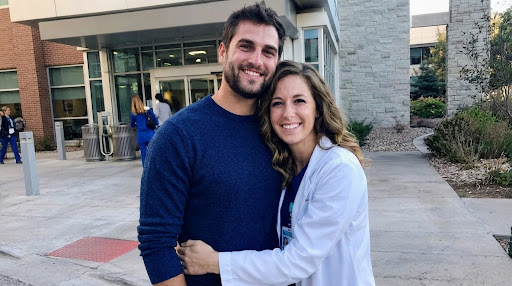
PART 3
The first black van stopped directly behind Maeve’s SUV.
The second pulled across the warehouse entrance.
For one terrible moment,
all I could hear was the uneven breathing of the little girl on
the hospital bed and the sound of my own heartbeat pounding inside my ears.
My wife gripped my wrist.
“Daniel,” she whispered, “don’t let them take the children.”
I looked at her.
Her blue nursing scrubs were stained with sweat.
There was a small cut on her forehead,
and her hands were trembling from exhaustion.
Behind her, twelve frightened children stood huddled
together beneath the fluorescent lights.
Some wore hospital gowns.
Others had blankets wrapped around their shoulders.
One little boy held a stuffed dinosaur missing an eye.
The youngest girl looked barely four.
I had spent the entire evening imagining terrible things had happened to my wife.
Now I realized she had stumbled into something far worse than either of us could have imagined.
I glanced at my phone.
The emergency dispatcher was still connected.
“Sir?” she asked. “Are you in a safe location?”
“Not exactly,” I whispered. “Two vans just arrived.
There are thirteen children here,
and my wife believes someone abandoned them after transferring them from the hospital.
Officers and emergency medical personnel are being dispatched.
Do not confront anyone. Can you move somewhere secure?
I looked around.
The warehouse had a narrow storage room behind a row of metal shelving.
There was another door beside it, but I couldn’t tell where it led.
Maeve followed my gaze.
“The supply room,” she whispered. “There’s a lock on the inside.”
I nodded.
“Get the children in there.”
She hesitated.
“The little girl—”
“I’ll help you move her.”
We worked quickly.
Maeve lifted the smallest child while I helped the others through the storage-room doorway.
The teenager holding the oxygen mask was named Noah.
He couldn’t have been older than fourteen.
Yet he moved with the practiced seriousness of someone who had learned too early that adults could not always be trusted.
“There’s a portable oxygen cylinder,” he whispered, pointing toward the bed.
Maeve checked it.
Then she and I carefully moved the little girl onto a wheeled stretcher.
Her name was Sophie.
She had a serious heart condition and had apparently suffered a medical emergency while the children were being held inside the warehouse.
Maeve had found her barely responsive.
If my wife hadn’t arrived when she did, I didn’t want to imagine what might have happened.
We had just pushed the stretcher into the supply room when footsteps sounded outside.
A man’s voice echoed through the warehouse.
“Hello?”
Nobody answered.
Another voice followed.
“Check the back.”
Maeve looked at me.
Her eyes were wide with terror.
I gently closed the storage-room door.
Then I turned the lock.
Inside, the room smelled of cardboard, disinfectant, and old paint.
The children crowded together between shelves stacked with cleaning supplies.
One little girl began crying.
Maeve knelt beside her.
“Sweetheart, look at me.”
The girl sniffled.
“Are they coming?”
Maeve brushed hair away from her forehead.
“Help is coming. Right now, I need everyone to stay quiet.”
The girl nodded.
I crouched beside the door with my phone.
The dispatcher asked whether I could hear the men.
“Yes,” I whispered. “They’re inside the building.”
“Remain where you are. Do not engage them.”
Footsteps approached.
Then stopped.
A man’s voice said, “Where are they?”
Another answered, “They were supposed to stay here until midnight.”
My stomach tightened.
The first man swore.
“Someone moved the equipment.”
A metallic crash echoed through the warehouse.
One of the children flinched.
Maeve gathered two little girls against her chest.
Then someone rattled the storage-room handle.
Every child froze.
“Who’s in there?”
I said nothing.
The handle rattled again.
“Open the door.”
My hands tightened around the phone.
The man struck the metal door.
“I’m not asking twice.”
A little boy began whimpering.
I looked toward Maeve.
She shook her head.
Don’t open it.
Then, somewhere outside, a siren sounded.
The man stopped.
For one second, there was complete silence.
Then we heard running footsteps.
An engine started.
Another engine followed.
The vans began moving.
And the dispatcher said, “Sir, officers are arriving. Stay inside until they identify themselves.”
I closed my eyes.
Only then did I realize I had been holding my breath.
The next twenty minutes felt like an entire night.
Police officers secured the warehouse.
Paramedics arrived.
The children were assessed one by one.
Sophie was transferred first, with Maeve providing the emergency team a detailed account of what had happened.
Noah stood beside me while the others were carried or escorted outside.
He kept looking toward the ambulance.
“Is Sophie going to die?”
I crouched beside him.
“She’s getting medical help.”
He swallowed.
“Maeve saved her.”
I looked toward my wife.
She was speaking rapidly to a paramedic, explaining Sophie’s medical history from the information she’d found.
“How long have you been here?” I asked Noah.
He stared at his shoes.
“Since this morning.”
“Did anyone tell you why?”
He nodded.
“They said we were going somewhere better.”
I felt my stomach turn.
“Better?”
“A place with special doctors.”
He looked toward the warehouse.
“But there weren’t any doctors.”
I swallowed.
“Who brought you?”
He hesitated.
“A man named Mr. Pike.”
The name meant nothing to me.
Yet the way Noah whispered it told me he was frightened.
“Did he hurt you?”
Noah shook his head.
“Not exactly.”
I waited.
“He said if we made trouble, our parents wouldn’t be allowed to visit us anymore.”
I felt something inside me break.
These children were sick.
Some were frightened.
Some were too young to understand why they had been taken from a hospital.
And someone had apparently used their families as a threat to keep them quiet.
I placed my hand gently on Noah’s shoulder.
“You did the right thing helping Sophie.”
His eyes filled.
“I thought she was going to stop breathing.”
I nodded.
“You helped keep her safe until Maeve could take over.”
For the first time, the boy looked as though he might cry.
Then he whispered, “Can I go home?”
I had no answer.
By 2:30 in the morning, Maeve and I were sitting in separate interview rooms at the police station.
My wife had been given a clean sweatshirt and a cup of coffee.
She looked exhausted.
But she refused to leave until she knew where every child had been taken.
A detective named Elena Ruiz interviewed me.
She was a serious woman with dark hair and an expression that suggested she had already heard things that night she would never forget.
“Mr. Carter, let’s start with when you arrived at the warehouse.”
I told her everything.
The unanswered calls.
The tracking app.
The industrial address.
The children.
The vans.
The men at the storage-room door.
She took careful notes.
Then she asked, “Did your wife tell you why she went there?”
I shook my head.
“Not completely.”
Detective Ruiz looked at me for a moment.
“Your wife says she received a message after her shift.”
“What kind of message?”
“An anonymous warning.”
I stared at her.
“About the children?”
She nodded.
“According to her statement, someone sent her a photograph of several pediatric patients being loaded into an unmarked transport vehicle.”
My heart began pounding.
“She didn’t tell me.”
“She says she tried calling the hospital administrator first.”
“And?”
“According to her, she was told the transfers were authorized.”
I rubbed my forehead.
“Then why did she go to the warehouse?”
Detective Ruiz looked down at her notes.
“Because the message included the address and said the children would be moved again before midnight.”
I stared at her.
My wife had followed an anonymous warning to an unfamiliar warehouse.
Alone.
Without telling anyone.
I felt anger rise through my fear.
Then I remembered the children.
And the little girl on the stretcher.
And Maeve kneeling on the concrete floor, refusing to stop trying to save her.
I covered my face.
“She could have been killed.”
Detective Ruiz’s expression softened.
“Yes,” she said quietly. “She could have.”
Maeve finally emerged from the interview room shortly after four.
She looked smaller than I’d ever seen her.
I stood immediately.
She crossed the hallway and collapsed into my arms.
For several minutes, neither of us spoke.
Then she whispered, “I’m sorry.”
I held her tighter.
“Don’t.”
“I should have called you.”
“Yes,” I said. “You should have.”
She began crying.
“I thought if I stopped to explain, they’d move the children.”
I closed my eyes.
“Maeve, I thought you were dead.”
Her shoulders shook.
“I know.”
I pulled back enough to look at her.
“Why did you turn off your phone?”
She wiped her cheeks.
“I didn’t. It died after I used the flashlight for hours. I left it on the table while I was working on Sophie.”
I stared at her.
“The tracking app still showed your location.”
She nodded.
“The phone had enough power to send its last location before shutting down.”
I took a breath.
Then I asked the question that had been haunting me.
“Who sent you the warning?”
Maeve looked toward the detective’s office.
“I don’t know.”
“You don’t know?”
She shook her head.
“It came from an unfamiliar number.”
“What did it say?”
Her voice trembled.
“Thirteen children. No medical staff. Industrial Road. Midnight transfer. Please don’t let them disappear.”
I felt cold.
Then she whispered something that made me stare at her.
“Daniel, the message included a photograph of my hospital identification badge.”
I frowned.
“Why?”
She looked at me.
“Because whoever sent it knew someone had used my credentials.”
We went home after sunrise.
Maeve showered.
I made coffee neither of us drank.
We sat at the kitchen table, staring at the pale light coming through the window.
For fifteen years, I’d believed I understood my wife’s work.
Long shifts.
Difficult patients.
Heartbroken parents.
The occasional miracle.
But I had never imagined that someone could use her professional identity to move vulnerable children without her knowledge.
Maeve stared at her hands.
“Daniel, I need to tell you something.”
I looked up.
“What?”
“Three weeks ago, the hospital announced a new pediatric transition program.”
I frowned.
“What kind of program?”
“They said it would help children who needed extended recovery care but didn’t require a full hospital bed.”
“That sounds reasonable.”
“It did.”
She swallowed.
“But some of the transfers bothered me.”
“Why?”
“Parents weren’t always present when the paperwork was prepared. Several families said they hadn’t received clear explanations about where their children were going.”
I felt my stomach tighten.
“Did you report it?”
“Yes.”
“To whom?”
“The director of nursing.”
“And?”
“She told me the arrangements had been reviewed by administration.”
Maeve looked toward the window.
“Then last week, I noticed my electronic signature attached to a discharge summary I hadn’t completed.”
I stared at her.
“What did you do?”
“I reported it to the compliance office.”
“And they investigated?”
“They said they would.”
She looked back at me.
“Yesterday morning, I was told the issue had been resolved.”
I swallowed.
“But it hadn’t.”
She shook her head.
“No.”
Then she said something that changed everything.
“Daniel, the person who approved those transfers was my supervisor.”
I stared at her.
“Who?”
Maeve’s voice dropped.
“Dr. Adrian Mercer.”
I recognized the name.
Mercer was the hospital’s director of pediatric services.
He had attended our anniversary dinner two years earlier.
He had shaken my hand.
Praised Maeve’s dedication.
Told me the hospital was lucky to have her.
I felt sick.
“Are you saying he was involved?”
Maeve shook her head.
“I don’t know.”
Then she looked at me with frightened eyes.
“But the transfer records all carried his authorization.”
At 8:17 that morning, Maeve’s phone rang.
She had plugged it in after coming home.
The screen displayed the hospital’s main number.
She answered on speaker.
“Maeve Carter?”
“Yes.”
“This is hospital administration. We need you to come in immediately.”
Maeve looked at me.
“Why?”
There was a pause.
Then a woman’s voice said:
“Dr. Mercer has reported that you removed thirteen pediatric patients from authorized care without permission.”
My wife went completely still.
The administrator continued.
“Pending investigation, your employment has been suspended.”
I stared at the phone.
Maeve whispered, “What?”
“And Mrs. Carter,” the woman added, “the hospital has notified the authorities.”
I reached for Maeve’s hand.
The woman continued.
“You may be facing criminal charges.”
PART 4
For the first time in our marriage, I watched my wife look truly defeated.
Maeve had spent eighteen years working with sick children.
She had missed birthdays.
Anniversaries.
Christmas mornings.
She had held frightened toddlers while their parents cried in hallways.
She had stayed after shifts to explain medication schedules to families who were too overwhelmed to understand them the first time.
And now the hospital where she’d devoted nearly two decades of her life was accusing her of taking thirteen children from authorized care.
I reached for the phone.
“Who is speaking?”
“This is Margaret Ellis from hospital administration.”
“My name is Daniel Carter. My wife has already given a statement to the police. You need to direct any allegations through the investigators.”
“Sir, this is an employment matter.”
“And there are thirteen children who were found in a warehouse without appropriate medical supervision.”
There was silence.
Then the woman said, “We cannot discuss confidential patient information.”
I felt anger rise.
“Neither can we. But we can tell you my wife was trying to save a child’s life.”
Maeve gently took the phone.
“Margaret, I will cooperate with a lawful investigation. Please send any employment instructions in writing.”
Then she ended the call.
Her hands were shaking.
“Daniel,” she whispered, “they’re going to ruin me.”
I pulled her close.
“Not without a fight.”
By noon, we had contacted an attorney.
Her name was Rebecca Hale.
She specialized in employment matters involving healthcare professionals and had experience working with investigators in cases involving medical records.
Rebecca listened carefully.
Then she said, “First, Maeve, do not access hospital systems while you’re suspended.”
Maeve nodded.
“Second, preserve the messages, call records, and anything you already lawfully possess.”
I wrote everything down.
“Third, do not discuss the investigation publicly or share patient information.”
Maeve looked exhausted.
“Am I going to lose my nursing license?”
Rebecca leaned forward.
“That depends on what the evidence establishes. An accusation is not proof of misconduct.”
Maeve wiped her eyes.
Rebecca continued.
“We need to understand who accessed your credentials, who approved the transfers, and whether the hospital’s records accurately reflect what happened.”
I looked at her.
“Can they fake electronic signatures?”
“Electronic records can be misused if access controls fail or credentials are compromised. Investigators can examine audit logs to determine who accessed and changed records.”
Maeve sat straighter.
“Audit logs?”
Rebecca nodded.
“Systems often record user activity, timestamps, and other technical details. Those records may be crucial.”
For the first time that morning, I saw a little hope return to my wife’s face.
That afternoon, Detective Ruiz called.
She asked Maeve to come to the station with Rebecca.
I went too.
The detective met us in a conference room.
She looked tired.
But there was something different about her expression.
“We’ve located the owners of the two vans,” she said.
My stomach tightened.
“Who?”
“One is registered to a private transportation contractor. The other was leased through a company associated with a medical placement business.”
Maeve leaned forward.
“What company?”
Detective Ruiz glanced at her notes.
“BrightPath Pediatric Transitions.”
Maeve stared at her.
“I’ve heard that name.”
“Where?”
“At the hospital.”
She swallowed.
“Dr. Mercer mentioned BrightPath during a staff meeting.”
Detective Ruiz nodded.
“We’re examining its relationship with the hospital and the individuals involved in the transfers.”
I looked at the detective.
“Why would anyone move children into a warehouse?”
She was careful.
“We’re investigating whether the children were diverted during a transfer process that was supposed to place them in licensed facilities. We haven’t established every motive yet.”
Maeve looked toward the table.
“Were the children supposed to be there?”
“No.”
The detective’s voice became firm.
“The warehouse was not an authorized pediatric care facility.”
I closed my eyes.
Then Maeve asked the question we both feared.
“Is Sophie alive?”
Detective Ruiz’s expression softened.
“She was alive when transferred to the receiving hospital. I can’t disclose further medical details without appropriate authorization.”
Maeve began crying.
I reached for her hand.
The investigation moved quickly after that.
Families of the children were located and contacted by the authorities and healthcare teams.
The children received medical assessments.
Several needed immediate treatment.
Others were reunited with their parents after appropriate arrangements were made.
Investigators began examining how the transfers had been approved and why the children had been diverted from legitimate care.
The hospital announced an internal review.
Dr. Mercer was placed on administrative leave.
The news spread through town.
Reporters gathered outside the hospital.
Parents demanded answers.
And my wife became the subject of rumors she couldn’t publicly correct without risking patient privacy and the investigation.
Some people called her a hero.
Others repeated the hospital’s accusation.
I watched Maeve read one cruel comment on her phone.
Maybe she was involved and got caught.
She stared at it.
Then quietly turned off the screen.
I sat beside her.
“Don’t read those.”
She nodded.
“I know.”
But tears were already sliding down her face.
Three days later, Rebecca called with important news.
The investigators had obtained relevant electronic record logs through the appropriate process.
The logs showed that several discharge entries attributed to Maeve had been created or modified while she was caring for patients in another part of the hospital.
Some activity occurred after she’d clocked out.
Other entries were linked to a workstation in an administrative office.
Maeve listened in stunned silence.
Then she whispered, “I knew it.”
Rebecca continued.
“There’s still work to do, but the records support your statement that you did not personally complete those entries.”
I looked at Maeve.
Her face crumpled.
For days, she’d been carrying the fear that someone could erase eighteen years of professional integrity with a few clicks.
Now there was evidence.
Not merely her word against the hospital’s.
Evidence.
She covered her face and began crying.
I held her.
Rebecca waited quietly.
Then she said, “Maeve, there’s something else.”
My wife looked up.
“What?”
“Investigators have identified a former BrightPath employee who contacted authorities.”
I frowned.
“Who?”
Rebecca hesitated.
“A woman named Claire Bennett.”
Maeve went still.
“Claire?”
I looked at her.
“You know her?”
Maeve nodded slowly.
“She worked at the hospital last year.”
“What happened?”
“She resigned.”
“Why?”
Maeve looked toward the window.
“She said she couldn’t work there anymore.”
I felt my stomach tighten.
Rebecca continued.
“Claire has provided information about the transfer arrangements.”
Maeve swallowed.
Then she whispered, “Was she the one who sent me the message?”
Rebecca answered carefully.
“Investigators are examining that possibility.”
Two days later, Detective Ruiz asked Maeve whether she remembered Claire Bennett.
Maeve did.
Claire had been a patient coordinator.
Quiet.
Efficient.
The kind of employee who knew where every form belonged and which families needed extra help.
She had resigned after raising concerns about incomplete transfer records.
At the time, hospital management had described her departure as a personal decision.
But Claire had apparently kept records of concerns she had reported through authorized channels.
When she learned that the transfer program was continuing, she became alarmed.
She contacted investigators.
And she had tried to warn Maeve.
The anonymous message came from a number Claire had used.
The photograph of Maeve’s badge had been included because Claire believed someone was using her credentials to make the transfers appear properly authorized.
I sat beside my wife as Detective Ruiz explained what could be shared.
Maeve stared at the table.
“Why didn’t Claire call the police herself?”
“She did,” the detective answered. “But she also believed the children were in immediate danger and wanted someone with medical training to know where they were.”
Maeve closed her eyes.
“That’s why she contacted me.”
Detective Ruiz nodded.
“She trusted you.”
My wife began crying.
Not because she was frightened anymore.
But because someone had believed she would do the right thing.
As investigators reconstructed the transfer process, the situation became clearer.
BrightPath had been contracted to coordinate placements for children needing continuing care.
But certain transfers had been represented as completed even though the receiving facilities had not accepted the patients.
The children had instead been transported to the warehouse as an unauthorized holding location.
Records had been altered or falsely completed to make the process appear legitimate.
Investigators also examined financial arrangements connected to the transfer contracts.
The evidence suggested that some individuals had been more interested in collecting payments than ensuring the children received proper care.
I listened to the details with growing disbelief.
Thirteen children.
Not packages.
Not inventory.
Children.
Children who needed medication.
Monitoring.
Specialized attention.
And someone had treated them like numbers on a spreadsheet.
One evening, Maeve sat at our kitchen table staring at a photograph of the hospital’s pediatric wing.
She had taken it years earlier.
The walls were painted with bright animals.
A giraffe stretched its neck toward the ceiling.
A smiling elephant stood beside the nurses’ station.
Maeve had helped choose the colors.
I sat beside her.
“What are you thinking?”
She looked at the photograph.
“I keep remembering Noah.”
“The teenager?”
She nodded.
“He was so calm.”
I waited.
“He was holding that oxygen mask like he’d done it a hundred times.”
Her voice trembled.
“He shouldn’t have had to know how.”
I took her hand.
She continued.
“And Sophie…”
Her eyes filled.
“I keep seeing her face.”
I swallowed.
“You did everything you could.”
Maeve shook her head.
“I should have found them sooner.”
I turned toward her.
“Maeve, you found them because you followed a warning nobody else had acted on quickly enough.”
She looked at me.
“You could have been hurt.”
I nodded.
“Yes.”
She began crying.
“I didn’t think about that.”
“I know.”
I held her hands.
“Next time, call emergency services and get help before going into a dangerous place.”
She nodded.
“I will.”
I kissed her forehead.
Then she whispered, “I just couldn’t leave them.”
I looked into her eyes.
“I know that too.”
The following week, the hospital issued a statement.
It confirmed that the investigation had identified serious irregularities in the pediatric transfer program.
The hospital said it was cooperating with authorities and reviewing its procedures.
It also withdrew the allegation that Maeve had independently removed the children.
Her suspension was lifted pending completion of the employment review.
But the damage wasn’t so easily undone.
Maeve had spent days terrified of losing her career.
She had been accused publicly.
Her colleagues had been questioned.
And the hospital that had trusted her with sick children had been willing to blame her before establishing the facts.
Rebecca helped her negotiate a formal correction to her personnel record.
Maeve also received confirmation that the relevant professional authorities had been informed of the corrected findings.
It was progress.
But she wasn’t ready to return.
Then, one afternoon, a letter arrived.
The envelope was addressed to Maeve.
There was no return address.
Inside was a folded piece of paper covered in careful handwriting.
At the top were three words.
Dear Nurse Maeve.
My wife sat down.
I watched her read.
Then her hand flew to her mouth.
“Daniel.”
I moved beside her.
“What?”
She handed me the letter.
It was from Noah.
He thanked her for finding them.
He wrote that he was back with his family.
He said he was going to school again.
And near the bottom, he had written:
I thought adults had forgotten about us. But you came back. I want to be a nurse someday because of you.
I stared at the words.
Maeve began crying.
Then she laughed through her tears.
“Daniel, he wants to be a nurse.”
I smiled.
“Sounds like he picked a good example.”
She pressed the letter against her chest.
For the first time since that terrible night, I saw my wife smile with genuine happiness.
A month later, Detective Ruiz called.
The investigation had led to charges against several people involved in the unauthorized transfers and falsified records.
Dr. Mercer was among those accused of participating in the scheme.
The transportation contractor’s role was being examined separately.
BrightPath’s operations were suspended while the relevant authorities reviewed its licensing and contracts.
I listened carefully.
Then I asked, “Does this mean it’s over?”
Detective Ruiz paused.
“Not yet. Court proceedings take time.”
I nodded.
“But the children?”
“The children are no longer at that location. Appropriate authorities are overseeing their care and placement.”
I closed my eyes.
That was what mattered most.
That evening, Maeve and I sat on the porch.
The sun was setting.
The air smelled of rain.
She leaned against my shoulder.
“Daniel?”
“Yes?”
“Do you remember what I said the morning everything happened?”
I smiled sadly.
“You said you’d be home by 7:15.”
She nodded.
“And that I’d bring Thai food.”
I laughed softly.
“Yes.”
She looked toward the street.
“I never picked it up.”
I turned toward her.
“Maeve.”
She smiled faintly.
“What?”
“I think we can forgive you for that.”
She laughed.
Then she began crying again.
I wrapped my arm around her.
For a while, we watched the evening light fade.
Then she whispered, “I don’t know if I can go back to that hospital.”
I looked at her.
“You don’t have to decide tonight.”
She nodded.
“I still want to be a nurse.”
I smiled.
“Then be a nurse.”
She looked up.
“Somewhere else?”
“Somewhere you can do your work without being afraid someone will misuse your name.”
She rested her head against my shoulder.
And for the first time, I believed we might find our way back to an ordinary life.
PART 5
Six months after the warehouse incident, Maeve received an invitation.
It came from a community organization that supported families of children with serious medical conditions.
The letter explained that several families wanted to thank the emergency responders and healthcare workers who had helped their children.
Maeve read it twice.
Then placed it on the kitchen table.
“I don’t know if I should go.”
I looked at her.
“Why not?”
She swallowed.
“I don’t want people to think I did something heroic.”
I sat beside her.
“Maeve, you helped save a child’s life.”
She shook her head.
“Lots of people helped.”
“I know.”
“The paramedics. The police. The doctors who treated them afterward.”
“Yes.”
She looked down.
“And Claire.”
I nodded.
“Claire too.”
Maeve sighed.
“I don’t want to take credit for everyone else’s work.”
I smiled gently.
“Then don’t. Go and thank them.”
She looked at me.
For a moment, she considered it.
Then she nodded.
“All right.”
The event took place in a small community hall on a Saturday afternoon.
There were paper decorations hanging from the ceiling.
Blue and yellow balloons.
A table covered with homemade cookies.
Children’s drawings taped to the walls.
Nothing expensive.
Nothing elaborate.
Just families who had survived something frightening and wanted to thank the people who had helped.
Maeve wore a simple green dress.
I wore a navy shirt.
She held my hand as we walked inside.
Then a boy’s voice shouted:
“NURSE MAEVE!”
We turned.
Noah was running toward us.
He looked healthier than he had in the warehouse.
His cheeks were fuller.
His hair had grown longer.
And his face carried the kind of smile that made my chest ache.
He stopped in front of Maeve.
For one second, he looked shy.
Then he threw his arms around her.
Maeve hugged him tightly.
“Oh, Noah.”
He began crying.
“Thank you.”
She held him.
“You’re welcome, sweetheart.”
He pulled back.
Then he looked at me.
“Are you Daniel?”
I smiled.
“Yes.”
He shook my hand with exaggerated seriousness.
“Thank you for helping too.”
I laughed.
“You’re welcome.”
Then he whispered, “I wasn’t scared when you were there.”
I felt my throat tighten.
I crouched slightly.
“I’m glad.”
He smiled.
Then he ran toward a group of children near the refreshment table.
Maeve watched him go.
Her eyes filled.
“He looks so much better.”
I squeezed her hand.
“Yes.”
A woman approached us a few minutes later.
She had dark hair and wore a blue cardigan.
Her eyes were red.
“Maeve?”
My wife turned.
“Yes?”
The woman smiled through tears.
“I’m Sophie’s mother.”
Maeve went completely still.
I felt her hand tighten around mine.
The woman stepped closer.
“My name is Anna.”
Maeve swallowed.
“How is she?”
Anna began crying.
“She’s doing well.”
Maeve covered her mouth.
“Oh, thank God.”
Anna nodded.
“She needed more treatment after that night, but she’s recovering.”
My wife began crying.
Anna reached for her hands.
“I don’t know how to thank you.”
Maeve shook her head.
“You don’t have to.”
“Yes,” Anna whispered. “I do.”
She took a breath.
“When they told us Sophie had been transferred, I thought she was going somewhere safe.”
Her voice broke.
“Then nobody could tell me where she was.”
Maeve listened silently.
Anna continued.
“I spent hours calling hospitals.”
Tears slid down her cheeks.
“I thought I’d lost my daughter.”
I felt my own eyes burning.
Anna squeezed Maeve’s hands.
“Then they called and said she’d been found.”
She swallowed.
“And that a nurse had stayed with her until help arrived.”
Maeve began crying harder.
Anna pulled her into an embrace.
For a long moment, they held each other.
Then a little voice spoke from behind Anna.
“Mommy?”
We looked down.
A small girl stood beside a folding chair.
She wore a pink sweater and held a stuffed rabbit.
Her dark curls framed a round face.
She looked toward Maeve.
Anna smiled.
“Sophie, sweetheart, this is Nurse Maeve.”
The little girl stared.
Then she stepped forward.
“Are you the lady who helped me?”
Maeve knelt.
“Yes, sweetheart.”
Sophie considered that.
Then she held out her stuffed rabbit.
“This is Bunny.”
Maeve smiled through her tears.
“Hello, Bunny.”
Sophie looked serious.
“Bunny says thank you.”
My wife began crying again.
Then Sophie wrapped her little arms around Maeve’s neck.
And I watched the woman I’d spent months trying to comfort finally receive the one thing no investigation, court hearing, or official statement could give her.
The knowledge that the little girl was alive.
Later that afternoon, the organizers asked Maeve to say a few words.
She hesitated.
Then walked to the front of the room.
I stood near the back.
She held the microphone with both hands.
For a moment, she looked nervous.
Then she smiled.
“I’m not very good at speeches.”
A few people laughed.
Maeve took a breath.
“I’ve been a pediatric nurse for eighteen years.”
She looked toward the children.
“And in those eighteen years, I’ve learned that children are often braver than adults realize.”
Her voice trembled.
“But bravery shouldn’t be something we demand from them.”
The room grew quiet.
“Children deserve safety. They deserve care. They deserve adults who listen when something is wrong.”
She paused.
“I wasn’t alone that night.”
She looked toward the paramedics seated near the front.
“The emergency responders helped get those children to safety.”
Then she looked toward Detective Ruiz.
“The investigators worked to find out what happened.”
Her eyes moved toward a woman standing beside the wall.
“And someone had the courage to raise the alarm.”
I followed her gaze.
Claire Bennett stood there.
She looked uncomfortable with the attention.
Maeve smiled.
“Claire, thank you.”
The room applauded.
Claire wiped her eyes.
Maeve continued.
“And my husband…”
She looked directly at me.
I felt my throat tighten.
“He came looking for me because I was late coming home.”
A few people laughed softly.
Maeve smiled through tears.
“He had no idea what he was walking into.”
She paused.
“But he stayed.”
I swallowed.
“He helped me when I was frightened, and he reminded me that even people who spend their lives caring for others need someone to care for them.”
My eyes filled.
Maeve looked toward the families.
“I’m grateful your children are here today.”
She took a shaky breath.
“And I hope we never forget that every child deserves to be treated as a person, not a number on a form.”
The room rose in applause.
Maeve began crying.
And I had never been prouder of her.
The criminal proceedings continued for more than a year.
The evidence included transportation records, electronic audit logs, financial documents, and witness testimony.
Several defendants ultimately entered guilty pleas or were convicted of offenses connected to the unauthorized transfers and falsified records.
The court imposed sentences based on each person’s role.
The hospital and the organizations involved also faced regulatory reviews and civil claims.
Not every allegation was proved.
Not every question received a satisfying answer.
But the central facts were established.
The children had been diverted from authorized care.
Their records had been misused.
And the people responsible had placed vulnerable patients at risk.
Maeve’s name was formally cleared of wrongdoing in the transfer scheme.
Her nursing license remained in good standing.
And the hospital corrected her employment records.
But she made a decision that surprised almost everyone.
She didn’t return.
One morning, about eight months after the warehouse incident, Maeve sat across from me at breakfast.
She had a letter in her hand.
“Daniel?”
I looked up from the newspaper.
“Yes?”
“I’ve been offered a job.”
I smiled.
“Where?”
“A pediatric home-care organization.”
I set down the paper.
“Really?”
She nodded.
“They work with children who have complex medical needs.”
“That sounds perfect for you.”
She smiled.
“I’d be visiting families, helping parents understand care plans, coordinating with doctors.”
I reached for her hand.
“Do you want it?”
She looked down at the letter.
“Yes.”
“Then take it.”
She laughed softly.
“Just like that?”
I nodded.
“Just like that.”
Her eyes filled.
“I thought you might be worried.”
I considered that.
“I’ll always worry about you.”
She smiled sadly.
“But?”
“But I don’t want fear to decide the rest of our lives.”
She squeezed my hand.
Then she whispered, “Neither do I.”
Maeve started her new job the following month.
Her first week was exhausting.
But when she came home, she looked different.
Lighter.
More like herself.
She told me about helping a father learn how to manage his daughter’s feeding equipment.
About a little boy who insisted every medical appointment should include a dinosaur sticker.
About a mother who cried with relief after finally understanding her child’s medication schedule.
She never shared identifying patient details.
But I could hear the joy returning to her voice.
One evening, she walked through the front door at exactly 7:15.
I looked at the clock.
Then at her.
She smiled.
“I’m home.”
I laughed.
“Right on time.”
She held up a paper bag.
“And I brought Thai food.”
For a moment, neither of us moved.
Then we both began laughing.
Not because the memory was funny.
But because we’d survived it.
She placed the bag on the kitchen counter.
I pulled her into my arms.
And for the first time in months, our ordinary evening felt like a gift.
A year after the incident, I drove past the warehouse.
I hadn’t intended to.
I was taking a different route home from work when I recognized the industrial road.
The same broken pavement.
The same chain-link fences.
The same rows of dark buildings.
I slowed.
The warehouse was empty.
Its windows were boarded.
The metal door had been secured.
A faded sign announced that the property was available for lease.
I pulled over.
For a moment, I simply stared.
I remembered the black vans.
The fluorescent lights.
The children huddled together.
Noah holding the oxygen mask.
Maeve kneeling beside Sophie.
And the terrible feeling that my heart had stopped when I realized what was happening.
I sat there for several minutes.
Then I called Maeve.
She answered immediately.
“Hey, handsome.”
I smiled.
“Hey.”
“Everything okay?”
I looked toward the warehouse.
“I’m on Industrial Road.”
There was silence.
Then she whispered, “Oh.”
“I drove past the building.”
She took a breath.
“Are you okay?”
I looked at the boarded windows.
“Yes.”
Then I realized something.
“I think I am.”
She was quiet.
I continued.
“I used to think about that night every time you were late.”
“I know.”
“I’d imagine the worst.”
Her voice softened.
“Daniel.”
I looked toward the road.
“But today, I saw the building, and I thought about the children who made it out.”
She was silent.
“And I thought about you.”
Her voice trembled.
“What about me?”
I smiled.
“How lucky I am.”
She began crying softly.
“I love you.”
“I love you too.”
That Christmas, Maeve received thirteen handmade cards.
They came through the community organization, with the families’ permission.
Some were covered in glitter.
Some had crooked drawings of snowmen.
One showed a nurse wearing a superhero cape.
Another had a bright yellow sun and the words:
THANK YOU FOR HELPING US GET HOME.
Noah’s card was longer.
He wrote that he was doing well in school.
He had joined a science club.
And he still wanted to become a nurse.
Sophie’s card contained a drawing of a pink rabbit.
Underneath, in uneven handwriting, were the words:
BUNNY LOVES YOU.
Maeve sat on the living room floor surrounded by the cards.
She cried.
Then she laughed.
Then she cried again.
I sat beside her.
She handed me Noah’s letter.
I read it carefully.
At the bottom, he had written:
When I grow up, I want to help children the way you helped us.
I looked at my wife.
She smiled through tears.
“Daniel, can you believe that?”
I nodded.
“Yes.”
She shook her head.
“I didn’t do anything special.”
I looked at her.
“Maeve.”
She smiled.
“What?”
“You stayed with a little girl who needed help. You kept going when you were frightened. And you made sure the children weren’t left alone.”
Her eyes filled.
“That matters.”
She leaned against me.
For a long time, we sat together surrounded by colorful cards.
The following spring, we planted a small garden behind our house.
Maeve wanted flowers.
I wanted vegetables.
We compromised.
Half the garden became tomatoes, peppers, and herbs.
The other half became flowers.
She chose thirteen white daisies.
One for each child.
We planted them along the fence.
On the morning we finished, Maeve stood looking at the little row of plants.
“They’re going to be beautiful.”
I smiled.
“Yes.”
She slipped her arm through mine.
“Do you think it’s strange?”
“What?”
“Planting thirteen flowers.”
I shook my head.
“No.”
She looked toward the garden.
“I just wanted something living to remind me that they’re still here.”
I squeezed her hand.
“Then it’s perfect.”
As time passed, our lives settled into a new rhythm.
Maeve worked four days a week.
I adjusted my schedule so we could have Fridays together.
Sometimes we went hiking.
Sometimes we visited friends.
Sometimes we stayed home and did absolutely nothing.
I learned to appreciate ordinary moments.
The sound of Maeve laughing at a television show.
Her shoes beside the front door.
The way she hummed while making coffee.
The little notes she left on the refrigerator.
And the familiar sound of her car pulling into the driveway.
Before that terrible night, I had taken those things for granted.
Afterward, I understood how quickly ordinary life could become something precious.
One Friday evening, almost two years after the warehouse incident, Maeve came home carrying a small package.
She looked excited.
“Daniel, close your eyes.”
I laughed.
“Why?”
“Just do it.”
I closed them.
I heard paper rustling.
Then she said, “Okay.”
I opened my eyes.
She was holding a framed photograph.
It showed the thirteen white daisies in our garden.
They were fully grown now.
Bright.
Healthy.
Blooming beneath the afternoon sun.
Underneath the photograph, she’d added a small inscription.
THIRTEEN LIVES. ONE NIGHT. A THOUSAND REASONS TO KEEP CARING.
I stared at it.
Then I looked at her.
“Maeve.”
She smiled.
“I thought we could hang it in the hallway.”
I nodded.
“Absolutely.”
She stepped closer.
“Do you remember what you said when you found me?”
I laughed softly.
“I think I shouted your name.”
She nodded.
“You did.”
I looked at her.
“I thought something terrible had happened to you.”
Her smile faded.
“I know.”
I took her hands.
“I was terrified.”
She squeezed them.
“I’m sorry.”
I shook my head.
“We’ve talked about that.”
She nodded.
Then she whispered, “I still think about that night.”
“So do I.”
She looked toward the photograph.
“But I don’t only remember the fear anymore.”
I smiled.
“What do you remember?”
She looked at me.
“The children getting into the ambulances.”
Her eyes filled.
“Noah helping Sophie.”
She paused.
“And you coming through that door.”
I felt my throat tighten.
She smiled.
“I knew I wasn’t alone anymore.”
I pulled her into my arms.
That night, we ate dinner on the porch.
The air was warm.
Crickets sang in the grass.
The garden swayed gently in the breeze.
Maeve rested her head against my shoulder.
“Daniel?”
“Yes?”
“Do you ever wish you hadn’t opened the tracking app?”
I considered the question.
I remembered the fear.
The drive through empty streets.
The dark warehouse.
The moment I saw my wife kneeling beside a child who wasn’t breathing properly.
I remembered how close we’d come to losing everything.
Then I looked at Maeve.
“No.”
She lifted her head.
“Really?”
I nodded.
“Not for a second.”
Her eyes filled.
“Why?”
I smiled.
“Because I found you.”
She laughed softly.
“You already had me.”
I shook my head.
“No.”
I took her hand.
“I found a part of you I hadn’t fully understood.”
She looked at me.
“What part?”
I glanced toward the thirteen white daisies.
“The part that refuses to walk away when someone needs help.”
Maeve began crying.
I kissed her forehead.
“And I wouldn’t trade that for anything.”
People sometimes ask me what happened that night.
They want the dramatic details.
The black vans.
The warehouse.
The police.
The investigation.
They ask whether I was frightened.
Of course I was.
I was terrified.
But when I think about that night now, I don’t remember the fear first.
I remember thirteen children who needed someone to notice they were missing.
I remember a fourteen-year-old boy holding an oxygen mask with shaking hands.
I remember a little girl named Sophie fighting to stay alive.
And I remember my wife kneeling beside her, refusing to give up.
I had driven to that warehouse because I thought I might be losing the woman I loved.
Instead, I discovered just how much love she carried for people who weren’t even her family.
Last night, Maeve came home at 7:12.
Three minutes early.
She walked through the door carrying Thai food.
I was standing in the kitchen.
She smiled.
“Miss me?”
I laughed.
“Always.”
She placed the bags on the counter.
Then she kissed my cheek.
Exactly the way she had on the morning everything began.
I wrapped my arms around her.
Held her a little longer than usual.
And whispered, “I’m glad you’re home.”
She smiled against my shoulder.
“Me too.”
Outside, the thirteen white daisies moved gently in the evening breeze.
And inside our little house, the woman I loved was safe.
The children were safe.
And for one ordinary, beautiful evening, that was enough.
THE END THANK YOU FOR READING !!!



