PART 3
“Mr. Hart,” Adrian said,
his voice cutting through the stunned silence,
“you’ve just humiliated my wife.”
For several seconds, nobody moved.
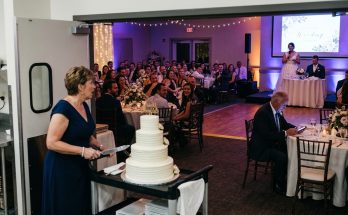
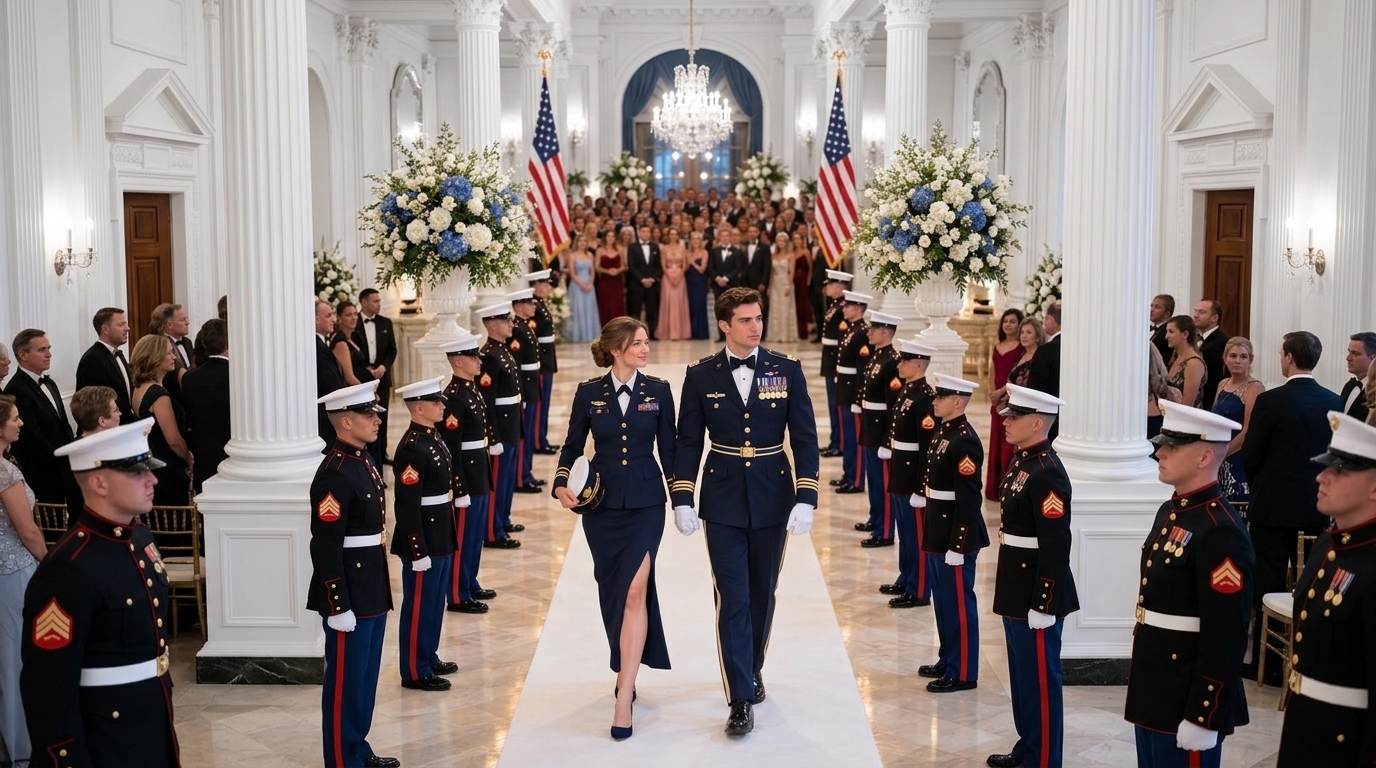
Four hundred wedding guests stood frozen beneath
the enormous crystal chandeliers.
The string quartet had stopped playing.
Waiters carrying silver trays of champagne hovered near the walls,
uncertain whether they should continue serving.
My father stared at Adrian’s hand wrapped around mine.
Then he looked at my wedding ring.
Then at my face.
“Your… wife?”
The words sounded unfamiliar coming from his mouth.
Adrian didn’t blink.
“Yes. Clara Blackwood. My wife of three years.”
Someone near the bar gasped.
A champagne glass struck the floor.
And my younger sister Sophie,
standing beside her new husband in a wedding gown that had cost more than my first car,
let out a sharp, disbelieving laugh.
“Oh, please.”
She folded her arms.
“This is ridiculous. Clara, did you hire some actor to pretend he’s your husband?”
I almost smiled.
Even now, with one of the most recognizable investment executives in the country standing beside me, Sophie couldn’t imagine that something wonderful might have happened in my life without her permission.
Adrian turned toward her.
“Congratulations on your marriage,” he said politely. “I wish we’d met under better circumstances.”
Sophie blinked.
Her husband, Ethan, looked between us.
“Wait,” he said quietly. “You’re Adrian Blackwood?”
Adrian nodded.
Ethan’s face changed.
He was a corporate attorney. Unlike Sophie, he paid attention to business news.
“Blackwood Capital?” Ethan asked.
“Yes.”
Ethan swallowed.
“The investment firm that acquired the controlling interest in Hart Hospitality?”
Adrian’s expression remained calm.
“That’s correct.”
My father’s champagne glass trembled.
For the first time that evening, I saw something I’d never seen on his face before.
Fear.
Not embarrassment.
Not irritation.
Actual fear.
Because Graham Hart understood exactly who Adrian was.
Three months earlier, Hart Hospitality had announced what my father described as a strategic partnership with Blackwood Capital.
He had hosted an elaborate celebration.
He’d posed for photographs with executives.
He’d told every business associate that the agreement proved his company was entering a new era of growth.
What he hadn’t told anyone was that Hart Hospitality had been struggling for nearly two years.
Its flagship properties were carrying enormous debt.
Several renovations had gone over budget.
Two major lenders had threatened to withdraw support.
And Blackwood Capital had provided the financing that kept the business operating while a restructuring took place.
My father had celebrated the transaction as though he’d personally conquered Wall Street.
He had no idea that the woman he’d pushed into a fountain was married to the man whose company now held a controlling stake in his business.
Or that I had spent the previous three years building a career of my own.
“Clara,” Dad said, forcing a laugh, “why didn’t you tell us?”
I stared at him.
It was an extraordinary question.
Not because it was complicated.
Because he asked it as though he’d ever shown the slightest interest in my life.
“You never asked.”
His face reddened.
“Of course we asked!”
I tilted my head.
“When?”
He opened his mouth.
Nothing came out.
I continued.
“Was it when you told Aunt Margaret I couldn’t keep a boyfriend because I was too difficult? Or when Mom said I should stop pretending my consulting work was a career? Or last Christmas, when Sophie announced that I’d probably die alone with six cats?”
A few guests shifted uncomfortably.
Sophie rolled her eyes.
“That was a joke.”
I looked at her.
“Funny how everything becomes a joke when you’re the one being cruel.”
Adrian’s fingers tightened gently around mine.
Dad glanced around the room.
“Clara, this is neither the time nor the place.”
I almost laughed.
“Really?”
I gestured toward the terrace.
“You thought it was the perfect time and place to announce that I couldn’t find a date.”
His jaw tightened.
“That was harmless teasing.”
“And pushing me into the fountain?”
He looked away.
“An accident.”
I stared at him.
“You put both hands on my shoulders.”
“You lost your balance.”
“You pushed me.”
His expression hardened.
“Don’t start making accusations in front of everyone.”
Adrian stepped forward.
“Mr. Hart, your daughter isn’t the one who created this situation.”
Dad straightened his jacket.
“Mr. Blackwood, I think there’s been a misunderstanding.”
Adrian’s voice remained quiet.
“Then explain it.”
Dad blinked.
“Explain what?”
“Why my wife arrived at her sister’s wedding in a green dress and is now standing here in a different one, with wet hair and bruising beginning to appear on her arm.”
My father looked at my wrist.
I hadn’t noticed the red marks until Adrian mentioned them.
They were beginning to darken where I’d struck the fountain’s stone edge.
Mom finally stepped forward.
“Adrian, dear, families sometimes play practical jokes.”
Adrian turned toward her.
“Mrs. Hart, is pushing someone into cold water in front of hundreds of people your idea of a practical joke?”
She faltered.
“Well, when you put it like that—”
“How else should I put it?”
Mom’s mouth closed.
I looked at her.
For years, she’d been the one who smoothed everything over.
Whenever Dad insulted me, she called it humor.
Whenever Sophie excluded me, she said I was too sensitive.
Whenever I cried, she accused me of creating drama.
Now she stood beneath a chandelier worth more than my annual salary, searching desperately for a way to make what happened sound acceptable.
But Adrian wasn’t interested in helping her.
The hotel manager approached us.
His name was Thomas Reed.
He looked pale.
“Mr. Blackwood, Mrs. Blackwood, may I speak with you privately?”
Adrian nodded.
“Of course.”
Dad immediately stepped forward.
“Thomas, I think we can handle this as a family.”
Thomas hesitated.
“Mr. Hart, I’m afraid there’s a separate concern.”
“What concern?”
Thomas looked toward the terrace.
“We’ve reviewed the security footage.”
The room went quiet again.
My father stared at him.
“What security footage?”
“The terrace cameras.”
I felt my heart begin pounding.
Thomas continued carefully.
“Our security team was alerted after several guests reported that someone had fallen into the fountain. We reviewed the recording to determine whether medical assistance was needed.”
Dad’s face drained.
“That footage is private.”
“Yes, sir,” Thomas replied. “And it will be handled appropriately.”
Dad’s voice rose.
“Then there’s no reason to discuss it here!”
Thomas looked at me.
“Mrs. Blackwood, are you injured?”
I glanced at my wrist.
“I’m not sure.”
Adrian turned toward me immediately.
“Clara?”
“I’m okay.”
He didn’t look convinced.
“Let’s have someone examine your arm.”
I shook my head.
“Not yet.”
I looked at my father.
“First, I want him to answer one question.”
Dad’s jaw tightened.
“What now?”
I stepped forward.
“Why?”
He stared at me.
“Why what?”
“Why did you push me?”
He scoffed.
“I’ve already told you. You slipped.”
“No.”
My voice remained steady.
“You followed me outside. You told me I was spoiling the aesthetic. You put your hands on my shoulders, and you pushed.”
His face reddened.
I continued.
“Why?”
For a moment, I thought he might actually answer.
Then he sneered.
“Because you were standing out there looking miserable, and I was tired of your attitude.”
The words hung in the air.
He seemed to realize what he’d admitted only after saying them.
I felt something inside me settle.
There it was.
Not an accident.
Not a misunderstanding.
Not harmless teasing.
He’d done it because he was angry that I wasn’t smiling through his humiliation.
Adrian looked at Thomas.
“Please preserve the recording. My wife will decide whether she wants to make a formal report.”
Thomas nodded.
“Of course.”
Dad stepped toward Adrian.
“Now hold on. There’s no need to involve authorities.”
Adrian met his eyes.
“That decision isn’t yours.”
Sophie suddenly burst into tears.
Not because I’d been hurt.
Not because our father had admitted pushing me.
Because people were looking at her.
“This is my wedding!” she shouted.
Everyone turned.
She pointed at me.
“You couldn’t let me have one day, could you?”
I stared at her.
She continued.
“You always have to make everything about yourself!”
A bitter laugh escaped me.
“Sophie, I came here quietly. Dad grabbed a microphone and announced my relationship status to four hundred people.”
She shook her head.
“You knew exactly what would happen if you brought some billionaire husband here!”
I looked at her.
“I didn’t bring him here.”
She blinked.
“I came alone because he was finishing a business meeting.”
Adrian spoke softly.
“And because Clara wanted to attend her sister’s wedding without making her marriage the center of attention.”
I looked at him gratefully.
He continued.
“She called me after someone assaulted her.”
The word landed heavily.
Assaulted.
Not teased.
Not embarrassed.
Not splashed.
Assaulted.
Dad flinched.
Sophie looked furious.
“Oh, so now we’re criminals?”
I took a breath.
“I didn’t say that.”
Adrian looked at her.
“But your sister is entitled to describe what happened accurately.”
Ethan finally stepped between Sophie and me.
“Sophie,” he said quietly, “stop.”
She stared at him.
“What?”
“Stop talking.”
Her mouth fell open.
“You’re taking her side?”
Ethan looked toward the terrace.
“I watched your father push her.”
My heart stopped.
Sophie turned pale.
“What?”
Ethan swallowed.
“I was near the doors. I saw him put his hands on her.”
Dad glared at him.
“Ethan, don’t involve yourself.”
Ethan looked at my father.
“With respect, sir, I think you’ve involved everyone already.”
For the first time all evening, Sophie had nothing to say.
Adrian turned toward me.
“Darling, we can leave.”
I looked around the ballroom.
At the faces.
At the whispers.
At the relatives who’d laughed.
At the people who’d applauded while I struggled out of freezing water.
Part of me wanted to run.
Another part wanted to stand there until every single person apologized.
But then I remembered something Grandpa used to tell me.
Clara, never confuse being heard with being understood.
My grandfather had been the only person in my family who never compared me to Sophie.
He died when I was twenty-four.
And after he was gone, family gatherings became even harder.
I looked at Adrian.
“Yes,” I whispered.
“Let’s go.”
Dad immediately stepped forward.
“Wait.”
We stopped.
His expression had changed completely.
The arrogance was gone.
Now he looked nervous.
“Adrian, perhaps we should discuss this privately.”
Adrian studied him.
“Discuss what?”
Dad lowered his voice.
“Our business relationship.”
I stared at him.
Of course.
Not my bruised wrist.
Not the fountain.
Not the humiliation.
The business.
Adrian’s expression cooled.
“Mr. Hart, tonight’s events don’t automatically change the company’s contractual obligations or governance. Those matters will be handled through the appropriate processes.”
Dad swallowed.
“But surely you understand—”
“I understand that my wife has been mistreated.”
Silence.
Adrian continued.
“And I understand that you’re more concerned about your position than her well-being.”
Dad looked as though he’d been slapped.
Then Adrian took my hand.
We walked toward the ballroom doors.
The crowd parted.
Nobody laughed.
Nobody applauded.
Nobody said a word.
And just before we reached the entrance, I heard my father call after us.
“Clara!”
I stopped.
Turned.
He stood beneath the chandeliers, surrounded by hundreds of people who’d spent the evening admiring him.
“Are you really going to walk away from your family over one little joke?”
I looked at him.
Then at Sophie.
Then at Mom.
And I finally said what I’d been holding inside for thirty-two years.
“No, Dad.”
My voice carried across the ballroom.
“I’m walking away because I finally understand that you were never joking.”
Then I left.
Outside, Adrian’s driver was waiting beside a black sedan.
Adrian opened the door for me.
But before I climbed inside, I stopped.
My hands were trembling.
He noticed immediately.
“Clara?”
I looked at him.
“I thought I was prepared.”
He brushed a damp strand of hair away from my face.
“For what?”
“To see them again.”
His expression softened.
I swallowed.
“I spent three years building a life where they couldn’t hurt me. I thought if I came back for one evening, I could handle whatever they said.”
Adrian gently touched my cheek.
“You did handle it.”
I shook my head.
“I ended up in a fountain.”
“You stood up afterward.”
My eyes filled.
He continued.
“You looked the man who hurt you in the eyes and told him you wouldn’t forget. That’s not weakness.”
I stared at him.
Then whispered, “I didn’t want you to see them like this.”
Adrian gave me a sad smile.
“Clara, I married you. Not the version of your family you wished existed.”
That was when I started crying.
Not delicately.
Not quietly.
I cried so hard my knees nearly gave way.
Adrian wrapped his arms around me.
And for the first time that evening, I allowed someone to hold me without feeling ashamed.
At the hospital, a doctor examined my wrist and shoulder.
The injuries were minor.
A bruise.
A strained shoulder.
A few scratches.
But the physician recommended documenting them, and I agreed.
Adrian sat beside me throughout the examination.
He didn’t make decisions for me.
He didn’t tell me what I should do.
He simply asked what I needed.
And that mattered more than he understood.
Because I’d spent my entire childhood being told what I felt.
What I meant.
What I was allowed to say.
Now someone was finally asking.
When we returned home after midnight, I found a message from Sophie.
YOU RUINED MY WEDDING.
Then another.
DAD IS FURIOUS.
Then a third.
I HOPE YOU’RE HAPPY.
I stared at the screen.
Adrian sat beside me.
“You don’t have to answer.”
“I know.”
I opened the message.
Typed four words.
I hope you’re safe.
Then I blocked her number for the night.
Adrian looked at me.
“Why that response?”
I stared at the dark window.
“Because Ethan looked at her the way someone looks at a stranger.”
I swallowed.
“And for the first time, I wondered whether Sophie was beginning to understand what Dad’s behavior had cost all of us.”
Adrian took my hand.
I leaned against him.
I thought the worst part of the evening was over.
I was wrong.
Because the next morning, Blackwood Capital’s general counsel called.
And what she told Adrian about my father’s company made the fountain incident seem like the smallest problem Graham Hart was facing.
PART 4
The call came at 7:14 the next morning.
I was sitting at our kitchen island in Adrian’s oversized sweatshirt, staring at a cup of coffee I hadn’t touched.
My wrist was wrapped.
My shoulder ached.
And every time I closed my eyes, I heard the applause.
Adrian’s phone rang.
He glanced at the screen.
“It’s Margaret.”
Margaret Ellis was Blackwood Capital’s general counsel.
She rarely called on Sunday mornings.
Adrian answered.
“Good morning.”
He listened.
Then his expression changed.
I straightened.
“What is it?”
He held up one finger.
Margaret spoke for nearly a minute.
Then Adrian said, “Send everything to the independent directors and the audit committee. No informal discussions. Preserve the documents.”
He listened again.
“Yes. I understand.”
Then he ended the call.
I looked at him.
“Adrian?”
He set the phone down.
“Clara, there’s something I need to explain.”
My stomach tightened.
“About Dad?”
He nodded.
“About Hart Hospitality.”
I stared at him.
“What happened?”
Adrian pulled out the chair beside me.
“During the acquisition, Blackwood Capital identified several accounting concerns. Some were ordinary restructuring issues. Others required further review.”
I frowned.
“Such as?”
“Related-party transactions. Questionable consulting payments. Invoices that didn’t match supporting records.”
I stared at him.
“Fraud?”
“We don’t know that yet.”
He spoke carefully.
“But Margaret says the audit team found additional discrepancies last night while reviewing documents already requested from Hart Hospitality.”
I looked down at my coffee.
“Does Dad know?”
“He knows the company is under review.”
I swallowed.
“Is this because of what happened at the wedding?”
“No.”
Adrian’s answer came immediately.
“The review began before yesterday. It will continue according to the company’s procedures, regardless of what happened to you.”
I nodded slowly.
He reached for my hand.
“Clara, I don’t want you to think I’m using my company to punish your father.”
I looked at him.
“I know you wouldn’t.”
He shook his head.
“Even so, we need to be careful. My relationship with you creates an obvious conflict, so I’ll be stepping back from decisions specifically involving your father.”
I stared at him.
“Really?”
“Yes. Independent directors and counsel will handle those matters.”
I felt a strange mixture of relief and fear.
Because Adrian wasn’t offering me a dramatic revenge fantasy.
He was doing something harder.
He was refusing to let his anger compromise the process.
And somehow, that made me love him even more.
Three years earlier, when I met Adrian, I had no idea he was wealthy.
I knew he worked in finance.
I knew he traveled often.
And I knew he wore a watch that looked expensive.
But he never mentioned the size of his company.
We met at a charity literacy event in Boston.
I was there because I had helped develop a digital reading program for underfunded schools.
He was there because his foundation supported education initiatives.
I accidentally spilled coffee on his sleeve.
He looked down at the stain.
Then smiled.
“Well, at least now I have an excuse to stop wearing this jacket.”
I laughed.
He asked about my work.
Not my relationship status.
Not my family.
Not whether I knew someone important.
My work.
And he listened.
That was what surprised me most.
My father had spent years dismissing my career in educational technology consulting.
He called it computer babysitting.
Sophie called it a hobby.
Mom suggested I find something more feminine.
Adrian asked questions about implementation costs, teacher training, and accessibility.
He treated me as though my ideas mattered.
We talked for nearly two hours.
Then he asked whether he could buy me another coffee.
I said yes.
Six months later, we were in love.
A year after that, we married in a small ceremony overlooking Lake Geneva.
There were twelve guests.
My closest friends.
His sister.
Two colleagues who’d become family.
And an elderly couple who’d hosted us during one of our trips.
I wore a simple ivory dress.
Adrian cried when he saw me.
Afterward, we ate dinner at a tiny restaurant where the owner brought us homemade chocolate cake.
It was the happiest day of my life.
And my parents knew nothing about it.
Not because I was ashamed.
Because for once, I wanted something beautiful that they couldn’t turn into a competition.
I had intended to tell them eventually.
I really had.
But every attempt to reconnect ended the same way.
Dad would ask whether I’d finally found a respectable job.
Mom would tell me Sophie was dating someone successful.
Sophie would send photographs of expensive vacations and ask whether I was still living in my little apartment.
After a while, I stopped correcting them.
I stopped explaining.
I stopped trying to make them proud.
And I began building a life where their approval wasn’t required.
My consulting firm grew.
I hired employees.
We secured contracts with school districts and nonprofit organizations.
I eventually became the founder of a successful education technology company.
Adrian supported me emotionally, but the business was mine.
My team built it.
Our clients trusted us.
And I was proud of that.
Yet whenever my parents asked what I did, I simply said I worked in technology.
They never asked another question.
Two days after the wedding, my father’s first voicemail arrived.
“Clara, this is Dad. We need to talk.”
No apology.
No acknowledgment of what happened.
Just a demand.
An hour later, another message.
“Adrian needs to understand that business matters should remain separate from family disagreements.”
Then another.
“Call me immediately. This is serious.”
I saved the messages.
Didn’t respond.
That afternoon, Mom called from a number I didn’t recognize.
I answered.
“Clara?”
I closed my eyes.
“Mom.”
“Oh, thank goodness.”
Her voice sounded strained.
“Your father is beside himself.”
I looked out the window.
“Is he?”
“Yes. He’s been trying to reach you.”
“I know.”
She sighed.
“Clara, sweetheart, you need to understand that your father didn’t mean to hurt you.”
I stared at the wall.
“He pushed me into a fountain.”
“He was trying to lighten the mood.”
“He admitted he was angry because I wasn’t smiling.”
Mom hesitated.
Then said, “Well, you know how he gets.”
I felt something inside me harden.
“Yes.”
I paused.
“I do.”
She lowered her voice.
“Your father is worried about his company.”
Of course he was.
I almost laughed.
“Mom, why are you calling?”
Silence.
Then she whispered, “He wants you to speak to Adrian.”
“About what?”
“The business review.”
I closed my eyes.
“Mom, Adrian isn’t handling that review personally.”
“But surely he can help.”
“No.”
“Clara—”
“No, Mom.”
Her voice sharpened.
“After everything this family has done for you, you can’t make one phone call?”
I stared at the window.
For a moment, I couldn’t speak.
Then I asked quietly, “What exactly has this family done for me?”
She gasped.
“How can you say that?”
I swallowed.
“Mom, I paid my own college tuition after Dad refused to help because he said my degree was useless.”
She said nothing.
“I worked two jobs. I paid my rent. I built my company. I got married without any of you because I couldn’t trust you not to humiliate me.”
My voice trembled.
“And when I finally came home for Sophie’s wedding, Dad pushed me into a fountain while everyone applauded.”
Mom began crying.
“Clara, please.”
I closed my eyes.
“I don’t want to fight.”
“Then help us.”
I took a breath.
“I won’t interfere with the review.”
She went silent.
Then whispered, “Your father says if you don’t help, you’re no longer his daughter.”
I stared at the wall.
The words should have shattered me.
Years earlier, they would have.
But now they sounded strangely familiar.
Dad had spent my entire life threatening to withdraw love whenever I refused to obey.
I took a breath.
“Mom, he can’t keep taking away something he never gave freely.”
Then I ended the call.
The next development came from Ethan.
He called me four days after the wedding.
I nearly ignored it.
But something told me to answer.
“Clara?”
“Ethan.”
He sounded exhausted.
“I’m sorry to bother you.”
“It’s okay.”
He hesitated.
“I wanted to apologize.”
I stared at the phone.
“For what?”
“For not helping you sooner.”
I closed my eyes.
“You didn’t push me.”
“No,” he said. “But I saw what happened, and I froze.”
I swallowed.
“You spoke up afterward.”
“Not quickly enough.”
I sat down.
There was something different about his voice.
He wasn’t trying to defend himself.
He wasn’t asking me to forget.
He was taking responsibility.
“Thank you,” I said quietly.
He hesitated.
“There’s something else.”
My stomach tightened.
“What?”
“Sophie and I have been fighting.”
I looked toward the window.
“I’m sorry.”
He gave a humorless laugh.
“She says you ruined our wedding.”
I said nothing.
Ethan continued.
“But I keep thinking about what happened.”
I swallowed.
He spoke slowly.
“Your father pushed you into a fountain. People laughed. And Sophie laughed too.”
My eyes filled.
He continued.
“I asked her how she would feel if someone did that to her.”
“What did she say?”
“She said it was different because you’re used to being teased.”
I closed my eyes.
There it was.
The sentence that explained everything.
You’re used to it.
As though repeated cruelty somehow made cruelty acceptable.
Ethan sighed.
“I don’t know how to make her understand.”
I looked down.
“You can’t force someone to care about another person’s pain.”
Silence.
Then he whispered, “I know.”
A week later, the wedding video appeared online.
Not the official recording.
A short clip filmed by one of Sophie’s friends.
It showed my father holding the microphone.
His announcement about me arriving alone.
The laughter.
Then the terrace.
Someone had continued recording as Dad followed me outside.
The camera captured his hands against my shoulders.
My fall.
The splash.
And the applause.
The clip ended with me standing in the fountain, looking directly at him.
“Remember this moment.”
Within hours, thousands of people had seen it.
Comments poured in.
Some were furious.
Others expressed disbelief.
A few recognized my father.
Several recognized Adrian when a second clip showed him entering the ballroom.
I watched thirty seconds.
Then closed the video.
I didn’t feel triumphant.
I felt exposed.
The worst moment of my life had become entertainment for strangers.
Adrian found me sitting on the edge of our bed.
“Clara?”
I looked up.
“People are sharing it everywhere.”
He sat beside me.
“I know.”
“I don’t want to be famous for being pushed into a fountain.”
He took my hand.
“Then we won’t help make it bigger.”
I looked at him.
“What do you mean?”
“We can ask people to respect your privacy. We can document harassment. We can avoid public statements unless they’re necessary.”
I swallowed.
“And Dad?”
Adrian paused.
“Your father will have to decide how he responds to his own behavior.”
I leaned against him.
For the first time, I understood that public embarrassment wasn’t the same as justice.
I didn’t need strangers to hate my father.
I needed him to stop hurting me.
And I needed to stop giving him opportunities to do it.
Three weeks after the wedding, Hart Hospitality announced that Graham Hart would be taking a leave of absence while an independent review continued.
The company’s statement was brief.
It cited governance concerns and ongoing financial examinations.
It did not mention me.
It did not mention the wedding.
It did not mention the fountain.
And I was grateful.
Because the business problems had existed long before that night.
My father had simply never believed consequences could reach him.
He’d spent decades treating people as though their value depended on what they could do for him.
Employees.
Relatives.
Business partners.
His own daughter.
And now, for the first time, he was facing a process he couldn’t control by grabbing a microphone and humiliating someone.
One afternoon, a courier delivered a thick envelope to our home.
It came from my father’s attorney.
Inside was a proposed statement.
My father wanted me to sign it.
It described the fountain incident as an unfortunate misunderstanding.
It said I had slipped while my father attempted to help me.
It claimed the family’s laughter had been taken out of context.
And it requested that I publicly confirm there had been no intentional physical contact.
I read it twice.
Then handed it to Adrian.
He scanned the first page.
His jaw tightened.
“Clara.”
I nodded.
“I know.”
He looked at me.
“What do you want to do?”
I stared at the document.
For years, Dad had trained me to doubt my own memory.
If he shouted, he’d say I was too sensitive.
If he insulted me, he’d say I misunderstood.
If he broke a promise, he’d insist he’d never made it.
Now he wanted me to sign a statement denying something hundreds of people had witnessed.
I took the pages back.
Then tore them in half.
Not because I believed tearing paper would solve anything.
Because I needed one small moment that belonged entirely to me.
I placed the pieces on the table.
Then called my own attorney.
My attorney’s name was Rachel Morgan.
She listened carefully as I described what had happened.
She reviewed the medical documentation, the preserved security footage, and the proposed statement.
Then she looked at me.
“Clara, you have options.”
I nodded.
She explained them.
I could make a formal report.
I could pursue a civil claim.
I could seek appropriate protective measures if harassment continued.
Or I could choose not to litigate while preserving the evidence and establishing boundaries.
I thought about it.
Then said, “I don’t want revenge.”
Rachel nodded.
“That’s not what legal remedies are for.”
I swallowed.
“I want him to stop.”
She studied me.
“Then let’s start by making your boundaries unmistakably clear.”
We sent a formal letter.
It stated that I would not sign a false account of the incident.
It requested that my father and his representatives stop pressuring me.
It directed future legal communications through counsel.
And it made clear that any further harassment would be documented.
I signed it.
Then went home.
That evening, I sat beside Adrian on the balcony.
The city glittered beneath us.
He looked at me.
“How do you feel?”
I thought for a moment.
“Scared.”
He nodded.
“Anything else?”
I looked down at my hands.
“Free.”
He smiled.
“That’s a good beginning.”
Two months later, the independent review concluded.
The findings were serious.
Hart Hospitality had recorded inflated revenue projections, approved unsupported consulting expenses, and failed to disclose certain related-party arrangements.
Some transactions required further investigation by regulators and law enforcement.
The board removed my father from his executive position.
He remained a shareholder, but he no longer controlled the company’s daily operations.
Blackwood Capital continued working with independent directors to stabilize the business.
Hotels remained open.
Employees continued receiving their wages.
Necessary renovations moved forward.
Adrian made sure that decisions affecting my father were handled by people without our personal conflict.
And I stayed out of the process entirely.
Still, the news spread quickly.
My father’s carefully cultivated image began collapsing.
Business magazines questioned his leadership.
Former employees described a culture of intimidation.
Investors demanded accountability.
And relatives who’d spent years laughing at his jokes suddenly became very quiet.
Then came the call I hadn’t expected.
From Sophie.
She was crying.
“Clara?”
I closed my eyes.
“What happened?”
Her voice broke.
“Ethan moved out.”
I sat down.
For several seconds, neither of us spoke.
Then she whispered something that made my chest tighten.
“He said he doesn’t want to raise children in a family where humiliating someone is considered entertainment.”
I closed my eyes.
And for the first time since the wedding, I heard something in my sister’s voice that sounded almost like understanding.
PART 5
Sophie arrived at my office on a rainy Thursday afternoon.
I hadn’t invited her.
My receptionist called upstairs.
“Ms. Blackwood, your sister is here.”
I stared at the phone.
For a moment, I considered telling her to leave.
Then I remembered Ethan’s call.
The sound of Sophie crying.
The way she’d said he had moved out.
I took a breath.
“Ask her to wait in the conference room.”
When I walked inside ten minutes later, Sophie was sitting at the far end of the table.
She looked different.
Not dramatically.
Her hair was still perfectly styled.
Her clothes were expensive.
Her handbag probably cost more than my first apartment’s monthly rent.
But there was no confidence in her posture.
No mocking smile.
No expectation that everyone would rearrange themselves around her.
She looked exhausted.
“Hi,” she whispered.
I sat across from her.
“Hello, Sophie.”
She glanced around the room.
At the glass walls.
The project boards.
The photographs of schoolchildren using educational technology our company had developed.
Then she looked at me.
“This is yours?”
I nodded.
“Yes.”
She swallowed.
“All of it?”
“I’m the founder and majority owner.”
Her eyes widened.
I watched her absorb that.
For years, she’d believed I was barely employed.
That I lived in a tiny apartment because I couldn’t afford anything better.
That I spent my days doing odd computer jobs.
Now she was sitting inside the headquarters of a company with more than sixty employees.
And for the first time, she was seeing a part of my life she’d never bothered to ask about.
“Why didn’t you tell us?” she whispered.
I looked at her.
“Sophie, do you remember what you said when I told you I’d signed my first major school district contract?”
She frowned.
“No.”
“You said, ‘Congratulations on teaching children how to click buttons.’”
Her face reddened.
I continued.
“Then you changed the subject to your vacation in Monaco.”
She looked down.
“I don’t remember that.”
“I do.”
Silence.
Then she whispered, “I’m sorry.”
I studied her.
It was the first apology she’d offered without immediately following it with an excuse.
I waited.
She began twisting her wedding ring.
“Ethan says I treated you terribly.”
I nodded.
“You did.”
Her eyes filled.
“He says I laughed when Dad pushed you.”
“You did.”
She swallowed.
“I didn’t think about how dangerous it could have been.”
I looked at her.
“Sophie, I hit the stone edge of the fountain. I could have struck my head.”
She covered her mouth.
“I know.”
I leaned back.
“Do you?”
She nodded through tears.
“I watched the video.”
I said nothing.
She continued.
“Not the short one online. The full security recording.”
My stomach tightened.
“Where did you get it?”
“Ethan requested that it be preserved through the proper channels. I saw it with him and his attorney.”
I looked at her.
“And?”
Her voice broke.
“I heard myself laughing.”
I stared at her.
She began crying.
“I watched you fall. I watched Dad stand there smiling. And I watched myself laugh like it was the funniest thing I’d ever seen.”
I swallowed.
Sophie wiped her face.
“I kept thinking that if someone did that to me, I’d never forgive them.”
I looked down.
Then asked quietly, “Why was it different when it was me?”
She began crying harder.
“Because Dad taught us it was.”
The answer surprised me.
Not because it was wrong.
Because it was true.
Sophie looked at me.
“When we were little, Dad always said you were difficult.”
I nodded.
“He said you were too serious. Too stubborn. Too sensitive.”
I stared at the table.
“He said I was the pretty one.”
I looked up.
She swallowed.
“And I liked it.”
Silence.
She continued.
“I liked being the daughter everyone admired. I liked being compared to you because I always came out ahead.”
My throat tightened.
She wiped her eyes.
“I didn’t understand that he was teaching me to feel important by making you feel worthless.”
I looked away.
For years, I’d wondered what I’d done to make Sophie hate me.
Now I was hearing something I hadn’t expected.
She hadn’t always hated me.
She’d learned that humiliating me earned her approval.
And she’d never questioned the cost.
Until Ethan walked away.
“Do you want him back?” I asked.
She nodded immediately.
“More than anything.”
I studied her.
“Then stop focusing on how to convince him you’re sorry.”
She blinked.
“What?”
“Focus on becoming someone who understands why he’s upset.”
Her eyes filled.
I continued.
“Ethan watched you laugh while your sister was hurt. He isn’t questioning whether you love him. He’s questioning what kind of person you become when someone weaker is being humiliated.”
Sophie stared at me.
I took a breath.
“You can’t fix that with flowers or expensive gifts.”
She looked down.
“I know.”
“Can you?”
She nodded.
“I’ve started counseling.”
That surprised me.
“Really?”
“Yes.”
She wiped her eyes.
“Ethan said he needed space. He didn’t promise he’d come back. But he told me that if I wanted a different marriage, I had to become a different person.”
I studied her.
“And do you?”
She nodded.
“I think so.”
For the first time in years, I believed she might actually mean it.
Not because she’d cried.
Not because she’d apologized.
But because she was finally willing to examine herself.
Before she left, Sophie stood near the conference room door.
“Clara?”
“Yes?”
She hesitated.
“Can I ask you something?”
I nodded.
“Were you happy?”
I frowned.
“When?”
“These last three years. Before the wedding.”
I looked at her.
Then smiled softly.
“Yes.”
Her eyes filled.
“Really happy?”
I nodded.
“Very.”
She swallowed.
“I wish I’d known.”
I studied her.
“You could have.”
She lowered her eyes.
“I know.”
Then she whispered, “I’m sorry I never asked.”
After she left, I sat alone in the conference room for a long time.
I didn’t suddenly trust her.
I didn’t forget what she’d done.
But for the first time, I saw the possibility that my sister might someday become someone I could know without fear.
And that was more than I’d expected.
My father took a different path.
He didn’t apologize.
Not at first.
Instead, he blamed everyone.
The board.
The auditors.
The investors.
His former employees.
Adrian.
Me.
Especially me.
He told relatives that I’d married a powerful man specifically to destroy him.
He claimed I’d spent three years planning revenge.
He said the fountain incident had been exaggerated to justify taking his company.
The accusations were absurd.
But they were familiar.
Dad had always needed a villain whenever his decisions had consequences.
And I had always been available.
This time, I wasn’t.
Four months after the wedding, he requested a meeting through my attorney.
I considered refusing.
Then I decided I wanted to hear what he had to say.
Not because I owed him another opportunity.
Because I wanted to know whether there was anything left of the father I’d once loved.
We met in Rachel Morgan’s office.
Adrian didn’t attend.
This was my decision.
My conversation.
My boundary.
Dad arrived wearing a dark suit.
He looked older.
His hair had thinned.
His face was drawn.
But his posture remained rigid.
He sat across from me.
For a moment, neither of us spoke.
Then he said, “You’ve caused me a great deal of trouble.”
I stared at him.
There it was.
The same old opening.
I folded my hands.
“Dad, why did you ask for this meeting?”
He leaned forward.
“I want you to tell your husband to stop interfering with my company.”
I looked at Rachel.
She remained silent.
I turned back to Dad.
“Adrian isn’t handling the decisions involving you.”
Dad scoffed.
“That’s what he says.”
“The independent board made those decisions.”
He waved a hand.
“Technicalities.”
I felt something inside me settle.
He hadn’t come to apologize.
He’d come to regain control.
I stood.
“Then we’re finished.”
His eyes widened.
“Sit down.”
I remained standing.
“No.”
His face reddened.
“Clara, I’m your father.”
I looked at him.
“Yes.”
“And you owe me respect.”
I took a breath.
“Respect doesn’t mean obedience.”
He slammed his palm against the table.
Rachel immediately spoke.
“Mr. Hart, lower your voice.”
Dad glared at her.
Then turned back to me.
“You think you’re better than me now because you married money?”
I stared at him.
“Dad, I built my company before Adrian and I married.”
He laughed bitterly.
“Oh, please.”
I shook my head.
“You still don’t know what I do.”
He opened his mouth.
Then closed it.
I continued.
“You don’t know what my company makes. You don’t know how many people work for me. You don’t know what projects I’m proud of.”
My voice trembled.
“And you don’t know my husband’s birthday, where we got married, or what kind of person he is.”
Dad stared at me.
I swallowed.
“You don’t know anything about my life because you never cared enough to ask.”
For the first time, he looked uncertain.
I continued.
“You cared about whether I made you look successful.”
Silence.
“You cared about whether I had a date.”
My eyes filled.
“You cared about whether Sophie looked better standing beside me.”
I took a breath.
“But you never cared whether I was happy.”
Dad looked away.
Then muttered, “You’re being dramatic.”
I almost smiled.
Of course.
Thirty-two years.
And that was still his answer.
I picked up my handbag.
“Goodbye, Dad.”
He looked up sharply.
“Clara!”
I stopped at the door.
He stared at me.
“If you walk out now, don’t expect to come back.”
I turned.
Looked directly into his eyes.
And smiled sadly.
“Dad, I stopped expecting to come back three years ago.”
Then I left.
The months that followed were quieter.
Not easy.
But quieter.
Hart Hospitality continued its restructuring.
The independent review led to corrections in financial reporting, repayment demands involving unsupported transactions, and further examination by the appropriate authorities.
My father faced civil proceedings connected to certain financial representations.
He eventually reached a settlement involving repayment and restrictions on his future management role.
I didn’t celebrate.
I didn’t attend hearings.
I didn’t ask Adrian for updates.
I simply continued living my life.
Because I’d finally realized that my father’s consequences didn’t need to become my identity.
My mother began writing letters.
At first, they were full of excuses.
Your father was under tremendous stress.
You know how weddings can be.
We never meant for things to go this far.
I didn’t answer those.
Then one arrived that was different.
Clara,
I watched the full video.
I saw your father push you.
I saw myself standing nearby.
And I realized that I didn’t move to help you.
I was more concerned about what people would think than whether my daughter was hurt.
There is no excuse for that.
I have spent years allowing your father to define how our family treats you.
I participated in it.
I am sorry.
I read the letter twice.
Then put it away.
A week later, I read it again.
And for the first time, I considered answering.
We met for coffee in a small café.
No photographers.
No relatives.
No expensive dining room.
Just two women sitting across from each other.
Mom looked nervous.
“Thank you for coming.”
I nodded.
“You’re welcome.”
She stared at her hands.
Then whispered, “I don’t know how to fix this.”
I looked at her.
“You can’t fix thirty-two years in one conversation.”
She nodded.
“I know.”
I took a breath.
“But you can stop pretending it didn’t happen.”
Her eyes filled.
“I want to.”
I studied her.
“Then start there.”
We talked for nearly two hours.
She admitted things I’d suspected for years.
That Dad had always valued appearances.
That she had learned to keep the peace by agreeing with him.
That Sophie had become the family’s favorite because she fit the image he wanted.
And that I had become the target because I refused to play along.
I listened.
But I also told her something she needed to hear.
“Mom, Dad’s behavior doesn’t excuse yours.”
She looked down.
“I know.”
“You were my mother.”
Her eyes filled.
“I know.”
“You could have protected me.”
She began crying.
“I should have.”
I looked away.
For years, I’d wanted her to say those words.
Now that she had, I felt both relief and grief.
Because an apology couldn’t give me back the childhood I’d deserved.
But it could mark the beginning of something different.
Six months after the wedding, Sophie called.
Her voice was trembling.
“Clara?”
“Yes?”
“Ethan came home.”
I sat up.
“Really?”
She began crying.
“Yes.”
I smiled.
“I’m glad.”
She sniffed.
“We’re still working on things.”
“That’s okay.”
“He says trust takes time.”
I looked out the window.
“He’s right.”
Sophie hesitated.
Then said, “I wanted to tell you because… well, because you’ve been kind to me even when I didn’t deserve it.”
My throat tightened.
“Sophie, kindness doesn’t mean pretending nothing happened.”
“I know.”
She swallowed.
“And I know you don’t have to forgive me.”
I thought for a moment.
Then said, “I’m working on it.”
She began crying again.
“Thank you.”
I smiled sadly.
“Keep working on yourself.”
“I will.”
A year after the wedding, my company hosted a celebration.
We had completed a major project providing accessible digital learning tools to hundreds of schools.
Our employees gathered in a bright event space overlooking the city.
There were teachers.
Developers.
Designers.
Researchers.
People who’d worked late nights and long weekends to make something meaningful.
I stood near the stage wearing a simple navy dress.
Adrian stood beside me.
He looked proud.
Not because of my family name.
Not because of his own wealth.
Because of what we’d built.
When the evening’s speeches began, my chief operating officer introduced me.
“Ladies and gentlemen, please welcome our founder and CEO, Clara Blackwood.”
The room erupted in applause.
I walked toward the stage.
And for one strange moment, I froze.
Applause.
The sound transported me back to the fountain.
Cold water.
Laughter.
My father’s grin.
Four hundred people watching.
I felt my chest tighten.
Then I looked around.
At my employees.
At my friends.
At Adrian.
At the people who had worked beside me.
And I realized something.
This applause was different.
Nobody was laughing at my pain.
Nobody was celebrating my humiliation.
They were celebrating something we’d accomplished together.
I took the microphone.
Then smiled.
“Thank you.”
My voice trembled slightly.
I continued.
“When I started this company, I had one goal. I wanted to make education more accessible to children who deserved opportunities their circumstances didn’t always provide.”
I looked across the room.
“Tonight, I’m proud to say that goal is becoming real.”
The applause returned.
This time, I didn’t flinch.
I smiled.
Because I’d finally learned that the same sound could mean very different things depending on the hearts behind it.
After the event, Adrian and I stood on the terrace.
The city lights shimmered below us.
He wrapped his arms around my waist.
“You were wonderful.”
I smiled.
“Thank you.”
He kissed my forehead.
“Your grandfather would have been proud.”
My eyes filled.
“He would.”
Adrian looked at me.
“Are you happy?”
I thought about the question.
Three years earlier, I would have answered immediately.
Yes.
Of course.
But now I understood that happiness wasn’t the absence of pain.
It was the presence of a life where pain didn’t control everything.
I looked at my husband.
Then smiled.
“Yes.”
I leaned against him.
“I’m really happy.”
Two years after Sophie’s wedding, I received an invitation.
It came from my sister.
She and Ethan were renewing their vows.
Not because their marriage had failed.
Because they’d spent two difficult years rebuilding it.
They wanted a small ceremony.
Forty guests.
A garden.
A simple dinner afterward.
Inside the invitation was a handwritten note.
Clara,
I know I have no right to ask you for anything.
But if you’re comfortable coming, I would love to have you there.
Not because I need you to make me look good.
Not because I want to prove we’re a perfect family.
Because you’re my sister.
And I’m finally learning what that should mean.
Love, Sophie.
I sat with the invitation for a long time.
Then showed it to Adrian.
He read the note.
Looked at me.
“What do you want to do?”
I smiled.
“I think I’d like to go.”
He nodded.
“Then we’ll go.”
I looked at him.
“Together.”
He smiled.
“Always.”
The ceremony took place in a quiet garden outside the city.
There were no enormous chandeliers.
No television cameras.
No champagne towers.
No four-hundred-person audience waiting for a spectacle.
Just flowers.
Soft music.
And people who genuinely wanted to be there.
Sophie wore a simple ivory dress.
Ethan stood beside her.
When I arrived, Sophie walked toward me.
Her eyes filled.
“You came.”
I smiled.
“I did.”
She looked at Adrian.
“Thank you for coming.”
He nodded warmly.
“Congratulations.”
Then Sophie looked back at me.
For a moment, she hesitated.
“Can I hug you?”
I felt my throat tighten.
She was asking.
Not assuming.
Not demanding.
Not treating my boundaries like an inconvenience.
I nodded.
“Yes.”
She stepped forward.
And we hugged.
It wasn’t a magical moment that erased everything.
It didn’t undo the years of cruelty.
But it was real.
And sometimes real beginnings are quiet.
During the ceremony, Sophie spoke about learning that love wasn’t something you proved through expensive celebrations.
It was something you practiced through honesty, patience, and respect.
She looked at Ethan.
Then at me.
Her voice trembled.
“I spent too much of my life believing that being admired was the same as being loved.”
Tears filled her eyes.
“I was wrong.”
I swallowed.
She continued.
“I’m grateful to the people who cared enough to tell me the truth, even when I didn’t want to hear it.”
Ethan took her hand.
And for the first time, I saw my sister standing beside someone without needing to prove she was better than anyone else.
I hoped it would last.
My father wasn’t there.
Sophie had invited him.
But she’d also told him that he couldn’t attend if he intended to insult anyone, blame me for his problems, or turn the ceremony into a performance.
He refused those conditions.
So she withdrew the invitation.
When she told me, I felt a strange ache.
Not satisfaction.
Not victory.
Just sadness.
Because Dad had been offered a chance to participate in something meaningful.
And he’d chosen his pride instead.
But that was his decision.
Not mine.
Not Sophie’s.
His.
My mother attended.
She sat quietly near the front.
After the ceremony, she approached me.
“Clara.”
I smiled gently.
“Hi, Mom.”
She looked at Adrian.
“It’s good to see you both.”
Adrian nodded.
“You too.”
Mom turned back to me.
“I wanted to tell you something.”
I waited.
She swallowed.
“I visited your office last month.”
I frowned.
“You did?”
She nodded.
“I saw the new education center you funded.”
My eyes widened.
“Oh.”
She smiled through tears.
“The children were using those learning stations you helped design.”
I nodded.
“Yes.”
She looked at me.
“I didn’t understand your work before.”
I smiled sadly.
“I know.”
She wiped her eyes.
“But I do now.”
For a moment, I couldn’t speak.
Then she whispered, “I’m proud of you.”
The words I’d wanted for most of my life.
I looked at her.
And something inside me softened.
Not because her approval suddenly defined my worth.
But because I no longer needed it to.
“Thank you, Mom.”
I smiled.
“That means something.”
Later that evening, Adrian and I walked through the garden.
The reception lights glowed behind us.
Music drifted through the trees.
He took my hand.
“Do you remember the first time you told me about your family?”
I smiled faintly.
“Yes.”
“You said they thought you were impossible to love.”
My eyes filled.
“I remember.”
He stopped walking.
Turned toward me.
“And what did I tell you?”
I smiled through tears.
“You said they were confusing their inability to love me properly with my inability to be loved.”
Adrian nodded.
“I meant it.”
I stepped closer.
“I know.”
He kissed my forehead.
Then we continued walking.
I’m thirty-four now.
I’ve been married to Adrian for five years.
My company continues to grow.
My relationship with Sophie is improving.
Mom and I have coffee once a month.
And my father remains someone I love from a distance.
I don’t know whether he’ll ever apologize sincerely.
I don’t know whether he’ll ever understand what he did.
But I’ve stopped waiting for him to become the father I needed.
Because my life is happening now.
And I refuse to spend it standing outside a locked door, hoping someone who hurt me will finally invite me inside.
Sometimes people ask why I kept my marriage secret for three years.
They assume I was planning some elaborate reveal.
That I wanted to surprise my family with a billionaire husband.
That I was waiting for the perfect moment to embarrass them.
But the truth is much simpler.
I kept my marriage private because it was precious.
Because Adrian loved me without comparing me to anyone.
Because he celebrated my accomplishments without making them about himself.
Because our home was peaceful.
And because I wanted one part of my life that my family couldn’t turn into a competition.
I didn’t arrive at Sophie’s wedding intending to reveal anything.
I came because she was my sister.
I wore a light green dress.
I brought a thoughtful gift.
I hoped we might have one decent evening together.
Instead, Dad grabbed a microphone.
Mocked me in front of four hundred people.
Followed me onto a terrace.
And pushed me into a fountain.
He thought the laughter would remind me of my place.
He thought the applause would make me disappear.
He thought I’d go home ashamed.
But he was wrong.
I still remember the cold water.
The shock.
The weight of my soaked dress.
The way the stone scraped my wrist.
The way my father smiled.
And the sound of hundreds of people applauding.
For a long time, that memory hurt.
Then I began remembering what happened afterward.
The black dress.
The red lipstick.
The two-word message.
Come now.
The ballroom doors opening.
Adrian walking past my father.
His jacket settling around my shoulders.
His hand finding mine.
And the moment he said:
“Mr. Hart, you’ve just humiliated my wife.”
That was the moment my family learned I wasn’t alone.
But it wasn’t the moment I became strong.
I’d already spent years building that strength.
Every time I paid my own bills.
Every time I refused to let their insults define my career.
Every time I chose peace instead of another argument.
Every time I built something meaningful without asking their permission.
And every time I reminded myself that being unwanted by cruel people didn’t mean I was unworthy of love.
My father once told me that a woman who couldn’t bring a date to her sister’s wedding had nothing to be proud of.
He was wrong.
I had a husband who loved me.
A career I’d built.
Friends who respected me.
A life filled with purpose.
But even if I’d had none of those things, I still would have deserved dignity.
That was the lesson my family had never understood.
My worth wasn’t determined by whether a wealthy man stood beside me.
It wasn’t determined by my relationship status.
It wasn’t determined by the size of my company or the balance in my bank account.
It was mine.
And it had always been mine.
Last week, I found the photographs from Sophie’s original wedding.
One showed the enormous ballroom.
Another showed the wedding cake.
Then I found a photograph someone had taken just before the fountain incident.
I was standing near the terrace doors.
Alone.
Wearing my light green dress.
My hands were folded.
My expression was tired.
But I was standing straight.
I studied that photograph for a long time.
Then I placed it beside a picture from my company’s celebration.
In the second photograph, I stood onstage.
Smiling.
Surrounded by people who respected me.
And I realized something.
The woman in those two pictures was the same woman.
She hadn’t suddenly become worthy because her husband appeared.
She hadn’t become important because her father lost his executive position.
She hadn’t become valuable because strangers applauded her accomplishments.
She’d been worthy all along.
The only thing that changed was that she finally stopped allowing other people to decide whether she deserved respect.
My family burst into laughter when I arrived alone at my sister’s wedding.
My father made certain four hundred people heard him announce that I couldn’t find a date.
Then he pushed me into a fountain and stood smiling while the guests applauded.
He believed he’d delivered the final humiliation.
He believed I’d spend the rest of the evening hiding in shame.
But as I climbed out of that freezing water, I looked him directly in the eyes.
And I said three words.
“Remember this moment.”
He didn’t understand them then.
He thought I was making an empty threat.
He thought I was still the daughter who would cry, apologize, and return whenever he decided to forgive me for being hurt.
He was wrong.
Because the woman who climbed out of that fountain was finished begging for a place in a family that enjoyed making her feel small.
And the man who walked through those ballroom doors wasn’t there to give her value.
He was there to stand beside someone who already had it.
My father thought pushing me into the fountain would show everyone how little I mattered.
Instead, it became the moment I finally stopped believing him.
And that was the one thing he could never take away.
THE END THANK YOU FOR READING !!!