PART 3
I stared at the document lying on the courthouse counter.
Three names appeared beneath
the heading identifying the property’s new owners.
Arthur Sterling.
Wendy Sterling.
Ivan Sterling.
My father.
My mother.
And me.
For several seconds, I couldn’t speak.
Then I looked at the county investigator.
“There has to be a mistake.”
The man introduced himself as Daniel Mercer,
an investigator assigned to the county prosecutor’s office.
He was in his late forties, with tired eyes and a calm expression.
Mr. Sterling, we haven’t determined whether the document is authentic.
That’s why we’re reviewing it.
I pointed at my name.
“I didn’t sign anything.”
Grandma Eleanor squeezed my wrist.
“I know you didn’t, sweetheart.”
I turned toward her.
“Grandma, why would they put my name on your house?”
She looked at the investigator.
“Because they thought he would never question them.”
Daniel studied her.
“What makes you say that, Mrs. Sterling?”
Grandma reached into her purse.
She removed the envelope bearing my grandfather’s handwriting.
HOUSE DEED.
Then she placed it on the counter.
“My husband left instructions concerning this property before he died.”
Daniel glanced at the envelope.
“May I?”
Grandma nodded.
He carefully removed the documents.
Inside was an older recorded deed, a copy of my grandfather’s will, and a handwritten letter.
Daniel examined the paperwork.
Then he looked up.
“Mrs. Sterling, these documents appear to establish that you inherited the property after your husband’s death.”
“I did.”
“And you never authorized a transfer to your son, daughter-in-law, and grandson?”
“Absolutely not.”
He turned toward me.
“Mr. Sterling, did you authorize anyone to sign property documents on your behalf?”
“No.”
“Have you ever signed a deed involving your grandmother’s house?”
“Never.”
Daniel nodded.
Then he placed the newly recorded document beside the older deed.
There were signatures near the bottom.
Grandma’s.
My father’s.
My mother’s.
And mine.
I stared at the last one.
Someone had written my name in a style that vaguely resembled my signature.
But the letters were too neat.
The final stroke curved in the wrong direction.
I felt cold.
“That isn’t mine.”
Daniel nodded.
“We’ll document your statement.”
Grandma leaned closer.
“And that isn’t my signature either.”
The investigator studied her.
Then he asked, “Mrs. Sterling, did you recently sign any paperwork relating to the property?”
Grandma shook her head.
“No.”
She hesitated.
“Although Arthur did bring me several documents after my knee surgery.”
My stomach tightened.
“What documents?”
“He said they were medical forms and banking authorizations.”
Daniel made a note.
“Did you read them?”
“Some. Others he told me were routine.”
She looked down.
“I trusted my son.”
Her voice cracked slightly.
It was the first time I’d heard emotion break through her calm exterior.
I wanted to hug her.
But Daniel was still speaking.
“Mrs. Sterling, we’ll need to review the circumstances carefully. The fact that a document was recorded doesn’t automatically establish that the transfer was legally valid.”
Grandma nodded.
“I understand.”
He continued.
“You should contact an attorney immediately. We can also take information concerning the suspected forgery and financial transactions.”
I looked at him.
“Can you stop my parents from selling the house?”
“I can’t promise that from this counter. Your attorney may need to seek urgent court relief and notify relevant parties that ownership is disputed.”
Grandma nodded again.
“That’s why we’re here.”
I stared at her.
She had been abandoned in a nursing facility less than four hours earlier.
Yet somehow, she was thinking more clearly than I was.
We spent the next hour providing statements.
Daniel photographed the documents with our permission and arranged for copies.
He asked about the power of attorney.
Grandma explained that she’d signed a limited authorization after knee replacement surgery seven months earlier.
She had needed help paying bills while recovering.
My father volunteered.
At first, everything seemed normal.
He picked up groceries.
Paid the electric bill.
Collected her mail.
Then he began insisting she shouldn’t review her own bank statements.
He said numbers confused her.
He claimed she forgot conversations.
He started answering questions for her at medical appointments.
And whenever Grandma disagreed with him, he told relatives she was becoming difficult.
I listened in disbelief.
“Why didn’t you tell me?”
Grandma looked at me.
“Because every time I tried, Arthur told me you were too busy.”
My stomach dropped.
“What?”
She nodded sadly.
“He said you were working sixty-hour weeks and barely managing your own life.”
I stared at her.
“Grandma, I call you every Sunday.”
“I know.”
“Why didn’t you mention it then?”
She looked embarrassed.
“He usually sat nearby.”
My chest tightened.
“He listened to our calls?”
“Sometimes.”
I remembered those conversations.
Grandma sounding unusually quiet.
My father interrupting to tell me she was tired.
Mom calling afterward to complain that Grandma was becoming forgetful.
Suddenly, everything looked different.
They hadn’t simply taken her money.
They had been isolating her.
Controlling what she heard.
And controlling what everyone else believed about her.
When we finally stepped outside the courthouse, my phone showed seventeen missed calls.
Nine from Dad.
Six from Mom.
Two from an unknown number.
Grandma glanced at the screen.
“Don’t answer.”
I nodded.
Then another message appeared.
IVAN, YOUR GRANDMOTHER IS CONFUSED. WE NEED TO KNOW WHERE SHE IS.
I showed Grandma.
She read it.
Then laughed without humor.
“Confused?”
She shook her head.
“I knew exactly where I was when they left me in that lobby.”
I slipped the phone into my pocket.
“What’s next?”
“The bank.”
I looked at her.
“Grandma, you’ve been through enough today.”
She lifted her chin.
“I’ve been through enough for seven months. Another hour won’t hurt.”
I smiled despite everything.
There was my grandmother.
The woman who taught me to make biscuits.
The woman who once chased a raccoon off her porch with a broom.
The woman who had raised three children, survived cancer, buried her husband, and somehow remained the strongest person I knew.
I opened the passenger door.
“Then let’s go.”
At the bank, Grandma requested a private meeting.
The branch manager, a woman named Patricia Owens, recognized her immediately.
“Mrs. Sterling!”
Grandma smiled politely.
“Hello, Patricia.”
Patricia looked surprised.
“I wasn’t expecting you.”
Grandma sat down.
“Neither were my son and daughter-in-law.”
The manager’s expression changed.
Grandma placed the bank statement on the desk.
“I need to review several transactions.”
Patricia examined the paper.
Then asked whether Grandma wanted me present.
“Yes,” Grandma answered firmly. “Ivan is here because I asked him to be.”
The manager nodded.
Over the next forty minutes, we learned more than I was prepared to hear.
The twelve-thousand-dollar withdrawal had been transferred to an account associated with my father’s business.
The eighteen-thousand-dollar withdrawal had gone toward a personal loan payment.
The twenty-five-thousand-dollar withdrawal had been sent to a real estate escrow account.
I stared at the final transaction.
“Real estate?”
Patricia nodded.
“That’s the description available in the records.”
Grandma’s expression hardened.
“What real estate?”
Patricia looked at her.
“We would need additional documentation to establish the purpose.”
Grandma took a breath.
“Then I want copies of everything I’m entitled to receive.”
“Of course.”
“And I want to revoke Arthur’s authority to act for me.”
Patricia nodded.
“We can explain the bank’s requirements and begin the process of updating your account permissions.”
Grandma looked at me.
“See, Ivan? I can still make decisions.”
I reached for her hand.
“I never doubted that.”
By late afternoon, we’d met with an attorney recommended by Daniel.
Her name was Rebecca Lawson.
She specialized in elder law and estate disputes.
She listened carefully as Grandma explained everything.
Then she reviewed the power of attorney.
Her expression became serious.
“This document gives Arthur certain financial powers, but those powers must be exercised according to the law and your interests.”
Grandma nodded.
“He used them for himself.”
Rebecca folded her hands.
“That’s what we need to investigate and document.”
She explained that Grandma could revoke the power of attorney while she had the legal capacity to do so.
She also recommended notifying financial institutions, obtaining complete records, reviewing the deed, and seeking appropriate protection for the property.
Then she looked at Grandma.
“Mrs. Sterling, do you feel safe returning home tonight?”
Grandma stared at the table.
“No.”
My heart tightened.
Rebecca nodded.
“Then where would you like to stay?”
Grandma looked at me.
“With Ivan.”
I squeezed her hand.
“Absolutely.”
Rebecca smiled.
“Then we’ll focus on protecting your choices and your property.”
We left the attorney’s office shortly after five.
Grandma settled into the passenger seat.
I started the engine.
“Back to my apartment?”
She shook her head.
“Not yet.”
I glanced at her.
“Grandma…”
“One more stop.”
I sighed.
“Your house?”
She nodded.
I hesitated.
“Are you sure?”
She looked straight ahead.
“I need to see what they’ve done.”
I took a breath.
Then turned toward the highway.
We reached Grandma’s neighborhood just before sunset.
Her house sat at the end of a quiet street lined with maple trees.
A white two-story farmhouse.
Green shutters.
A wraparound porch.
A garden Grandpa had planted forty years earlier.
I remembered spending summers there.
Catching fireflies.
Climbing the apple tree.
Helping Grandpa repair the fence.
Grandma had lived in that house for nearly fifty years.
It wasn’t simply property.
It was her life.
As we turned into the driveway, I noticed something immediately.
A moving truck.
Parked beside the garage.
Two men were carrying furniture through the front door.
I slammed on the brakes.
Grandma stared ahead.
Then whispered, “I knew it.”
I looked at her.
“What?”
She pointed toward the porch.
A woman in a navy blazer stood beside my father.
She held a clipboard.
And behind them, my mother was directing the movers.
Grandma’s voice dropped.
“They weren’t planning to put me in a nursing home.”
I looked at her.
She continued.
“They were planning to empty my house before I could come back.”
Then my father turned toward the driveway.
He saw us.
And the color drained from his face.
PART 4
My father stood frozen on the porch.
For several seconds, nobody moved.
Then he hurried down the steps.
“Ivan!”
I climbed out of the car.
Grandma opened her own door.
Dad looked between us.
His face changed from shock to anger.
“Where have you been?”
I stared at him.
“Picking up Grandma.”
He frowned.
“What?”
“From the nursing facility where you abandoned her.”
My mother’s voice rang out from the porch.
“We did not abandon anyone!”
Grandma stepped forward.
“Then why did you leave me there without finishing the paperwork?”
Mom opened her mouth.
Then closed it.
Dad recovered first.
“We were getting documents.”
Grandma looked at him.
“For three hours?”
He swallowed.
“We had an emergency.”
I folded my arms.
“What emergency?”
Dad glanced toward the moving truck.
I followed his gaze.
Then looked back at him.
“Moving furniture?”
His jaw tightened.
“That’s none of your business.”
Grandma spoke quietly.
“It’s my furniture.”
Dad turned toward her.
“Mom, you shouldn’t be here.”
She lifted her chin.
“Why not?”
“Because you’re supposed to be getting settled.”
“At a nursing facility I never agreed to enter?”
He sighed dramatically.
“Here we go.”
I felt anger rising.
“Don’t talk to her like that.”
Dad looked at me.
“Ivan, stay out of this.”
I stepped closer.
“No.”
He blinked.
I continued.
“You left an eighty-one-year-old woman in a facility lobby and disappeared.”
Mom hurried down the steps.
“Your grandmother has become difficult. We were trying to arrange proper care.”
Grandma looked at her.
“Then why did you tell me we were going to lunch?”
Mom froze.
Grandma waited.
No answer.
Then she looked toward the woman holding the clipboard.
“Who are you?”
The woman stepped forward.
“My name is Melissa Grant. I’m a real estate agent.”
Grandma stared at her.
“A real estate agent?”
Melissa nodded nervously.
“I was told the property was being prepared for sale.”
My stomach tightened.
Grandma’s face went pale.
“Sale?”
Dad stepped between them.
“Mom, we can discuss this inside.”
Grandma didn’t move.
“Who told you my house was for sale?”
Melissa looked at Dad.
“Mr. Sterling said the family had completed a transfer.”
I stared at him.
Dad’s expression hardened.
“That’s correct.”
Grandma slowly reached into her purse.
She removed a copy of the recorded document.
Then held it up.
“This transfer?”
Dad’s face changed.
I watched the confidence disappear from his eyes.
Grandma continued.
“The one containing a signature I never wrote?”
Mom gasped.
“Eleanor!”
Grandma turned toward her.
“And the one containing Ivan’s name without his permission?”
Melissa stepped backward.
“I wasn’t aware there was a dispute.”
Dad raised his hands.
“This is a misunderstanding.”
I laughed bitterly.
“A misunderstanding?”
He looked at me.
“Yes.”
I pointed toward the moving truck.
“Then why are movers carrying Grandma’s furniture out of her house?”
He stared at me.
Then said something that made my blood boil.
“Because someone has to make responsible decisions.”
Grandma went completely still.
For a moment, I thought she might cry.
Instead, she spoke with a calmness that frightened me more than shouting would have.
“Arthur, I raised you better than this.”
Dad looked away.
And for the first time, he seemed ashamed.
But only for a moment.
Then he snapped, “You don’t understand what’s best for you anymore.”
Grandma stepped closer.
“I understand that you took fifty-five thousand dollars from my accounts.”
Dad froze.
Mom grabbed his arm.
Grandma continued.
“I understand that you used my temporary power of attorney to move money without explaining it to me.”
She pointed toward the house.
“And I understand that while I sat alone in a nursing facility, you were preparing to sell the home your father and I built together.”
Dad’s face turned red.
“You have no idea how much we’ve sacrificed for you!”
Grandma stared at him.
Then whispered, “Tell me what you’ve sacrificed.”
Silence.
She waited.
Dad looked away.
Grandma nodded slowly.
“That’s what I thought.”
Melissa immediately suspended her involvement in the sale.
She told Dad she couldn’t proceed while ownership was disputed.
The movers stopped working.
One of them asked where the furniture should go.
Grandma looked toward the truck.
“Back inside.”
Dad opened his mouth.
Melissa raised a hand.
“Mr. Sterling, I’m not comfortable continuing this transaction.”
I called Rebecca Lawson.
She answered on the second ring.
I explained what was happening.
Her voice became firm.
“Do not get into a physical confrontation. Document the situation. If there’s an immediate threat or property damage, contact the appropriate authorities.”
I nodded.
“Okay.”
She continued.
“I’m going to contact the other parties and seek urgent legal relief concerning the property.”
Grandma listened beside me.
When I ended the call, she looked at Dad.
“My attorney is handling this now.”
He stared at her.
“Your attorney?”
“Yes.”
Mom scoffed.
“Eleanor, you don’t need an attorney. We’re family.”
Grandma looked at her.
“So was my husband.”
Mom blinked.
Grandma continued.
“And he would be ashamed of what you’re doing.”
We didn’t stay at the house that evening.
Rebecca advised us to avoid escalating the confrontation while the legal issues were being addressed.
Grandma agreed.
But before leaving, she walked to the porch.
She stood beneath the old wooden swing Grandpa had built.
For a moment, she touched the railing.
Then she looked back at the house.
I could see tears in her eyes.
“Grandma?”
She smiled sadly.
“I planted those roses the summer your father turned ten.”
I looked toward the garden.
Red roses climbed along the fence.
She continued.
“Your grandfather built that porch himself.”
I nodded.
“I remember.”
She looked at the windows.
“I brought all my babies home here.”
Her voice cracked.
Then she whispered, “I never imagined one of them would try to take it from me.”
I put my arm around her.
“We’re going to protect it.”
She leaned against me.
“I know, sweetheart.”
Over the next several weeks, everything changed.
Rebecca formally assisted Grandma with revoking the power of attorney.
The relevant financial institutions were notified.
Grandma’s accounts were reviewed.
New safeguards were established.
And the suspicious withdrawals became part of a broader investigation.
The disputed deed was challenged through the appropriate legal process.
The court issued temporary protections while the validity of the transfer was examined.
My parents retained an attorney.
They insisted Grandma had agreed to everything.
They claimed the money had been used for her benefit.
They argued that her age made her unreliable.
But Grandma wasn’t confused.
She remembered dates.
Conversations.
Appointments.
The day she signed the original power of attorney.
The exact words Dad used when he told her the documents were routine.
She also had medical records showing she was capable of making her own decisions.
Rebecca made sure those records were properly presented.
And I began understanding just how much damage my parents had done.
They hadn’t simply taken money.
They had tried to make Grandma doubt herself.
They had convinced relatives she was losing her memory.
They had controlled her mail.
Her bank statements.
Her appointments.
Her transportation.
Even her phone calls.
And when she started asking questions, they attempted to place her in a facility.
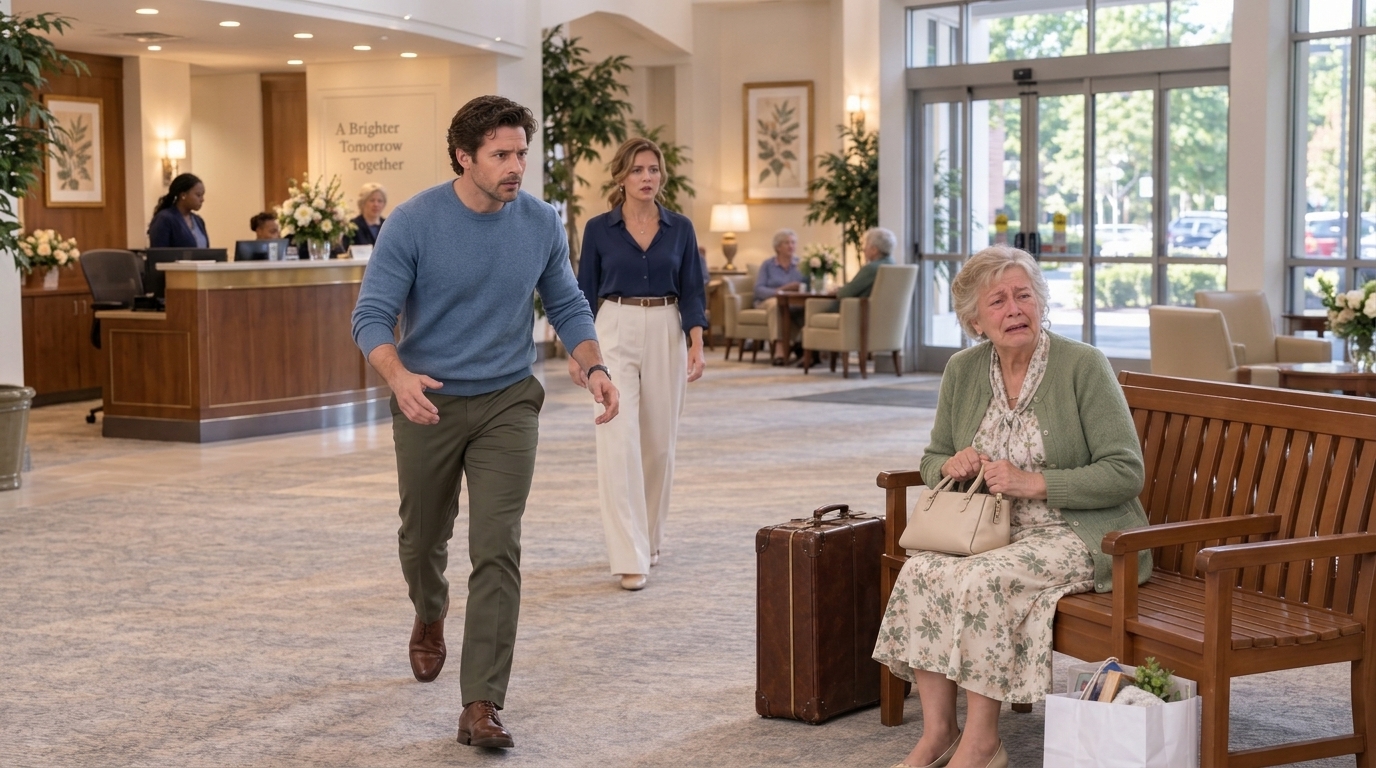
I couldn’t stop thinking about that suitcase.
One brown suitcase.
A grocery bag of medications.
And an eighty-one-year-old woman sitting alone in a lobby, waiting for someone who wasn’t coming back.
One afternoon, my aunt Patricia called me.
She was Dad’s younger sister.
“Ivan, what’s going on?”
I took a breath.
“What have you heard?”
She hesitated.
“Arthur says Grandma is confused and you’re manipulating her.”
I closed my eyes.
“Of course he does.”
Patricia sounded worried.
“He says you’ve convinced her to challenge the property transfer because you want the house.”
I stared at the wall.
“Patricia, I didn’t even know my name was on the deed until Grandma and I went to the courthouse.”
She went quiet.
I continued.
“I never signed it.”
Silence.
Then she whispered, “What?”
I explained everything.
The nursing facility.
The withdrawals.
The disputed deed.
The moving truck.
By the time I finished, Patricia was crying.
“Oh, Ivan.”
I swallowed.
“She needs family right now.”
Patricia nodded.
“Can I speak with her?”
“Of course.”
Grandma was sitting beside me.
I handed her the phone.
“It’s Aunt Patricia.”
Grandma smiled.
“Hello, sweetheart.”
Then she listened.
Her expression softened.
“No, darling. I’m not confused.”
She paused.
“Yes, I remember your birthday.”
Another pause.
Grandma laughed.
“Of course I remember the time you broke your arm falling out of the apple tree. Your father nearly fainted.”
Patricia began crying on the other end.
Grandma’s eyes filled too.
And for the first time since this nightmare began, I realized my parents’ story was starting to fall apart.
The financial investigation uncovered something else.
The twenty-five-thousand-dollar transfer to the real estate escrow account had been connected to a deposit on a condominium.
Not for Grandma.
For my parents.
The condominium was in a retirement community near a golf course.
My father had told relatives he and Mom were finally purchasing their dream retirement property.
But the money trail suggested that at least part of the deposit had come from Grandma’s account.
When Rebecca explained this, I felt physically sick.
“They were using her savings to buy themselves a condo?”
Rebecca remained careful.
“The records show a connection. We’re still determining the full circumstances and legal responsibility.”
I stared at the documents.
Grandma sat beside me.
She looked tired.
Then she asked quietly, “Arthur used my money for his retirement?”
Rebecca looked at her.
“That’s one of the issues we’re examining.”
Grandma nodded slowly.
For several seconds, she said nothing.
Then she whispered, “I would have helped him if he’d asked.”
My heart broke.
She looked at me.
“I would have.”
I squeezed her hand.
“I know.”
She wiped her eyes.
“But he didn’t ask.”
Two months later, the disputed property transfer reached a critical hearing.
Grandma wore a navy dress and her favorite pearl earrings.
She insisted on walking into the courthouse without assistance.
I stayed beside her.
Dad and Mom were already seated with their attorney.
Dad looked older.
Mom looked furious.
When Grandma entered, Dad stood.
“Mom.”
She nodded politely.
“Arthur.”
He glanced toward me.
Then said, “We can still settle this privately.”
Grandma looked at him.
“We tried privately.”
He swallowed.
She continued.
“You called me forgetful.”
Dad looked away.
“You took my money.”
Silence.
“You left me in a nursing facility.”
Mom shifted in her seat.
Grandma lifted her chin.
“And you tried to sell my home.”
Dad opened his mouth.
Grandma raised one hand.
“No more.”
Then she walked past him.
And took her seat.
The hearing lasted several hours.
The court reviewed the deed, the circumstances surrounding its execution, and the available evidence concerning the signatures.
The parties presented documents.
Witnesses answered questions.
The disputed authorization was examined.
And the court considered the urgent need to protect the property while the underlying issues were resolved.
When the judge announced that the protective orders would remain in place, Grandma squeezed my hand.
It wasn’t the end.
But it meant the house couldn’t simply be sold while the dispute continued.
I looked at her.
She smiled faintly.
“We’re getting somewhere.”
I nodded.
“Yes, Grandma.”
But as we left the courtroom, Dad approached us.
His face was pale.
“Ivan, I need to speak with you.”
I stopped.
“What?”
He glanced at Grandma.
“Alone.”
Grandma shook her head.
“Anything you have to say to Ivan, you can say in front of me.”
Dad swallowed.
Then whispered something that made my stomach drop.
“The house wasn’t supposed to be sold to strangers.”
I stared at him.
“What does that mean?”
He looked toward the courthouse doors.
Then back at me.
“It was supposed to be transferred into a company.”
My chest tightened.
“What company?”
Dad hesitated.
Then said, “One that already exists.”
I stared at him.
“And who owns it?”
He looked directly at me.
Then whispered, “Your mother.”
PART 5
For a moment, I thought I’d misunderstood.
“My mother?”
Dad nodded.
“Wendy.”
I stared at him.
“Why would Grandma’s house be transferred into a company owned by Mom?”
He looked exhausted.
“Because we were trying to protect the family assets.”
Grandma let out a short, bitter laugh.
“Protect them from whom, Arthur?”
Dad looked at her.
“Mom, you don’t understand.”
Grandma’s expression hardened.
“I understand perfectly well.”
I took a breath.
“Dad, start from the beginning.”
He looked toward the courthouse hallway.
Then lowered his voice.
“Wendy formed a property company last year.”
I stared at him.
“What company?”
“Sterling Heritage Holdings.”
I frowned.
I’d never heard of it.
Dad continued.
“She wanted to consolidate the family properties.”
Grandma folded her arms.
“My house isn’t one of your family investments.”
Dad looked down.
“I know.”
“Then why was it included?”
He swallowed.
“Because we thought it would make things easier.”
I stared at him.
“Easier for what?”
He didn’t answer.
Grandma stepped closer.
“Arthur.”
Dad looked at her.
She spoke quietly.
“Tell the truth.”
His shoulders sagged.
Then he whispered, “We needed collateral.”
My stomach tightened.
“Collateral?”
Dad nodded.
“For a business loan.”
I stared at him.
“What business loan?”
He rubbed his forehead.
“Wendy wanted to invest in a development project.”
Grandma went completely still.
I looked between them.
“How much?”
Dad hesitated.
Then whispered, “Four hundred thousand dollars.”
For several seconds, nobody spoke.
I felt cold.
“You were going to use Grandma’s house to secure a four-hundred-thousand-dollar loan?”
Dad looked away.
“We thought the investment would pay off.”
Grandma stared at him.
Then asked the question that finally broke his composure.
“And what would have happened if it didn’t?”
Dad said nothing.
Grandma nodded slowly.
“You would have lost my home.”
His eyes filled.
“Mom…”
She stepped backward.
“No.”
He reached toward her.
She raised one hand.
“Don’t.”
Rebecca joined us moments later.
We explained what Dad had said.
Her expression became serious.
She asked him whether he was willing to provide the information through his attorney.
Dad hesitated.
Then nodded.
“I’ll talk to my lawyer.”
Rebecca turned toward Grandma.
“Mrs. Sterling, this information may be relevant to the property dispute.”
Grandma nodded.
“I understand.”
Then she looked at Dad.
“I want you to know something.”
He swallowed.
“What?”
“I spent forty-eight years in that house.”
Her voice trembled.
“Your father and I paid the mortgage while raising three children.”
Dad looked down.
“We repaired the roof ourselves.”
She paused.
“We planted trees.”
Her eyes filled.
“We buried two dogs in the backyard.”
Dad began crying.
Grandma continued.
“And you were willing to risk all of it because you wanted to make money.”
He shook his head.
“Mom, I didn’t think—”
“No.”
She wiped her eyes.
“You didn’t.”
Then she turned away.
I walked beside her.
And for the first time in my life, I saw my father standing alone in a courthouse hallway, unable to talk his way out of what he’d done.
The following months were difficult.
The court proceedings continued.
The property company records were examined.
The proposed financing arrangement came under scrutiny.
And the financial investigation expanded to include the attempted use of Grandma’s property.
My parents’ attorneys worked to resolve the civil disputes.
The bank reviewed the withdrawals.
Grandma’s financial authority was restored and safeguarded.
The disputed deed was ultimately set aside through the legal process, restoring the property records to reflect Grandma’s ownership.
Certain funds were returned, and arrangements were made to address additional financial losses.
Not every issue was resolved quickly.
And not every consequence came with a dramatic announcement.
But the important thing was that Grandma regained control.
Her house.
Her accounts.
Her decisions.
Her life.
When Rebecca called to tell us the property matter had been resolved, Grandma was sitting at my kitchen table.
She was doing a crossword puzzle.
I answered the phone.
Listened.
Then looked at her.
“Grandma?”
She glanced up.
“Yes, sweetheart?”
I smiled.
“The house is yours again.”
She stared at me.
For a moment, she didn’t move.
Then she slowly set down her pencil.
“Mine?”
I nodded.
“The property records have been corrected. Rebecca says the legal process is complete on that issue.”
Grandma covered her mouth.
Her eyes filled.
Then she began crying.
Not loudly.
Not dramatically.
Just quiet tears.
I sat beside her.
She took my hand.
“Your grandfather would be so relieved.”
I swallowed.
“I know.”
She smiled through her tears.
Then whispered, “Can we go home?”
I nodded.
“Of course.”
We returned to the farmhouse the following Saturday.
Aunt Patricia came with us.
So did several cousins.
We brought cleaning supplies.
Groceries.
Fresh flowers.
And a large homemade lasagna.
The house needed attention.
Some furniture had been moved.
Several rooms were dusty.
The garden was overgrown.
But the structure was sound.
And Grandma was home.
She walked slowly through the living room.
Touched the fireplace mantel.
Then stopped beside a framed photograph of Grandpa.
She picked it up.
Held it against her chest.
And whispered, “We’re back, Henry.”
I turned away.
Because I couldn’t stop crying.
Over the next few weeks, we helped Grandma settle in.
She had her locks changed after regaining possession and confirming the appropriate legal arrangements.
We updated her financial accounts.
Installed better exterior lighting.
Organized her medications.
And arranged transportation for appointments.
But we didn’t take over her life.
That mattered.
Because my parents had spent months convincing everyone she couldn’t make decisions.
I wasn’t going to replace their control with my own.
Grandma chose what help she wanted.
She decided when she needed assistance.
She selected her own doctors.
Reviewed her own bills.
And made her own plans.
Sometimes she asked me to explain something.
Sometimes she told me to mind my business.
And every time she did, I smiled.
Because that was Grandma.
One afternoon, while we were sitting on the porch, she looked at me.
“Ivan?”
“Yeah?”
“Do you think I was foolish?”
I frowned.
“For what?”
“For trusting your father.”
My heart tightened.
I shook my head.
“No.”
She stared at the garden.
“I raised him.”
I nodded.
“I know.”
“I thought he was a good man.”
I took a breath.
“Grandma, loving someone doesn’t mean you can predict every choice they’ll make.”
She looked at me.
“But I gave him access to everything.”
“Because you believed he’d help you.”
She nodded.
I squeezed her hand.
“That doesn’t make what he did acceptable.”
Her eyes filled.
She whispered, “I never thought I’d need to protect myself from my own son.”
I didn’t know what to say.
So I simply held her hand.
Dad eventually wrote Grandma a letter.
It arrived in a plain white envelope.
No return address.
Grandma recognized his handwriting immediately.
She placed it on the kitchen table.
Then left it there for three days.
On the fourth morning, she opened it.
I was making coffee.
She read quietly.
Then folded the pages.
I looked at her.
“Are you okay?”
She nodded.
“I’m sad.”
I sat beside her.
“Do you want to talk about it?”
She hesitated.
Then said, “He apologized.”
I nodded.
“He said he convinced himself he was helping the family.”
I waited.
“He said Wendy pushed him into the investment.”
Grandma looked at me.
“But he signed the papers.”
I nodded.
“Yes.”
She stared at the letter.
“He’s still trying to explain it as though he had no choice.”
I squeezed her hand.
Grandma sighed.
“I love my son.”
“I know.”
“But I don’t trust him.”
I nodded.
“You don’t have to.”
She looked at me.
“Can I love him without letting him manage my life?”
I smiled gently.
“Absolutely.”
She took a breath.
“Then that’s what I’m going to do.”
Mom never apologized directly.
She sent messages through relatives.
She claimed the situation had been exaggerated.
She said Grandma was being manipulated.
She accused me of turning the family against her.
But I stopped responding.
Because I’d learned something.
You can’t reason someone into taking responsibility if they’re more interested in protecting their image than facing what they’ve done.
And Grandma deserved peace.
Not endless arguments.
A year after the nursing facility incident, Grandma celebrated her eighty-second birthday.
We held the party at the farmhouse.
Aunt Patricia decorated the porch with yellow flowers.
My cousins brought food.
The neighbors came.
And Grandma insisted on making her famous peach cobbler.
I offered to help.
She waved me away.
“Ivan, go set the table.”
I laughed.
“Yes, ma’am.”
She smiled.
“That’s better.”
By late afternoon, the house was full of laughter.
Children ran through the yard.
Music played softly.
Someone brought a birthday cake.
And Grandma sat at the head of the dining table wearing a pale blue dress.
She looked happy.
Not simply relieved.
Happy.
When everyone gathered to sing, she laughed and covered her face.
“Oh, stop making such a fuss.”
But she was smiling.
Afterward, she stood and tapped her glass.
“I want to say something.”
The room grew quiet.
She looked around.
“A year ago, I thought I’d lost my home.”
My chest tightened.
She continued.
“I thought the people I trusted most had decided I was no longer capable of living my own life.”
Several relatives wiped their eyes.
Grandma looked at me.
“But my grandson drove nearly two hundred miles to come get me.”
I swallowed.
She smiled.
“He didn’t ask whether I was worth the trouble.”
My eyes filled.
“He just came.”
She took a breath.
“And when I told him I wanted to go to the courthouse, he didn’t laugh at me.”
A few people chuckled.
Grandma grinned.
“He looked worried, but he drove.”
Everyone laughed.
Then her expression softened.
“I want all of you to remember something.”
The room became quiet.
“Getting older doesn’t mean your life belongs to someone else.”
She looked around the table.
“It doesn’t mean your home is theirs.”
Her voice trembled.
“It doesn’t mean your money is theirs.”
Then she smiled.
“And it certainly doesn’t mean they get to decide when you’re finished living.”
The room erupted in applause.
I stood.
Walked toward her.
And hugged her.
She whispered, “Thank you for believing me.”
I held her tighter.
“Always, Grandma.”
Later that evening, after the guests had left, Grandma and I sat on the porch swing.
The sun was setting.
The roses were blooming.
A gentle breeze moved through the trees.
Grandma held a cup of tea.
I sat beside her.
For a while, neither of us spoke.
Then she said, “Ivan?”
“Yeah?”
“Do you remember what I told you in the car that day?”
I smiled.
“Which part?”
She laughed.
“The part where I told you not to call your parents.”
I nodded.
“I remember.”
She looked toward the driveway.
“I was scared.”
I turned toward her.
“You didn’t look scared.”
She smiled sadly.
“I know.”
She took a sip of tea.
“But I was.”
I squeezed her hand.
“Why didn’t you tell me?”
She looked at me.
“Because I needed you to believe I knew what I was doing.”
I swallowed.
“Grandma, I would have believed you even if you were crying.”
Her eyes filled.
She smiled.
“I know that now.”
Sometimes people ask me why I drove 190 miles that day.
They ask why I didn’t simply tell the nursing facility to contact my parents.
Why I got involved in something that could have destroyed my relationship with them.
I always give the same answer.
Because Grandma called me when I was little and frightened.
She came when I was sick.
She attended my school plays.
She helped me through my first heartbreak.
She sat beside me after Grandpa died.
And she never once made me feel like I was too much trouble.
So when a stranger called and said my grandmother was sitting alone in a nursing facility lobby with a suitcase, I didn’t need time to think.
I got in my car.
And I went.
I didn’t know about the bank withdrawals.
I didn’t know about the deed.
I didn’t know about the moving truck.
I didn’t know my parents were preparing to use her home for a business deal.
I only knew one thing.
Grandma needed someone.
And I was going to be there.
A few months after her birthday, Grandma asked me to help organize her estate documents.
We met with Rebecca.
Grandma reviewed her will.
Her medical preferences.
Her financial arrangements.
And the people she wanted involved if she ever needed assistance.
She made those decisions herself.
Clearly.
Confidently.
Without anyone rushing her.
When the meeting ended, Rebecca smiled.
“Mrs. Sterling, everything is in order.”
Grandma nodded.
“Good.”
Then she looked at me.
“Ivan, there’s something I want you to know.”
I smiled.
“What?”
She took my hand.
“I don’t want you thinking you have to save me every time something goes wrong.”
I laughed softly.
“Grandma…”
She shook her head.
“I’m serious.”
I nodded.
She continued.
“You have your own life to live.”
I squeezed her hand.
“I know.”
She smiled.
“But I’m glad you came that day.”
My throat tightened.
“So am I.”
I still remember the sound of Grandma’s seatbelt clicking into place.
The way she looked straight ahead.
The way she said, “Don’t call them.”
And the certainty in her voice when she told me to drive to the courthouse.
At the time, I thought I was rescuing a frightened old woman.
But as the months passed, I realized something.
Grandma wasn’t helpless.
She was determined.
She had recognized that something was wrong.
She had preserved documents.
She had questioned the withdrawals.
She had remembered the promises people made.
And when the people she trusted betrayed her, she found someone who would listen.
I didn’t save her by taking control.
I helped her regain the control that should never have been taken away.
That was the difference.
And it changed the way I understood family forever.
My parents believed that leaving Grandma in a nursing facility would make her disappear quietly while they took control of her money and home. Instead, the woman they underestimated walked into a courthouse, challenged what they’d done, and reclaimed the life they thought they could take from her.
And every time I visit that old farmhouse and see her sitting on the porch, smiling beneath the roses Grandpa planted, I remember the most important lesson she ever taught me.
Growing old doesn’t make someone powerless. And loving your family never means surrendering your dignity.
THE END THANK YOU FOR READING !!!