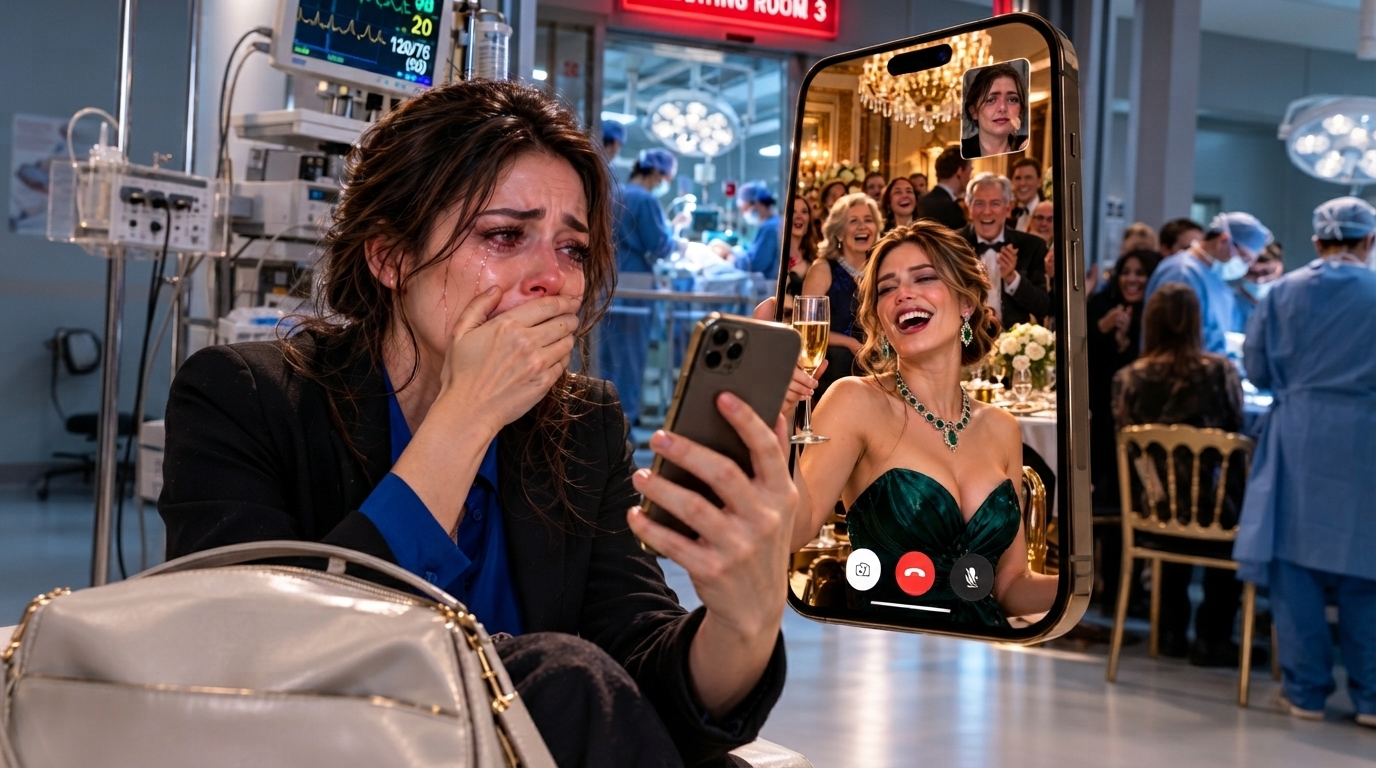
PART 3
The operating room doors opened at 7:42 p.m.
I stood so quickly that my knees nearly buckled.
A woman in blue surgical scrubs stepped into the hallway,
pulling off her mask.
Her name was Dr. Rebecca Lawson,
the pediatric neurosurgeon who had spent
the last five hours trying to save my daughter’s spinal cord.
There was blood on the cuff of her gown.
My heart stopped.
“Dr. Lawson?”
She looked at me.
“Mrs. Bennett, I need you to come with me.”
I couldn’t move.
“Is Maya alive?”
Her expression softened immediately.
“Yes. Maya is alive.”
I pressed my hand against my mouth.
“Thank God.”
Dr. Lawson guided me toward a small consultation room.
I hated that room.
I’d spent enough time in hospitals to know that doctors rarely invited parents into
private rooms to announce something simple.
“Please,” I whispered. “Just tell me.”
She sat across from me.
The surgery was technically successful.
We stabilized the damaged vertebrae and relieved the pressure around Maya’s spinal cord.
I began crying.
“But?”
Dr. Lawson took a breath.
There was significant swelling and injury.
We won’t know the full extent of her neurological recovery until she’s awake and we’ve had time to assess her.”
I stared at her.
“Will she walk?”
The doctor didn’t look away.
“I can’t promise that tonight.”
My heart shattered.
She continued gently.
“Some children recover more function than we initially expect. Others need extensive rehabilitation and may have lasting limitations. Right now, the most important thing is that Maya survived the procedure and is stable enough to transfer to intensive care.”
I nodded, although I could barely understand the words.
Stable.
Alive.
My daughter was alive.
That was enough for the moment.
Dr. Lawson reached across the table.
“You did the right thing bringing her here immediately.”
I closed my eyes.
Maya had been in the back seat of my car when the truck struck us.
We had been driving home from her piano lesson.
The truck driver had lost control while approaching an intersection.
I remembered the terrible sound of metal folding.
The shattered glass.
Maya screaming.
Then the sudden silence that frightened me more than anything.
I had crawled through the wreckage to reach her.
She was conscious, but she couldn’t move her legs.
“Mommy,” she’d whispered. “Why can’t I feel my feet?”
Those words had followed me through every minute of the surgery.
I looked at Dr. Lawson.
“When can I see her?”
“As soon as she’s settled in the pediatric ICU.”
I nodded.
“Thank you.”
She stood.
Then paused.
“Mrs. Bennett, do you have someone here with you?”
I looked down.
For a moment, I almost said yes.
I had parents.
A sister.
Aunts.
Uncles.
Cousins.
Thirty relatives who were apparently enjoying champagne beneath crystal chandeliers.
But none of them had come.
“No,” I whispered.
Dr. Lawson’s expression softened.
“Would you like us to contact a hospital social worker or support person?”
I wiped my face.
“Yes, please.”
She nodded.
“We’ll help you.”
When she left, I sat alone for several minutes.
Then my phone vibrated.
Again.
And again.
I looked at the screen.
Twenty-six missed calls.
Eleven messages.
Most were from my mother.
Elena, answer me.
What did you do to the accounts?
The event coordinator says the remaining balance hasn’t been paid.
You are embarrassing this family.
Then came a message from Chloe.
YOU CAN’T STOP THE PAYMENTS! MOM ALREADY SIGNED THE PAPERS USING YOUR NAME!
I stared at it.
My grief temporarily gave way to confusion.
What papers?
I opened our conversation.
Me: What papers did Mom sign?
Chloe replied almost immediately.
Chloe: Don’t play stupid.
Me: Tell me exactly what she signed.
Three dots appeared.
Disappeared.
Then appeared again.
Chloe: The sponsorship agreement. The club said the payment authorization had to come from you, so Mom handled it.
My stomach tightened.
Me: Did she sign my name?
No answer.
I typed again.
Me: Chloe, did Mom sign my name on a financial document without permission?
This time, Chloe called.
I declined.
She called again.
I declined again.
Then a message appeared.
You were supposed to pay anyway. Stop acting like this is some huge crime.
I stared at those words.
Then I took a screenshot.
I forwarded the conversation to my attorney, Natalie Price.
Natalie had represented my company for nearly six years. She was careful, practical, and not easily rattled.
I sent one additional message.
Possible unauthorized signature on a private sponsorship agreement. Please preserve this and call when available. Maya is out of surgery and going to ICU.
Natalie replied within minutes.
I’m relieved Maya survived. Stay with her. I’ll have our team preserve the relevant records and review the authorization tomorrow. Do not confront anyone about the document tonight.
I put my phone away.
For once, I listened.
Because no matter what my mother had signed, no matter how much money was involved, none of it mattered more than the little girl being wheeled into intensive care.
At 9:16 p.m., a nurse came to get me.
I followed her through the pediatric ICU.
The room was dim.
Machines hummed softly.
And there, beneath a white hospital blanket, lay my daughter.
Maya looked impossibly small.
Her dark curls had been pushed away from her forehead.
A breathing tube remained in place while the team monitored her recovery from anesthesia.
There were lines attached to her arms.
A monitor displayed her heartbeat.
And beneath the blanket, I knew there were dressings covering the incision along her back.
I approached slowly.
“Hi, baby.”
My voice broke.
I touched her hand.
“Mommy’s here.”
The nurse moved a chair beside the bed.
“You can sit with her.”
I sat.
Then I leaned forward and kissed Maya’s forehead.
“You did so good, sweetheart.”
Tears rolled down my cheeks.
“I’m so proud of you.”
I stayed there through the night.
Sometimes I watched the monitors.
Sometimes I prayed.
Sometimes I simply held her hand.
At two in the morning, my phone vibrated again.
This time, it was my father.
Your mother is very upset. Call her and fix this.
I stared at the message.
Then typed:
Maya survived surgery. She’s in intensive care. Her doctors cannot yet tell me whether she’ll walk again.
I waited.
His reply came three minutes later.
We’ll discuss that tomorrow. Your sister’s celebration was ruined.
I read it twice.
Then turned off notifications from my family.
Something inside me had finally become clear.
My parents didn’t misunderstand the seriousness of Maya’s condition.
They knew.
They simply believed Chloe’s happiness mattered more.
For thirty-six years, I had tried to earn a place in my family.
I had been the responsible daughter.
The quiet daughter.
The daughter who solved problems.
When my father’s business failed, I covered his debts.
When my mother’s car broke down, I bought her another.
When Chloe wanted to study abroad, I paid her tuition.
When my parents wanted to join an exclusive country club, I covered the membership.
I had even paid for Chloe’s doctoral program expenses when her funding ran short.
And somehow, none of it had been enough.
They still called me the unsuccessful freelancer.
The daughter who couldn’t keep a husband.
The woman who spent too much time working.
Maya’s father, Michael, had died from complications following an illness when she was four.
Since then, I’d raised her alone.
My parents had promised to help.
Instead, they criticized everything I did.
They complained that I worked too much.
Then they complained that I didn’t earn enough.
They said Maya was spoiled because I bought her books.
They said she was too sensitive because she cried when adults shouted.
And Chloe called her “the little drama queen” whenever she needed attention.
I had tolerated it.
I had told myself family relationships were complicated.
I had told myself Maya needed grandparents.
But sitting beside her hospital bed, I finally understood that having grandparents meant nothing if those grandparents couldn’t show her basic compassion.
At seven the next morning, Maya began waking.
Her eyelids fluttered.
I leaned forward.
“Sweetheart?”
Her eyes opened slightly.
She looked frightened.
“Mommy?”
I nearly collapsed with relief.
“I’m here.”
Her lips trembled.
“Did I die?”
My heart broke.
“No, baby. You’re here with me.”
She looked around.
“Why does everything hurt?”
I brushed her hair back.
“You were in an accident. The doctors fixed the bones in your back, and they’re taking very good care of you.”
She began crying.
I held her hand.
“I’m right here.”
Then she whispered the question I’d been dreading.
“Can I walk?”
I swallowed.
“The doctors don’t know yet, sweetheart. Your body needs time to heal.”
Her eyes filled.
“But I want to dance again.”
Maya loved dancing.
She took ballet lessons every Wednesday.
She practiced turns in our kitchen.
She wore pink slippers until the soles were almost transparent.
I leaned close.
“I know, baby.”
She began sobbing.
I kissed her forehead.
“Whatever happens, we’ll work through it together.”
She looked at me.
“Promise?”
I squeezed her hand.
“Promise.”
And in that moment, I knew exactly what I needed to do.
Not to punish my family.
Not to humiliate Chloe.
But to make sure Maya never again had to compete with them for my attention, my time, or my love.
At nine-thirty, Natalie called.
I stepped into the hallway after asking the nurse to stay with Maya.
“Elena?”
“Hi.”
“How is she?”
“Awake. Frightened. In pain.”
Natalie’s voice softened.
“I’m so sorry.”
I swallowed.
“Did you find the document?”
“Yes.”
My stomach tightened.
“What is it?”
“A private event sponsorship agreement with the country club.”
I closed my eyes.
“How much?”
Natalie paused.
“Eighty-six thousand dollars.”
I gripped the phone.
“What?”
“The total event budget was higher, but this agreement committed you personally to an eighty-six-thousand-dollar sponsorship package, subject to its terms.”
I stared at the wall.
“That’s insane.”
“There is a signature purporting to be yours.”
I closed my eyes.
“I didn’t sign anything.”
“I understand.”
“Did my mother?”
“We have not established who signed it. But the document was submitted from an email address associated with your mother, and the club’s coordinator says she represented herself as authorized to act for you.”
My heart began pounding.
Natalie continued.
“We’ll obtain the original records, review the signature and any electronic authentication, and notify the club that you dispute the authorization.”
I nodded.
“Good.”
“Elena, there’s another issue.”
I felt exhausted.
“What now?”
“The sponsorship agreement references your company.”
I froze.
“What?”
“Your company’s name appears as the proposed sponsor.”
I closed my eyes.
My mother hadn’t merely tried to charge me for Chloe’s party.
She had apparently tried to commit my business to it.
Natalie continued.
“We’ve confirmed that no authorized company officer approved the agreement. We’ll address that immediately.”
I leaned against the wall.
Then whispered, “She knew I owned the company?”
Natalie paused.
“We don’t know what she knew.”
I stared ahead.
For years, my parents had believed I worked in basic data entry.
They knew I had a small consulting business.
But they had no idea that business had grown into a medical logistics software company worth forty million dollars.
At least, that was what I believed.
Then Natalie said something that made my blood run cold.
“Elena, the document includes your corporate title.”
I stopped breathing.
“What?”
“It identifies you as founder and chief executive officer.”
I stared at the wall.
My mother had known.
Maybe not everything.
But enough.
And she’d kept mocking me while using my company name to finance Chloe’s celebration.
Then Natalie added:
“There is also an email from Chloe discussing how to keep the sponsorship from appearing in the family accounts.”
I closed my eyes.
For the first time, I wondered whether the graduation party had been about celebrating Chloe at all.
Or whether my family had been quietly using me as their private bank for years.
PART 4
By the third day after Maya’s surgery, my parents’ financial arrangements had begun to change.
Not because I’d emptied their bank accounts.
I hadn’t.
Not because I’d canceled payments I was legally required to make.
I hadn’t done that either.
My financial director, Sarah Mitchell, had carefully separated personal gifts from binding obligations.
The mortgage assistance I’d been voluntarily providing my parents was scheduled to end after the current payment cycle.
The monthly allowances I’d been sending Chloe were discontinued.
The automatic payments for my parents’ country club membership were stopped before the next billing period.
And the accounts and cards I personally owned, which I’d allowed family members to use, were restricted after we reviewed the authorized users and existing charges.
I instructed Sarah to handle everything properly.
No surprises that would violate contracts.
No misuse of company funds.
No retaliation.
Just an end to voluntary support that had become an expectation.
Sarah had worked with me since the early days of the company.
She remembered when I built our first software prototype at my kitchen table.
She remembered the nights I slept beside my laptop.
She remembered the hospital administrators who told me my ideas were unrealistic.
And she remembered the first contract that changed everything.
When I called her from Maya’s hospital room, she listened quietly.
Then said, “Elena, may I ask you something?”
“Of course.”
“Why have you been supporting all these people?”
I looked toward Maya.
She was asleep.
A stuffed rabbit rested beside her pillow.
“Because they’re my family.”
Sarah paused.
“And have they been supporting you?”
I didn’t answer.
She continued gently.
“You don’t have to earn love by paying for it.”
I closed my eyes.
“I know.”
But the truth was, I hadn’t known.
Not really.
For years, I’d believed that if I gave enough, helped enough, sacrificed enough, eventually my parents would look at me with the same pride they showed Chloe.
Chloe had always been the golden child.
When she won a school spelling competition, my parents threw a party.
When I graduated from college with honors, they sent flowers and said they were busy.
When Chloe received a scholarship, they framed the announcement.
When I signed my company’s first million-dollar contract, they asked whether I had finally found a stable job.
I had laughed it off.
Then worked harder.
When Chloe decided to pursue her doctorate, my parents called it the greatest achievement in our family’s history.
I agreed that earning a PhD was impressive.
I was proud of her.
I even helped pay for research expenses.
But somehow, her success required everyone else’s sacrifice.
And mine required silence.
The worst part was that Maya had noticed.
A year earlier, she’d asked me why Grandma had a wall of Chloe’s photographs but only one small picture of her.
I told her Grandma was simply forgetful.
Maya had nodded.
Then asked, “Does she forget me because I’m not important?”
I had hugged her.
Told her she was important.
Promised Grandma loved her.
Now, sitting beside Maya’s hospital bed, I hated myself for making promises on behalf of people who had never earned them.
On the fourth morning, my mother arrived at the hospital.
I was standing near the nurses’ station when I saw her.
She wore a cream-colored coat, pearl earrings, and the expression she always used when she believed someone had embarrassed her.
“Elena.”
I turned.
“Mom.”
She approached quickly.
“We need to talk.”
I looked toward Maya’s room.
“Not here.”
She frowned.
“Don’t be ridiculous.”
I lowered my voice.
“Maya is recovering from spinal surgery. You are not going to create a scene outside her room.”
My mother stared.
Then folded her arms.
“Fine. Let’s go somewhere private.”
I asked the nurse to keep an eye on Maya and followed my mother into a small family consultation room.
She sat down.
Then immediately began speaking.
“Your father and I are extremely disappointed in you.”
I stared.
“Disappointed?”
“Yes.”
I sat across from her.
“Mom, Maya almost died.”
She waved a hand.
“We know that.”
“Do you?”
Her expression hardened.
“Don’t take that tone with me.”
I took a slow breath.
“Have you asked how she’s doing?”
My mother looked irritated.
“Of course we’re concerned.”
“Then ask.”
She stared.
I waited.
Finally, she said, “How is Maya?”
I looked at her.
“She survived surgery. The doctors are monitoring her spinal cord injury. We don’t know how much movement she’ll recover.”
My mother’s expression softened slightly.
“Well, I’m glad she’s alive.”
I waited.
Then she added, “But that doesn’t excuse what you did to Chloe.”
I felt something inside me go still.
“What did I do to Chloe?”
“You ruined her graduation.”
I stared.
“She earned her doctorate after years of work. Important people attended that party. And you embarrassed us in front of everyone.”
I looked down at my hands.
For the first time, I wasn’t shaking.
“Mom, I was in a hospital while surgeons operated on my daughter’s spine.”
She sighed.
“And there was nothing you could do to help them.”
I looked up.
“There was something I could do.”
She frowned.
“What?”
“Be here when Maya woke up.”
My mother rolled her eyes.
“Children recover. They’ll forget these things.”
I stared at her.
“No.”
My voice was quiet.
“They don’t.”
She looked away.
Then reached into her handbag.
She pulled out a folder.
“I need you to sign this.”
I almost laughed.
“What is it?”
“A payment authorization.”
I stared.
“For Chloe’s party?”
“Yes.”
I leaned back.
“You came to the hospital to ask me to pay for the party?”
She looked offended.
“You already agreed to sponsor it.”
“No, I didn’t.”
“Chloe said you would.”
“Chloe doesn’t get to make financial commitments on my behalf.”
My mother frowned.
“Don’t be difficult.”
I took a breath.
“Did you sign my name on the sponsorship agreement?”
She went still.
Then said, “I handled the paperwork.”
“That wasn’t my question.”
Her face reddened.
“I’ve signed things for you before.”
“With my permission?”
She hesitated.
I leaned forward.
“Mom, did you sign my name without asking me?”
She looked away.
“I knew you’d approve.”
I stared.
“Did you imitate my signature?”
She slammed the folder onto the table.
“Oh, for heaven’s sake, Elena! You’re acting like I robbed a bank!”
I closed my eyes.
Then opened them.
“You used my name on a financial document.”
She waved her hand.
“It was for your sister.”
“And you used my company name.”
Her expression changed.
I watched carefully.
She looked toward the door.
Then back at me.
“So you finally admit you have money.”
I felt my stomach tighten.
“What?”
She laughed bitterly.
“You’ve been hiding it for years.”
I stared.
“How long have you known?”
She crossed her arms.
“Chloe found your company online.”
I went silent.
My mother continued.
“She said it was worth millions.”
I swallowed.
“And neither of you thought to ask me?”
She shrugged.
“We assumed you didn’t want to share.”
I almost laughed.
For years, I’d paid their bills.
Bought their cars.
Covered their memberships.
Funded Chloe’s education.
And they had assumed I was selfish because I hadn’t told them exactly how wealthy I was.
I looked at my mother.
“How much have I given you over the years?”
She frowned.
“What?”
“Do you know?”
She waved her hand.
“You’re always exaggerating.”
I opened my laptop.
I’d asked Sarah to prepare a summary of voluntary personal support.
I turned the screen toward my mother.
The total covered nearly seven years.
Mortgage assistance.
Vehicle payments.
Insurance.
Country club fees.
Travel expenses.
Chloe’s tuition support.
Research expenses.
Living allowances.
And numerous other payments.
The number at the bottom was $1,184,600.
My mother stared.
For the first time, she seemed genuinely speechless.
I waited.
Then she whispered, “That can’t be right.”
“It is.”
She looked up.
“You spent that much?”
I nodded.
“On this family.”
Her eyes moved back to the screen.
Then she said something that almost made me laugh.
“Well, you can clearly afford it.”
I closed the laptop.
There it was.
The entire problem.
Not gratitude.
Not concern.
Not even surprise that I’d sacrificed so much.
Just the belief that because I had money, they were entitled to it.
I stood.
“This conversation is over.”
My mother rose.
“Elena, sit down.”
“No.”
She looked furious.
“You cannot abandon your family over one misunderstanding.”
I stared.
“One misunderstanding?”
She hesitated.
I continued.
“You ignored twelve calls while Maya was being rushed into emergency surgery.”
My voice trembled.
“You let Chloe mock her.”
I took a breath.
“You ordered me to leave the hospital and serve food at a party.”
My mother’s expression hardened.
“And you threatened to disown me if I didn’t.”
She looked away.
I continued.
“Then you came here, not to comfort Maya, but to demand more money.”
My mother opened her mouth.
I raised my hand.
“No.”
She froze.
“For thirty-six years, I’ve tried to be the daughter you wanted.”
Tears filled my eyes.
“I worked hard. I helped you. I made excuses for you.”
My voice cracked.
“But I will not teach my daughter that love means accepting cruelty.”
My mother stared.
Then whispered, “You’re choosing Maya over us?”
I looked at her.
“Yes.”
The answer came without hesitation.
“Every single time.”
Her face twisted.
“You’ll regret this.”
I shook my head.
“No, Mom.”
I opened the door.
“I regret waiting so long.”
She stood motionless.
Then hissed, “Don’t come crawling back when you need family.”
I looked at her.
“I needed family four nights ago.”
She said nothing.
“And you chose a party.”
Then I walked away.
When I returned to Maya’s room, she was awake.
Her eyes followed me.
“Mommy?”
I smiled.
“Hi, sweetheart.”
“Was Grandma here?”
I stopped.
“Yes.”
Maya looked toward the door.
“Did she come see me?”
My heart broke.
I sat beside her.
“No, baby.”
Her face fell.
“Oh.”
I took her hand.
“Listen to me, Maya.”
She looked up.
“Some grown-ups don’t always make good choices.”
She nodded slowly.
“And when they don’t, it’s not because children aren’t important.”
Her eyes filled.
I squeezed her hand.
“You are important. You are loved. And you will never have to earn that love.”
She began crying.
I leaned forward and hugged her carefully.
Then she whispered, “Can we just be our own family?”
I closed my eyes.
“Yes, sweetheart.”
I kissed her forehead.
“We can.”
That afternoon, Natalie called with an update.
The country club had received our notice disputing the sponsorship agreement.
The club agreed to preserve its records while the matter was reviewed.
Its representatives confirmed that my mother had presented herself as authorized to act for me.
The club was also examining the agreement’s approval process.
Natalie explained that any legal consequences would depend on the evidence and applicable law.
I agreed.
I didn’t want to make accusations beyond what could be proven.
I wanted the unauthorized commitment resolved.
And I wanted my family to stop using my name.
But there was one more surprise.
Natalie had discovered that Chloe had submitted a separate request for a substantial donation to a university-affiliated research fund.
The request named my company as a prospective sponsor.
And attached to it was a letter supposedly written by me.
I hadn’t written it.
I hadn’t approved it.
And I had never seen it before.
Natalie paused.
“Elena, there’s something in the letter you should know.”
I gripped the phone.
“What?”
“It describes Chloe as the person responsible for introducing your company to the hospital systems that helped it grow.”
I stared at the wall.
That wasn’t merely false.
It was absurd.
I’d built the company before Chloe even began graduate school.
Then Natalie continued.
“The letter also implies she holds an advisory role in your business.”
I closed my eyes.
My sister hadn’t just wanted my money.
She wanted credit for my work.
And she’d apparently been telling people a version of my life in which my success belonged to her.
PART 5
Maya spent twenty-three days in the hospital.
Those days changed me more than any business deal I’d ever negotiated.
Before the accident, I measured time in deadlines.
Product launches.
Contract renewals.
Board meetings.
Quarterly reports.
I knew exactly how many hospital systems used our software.
I knew our annual recurring revenue.
I knew which markets we planned to enter next.
But during those twenty-three days, my entire world became smaller.
And infinitely more important.
I learned the names of every nurse who cared for Maya.
I learned how to help her reposition safely.
I learned which pillows made her comfortable.
I learned how to recognize when she was exhausted before she admitted it.
And I learned that courage could look like an eight-year-old girl trying to wiggle her toes while tears rolled down her cheeks.
On the sixth day after surgery, Dr. Lawson came into Maya’s room with a physical therapist named Amanda.
Maya looked nervous.
“Are we doing exercises?”
Amanda smiled.
“Just a little assessment today.”
Maya looked at me.
“Will it hurt?”
I squeezed her hand.
“They’ll be gentle, sweetheart. And you can tell them if something hurts.”
Amanda carefully explained what she wanted Maya to try.
First, moving her ankles.
Then attempting to move her toes.
Maya concentrated so hard that her forehead wrinkled.
Nothing happened.
She tried again.
Still nothing.
Her eyes filled.
“I can’t.”
Amanda nodded gently.
“That’s okay. Your body has been through a lot.”
Maya began crying.
“I want my legs back.”
I leaned forward.
“I know, baby.”
She looked at me.
“Mommy, what if I never walk?”
My heart shattered.
I wanted to promise her she’d run again.
I wanted to tell her everything would return to normal.
But I had spent enough time around doctors to know that false promises could hurt.
So I told her the truth.
“I don’t know exactly what recovery will look like.”
She cried harder.
I squeezed her hand.
“But I know we’ll make sure you have everything you need to live a full, wonderful life.”
She looked up.
“Even if I need a wheelchair?”
“Even then.”
She sniffled.
“Can I still dance?”
Amanda smiled.
“Dancing can look lots of different ways, Maya.”
Maya looked uncertain.
Amanda continued.
“We can explore what movement feels good and safe as you recover. There are dancers who use wheelchairs too.”
Maya thought about that.
Then whispered, “Really?”
“Really.”
For the first time that morning, she smiled.
It was small.
But it was everything.
Over the following weeks, Maya began intensive rehabilitation.
Some days were encouraging.
Other days were devastating.
There were mornings when she laughed through therapy.
And afternoons when she cried because she couldn’t do something she’d done easily before the accident.
I learned not to treat every difficult day as a failure.
I learned to celebrate effort without demanding progress.
And I learned that recovery wasn’t a straight line.
Meanwhile, my company continued operating.
Sarah managed financial matters.
My chief operating officer handled daily decisions.
Our leadership team kept projects moving.
For years, I’d believed I had to personally oversee everything.
Now I discovered that the company I’d built was strong enough to function while I focused on my daughter.
That realization changed the way I thought about success.
What was the point of building a forty-million-dollar business if I couldn’t step away when my child needed me?
I reorganized my schedule.
Delegated more responsibility.
And established boundaries around my time.
I still loved my work.
I still cared about our technology.
But I no longer confused being indispensable at the office with being present in my life.
The dispute over Chloe’s graduation party continued through attorneys.
The country club reviewed the disputed sponsorship authorization.
After examining the available records, the club withdrew its demand that I personally pay the contested amount.
It pursued the remaining contractual questions with the parties who had arranged the event.
My company separately clarified that no authorized corporate sponsorship had been approved.
The university-affiliated research fund also received formal notice that the letter submitted in my name was unauthorized.
Its administrators withdrew the proposed sponsorship request from consideration pending clarification.
Natalie preserved the relevant records and advised me on the available legal options.
I chose not to turn the situation into a public spectacle.
There were legitimate questions about unauthorized signatures and representations.
Those were handled through appropriate channels.
I didn’t need to destroy Chloe’s career.
I needed her to stop using mine.
And I needed my family to understand that my financial support had ended.
The consequences arrived gradually.
My parents had to begin paying their own mortgage.
They sold one of their luxury vehicles.
They canceled their country club membership.
Chloe reduced her spending.
The expensive apartment she’d rented near the university became difficult to maintain without my monthly assistance.
My mother called it cruelty.
My father called it betrayal.
Chloe called it jealousy.
But I didn’t respond.
I had spent too many years explaining decisions to people who believed my money belonged to them.
For once, I allowed them to be disappointed.
Without rescuing them from that disappointment.
About six weeks after Maya came home, Chloe appeared at my front door.
I was in the kitchen preparing lunch when the security camera notified me.
I looked at the screen.
She stood on the porch wearing a beige coat and carrying a designer handbag.
I hadn’t seen her since the night of the party.
For a moment, I considered ignoring her.
Then I stepped outside, closing the door behind me.
“Chloe.”
She looked at me.
“Elena.”
We stood silently.
Then she said, “You look tired.”
I almost laughed.
“My daughter is recovering from spinal surgery.”
She looked away.
“Right.”
I waited.
Then she sighed.
“Can we talk?”
“We can talk here.”
She glanced toward the door.
“Aren’t you going to invite me inside?”
“No.”
Her face tightened.
“Seriously?”
“Maya is resting.”
Chloe crossed her arms.
“You’re still punishing me.”
I took a breath.
“What do you want, Chloe?”
She looked down.
Then said, “I need help.”
Of course.
I waited.
“My apartment lease is ending. Mom and Dad can’t help. And the university position I applied for didn’t come through.”
I nodded.
“I’m sorry to hear that.”
She looked up.
“So?”
“So what?”
She stared.
“Can you help me?”
I took a breath.
“What kind of help?”
She hesitated.
“Money.”
I looked at her.
“How much?”
“Twenty-five thousand.”
I almost laughed.
“Chloe.”
She rolled her eyes.
“It’s not much to you.”
I stared at her.
There it was again.
The same belief.
The same entitlement.
The same assumption that because I could afford something, she had a right to demand it.
I shook my head.
“No.”
Her face changed.
“What?”
“No.”
She stared.
“You’re serious?”
“Yes.”
She laughed bitterly.
“You really are jealous of me.”
I looked at her.
“Chloe, I was proud of you for earning your doctorate.”
She blinked.
I continued.
“I helped pay for your education because I believed in you.”
She looked away.
“But when Maya was fighting for her life, you used your graduation party to humiliate us.”
Chloe’s expression hardened.
“I was upset.”
I nodded.
“You were.”
“And you ruined everything.”
I took a breath.
“No. I stopped paying for everything.”
She stared.
I continued.
“There’s a difference.”
For a moment, she looked as though she might shout.
Then her expression shifted.
She looked toward the door.
“How is Maya?”
I stared.
It was the first time she’d asked.
“She’s recovering.”
Chloe nodded.
“Can she walk?”
I swallowed.
“She has some movement returning, but her recovery is still uncertain. She’s working hard in therapy.”
Chloe looked down.
“Oh.”
I waited.
Then she whispered, “I didn’t think it was that serious.”
I felt anger rise.
“You knew she was having emergency spinal surgery.”
Chloe nodded.
“I know.”
“You knew the doctors were worried about her spinal cord.”
She looked away.
“I know.”
I took a breath.
“Then what did you think was happening?”
She began crying.
“I don’t know.”
I stared at her.
She wiped her eyes.
“I just wanted one night where everyone was proud of me.”
For the first time, I saw something beneath her arrogance.
Fear.
Insecurity.
The same desperate need for our parents’ approval that had shaped my own life.
But Chloe had responded differently.
Where I had tried to earn love by giving, she’d tried to secure it by demanding.
I softened my voice.
“Chloe, you earned a PhD. That’s something to be proud of.”
She sniffled.
“But it doesn’t make Maya less important.”
She looked at me.
“And it doesn’t make my work less valuable.”
Tears rolled down her cheeks.
“I know.”
I waited.
Then she whispered, “I’m sorry.”
I looked at her carefully.
“For what?”
She swallowed.
“For what I said about Maya.”
I nodded.
“And?”
She looked down.
“For using your name on those documents.”
My chest tightened.
“Did you know Mom signed the sponsorship agreement?”
She nodded.
I closed my eyes.
“Did you ask her to?”
Chloe hesitated.
Then whispered, “I told her you’d never approve if we asked directly.”
I stared at her.
The honesty hurt.
But I needed it.
I took a breath.
“Chloe, you can’t repair this with one apology.”
She nodded.
“I know.”
“You have to stop using people.”
She began crying again.
“I know.”
I looked toward the house.
Then back at her.
“I hope you build a good life.”
She stared.
“But I won’t finance it anymore.”
Her face crumpled.
I continued.
“And Maya will decide if and when she wants a relationship with you.”
Chloe nodded.
“Okay.”
For a moment, I thought she might hug me.
Instead, she stepped back.
Then whispered, “I really am sorry.”
I nodded.
“I hope you mean that.”
She walked away.
I watched until her car disappeared.
Then I went inside.
Maya was sitting at the kitchen table with her wheelchair beside the chair we’d helped her transfer into.
She was coloring.
She looked up.
“Was that Aunt Chloe?”
I nodded.
“Yes.”
Maya studied my face.
“Did she say sorry?”
I sat beside her.
“Yes.”
Maya thought about that.
Then asked, “Do I have to forgive her?”
I shook my head.
“No, sweetheart.”
She nodded.
“Okay.”
I kissed her forehead.
“You can take all the time you need.”
She smiled.
Then held up her drawing.
“Look what I made.”
It was a picture of a little girl sitting beneath a rainbow.
Beside her was a woman holding her hand.
Above them, in large purple letters, Maya had written:
WE ARE STILL STRONG.
I stared.
My eyes filled.
“It’s beautiful.”
Maya smiled.
“That’s us.”
I hugged her carefully.
“Yes, baby.”
I swallowed.
“It is.”
Six months after the accident, Maya reached a milestone that made me cry harder than I had on the day my company signed its largest contract.
During therapy, she managed to move her right foot deliberately.
Not much.
Just a small movement.
But it was hers.
Amanda smiled.
“Did you see that?”
Maya looked stunned.
“Was that me?”
Amanda nodded.
“That was you.”
Maya turned toward me.
“Mommy!”
I covered my mouth.
She began laughing.
“I did it!”
I rushed forward and hugged her.
“Yes, sweetheart!”
Tears streamed down my face.
“You did!”
It didn’t mean she would recover all her previous movement.
The doctors were careful about that.
But it was progress.
And for Maya, it was hope.
Over the following months, she continued therapy.
She learned new ways to move.
Built strength.
Practiced transfers.
Used adaptive equipment.
And slowly regained some function.
There were setbacks.
Painful days.
Frustrating exercises.
But she kept going.
And I kept showing up.
Every appointment.
Every therapy session I could attend.
Every difficult evening.
Every moment she needed someone to remind her that her worth had nothing to do with whether she could walk.
A year after the accident, Maya returned to a dance studio.
Not the same way she had before.
Her body had changed.
Her mobility was different.
And she still used a wheelchair for much of her daily life.
But the studio offered an adaptive dance program.
The instructor, a woman named Rachel, welcomed her warmly.
On the first day, Maya was nervous.
She looked at me.
“Mommy, what if everybody stares?”
I knelt beside her.
“Then let them see how wonderful you are.”
She smiled.
“Okay.”
I watched from the side of the room as Rachel guided the children through movements adapted to their abilities.
Some stood.
Some sat.
Some used wheelchairs.
Some needed assistance.
But every child was dancing.
Maya began moving her arms to the music.
Then she smiled.
A real smile.
The kind I hadn’t seen since before the accident.
And I cried.
Not because everything had returned to normal.
It hadn’t.
But because my daughter was discovering that her life could still hold joy.
That evening, we celebrated with pizza and chocolate cake.
Just the two of us.
Maya insisted on lighting a candle.
I laughed.
“It’s not your birthday.”
She grinned.
“I know.”
“Then what’s the candle for?”
She thought for a moment.
“For being happy.”
My heart melted.
I lit it.
She closed her eyes.
Made a wish.
Then blew it out.
I smiled.
“What did you wish for?”
She shook her head.
“Can’t tell.”
I laughed.
“Fair enough.”
Then she leaned toward me.
“But I can tell you something.”
“What?”
She smiled.
“I’m glad you stayed at the hospital.”
My chest tightened.
I reached for her hand.
“Sweetheart, there was never anywhere else I was going to be.”
She nodded.
“I know.”
And that was when I realized how much had changed.
A year earlier, Maya had wondered why her grandparents didn’t love her enough to come.
Now she knew she didn’t have to chase people who chose not to show up.
She had friends.
Teachers.
Therapists.
People who celebrated her progress.
And a mother who would never again allow anyone to make her feel like an inconvenience.
My parents occasionally sent messages.
Most were complaints about money.
Some were invitations to family gatherings.
A few were attempts at reconciliation.
I didn’t ignore every message forever.
But I stopped answering demands.
I stopped defending my boundaries.
And I stopped believing that being a good daughter required me to be a bad mother.
Eventually, my father sent a short letter.
He admitted that he had failed Maya.
He said he’d been ashamed of how he’d handled the night of the surgery.
He didn’t ask for money.
He didn’t blame Chloe.
He simply apologized.
I kept the letter.
But I didn’t immediately arrange a visit.
An apology could begin a conversation.
It couldn’t erase years of neglect.
My mother remained angry much longer.
She told relatives I had abandoned the family.
Some believed her.
Others eventually learned what had happened.
A few contacted me to apologize for attending Chloe’s party without checking on Maya.
I thanked those who seemed sincere.
But I didn’t rebuild my life around their approval.
I had something better to do.
I had a daughter to raise.
A company to lead responsibly.
And a future to build.
On the second anniversary of Maya’s accident, we visited a small park near our home.
The weather was beautiful.
Sunlight filtered through the trees.
Maya rolled beside me along the paved path.
She was ten now.
Tall for her age.
Still curious.
Still kind.
And stronger than she understood.
We stopped beside a pond.
Ducks floated across the water.
Maya watched them for a while.
Then looked up.
“Mom?”
“Yes, sweetheart?”
“Do you remember when I asked if I’d ever dance again?”
I smiled.
“Of course.”
She looked toward the water.
“I thought dancing meant standing up.”
I nodded.
“And now?”
She grinned.
“Now I know it means moving because you’re happy.”
My eyes filled.
I reached for her hand.
She squeezed mine.
Then she asked, “Are you happy, Mommy?”
I looked at her.
At the sunlight in her hair.
At the bright purple ribbon tied to her wheelchair.
At the little girl who had survived something terrifying and still found reasons to laugh.
“Yes,” I whispered.
“I am.”
She smiled.
“Me too.”
We sat together for a long time.
And I thought about the night everything changed.
The operating room.
The crimson warning light.
Chloe’s champagne glass.
My mother’s angry voice.
The twenty-minute ultimatum.
The laptop.
The accounts.
The forged authorization.
The millions I’d spent trying to earn love.
For years, I had believed that my greatest achievement was building a forty-million-dollar company.
I was proud of that company.
Proud of the technology.
Proud of the employees.
Proud that our software helped hospitals coordinate critical resources.
But the greatest decision of my life hadn’t happened in a boardroom.
It happened on a freezing hospital floor.
When my mother told me to abandon my daughter.
And I finally understood that family loyalty should never require sacrificing a child who needs you.
My parents had chosen a graduation party.
My sister had chosen applause.
I chose Maya.
And I would make that choice a thousand times over.
Because the most important thing I ever built wasn’t my company.
It was the life where my daughter knew she was loved.
Not for her achievements.
Not for her abilities.
Not for what she could give anyone.
But simply because she was Maya.
My little girl.
My whole heart.
And when she looked up at me beside that pond and whispered, “Mommy, I’m glad you’re my family,” I knew I had finally stopped chasing the wrong people’s love.
I smiled through my tears.
Then answered the only way I could.
“And I’m the luckiest mother in the world because you’re mine.”
THE END THANK YOU FOR READING !!!



