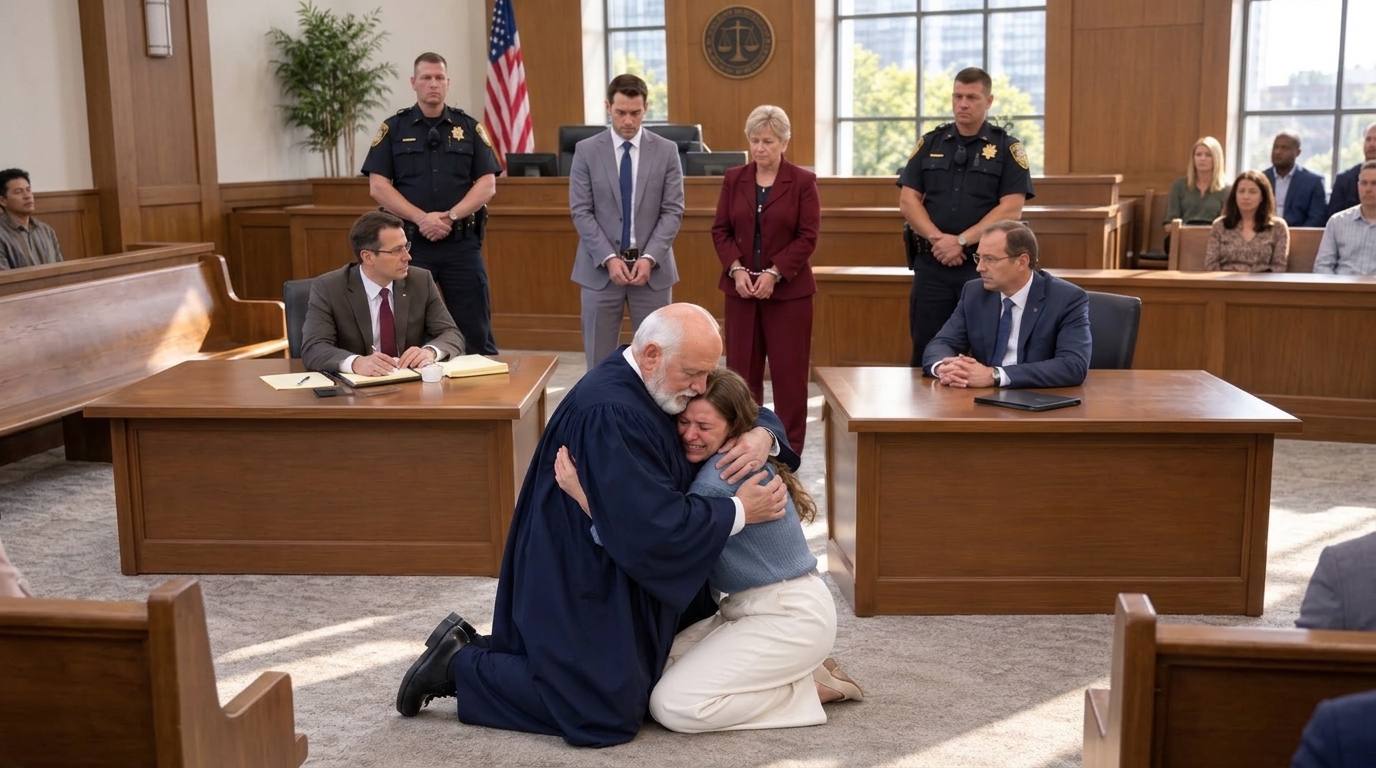
PART 3
For several seconds, I couldn’t speak.
The steady beeping of the hospital monitor filled the silence between my father and me.
My daughter was alive.
That was the only thing I could think about.
She had been delivered ten weeks early,
after doctors performed an emergency cesarean section to save us both.
She weighed barely three pounds, and her tiny lungs needed help breathing.
But she was alive.
Somewhere beyond my hospital room,
my little girl was fighting for her life.
I gripped Dad’s hand.
“Can I see her?”
His expression softened.
“As soon as the doctors say you’re strong enough.”
I closed my eyes.
“What did they name her?”
Dad looked confused.
“Sweetheart?”
I swallowed.
“The nurses. What are they calling my baby?”
He smiled sadly.
“Baby Girl Miller.”
My heart tightened.
“No.”
Dad leaned closer.
“Anna?”
I opened my eyes.
“Her name is Grace.”
Tears filled his eyes.
“Grace?”
I nodded.
“Grace Margaret. After Grandma.”
Dad covered his mouth.
My grandmother Margaret had raised him after his own mother died.
She was the strongest woman I’d ever known, and she’d always told me that courage wasn’t the absence of fear.
It was doing what needed to be done while your hands were shaking.
Dad squeezed my fingers.
“Grace Margaret,” he repeated.
Then he smiled through his tears.
“That’s a beautiful name.”
For a moment, everything else disappeared.
David.
Sylvia.
The Christmas dinner.
The blood on the kitchen floor.
All I could think about was my daughter.
Then Dad looked toward the door.
“Anna, there’s something we need to discuss.”
I felt my stomach tighten.
“The recording?”
He nodded.
I stared at him.
“What did David say?”
Dad hesitated.
Then he pulled his chair closer.
“Before I tell you, I need you to understand something.”
I waited.
“I’m your father. And I love you more than anything.”
My eyes filled.
“But I’m also a judge. That means I cannot interfere with investigations or use my position to punish anyone.”
I nodded slowly.
“I know.”
He squeezed my hand.
“What I can do is make sure you have the support and legal representation you need. The police and prosecutors will handle the evidence independently.”
I swallowed.
“Dad, just tell me.”
He took a breath.
“David wasn’t simply allowing his mother to mistreat you.”
My heart began pounding.
“He was helping her plan it.”
I stared at my father.
“What?”
He looked down at the phone resting on the bedside table.
“One of David’s colleagues recorded part of the conversation before you came into the dining room.”
I remembered the guests.
Three attorneys from David’s firm.
Their wives.
Sylvia’s sister.
And a senior partner named Robert Ellis, who had barely spoken to me all evening.
I’d spent hours cooking for those people.
Roasting the turkey.
Preparing the potatoes.
Baking pies.
Setting the table.
Making sure everyone had enough to eat.
All while carrying a child who had begun kicking so strongly that I sometimes had to stop and catch my breath.
“What conversation?” I whispered.
Dad looked at me.
“Are you sure you want to hear it now?”
I nodded.
“Yes.”
He studied my face.
Then said, “Robert Ellis heard David discussing your pregnancy with his mother.”
I felt cold.
Dad continued.
“Sylvia said you were becoming difficult to control.”
I closed my eyes.
David had used that phrase before.
Difficult to control.
Whenever I questioned his spending.
Whenever I wanted to visit my friends.
Whenever I asked why his mother had a key to our house.
He called me difficult.
Dad’s voice trembled.
“David told her that after the baby was born, he intended to make sure you had no independent access to money.”
I stared at him.
“What?”
“He said you were going to stay home, stop seeing your friends, and follow whatever arrangements he and Sylvia made.”
I couldn’t breathe.
Dad continued.
“And Sylvia said she needed to remind you of your place before the baby arrived.”
My hands began shaking.
I remembered the way Sylvia had watched me carrying serving dishes.
The way she’d criticized the turkey.
The way she’d ordered me to clean the kitchen before I was allowed to eat.
I had believed she was cruel.
But I hadn’t understood how deliberately she was trying to humiliate me.
Then Dad said something that made my blood run cold.
“Anna, David laughed and told her that nobody would believe you if you complained.”
I stared at him.
He swallowed.
“He said he could make you look unstable.”
I turned toward the window.
Outside, Christmas lights glowed along the hospital courtyard.
Families were probably sitting around dinner tables.
Children were opening presents.
People were laughing.
And I was lying in a hospital bed wondering how I’d married a man who could speak about me that way.
“I thought he loved me,” I whispered.
Dad’s face crumpled.
“Oh, sweetheart.”
I shook my head.
“I really thought he loved me.”
He reached for my hand.
“I know.”
I stared at the ceiling.
“When we first met, he was so different.”
David had been charming.
Thoughtful.
Funny.
He brought flowers to my office.
Remembered my favorite coffee.
Called me every evening just to hear my voice.
He told me he admired my independence.
He said he wanted a partner, not someone who simply agreed with him.
But after we married, everything changed slowly.
So slowly that I barely noticed.
First, he criticized my friends.
Then my clothes.
Then my work.
He said my job at the community arts foundation was unnecessary because he earned enough for both of us.
When I became pregnant, he insisted I resign.
He called it a gift.
“You shouldn’t have to work while you’re carrying my child.”
I had wanted to believe him.
Then Sylvia began visiting every day.
She rearranged my kitchen.
Criticized my housekeeping.
Told me how to dress.
And insisted that a good wife never embarrassed her husband by disagreeing in public.
I tried to keep peace.
I told myself things would improve after the baby arrived.
Now I understood that David had been planning the opposite.
“Dad,” I whispered, “why didn’t I see it?”
He shook his head.
“Because he didn’t show you everything at once.”
Tears rolled down my face.
“I teach children art. I tell them to trust themselves. And I couldn’t even trust my own instincts.”
Dad leaned forward.
“Anna, being mistreated doesn’t make you foolish.”
I covered my face.
He waited until I could breathe again.
Then I asked, “What happened to David?”
Dad took a breath.
“He and Sylvia were questioned by the police. I don’t want to speculate about the charges or the outcome.”
I looked at him.
“Did they arrest them?”
“Sylvia was taken into custody after the initial investigation. David’s actions are also being investigated.”
I swallowed.
“He grabbed my hair.”
Dad’s jaw tightened.
“I know.”
“He broke my phone.”
“I know.”
“He refused to call an ambulance.”
Dad closed his eyes.
For the first time, I saw how much effort it took him to remain calm.
Then he whispered, “I’m so sorry I wasn’t there sooner.”
I reached for his hand.
“You came.”
His eyes filled.
“You called me.”
I nodded.
“And you came.”
The next morning, a nurse helped me into a wheelchair.
My incision hurt.
Every movement felt like someone pulling a tight wire across my abdomen.
But I didn’t care.
I was going to see Grace.
The neonatal intensive care unit was quieter than I expected.
Machines hummed.
Monitors beeped.
Nurses moved between incubators.
Then a doctor named Emily Carter stopped beside a clear plastic enclosure.
“Anna, this is your daughter.”
I looked inside.
And my entire world changed.
Grace was impossibly small.
Her skin was pink and delicate.
Tiny wires and tubes surrounded her.
A soft cap covered her head.
Her little chest rose and fell with help from the breathing equipment.
I pressed my hand against the incubator.
“Hi, baby.”
My voice broke.
“It’s Mommy.”
Grace moved one tiny hand.
I began crying.
Dr. Carter stood beside me.
“She’s very premature, and the next several weeks will be important. But she’s receiving excellent care.”
I nodded.
“Is she in pain?”
“We monitor her comfort closely.”
I swallowed.
“Can I touch her?”
The nurse showed me how to place my hand gently against Grace’s back through the incubator opening.
I followed her instructions.
My daughter’s tiny body moved beneath my palm.
And I whispered the words I’d been waiting to say.
“I’m here, sweetheart.”
Tears streamed down my face.
“Mommy’s here.”
I stayed beside Grace as long as the nurses allowed.
Dad waited outside.
When I returned, he stood immediately.
“How is she?”
I smiled through tears.
“Beautiful.”
He laughed softly.
“Of course she is.”
I looked at him.
“She has your nose.”
Dad raised his eyebrows.
“Poor child.”
I laughed for the first time since Christmas.
Then my expression changed.
“Dad?”
“Yes?”
“David can’t take her, can he?”
His face grew serious.
“Your attorney is already working on appropriate protective arrangements.”
I swallowed.
“I don’t want him near her.”
Dad nodded.
“I understand.”
Then he added carefully, “The court will determine the legal arrangements based on the evidence and Grace’s safety. You won’t have to handle that alone.”
I closed my eyes.
For the first time, I understood how complicated my future might become.
Divorce.
Custody.
Medical bills.
Criminal proceedings.
And a premature baby who needed weeks, perhaps months, of specialized care.
I felt overwhelmed.
Then Dad placed his hand on my shoulder.
“One thing at a time, Anna.”
I nodded.
“One thing at a time.”
That afternoon, Robert Ellis came to the hospital.
He looked older than I remembered.
His silver hair was disheveled.
His eyes were red.
He stood in the doorway holding a small paper bag.
“Anna?”
I looked up.
“Mr. Ellis.”
He swallowed.
“May I come in?”
I hesitated.
Then nodded.
He placed the bag on the bedside table.
Inside was a soft pink blanket.
“My wife picked it out for your daughter.”
I stared at it.
“Thank you.”
Robert sat down.
For several seconds, he said nothing.
Then he whispered, “I owe you an apology.”
I looked at him.
He continued.
“I heard what David and Sylvia were saying.”
My stomach tightened.
“And you didn’t stop them.”
He lowered his head.
“No.”
I waited.
He swallowed.
“I thought David was being arrogant. I thought his mother was unpleasant. I didn’t understand how dangerous the situation had become.”
I stared at him.
“You heard them planning to control me.”
He nodded.
“Yes.”
“And you stayed at the table.”
His eyes filled.
“Yes.”
I looked away.
Robert’s voice cracked.
“I should have said something.”
For a long moment, neither of us spoke.
Then he continued.
“When I heard the crash from the kitchen, I went to see what happened. I saw the blood. I saw David preventing you from getting help.”
I closed my eyes.
“That’s when I realized this wasn’t just cruelty.”
He swallowed.
“It was abuse.”
I looked at him.
Robert wiped his eyes.
“I gave the recording to the investigators. And I’ve told them everything I witnessed.”
I nodded slowly.
“Thank you.”
He looked down.
“I don’t deserve your gratitude.”
I took a breath.
“Maybe not. But telling the truth still matters.”
He nodded.
Then stood.
Before leaving, he turned back.
“Anna?”
“Yes?”
“David thinks his reputation will protect him.”
I stared at him.
Robert’s expression hardened.
“He’s about to discover that a reputation built on lies doesn’t last forever.”
PART 4
Three weeks after Christmas, I received the first letter from David.
It arrived through my attorney.
The envelope contained four pages.
He began by telling me how much he missed me.
Then he described how difficult his life had become.
His firm had placed him on administrative leave.
Several clients had requested different representation.
His colleagues were refusing to return his calls.
His mother was staying with relatives while her case proceeded.
And he was deeply embarrassed by the publicity.
I read the letter twice.
Not once did he ask how Grace was doing.
Not once did he ask whether I was recovering.
Not once did he acknowledge that his actions had contributed to a medical emergency.
Instead, he wrote:
You know how much I’ve worked for my career. I hope you won’t allow one terrible misunderstanding to destroy everything we’ve built.
I stared at those words.
Everything we’ve built.
I thought about Grace lying in an incubator.
I thought about the scar across my abdomen.
I thought about the Christmas dinner I’d spent fourteen hours preparing.
And I realized David still believed the most important thing at stake was his career.
My attorney’s name was Caroline Bennett.
She was a family law specialist recommended by a trusted colleague of Dad’s, and she had no professional connection to his court.
Caroline was direct.
Calm.
And completely unimpressed by David’s threats.
During our first meeting, she spread several documents across the table.
“Anna, I want you to understand your options.”
I nodded.
She explained the divorce process.
The temporary financial arrangements.
The protective orders.
And the custody issues that would eventually need to be addressed.
Then she looked at me.
“Your husband’s profession doesn’t give him special authority over you.”
I swallowed.
“He said he could have me committed.”
Caroline’s expression remained steady.
“A lawyer cannot simply order someone into psychiatric care because he dislikes what they say.”
I nodded.
“He said nobody would believe me.”
She glanced toward the evidence folder.
“We have witness statements, medical records, photographs, and other evidence. Those will be evaluated through the proper legal process.”
My eyes filled.
Caroline leaned forward.
“Anna, your father being Chief Justice doesn’t determine the outcome of your case.”
“I know.”
“But neither does your husband being an attorney.”
I stared at her.
Then slowly smiled.
For years, David had used his legal knowledge like a weapon.
He’d made every disagreement sound like a courtroom argument.
He’d quoted laws I didn’t understand.
Threatened consequences I couldn’t verify.
And convinced me that questioning him was pointless.
Now, sitting across from Caroline, I realized something important.
The law wasn’t his personal property.
And I wasn’t powerless.
Meanwhile, Grace continued fighting.
Some days were encouraging.
She gained a few ounces.
Needed slightly less breathing support.
Opened her eyes for longer periods.
Other days were frightening.
Her oxygen levels fluctuated.
She struggled with feeding.
And once, when a monitor alarm sounded, I felt the same terror I’d experienced on the kitchen floor.
A nurse named Patricia placed a hand on my shoulder.
“She’s okay, Anna. We’re right here.”
I nodded, trembling.
Patricia stayed beside me until I could breathe normally again.
Over time, the nurses taught me how to participate in Grace’s care.
How to recognize her signals.
How to hold her safely when the medical team determined she was ready.
How to speak softly without overwhelming her.
The first time I held her against my chest, I cried so hard I could barely see.
Grace weighed just over three pounds.
She fit against me like a tiny bundle of warmth.
I kissed her forehead.
“Hi, sweetheart.”
She moved her hand.
I smiled.
“It’s Mommy again.”
Then I whispered, “I’m going to make sure you grow up knowing what love feels like.”
Dad visited every evening.
Sometimes he brought dinner.
Sometimes flowers.
Sometimes he simply sat beside me while I watched Grace through the incubator.
He never talked about the investigation unless I asked.
He never promised that David would be convicted.
He never claimed he could influence the proceedings.
Instead, he helped me with the ordinary things.
He drove me to appointments.
Made sure I ate.
Helped arrange temporary housing.
And listened when I cried.
One evening, while we sat in the hospital cafeteria, I asked him something that had been bothering me.
“Dad, are you disappointed in me?”
He looked startled.
“Disappointed?”
I stared at my untouched soup.
“For marrying David.”
His expression softened.
“Anna.”
I shook my head.
“You warned me that he seemed controlling.”
Dad was quiet.
I continued.
“You said you didn’t like how he interrupted me.”
He nodded slowly.
“I remember.”
“And I told you to stop judging him.”
Dad reached across the table.
“Sweetheart, you were allowed to make your own decisions.”
My eyes filled.
“But I was wrong.”
He squeezed my hand.
“You trusted someone who promised to love you.”
I looked up.
“That doesn’t make you responsible for his choices.”
I began crying.
Dad moved his chair beside mine.
And for several minutes, he simply held me.
The investigation uncovered more than the Christmas incident.
David had been monitoring my spending.
He’d restricted my access to certain joint accounts.
He’d contacted two of my friends and told them I was experiencing emotional problems during pregnancy.
He’d also sent messages to Sylvia discussing how to make me more dependent on him after Grace was born.
Caroline reviewed the evidence carefully.
Some of it was relevant to the family proceedings.
Other material was provided to investigators.
I was stunned by how much I’d missed.
But the most painful discovery came from my former coworker, Melissa.
She called me one afternoon.
“Anna?”
I smiled weakly.
“Hi, Mel.”
Her voice trembled.
“I’ve been trying to reach you for months.”
I frowned.
“What?”
“David told me you didn’t want to speak to anyone from the foundation.”
I stared at the wall.
“He said what?”
Melissa swallowed.
“He said pregnancy had been difficult and you needed privacy.”
My chest tightened.
“I never said that.”
“I know that now.”
She began crying.
“Anna, I’m so sorry.”
I closed my eyes.
Then Melissa said something that made my heart ache.
“We missed you.”
I covered my mouth.
She continued.
“The kids still ask about you.”
Before I resigned, I’d taught art workshops for children from low-income families.
I loved that work.
I loved watching shy children discover they could paint, draw, and create things they were proud of.
David had convinced me that my job was insignificant.
That his career mattered more.
That once Grace arrived, I wouldn’t have time for anything else.
But Melissa’s call reminded me that I had existed before David.
I had dreams.
Friends.
Work I loved.
And people who cared about me.
A month later, I visited the foundation.
Melissa met me at the entrance.
The moment she saw me, she burst into tears.
We hugged for a long time.
Then she led me into the art room.
The walls were covered in children’s paintings.
Bright suns.
Blue mountains.
Purple houses.
And one enormous poster decorated with paper hearts.
Across the top, someone had written:
WE MISS YOU, MISS ANNA!
I covered my mouth.
Melissa smiled through tears.
“The kids made it when they heard you were recovering.”
I stared at the poster.
One little girl had drawn a woman holding a baby.
Underneath, she’d written:
Miss Anna and Baby Grace.
I began crying.
Melissa put her arm around me.
“There’s still a place for you here.”
I looked at her.
“Really?”
She smiled.
“Whenever you’re ready.”
For the first time in months, I imagined a future that wasn’t defined by David.
The criminal proceedings moved slowly.
There were hearings.
Evidence reviews.
Witness interviews.
And legal arguments I tried not to follow too closely.
Sylvia continued denying responsibility.
She claimed I had fallen accidentally.
She insisted the shove was merely an attempt to move past me.
But the witness statements and physical evidence contradicted important parts of her account.
David initially claimed he had panicked.
Then he suggested I had exaggerated the emergency.
Then he admitted he’d prevented me from calling for help, while arguing that he hadn’t understood how serious my condition was.
I learned about these developments through official updates and my attorney.
Dad stayed entirely outside the decision-making process.
He told me that maintaining judicial independence mattered even when the case involved his own family.
I respected that.
Because I didn’t want David punished for insulting the Chief Justice’s daughter.
I wanted him held accountable for what he’d done to his wife.
And I wanted Sylvia held accountable for what she’d done to a pregnant woman.
Who my father happened to be should not have changed either obligation.
One afternoon, Caroline called.
“Anna, I have news.”
My heart began pounding.
“About David?”
“Yes.”
I sat down.
She continued.
“His firm has completed its internal review.”
I swallowed.
“And?”
“His partnership has been terminated.”
I closed my eyes.
For several seconds, I couldn’t speak.
Caroline continued.
“The firm cited conduct inconsistent with its professional standards and the information available from the investigation.”
I nodded slowly.
“Is he losing his law license?”
“That will be determined through a separate disciplinary process. We shouldn’t assume the outcome.”
I stared at the floor.
David had spent years telling me how powerful he was.
How nobody could challenge him.
How his connections would protect him.
Now the very colleagues he’d tried to impress at Christmas dinner were distancing themselves from him.
And the senior partner who had witnessed his behavior had provided evidence.
I didn’t feel triumphant.
I felt exhausted.
Then Caroline said, “Anna, there’s something else.”
I looked up.
“David wants to negotiate a divorce settlement.”
I swallowed.
“Does he want to see Grace?”
There was a pause.
“He has raised that issue through counsel.”
I closed my eyes.
“What do I do?”
Caroline’s voice softened.
“We follow the court’s orders, present the evidence, and keep Grace’s safety at the center of every decision.”
I nodded.
“Okay.”
Then I whispered, “I just want my daughter to be safe.”
By early March, Grace had grown stronger.
She was gaining weight.
Her breathing had improved.
And the doctors were cautiously optimistic about her progress.
One afternoon, Dr. Carter approached me with a smile.
“Anna, I have good news.”
My heart jumped.
“What?”
“If Grace continues doing well, we may be able to start preparing for discharge in the coming weeks.”
I stared at her.
“Home?”
She nodded.
“Home.”
I began crying.
Dr. Carter smiled.
“We’ll need to make sure she’s feeding well, maintaining her temperature, and meeting the other discharge requirements.”
I nodded eagerly.
“Anything.”
She laughed softly.
“I know.”
I looked through the incubator.
Grace was sleeping peacefully.
Her tiny fist rested beside her cheek.
I whispered, “Did you hear that, baby?”
Tears streamed down my face.
“We’re going home.”
But I wasn’t going back to David’s house.
Dad had helped me find a small rental cottage near his neighborhood.
It had two bedrooms.
A sunny kitchen.
A little garden.
And a window overlooking a row of flowering trees.
Melissa and several friends helped furnish it.
Dad assembled the crib.
My aunt Caroline—not my attorney, but Dad’s younger sister—brought handmade blankets.
And the children from the art foundation painted pictures for Grace’s nursery.
I stood in the doorway one afternoon looking at the finished room.
Soft yellow walls.
A white crib.
A rocking chair.
A bookshelf.
And a framed painting of a rainbow.
I began crying.
Dad appeared beside me.
“What’s wrong, sweetheart?”
I shook my head.
“Nothing.”
He looked concerned.
I smiled through tears.
“It’s just…”
I looked around.
“It’s peaceful.”
Dad put his arm around me.
And I realized how long it had been since I’d felt safe inside my own home.
Two days before Grace’s discharge, I received another letter from David.
This one was shorter.
He wrote that he regretted what happened.
He said he missed me.
He said he’d been under enormous pressure at work.
Then he wrote:
I hope you’ll remember that we once loved each other.
I stared at the sentence.
Because he was right.
We had.
Or at least, I had loved the man I believed he was.
But love wasn’t enough to rebuild trust after what he’d done.
I folded the letter.
Placed it in the folder for my attorney.
And went back to the NICU.
My daughter was waiting.
PART 5
Grace came home on a rainy Thursday in March.
She was nearly three months old.
Still tiny.
Still needing careful monitoring and follow-up appointments.
But she was strong enough to leave the hospital.
I had imagined that moment a thousand times.
I thought I would be laughing.
Smiling.
Taking photographs.
Instead, I cried the entire time the nurse helped me secure Grace in her car seat.
Patricia smiled gently.
“Ready, Mom?”
I looked down at my daughter.
Grace opened her eyes.
I nodded.
“Yes.”
Patricia squeezed my shoulder.
“You’ve both come a long way.”
I swallowed.
“We have.”
Dad drove us home.
I sat in the back seat beside Grace.
Every few seconds, I checked her breathing.
Dad glanced at me through the rearview mirror.
“She’s okay, sweetheart.”
I nodded.
“I know.”
Thirty seconds later, I checked again.
Dad smiled.
“You’re going to wear out your neck.”
I laughed through tears.
“I probably am.”
When we reached the cottage, Dad parked carefully.
He carried our bags.
I carried Grace.
The rain had stopped.
Sunlight broke through the clouds.
And as I stepped through the front door, I whispered, “Welcome home, baby.”
Grace yawned.
I laughed.
Dad wiped his eyes.
Then he said, “Your grandmother would have loved this.”
I smiled.
“She would have loved Grace.”
He nodded.
“Very much.”
The first weeks were difficult.
Grace needed frequent feeding.
She had medical appointments.
I slept in short stretches.
Sometimes I woke terrified that something was wrong.
Sometimes I sat beside her crib watching her breathe.
The doctors reassured me that many parents of premature babies experience intense anxiety after a long hospital stay.
I began seeing a therapist.
Not because David had been right about me being unstable.
But because I’d survived something traumatic.
And I wanted to heal.
My therapist, Dr. Lauren Mitchell, helped me understand the patterns I’d experienced in my marriage.
The isolation.
The humiliation.
The threats.
The way David had gradually made me doubt my own judgment.
She also helped me work through the guilt I felt about Grace’s premature birth.
One afternoon, I whispered, “If I’d stood up to Sylvia sooner, maybe none of this would have happened.”
Dr. Mitchell looked at me.
“Anna, who pushed you?”
I swallowed.
“Sylvia.”
“Who prevented you from calling for help?”
“David.”
She nodded.
“Then those actions belong to them.”
My eyes filled.
I looked down.
She continued.
“You can reflect on warning signs and decide what boundaries you want in the future. But you are not responsible for another person’s violence.”
I began crying.
And for the first time, I allowed myself to believe her.
The divorce proceedings continued.
Caroline negotiated temporary financial support and helped me obtain appropriate protective arrangements.
The family court reviewed the evidence concerning David’s conduct and Grace’s medical needs.
The court did not treat David’s profession as a reason to favor him.
Nor did it treat my father’s position as a reason to favor me.
The decisions were made through the legal process.
That mattered to me.
Because I wanted Grace to grow up knowing that justice should not depend on who your relatives are.
David’s criminal case eventually reached a resolution.
He admitted to conduct involving threats and interference with my attempt to obtain emergency assistance, and the court imposed criminal penalties and conditions.
Sylvia’s case also resulted in a conviction for her assault on me.
The precise outcomes reflected the evidence, applicable charges, and agreements reached through the legal process.
Neither case was decided by my father.
He had no involvement in the proceedings.
I learned the final results from the prosecutor’s office.
I sat at my kitchen table holding the paperwork.
For a long time, I stared at it.
Then I looked toward Grace.
She was asleep in her bassinet.
One tiny hand rested beside her cheek.
I expected to feel victorious.
Instead, I felt sad.
Sad that my marriage had ended this way.
Sad that Grace would grow up with a complicated family history.
Sad that the people who should have protected us had caused so much harm.
But beneath the sadness was relief.
The truth had been acknowledged.
The violence hadn’t been dismissed as a misunderstanding.
And I no longer had to pretend everything was fine.
David’s professional disciplinary proceedings continued separately.
Months later, the licensing authority issued a decision suspending his right to practice law for a substantial period, subject to conditions for any future reinstatement.
His firm had already ended his partnership.
His career had changed dramatically.
I remembered the way he’d crouched beside me on the kitchen floor.
The way he’d grabbed my hair.
The way he’d sneered, “I’m a lawyer. You won’t win.”
I looked at the disciplinary decision.
Then quietly closed the folder.
Because I finally understood something.
Winning had never meant destroying David.
Winning meant surviving.
Protecting Grace.
Reclaiming my independence.
And building a life where nobody could use fear to control me.
By summer, Grace was thriving.
She still had medical follow-up appointments, but her doctors were pleased with her progress.
She smiled when I sang.
Kicked her feet when Dad visited.
And developed a particular fondness for grabbing his tie.
One afternoon, Dad sat in the rocking chair holding her.
He wore his usual dark suit.
Grace reached up and grabbed the blue silk tie around his neck.
Dad laughed.
“Your mother used to do that.”
I smiled.
“Really?”
He nodded.
“When you were a baby, you pulled every tie I owned.”
I laughed.
“Maybe it’s genetic.”
Dad looked down at Grace.
His expression softened.
“You know, little one, your mother is the bravest person I know.”
I felt my eyes fill.
“Dad.”
He looked at me.
“It’s true.”
I shook my head.
“I was terrified.”
He smiled.
“Bravery doesn’t mean you weren’t afraid.”
I stared at him.
He continued.
“It means you kept going.”
I looked at Grace.
Then whispered, “Grandma Margaret used to say that.”
Dad nodded.
“She did.”
In September, I returned to the community arts foundation.
Only part-time at first.
Melissa greeted me with a hug.
The children had decorated the classroom with paper flowers.
One little boy named Ethan ran toward me.
“Miss Anna!”
I knelt.
“Hi, sweetheart.”
He threw his arms around me.
“Did you bring your baby?”
I laughed.
“Not today.”
He frowned.
“Why?”
“Because she’s still little.”
He considered that.
Then asked, “Can babies paint?”
I smiled.
“Not very well.”
He nodded solemnly.
“Maybe you should teach her.”
I laughed.
“Maybe I should.”
That afternoon, I stood in front of a classroom filled with children holding paintbrushes.
For the first time in nearly a year, I felt like myself.
Not David Miller’s wife.
Not the Chief Justice’s daughter.
Not the woman from the Christmas incident.
Just Anna.
An art teacher.
A mother.
A woman who loved bright colors, messy tables, and watching children discover their own creativity.
I looked around the room.
“Today,” I told the children, “we’re going to paint something that makes us feel safe.”
They began talking excitedly.
One child painted a dog.
Another painted her grandmother.
A little boy painted a treehouse.
And one quiet girl named Sophie painted a small yellow house.
I knelt beside her.
“That’s beautiful.”
She smiled.
“It’s my house.”
I looked at the painting.
“What do you like most about it?”
She thought for a moment.
Then whispered, “Everybody is nice there.”
My throat tightened.
I smiled.
“That sounds like a wonderful home.”
The following Christmas, I did something I’d never imagined doing.
I hosted dinner.
Not for David.
Not for Sylvia.
Not for people who expected me to serve them while they insulted me.
I invited Dad.
Melissa.
Aunt Caroline.
Several friends from the foundation.
And two nurses who had cared for Grace.
I cooked because I wanted to.
Not because someone ordered me.
I made roast chicken.
Mashed potatoes.
Green beans.
And Grandma Margaret’s apple pie.
Grace sat in her high chair wearing a red velvet dress.
She had grown stronger and was approaching her first birthday.
Her cheeks were round.
Her eyes were bright.
And she had recently discovered that dropping a spoon made adults pick it up.
Repeatedly.
Dad found this hilarious.
I did not.
At six o’clock, everyone gathered around the dining table.
I carried the final serving dish into the room.
Then I paused.
For one terrible moment, I remembered the previous Christmas.
Sylvia’s voice.
Servants don’t sit with family.
The shove.
The pain.
The blood.
David refusing to call for help.
My hands began trembling.
Melissa noticed.
She stood.
“Anna?”
I looked at her.
She walked over.
“Are you okay?”
I swallowed.
“Just remembering.”
Her expression softened.
She took the dish from my hands.
“Then sit down.”
I stared at her.
She smiled.
“We’ve got this.”
Dad stood and pulled out a chair.
My chair.
At the head of the table.
“Come on, sweetheart.”
My eyes filled.
I looked around.
Everyone was smiling.
Nobody was waiting for me to finish serving them.
Nobody was criticizing the food.
Nobody was telling me I didn’t belong.
I sat down.
And for the first time in years, I felt completely at home.
Before dinner, Dad raised his glass.
“I’d like to say something.”
I smiled.
“Dad, please don’t make a speech.”
Everyone laughed.
He grinned.
“I’ll keep it short.”
He looked toward Grace.
“One year ago, we nearly lost two people we love.”
The room grew quiet.
Dad continued.
“We spent weeks hoping and praying that this little girl would survive.”
He looked at me.
“And that her mother would recover.”
My eyes filled.
He swallowed.
“Today, they’re both here.”
Grace banged her spoon against the tray.
Everyone laughed through tears.
Dad smiled.
“And apparently, Grace would like to make a speech too.”
I laughed.
He raised his glass.
“To second chances.”
Everyone lifted their glasses.
“To second chances.”
After dinner, Melissa helped me clear the table.
I tried to take several plates from her.
She shook her head.
“Anna.”
I smiled.
“What?”
“Go sit down.”
I laughed.
“I can help.”
She raised an eyebrow.
“You cooked all afternoon.”
I looked toward the living room.
Dad was sitting on the carpet with Grace.
Aunt Caroline was showing her a picture book.
The nurses were laughing.
And the Christmas tree glowed beside the window.
I smiled.
Then handed Melissa the plates.
“Okay.”
She grinned.
“Good.”
I walked into the living room.
Sat beside Dad.
And picked up my daughter.
Grace rested her head against my shoulder.
I kissed her soft hair.
Then whispered, “Merry Christmas, sweetheart.”
She smiled.
And I began crying.
People sometimes ask whether I regret keeping my father’s identity private from David’s family.
I don’t.
When I met David, I wanted him to love me for who I was.
Not because my father held an important position.
Not because of his connections.
Not because of the influence people imagined he possessed.
I wanted a marriage built on mutual respect.
I wanted to be Anna.
Just Anna.
But I learned something painful.
David didn’t mistreat me because he believed my father was unimportant.
He mistreated me because he believed I was powerless.
And when he discovered who my father was, his fear wasn’t proof that he suddenly respected me.
It was proof that he feared consequences.
Those are two very different things.
My father never made a phone call to have David fired.
He never ordered a prosecutor to file charges.
He never threatened a judge.
He didn’t need to.
The witnesses spoke.
The medical records told their story.
The recordings were examined.
The legal process moved forward.
And the people responsible were held accountable through the proper channels.
Dad’s greatest contribution wasn’t his title.
It was that when I called for help, he believed me.
He acted.
And he stayed.
As for Sylvia, I haven’t spoken to her since that Christmas.
I don’t know whether she regrets what happened.
I don’t know whether she still believes a daughter-in-law should serve her husband’s family without question.
And I no longer spend my time trying to understand her.
The court’s protective arrangements remain in place where applicable.
My priority is Grace.
My daughter will grow up knowing that kindness is not weakness.
That respect must be mutual.
That marriage does not make one person another person’s servant.
And that no one has the right to hurt her simply because they are older, wealthier, or more powerful.
One evening, shortly after Grace’s first birthday, Dad visited our cottage.
I was sitting on the living room floor helping her stack colorful wooden blocks.
He watched us for a while.
Then smiled.
“Anna?”
I looked up.
“Yes?”
“Are you happy?”
The question surprised me.
I thought about it.
A year earlier, I would have answered automatically.
Of course.
Everything is wonderful.
David is successful.
We have a beautiful house.
We’re expecting a baby.
I would have smiled and hidden everything that was wrong.
But now, sitting on the floor in my little cottage, I didn’t need to pretend.
I looked at Grace.
She was trying to balance a red block on top of a blue one.
I smiled.
“Yes, Dad.”
He nodded.
“Really?”
I laughed softly.
“Really.”
My eyes filled.
“I’m tired. Sometimes I’m scared. And there are still difficult days.”
I looked around.
“But I’m safe.”
Dad’s expression softened.
“And Grace is safe.”
I nodded.
“And we’re loved.”
He smiled.
“Then that’s enough.”
Later that night, after Dad left, I carried Grace into her nursery.
I changed her into soft pajamas.
Read her a picture book.
And rocked her until her eyes grew heavy.
She reached up and touched my cheek.
I smiled.
“Hi, baby.”
She made a sleepy little sound.
I kissed her forehead.
Then whispered, “Do you know how much Mommy loves you?”
She blinked.
I smiled.
“More than all the stars.”
I placed her gently in her crib.
For a moment, I stood watching her.
Then I thought about the woman I’d been the previous Christmas.
Seven months pregnant.
Exhausted.
Humiliated.
Standing in a kitchen after cooking for people who treated her like she didn’t belong.
I wished I could go back and tell that woman something.
Not that her father was powerful.
Not that her husband would lose his partnership.
Not that Sylvia would face criminal consequences.
I wanted to tell her that she deserved respect before anyone knew who her father was.
That she had value without a famous name.
That she was worthy of protection without wealth or connections.
And that one day, she would sit at her own Christmas table with her daughter in her arms, surrounded by people who loved her.
The following morning, I found an old photograph while unpacking a box.
It showed me at eight years old.
I was standing beside Dad outside the courthouse.
He was much younger then.
His hair was dark.
His suit was slightly wrinkled.
And I was wearing a yellow dress with white shoes.
On the back, in Grandma Margaret’s handwriting, were the words:
Anna and her daddy. The day she learned that doing right matters more than being important.
I stared at the photograph.
Then I remembered the conversation.
I’d asked Dad whether being a judge meant he could make everybody obey him.
He’d laughed.
Then knelt beside me.
“No, sweetheart.”
I’d frowned.
“Then what’s the point?”
He’d smiled.
“The point is to make sure the rules apply to everybody.”
I looked at the photograph for a long time.
Then placed it on the shelf beside Grace’s crib.
I still remember David’s face when he heard my father’s name.
The sudden silence.
The disbelief.
The fear.
But that wasn’t the moment my life changed.
My life changed when I stopped accepting humiliation as the price of keeping my marriage.
When I asked for help.
When I allowed people to protect me.
When I decided my daughter would never grow up believing that love meant enduring cruelty.
David once told me I wouldn’t win because he was a lawyer.
He was wrong.
But not for the reason he imagined.
I didn’t win because my father was the Chief Justice.
I won because I survived, told the truth, accepted help, and rebuilt my life.
And the greatest victory wasn’t watching David lose his career.
It was watching Grace take her first steps across our living room.
Her little arms stretched toward me.
Her face shining with excitement.
And hearing her laugh as she fell safely into my arms.
That was the moment I knew.
We were going to be okay.
THE END THANK YOU FOR READING !!!



