PART 3
For several seconds, nobody spoke.
The kitchen clock ticked above the refrigerator.
Somewhere upstairs, a floorboard creaked as
one of the children turned over in bed.
I stared at my father.
“Mom sold my house?”
Dad lowered himself into a chair.
No, Tammy. She couldn’t legally sell it.
But she promised it to someone who believed she could.
Jeff stood beside the table, still holding the old picture frame.
“Who gave her ten thousand dollars?”
Dad rubbed his forehead.
“Richard Barlow.”
I recognized the name immediately.
Richard owned a small real estate investment company in the next county.
He bought old houses, renovated them, and either rented them out or sold them for a profit.
He had been asking about our farmhouse for years.
I remembered him approaching Dale at the county fair.
He’d offered us ninety thousand dollars for the property.
Dale had laughed.
“Richard, the new roof alone cost fourteen thousand.”
Richard had smiled and said, “Well, if you ever change your mind, call me.”
We never had.
Now Dad was telling me that my mother had accepted ten thousand dollars from him.
I slowly sat down.
“Why?”
Dad looked toward the staircase.
Then he looked at Jeff.
“Your mother told Richard that Tammy was planning to transfer the house back to us.”
Jeff shook his head.
“But she wasn’t.”
“I know.”
Dad’s voice cracked.
“She told him we would have the deed by the end of the month. Richard gave her ten thousand dollars as a deposit toward a future purchase.”
I stared at him.
“And what did Mom do with the money?”
Dad closed his eyes.
“That’s the part I need to explain.”
I waited.
He removed another paper from the folder.
It was a bank statement.
There were several withdrawals.
Credit card payments.
A transfer to a company I didn’t recognize.
Then one entry caught my attention.
$6,800 — MELTON FINANCIAL SERVICES.
I frowned.
“What is Melton Financial?”
Dad swallowed.
“A debt collection company.”
Jeff stepped forward.
“Whose debt?”
Dad didn’t answer.
I looked at him.
“Dad?”
He finally whispered, “Your mother’s.”
I had always believed my parents were financially comfortable.
Dad had retired from farming twelve years earlier.
They owned their small house in town outright.
They had retirement savings.
Mom received Social Security, and Dad had a modest pension from years of part-time work at the agricultural cooperative.
They weren’t wealthy.
But they had never appeared to struggle.
At least, that was what I thought.
Dad looked at the papers.
“Your mother started borrowing money about four years ago.”
I stared at him.
“For what?”
He shook his head.
“At first, it was little things. Furniture. Gifts. Trips with her friends.”
I remembered the new living room set.
The expensive kitchen appliances.
The weekend trips Mom took with women from church.
I’d assumed she was enjoying retirement.
Dad continued.
“Then she started using credit cards to pay other credit cards.”
My stomach tightened.
“How much does she owe?”
He looked away.
“Almost forty-eight thousand.”
Jeff let out a low whistle.
I stared at Dad.
“Forty-eight thousand dollars?”
He nodded.
“That’s what I know about.”
I leaned back in my chair.
For a moment, I couldn’t understand what I was hearing.
My mother wanted me to surrender a house I’d owned for twenty years.
A house Dale and I had repaired with our own savings.
A house where we’d raised Hannah.
And she’d presented the request as an act of compassion toward Jeff and his children.
But now it seemed there was another reason.
She needed the house back because she’d promised it to someone who would give her money.
I looked at Dad.
“Did she ever intend for Jeff to live here?”
He hesitated.
That hesitation told me enough.
“Dad.”
He rubbed his hands together.
“She told Richard she could sell the property with vacant possession.”
Jeff went completely still.
“Vacant?”
Dad nodded.
Jeff stared at him.
“Then where were my kids supposed to go?”
Dad’s eyes filled.
“I don’t know, son.”
Jeff stepped backward.
For the first time that night, he looked truly angry.
Not embarrassed.
Not ashamed.
Angry.
“Mom told me Tammy was being selfish,” he whispered.
I looked at him.
He continued.
“She said Tammy had a big house and wouldn’t help us unless somebody forced her.”
My chest tightened.
Jeff stared at Dad.
“She told me she was going to make sure the children had a home.”
Dad covered his face.
Jeff’s voice broke.
“Was she planning to use us to get the house back?”
Nobody answered.
Because we all knew.
I had spent most of my life trying to keep peace in our family.
Mom was a strong woman.
Opinionated.
Proud.
The kind of person who believed that being older automatically made her right.
When Jeff and I were children, she made most of the decisions.
Dad worked long hours in the fields.
Mom managed the household.
And when she wanted something, she usually found a way to get it.
I had learned to avoid arguments.
Jeff had learned to disappear into his room.
Dad had learned to say, “Your mother means well.”
For years, those habits seemed harmless.
Now they had nearly cost me my home.
I looked at Dad.
“Why didn’t you stop her?”
He stared at his hands.
“I tried.”
I shook my head.
“Dad, you knew the house belonged to me.”
“I know.”
“You knew she couldn’t sell it.”
“I know.”
“Then why did you let her take Richard’s money?”
His eyes filled.
“Because she told me she’d already done it.”
I stared at him.
He continued.
“She said if I interfered, Richard would sue us. She said we could lose our house in town.”
I took a breath.
“Dad, did you sign anything?”
He shook his head.
“No.”
“Did you tell Richard you owned this property?”
“No.”
“Did Mom?”
“I don’t know exactly what she told him.”
I looked toward the folder.
“Then we need to find out.”
Jeff pulled out the chair beside me.
“Tam, I need to say something.”
I turned.
He looked exhausted.
His face was thinner than I remembered.
His divorce had taken a toll on him.
He had lost the house he shared with his wife, and the custody arrangements were still being finalized.
He’d been working overtime at the auto parts warehouse while trying to keep three children fed, clothed, and emotionally steady.
He swallowed.
“I never asked Mom to take your house.”
“I know.”
He shook his head.
“No. You don’t understand.”
He looked toward the staircase.
“I would have slept in my truck before I let my kids believe their aunt had been thrown out for us.”
My eyes filled.
“Jeff—”
He continued.
“When Mom told me about the dollar, I thought you and Dale had some arrangement with her.”
I nodded.
“She said you were holding the property until somebody in the family needed it.”
I looked at Dad.
He stared at the table.
Jeff whispered, “I didn’t know she’d lied.”
I reached for his hand.
“You didn’t do anything wrong.”
He looked at me.
“Neither did you.”
For a moment, we sat silently.
Then I smiled through my tears.
“And your kids aren’t going anywhere.”
His face crumpled.
“Tammy…”
I squeezed his hand.
“They have bedrooms upstairs. Pickles has a place on the dresser. And Dale already promised Brody he’d help him fix his bicycle.”
Jeff began crying.
He covered his face with both hands.
I hadn’t seen my brother cry since our grandfather’s funeral.
I moved my chair closer and wrapped my arms around him.
“We’ll figure this out,” I whispered.
He nodded against my shoulder.
“We’ll figure it out.”
Dad stayed until nearly midnight.
Before he left, I asked him one more question.
“Does Mom know you came here?”
He shook his head.
“She thinks I’m at the gas station.”
I almost laughed.
My seventy-eight-year-old father was sneaking out of his own house to tell his daughter the truth.
It would have been funny if it weren’t so heartbreaking.
I walked him to the porch.
The night air was cold.
Dad stopped beside his truck.
“Tammy?”
“Yes?”
He looked toward the farmhouse.
“I remember when your grandfather built that upstairs bedroom.”
I smiled faintly.
“The one facing the orchard?”
He nodded.
“He used to say this house would always have room for somebody who needed it.”
I looked through the window.
Inside, Jeff was washing the dishes.
Dad swallowed.
“I forgot that.”
I turned toward him.
“What?”
“That making room for family doesn’t mean taking something away from somebody else.”
My eyes filled.
Dad looked down.
“I’m sorry I didn’t stand up to your mother sooner.”
I hugged him.
Then whispered, “You still can.”
The next morning, Dale and I sat at the kitchen table before sunrise.
I told him everything.
He listened without interrupting.
When I finished, he leaned back.
“Well,” he said quietly, “that’s a mess.”
I almost smiled.
“That’s one way to describe it.”
He reached for my hand.
“Tam, the deed is in your name. Your parents transferred the property to you twenty years ago.”
I nodded.
“But Richard thinks he’s buying it.”
“Then we get an attorney involved.”
I looked at him.
“You aren’t angry?”
He raised his eyebrows.
“I’m furious.”
I blinked.
Dale continued.
“But yelling won’t protect our home. Paperwork will.”
I laughed despite myself.
That was Dale.
Practical.
Steady.
The kind of man who could fix a tractor engine while explaining exactly why somebody had made a foolish decision.
He squeezed my hand.
“We’ll deal with Richard. We’ll deal with your mother. And we’ll help Jeff get back on his feet.”
I looked toward the staircase.
“Thank you.”
He smiled.
“Tam, this is our home. Nobody gets to take it because they decided our kindness was an invitation.”
At eight thirty, I called an attorney named Rebecca Collins.
She specialized in property disputes and estate planning.
By eleven, Dale and I were sitting in her office with the deed, renovation notebook, tax records, and Dad’s folder.
Rebecca examined everything carefully.
Then she looked at me.
“Tammy, based on these documents, the property was transferred to you in 2006.”
I nodded.
“There’s no language here giving your parents an automatic right to repurchase it for one dollar.”
I exhaled.
“And the money Mom took?”
Rebecca folded her hands.
“Your mother cannot convey property she doesn’t own. We need to determine exactly what representations she made to Mr. Barlow and whether any documents were recorded or signed.”
I nodded.
“Could he come after us?”
“He may attempt to assert a claim, but that doesn’t mean he has a valid claim against your property. We’ll investigate and respond appropriately.”
Dale leaned forward.
“What should we do first?”
Rebecca smiled slightly.
“First, don’t sign anything.”
I nodded.
“Second, preserve every document and communication.”
Dale looked at me.
I thought of my spiral-bound notebook.
Twenty years of receipts.
Twenty years of repairs.
Twenty years of work.
Rebecca continued.
“And third, we’re going to contact Mr. Barlow’s attorney before this situation becomes any more complicated.”
That afternoon, Mom arrived.
Without calling.
Without knocking.
She marched through the kitchen door carrying her handbag and wearing the expression she used when Jeff and I were children and had disappointed her.
“Tammy, what have you done?”
I was standing beside the sink.
Dale sat at the table.
Jeff was upstairs helping the children unpack.
I dried my hands.
“Hello, Mom.”
She slammed her handbag onto a chair.
“Don’t ‘hello, Mom’ me.”
I took a breath.
“What would you like to discuss?”
She stared at me.
“Your father told me you hired a lawyer.”
“Yes.”
Her face reddened.
“Against your own mother?”
I looked at her.
“To protect my home.”
She gave a bitter laugh.
“Your home? Your father and I gave you this house.”
I nodded.
“Yes. You did.”
“And now you’re treating us like criminals?”
I remained calm.
“Mom, did you accept ten thousand dollars from Richard Barlow?”
She froze.
For the first time since entering the kitchen, she had nothing to say.
I waited.
Then she whispered, “Your father had no right to tell you that.”
I felt my heart sink.
“Mom.”
She looked away.
“Did you promise Richard my house?”
She straightened.
“I was trying to help this family.”
I shook my head.
“No. You were trying to sell something that doesn’t belong to you.”
Her eyes narrowed.
“You have no idea what I’ve sacrificed for you.”
I swallowed.
“Then tell me.”
She opened her mouth.
But before she could answer, footsteps sounded on the staircase.
Jeff appeared.
And when Mom saw him, her expression changed.
“Jeff, sweetheart, tell your sister she needs to do the right thing.”
He stood at the bottom step.
Then said quietly, “She already did.”
Mom blinked.
“What?”
Jeff looked at me.
Then back at her.
“She gave my children bedrooms.”
Mom’s mouth tightened.
“That isn’t the point.”
Jeff stepped forward.
“Then what is the point, Mom?”
She stared at him.
He continued.
“Because you told me this was about giving my kids somewhere to live.”
Mom looked away.
Jeff’s voice shook.
“But you promised the house to Richard Barlow.”
Silence filled the kitchen.
Mom’s face turned pale.
Then Jeff asked the question none of us could avoid.
“Were you going to make Tammy homeless just to pay your debts?”
PART 4
Mom didn’t answer Jeff.
Instead, she looked at me.
“You’ve turned your brother against me.”
I stared at her.
“No, Mom.”
She pointed toward Jeff.
“He’s going through a divorce. He’s vulnerable. And you’re filling his head with nonsense.”
Jeff took a slow breath.
“Mom, I’m standing right here.”
She ignored him.
“Tammy, you’ve always been stubborn. Your father gave you that house for practically nothing, and now you’re acting like you earned every inch of it.”
Something inside me hardened.
I walked to the dining room hutch.
Opened the bottom drawer.
And removed my spiral-bound notebook.
I placed it on the kitchen table.
Mom frowned.
“What’s that?”
“Twenty years.”
She stared at me.
I opened the notebook.
“Roof replacement. Fourteen thousand dollars.”
I turned a page.
“Heating system. Seven thousand eight hundred.”
Another page.
“Electrical work. Plumbing. Insulation. Windows. Repairs to the foundation.”
I pushed the notebook toward her.
“Sixty thousand three hundred forty dollars.”
She looked down.
I continued.
“And that doesn’t include property taxes, insurance, utilities, or the thousands of hours Dale and I spent doing work ourselves.”
Mom’s face tightened.
I spoke quietly.
“You gave me a farmhouse that needed major repairs. I accepted it gratefully. Then Dale and I spent twenty years making it a home.”
She looked up.
“You wouldn’t have had it without us.”
I nodded.
“That’s true.”
She seemed surprised.
I continued.
“And I have always been grateful.”
I placed my hand on the notebook.
“But gratitude doesn’t mean you can take back a gift whenever you want.”
Mom began crying.
At first, I felt the familiar urge to comfort her.
To apologize.
To make the conversation easier.
Then I looked at Jeff.
His face was pale.
I thought about his children sleeping upstairs.
I thought about Hannah helping Kenzie braid her hair.
I thought about Cole carefully carrying Pickles into our house.
And I realized I couldn’t allow Mom’s tears to erase what she’d done.
“Mom,” I said, “I need you to answer one question.”
She wiped her cheeks.
“What?”
“If I had signed the house back to you for one dollar, would Jeff and the kids have been allowed to stay?”
She stared at me.
“Of course.”
“For how long?”
She looked away.
“Until things settled down.”
“And then?”
Silence.
I took a breath.
“Mom, Richard wanted the property vacant.”
She closed her eyes.
Jeff whispered, “You knew that?”
Mom began crying harder.
“I was going to figure something out.”
Jeff shook his head.
“That’s not an answer.”
She looked at him.
“Jeff, I was trying to help you.”
He swallowed.
“No, Mom. You were using my children to convince Tammy to give you her house.”
Mom’s shoulders sagged.
For the first time, she didn’t argue.
The truth came out slowly.
Mom had been hiding her debts for years.
She’d convinced herself that she could pay everything off eventually.
When the interest became overwhelming, she started looking for something valuable she could sell.
Their house in town wasn’t an option she wanted to consider.
Dad’s retirement savings were limited.
Then she remembered the farmhouse.
She still thought of it as hers.
Not legally.
But emotionally.
She’d grown up there.
Married Dad while living there.
Raised Jeff and me beneath that roof.
In her mind, transferring the property to me for one dollar hadn’t truly changed ownership.
It had simply changed whose name appeared on the paperwork.
And when Jeff’s marriage collapsed, she saw an opportunity.
She could tell herself she was helping her grandchildren.
She could persuade me to surrender the property.
Then she could sell it.
Pay her debts.
And somehow arrange another place for Jeff.
It was a plan built on assumptions.
And lies.
And the belief that everyone else would cooperate because she was their mother.
“Why didn’t you ask for help?” I whispered.
Mom looked at me.
“Because I was ashamed.”
I nodded.
“I understand being ashamed.”
She wiped her face.
“But you didn’t just hide your debt.”
I swallowed.
“You tried to solve it by taking my home.”
She began crying again.
“I thought you’d understand.”
I looked at her.
“I would have understood if you’d told me you were struggling.”
She stared at me.
“I might have helped you make a budget. I might have helped you find a financial counselor. I might even have considered helping with a specific bill if Dale and I could afford it.”
My voice shook.
“But I would never have agreed to give away my house.”
Mom looked down.
Then whispered, “I know that now.”
Dad arrived an hour later.
He had been sitting in his truck at the end of our driveway.
Apparently, he knew Mom was coming.
But he hadn’t wanted to walk into another argument.
When he finally entered, he looked exhausted.
Mom turned toward him.
“You told them everything.”
Dad removed his cap.
“Yes.”
She stared at him.
“You betrayed me.”
Dad looked at her for a long time.
Then said quietly, “No, Evelyn.”
I held my breath.
He continued.
“I should have told the truth sooner.”
Mom began crying.
Dad sat beside her.
“For forty-eight years, I’ve tried to keep you happy by avoiding arguments.”
She looked away.
He swallowed.
“But I let that become an excuse for staying quiet when you were wrong.”
My eyes filled.
Dad looked toward me.
“I did it when Tammy was little.”
Then toward Jeff.
“And I did it when Jeff needed somebody to stand up for him.”
Jeff lowered his eyes.
Dad continued.
“I won’t do it anymore.”
Mom stared at him.
For a moment, I thought she might start shouting.
Instead, she whispered, “What are we supposed to do now?”
Dad placed his cap on the table.
“We tell Richard the truth.”
The meeting with Richard Barlow took place three days later.
Rebecca arranged it at her office.
Mom and Dad attended with their own attorney.
Richard arrived with a lawyer.
Dale and I sat beside Rebecca.
The atmosphere was tense.
Richard looked irritated.
He was a tall man in his sixties with neatly combed silver hair and a habit of tapping his pen against the table.
He began immediately.
“Mrs. Bennett told me the property was being transferred back to her.”
Rebecca nodded.
“That transfer never occurred.”
Richard looked toward Mom.
“She assured me it would.”
Mom stared at her hands.
Rebecca continued.
“My client has not agreed to sell the property.”
Richard turned toward me.
“Mrs. Harper, I was told you wanted to move.”
I shook my head.
“I’ve never wanted to sell.”
He frowned.
“Your mother said your brother needed the house.”
I nodded.
“He does need somewhere to live.”
Richard leaned forward.
“Then why are we here?”
I looked directly at him.
“Because I made room for him.”
Richard blinked.
I continued.
“My brother and his children are living upstairs. Nobody needed to take my house away to help them.”
For several seconds, Richard said nothing.
Then he turned toward Mom.
“You told me the property would be vacant.”
Mom’s face reddened.
“I thought I could arrange it.”
Richard stared at her.
“You thought?”
His attorney touched his arm.
The discussion became formal after that.
Rebecca explained the ownership records.
Richard’s attorney reviewed the documents.
The lawyers discussed the deposit and the representations Mom had made.
By the end of the meeting, everyone understood one thing.
Richard wasn’t buying my farmhouse.
The ten thousand dollars remained a problem.
Mom had already spent most of it.
Richard wanted his money returned.
My parents couldn’t simply write a check.
Their attorney helped them negotiate a repayment agreement, and Richard agreed not to pursue a property claim against me.
The arrangement did not erase Mom’s responsibility.
She would have to repay what she’d accepted.
And she would have to face the financial problems she’d spent years hiding.
I didn’t offer to pay the deposit.
Neither did Dale.
That decision was difficult.
Mom had helped me when I was younger.
She had cared for me when I was sick.
She had taught me to cook.
She had sat beside my bed after my first heartbreak.
But none of those memories meant I had to take responsibility for a debt created through deception.
I could love my mother.
And still refuse to rescue her from every consequence.
The Sunday dinner I’d invited Mom and Dad to happened two weeks later than planned.
I wasn’t sure Mom would come.
She had barely spoken to me since the meeting.
But at five thirty, Dad’s truck pulled into the driveway.
Mom climbed out carrying a casserole.
Dad carried a bag of dinner rolls.
I watched them through the kitchen window.
Then I opened the door.
“Hi, Mom.”
She looked at me.
For a moment, neither of us moved.
Then she whispered, “Hello, Tammy.”
I stepped aside.
“Come in.”
The kitchen was full.
Dale stood beside the stove.
Hannah was setting the table.
Brody and Kenzie were arguing over who got the chair closest to the window.
Cole sat on the floor explaining something important to Pickles.
Jeff was chopping vegetables.
When Mom entered, the children ran toward her.
“Grandma!”
Her face changed.
She knelt and hugged them.
For a moment, she looked like the mother I remembered.
Warm.
Loving.
Happy to be surrounded by family.
Then Cole grabbed her hand.
“Grandma, come see my room!”
Mom glanced at me.
I nodded.
“Go ahead.”
He led her upstairs.
We heard his little voice explaining where he kept his toys.
Then Kenzie shouted that Grandma needed to see the curtains Hannah had helped her choose.
Mom stayed upstairs for nearly twenty minutes.
When she returned, her eyes were red.
She sat at the table.
Then looked at me.
“Tammy?”
“Yes?”
She swallowed.
“You made it beautiful.”
I smiled faintly.
“The upstairs?”
She shook her head.
“The whole house.”
I looked around.
The old kitchen cabinets.
The repaired ceiling.
The warm light above the table.
The family photographs on the wall.
Mom’s voice trembled.
“I remember when that room was freezing in winter.”
I nodded.
“So do I.”
She looked toward Dale.
“You fixed the heating?”
He smiled.
“Years ago.”
Mom lowered her eyes.
“I never really thought about how much work you two put into this place.”
I didn’t answer.
Then she whispered, “I’m sorry.”
The kitchen went quiet.
She looked at me.
“I’m sorry I treated your home like something I could take back.”
My eyes filled.
She continued.
“And I’m sorry I used Jeff’s situation to make you feel guilty.”
Jeff stood beside the counter.
Mom turned toward him.
“I owe you an apology too.”
He swallowed.
“You do.”
She nodded.
“I know.”
Then she began crying.
And this time, nobody rushed to tell her everything was fine.
Because everything wasn’t fine.
But it was finally honest.
After dinner, Dad asked me to walk outside with him.
We stood beside the old apple tree.
The one he’d planted when Jeff was born.
Dad looked toward the farmhouse.
“You know, your grandfather nearly lost this place during the drought of 1956.”
I smiled.
“I remember you telling me.”
He nodded.
“He borrowed money, worked nights at the grain elevator, and somehow kept the farm going.”
I looked at the porch.
Dad continued.
“He used to say land wasn’t valuable because of what somebody would pay for it.”
I turned toward him.
“He said it was valuable because of what people built on it.”
Dad smiled.
“You remember.”
I nodded.
He looked through the window.
Inside, Hannah was helping Cole wash dishes.
Jeff was laughing with Dale.
Mom sat beside Kenzie.
Dad’s eyes filled.
“Your grandfather would have liked this.”
I swallowed.
“I hope so.”
He put his arm around my shoulders.
Then whispered, “You did the right thing, Tammy.”
For twenty years, I’d wanted my parents to understand that the farmhouse was truly mine.
Not because I’d paid a dollar.
Not because my name was on the deed.
But because Dale and I had built our lives there.
Now Dad finally understood.
And for the first time, I believed Mom might eventually understand too.
PART 5
Jeff and the children stayed with us for eleven months.
At first, I worried about how difficult it would be.
Seven people under one roof.
Three children adjusting to a divorce.
One teenager preparing for college.
Two adults trying to maintain their routines.
And my brother, who was doing everything possible to rebuild his life.
But the farmhouse surprised us.
It had been built for a large family.
The upstairs hallway was wide.
The bedrooms had tall windows.
And the kitchen table, which once seemed unnecessarily enormous, suddenly made perfect sense.
Every chair was occupied.
Every evening was noisy.
And somehow, the house felt more alive than it had in years.
We established rules early.
Jeff contributed toward groceries and utilities once he could.
He helped Dale with repairs.
He handled his children’s school schedules and appointments.
And he made it clear that I wasn’t expected to become their second mother.
One evening, I found him standing in the laundry room staring at a basket of children’s clothes.
He looked overwhelmed.
I leaned against the doorway.
“Everything okay?”
He sighed.
“I never realized how much laundry three kids make.”
I laughed.
“Welcome to parenting.”
He smiled weakly.
Then his face changed.
“Tam?”
“Yes?”
“I don’t know how to thank you.”
I shook my head.
“You don’t have to.”
He looked toward the stairs.
“Yes, I do.”
I waited.
He swallowed.
“When my marriage ended, I thought I’d failed everybody.”
My chest tightened.
He continued.
“The kids were sleeping in Mom’s basement. I was working overtime. I couldn’t afford a decent apartment.”
He rubbed his forehead.
“Then Mom told me you wouldn’t help unless she took the house back.”
I closed my eyes.
Jeff looked at me.
“I started believing I was a burden.”
I moved closer.
“Jeff, you’re my brother.”
He nodded.
“I know.”
“And those kids are my family.”
His eyes filled.
I smiled.
“You don’t have to be homeless to prove you’re independent.”
He laughed through his tears.
Then hugged me.
Brody adjusted first.
At twelve, he was old enough to understand that his parents’ marriage had ended.
But he was still young enough to blame himself.
He’d become quiet after the divorce.
His grades had slipped.
He spent hours playing games on his phone.
Dale began inviting him into the barn.
At first, Brody barely spoke.
He handed Dale tools.
Swept the floor.
Watched him repair the old tractor.
Then one Saturday, Dale showed him how to change the oil.
Brody listened carefully.
By the end of the afternoon, he was covered in grease and grinning.
That evening, he burst into the kitchen.
“Aunt Tammy! Uncle Dale says I can help rebuild the mower!”
I looked at Dale.
He shrugged.
“Kid’s got good hands.”
Brody beamed.
It was the first time I’d seen him look genuinely proud in months.
Kenzie found comfort in Hannah.
My daughter had always wanted a younger sister.
Now she had one living down the hallway.
They braided each other’s hair.
Watched movies.
Painted their nails.
And spent long evenings talking in Hannah’s room.
One afternoon, I overheard Kenzie asking a question.
“Do you think Mom still loves us?”
I froze outside the door.
Hannah answered gently.
“Of course she does.”
Kenzie was quiet.
“Then why did she leave?”
I felt my heart tighten.
Hannah paused.
Then said, “Sometimes grown-ups have problems they don’t know how to fix. But that doesn’t mean their kids caused them.”
I covered my mouth.
My sixteen-year-old daughter was explaining something many adults struggled to understand.
Kenzie began crying.
Hannah hugged her.
I quietly walked away.
Some moments belong to the people sharing them.
Cole was the easiest to please.
He loved everything about the farmhouse.
The chickens.
The barn.
The orchard.
The old tire swing.
And especially Pickles.
His goldfish occupied a place of honor on the dresser beside his bed.
Every morning, Cole greeted him.
“Good morning, Pickles. You’re still alive.”
Dale nearly choked on his coffee the first time he heard that.
One evening, Cole asked whether Pickles could have a birthday party.
Jeff looked exhausted.
I smiled.
“Of course.”
So we celebrated Pickles’ imaginary seventh birthday.
Hannah made a paper crown for the bowl.
Kenzie drew decorations.
Brody pretended to be embarrassed.
And Dale placed a tiny sign beside the fish.
HAPPY BIRTHDAY, PICKLES. PLEASE DON’T EAT THE CAKE.
Cole laughed so hard he fell off his chair.
For a few minutes, nobody thought about divorce.
Debt.
Property disputes.
Or anything painful.
We were simply a family celebrating a goldfish.
Meanwhile, Mom and Dad began rebuilding their finances.
It wasn’t easy.
They met with a nonprofit credit counselor.
Mom canceled several credit cards.
She sold some expensive furniture and jewelry.
They created a budget.
Dad took a small part-time job at the local agricultural supply store, mostly because he enjoyed talking to farmers.
Mom began doing bookkeeping for a local church office.
They also explored formal debt-relief options with professional guidance.
I didn’t pay their debts.
But I helped Mom organize paperwork when she asked.
That was our new boundary.
I could support her.
I could listen.
I could offer practical help.
But I would not sacrifice my home or my family’s security to erase the consequences of her choices.
One afternoon, Mom came over carrying a small box.
I was working in the garden.
She walked toward me.
“Tammy?”
I looked up.
“Hi, Mom.”
She smiled nervously.
“Do you have a minute?”
I set down my gloves.
“Sure.”
We sat on the porch.
She placed the box between us.
“I found something while cleaning out the attic.”
I opened it.
Inside were old photographs.
The farmhouse in winter.
Jeff and me playing in the yard.
Dad standing beside his first tractor.
Grandpa sitting on the porch with a cup of coffee.
And one photograph of me at six years old.
I was standing beside the front door holding a little wooden sign.
The sign read:
TAMMY’S HOUSE.
I laughed.
“Oh my goodness.”
Mom smiled.
“You made that after your grandfather told you someday the farmhouse might be yours.”
I stared at the picture.
I’d forgotten about it.
Mom looked toward the yard.
“You used to follow your grandfather everywhere.”
I nodded.
“He taught me how to plant tomatoes.”
She smiled.
“And how to fix a fence.”
I laughed.
“Mostly he taught me how to hold the nails.”
Mom grew quiet.
Then she said, “I think he knew you’d take care of this place.”
My eyes filled.
She swallowed.
“I forgot that for a while.”
I looked at her.
Mom continued.
“I kept thinking about what the house used to mean to me.”
She glanced toward the kitchen window.
“I didn’t think enough about what it means to you now.”
I reached for her hand.
“Thank you for saying that.”
She squeezed my fingers.
Then whispered, “I’m proud of what you’ve built here.”
For a moment, I couldn’t speak.
Because those were words I’d waited twenty years to hear.
The following winter, Jeff received a promotion.
He became assistant manager at the warehouse.
His income improved.
He began saving for a rental home.
At first, he wanted to move immediately.
He worried he’d stayed too long.
But Dale told him not to rush.
“Find somewhere safe for the kids,” he said. “Don’t grab the first place just because you’re embarrassed.”
Jeff nodded.
And for once, he listened.
In February, he found a small three-bedroom house fifteen minutes away.
It had a fenced backyard.
A bright kitchen.
And a bedroom for each child if Brody used the finished attic room.
The rent was reasonable.
The school district was the same.
When Jeff showed me the listing, his hands trembled.
“Tam, I think we can do this.”
I smiled.
“I think you can too.”
He looked down.
“I’m scared.”
I nodded.
“Of course you are.”
He swallowed.
“What if I mess it up?”
I reached for his hand.
“Then you ask for help before everything falls apart.”
He laughed softly.
“That’s a new concept in this family.”
I smiled.
“Maybe it’s time we learned it.”
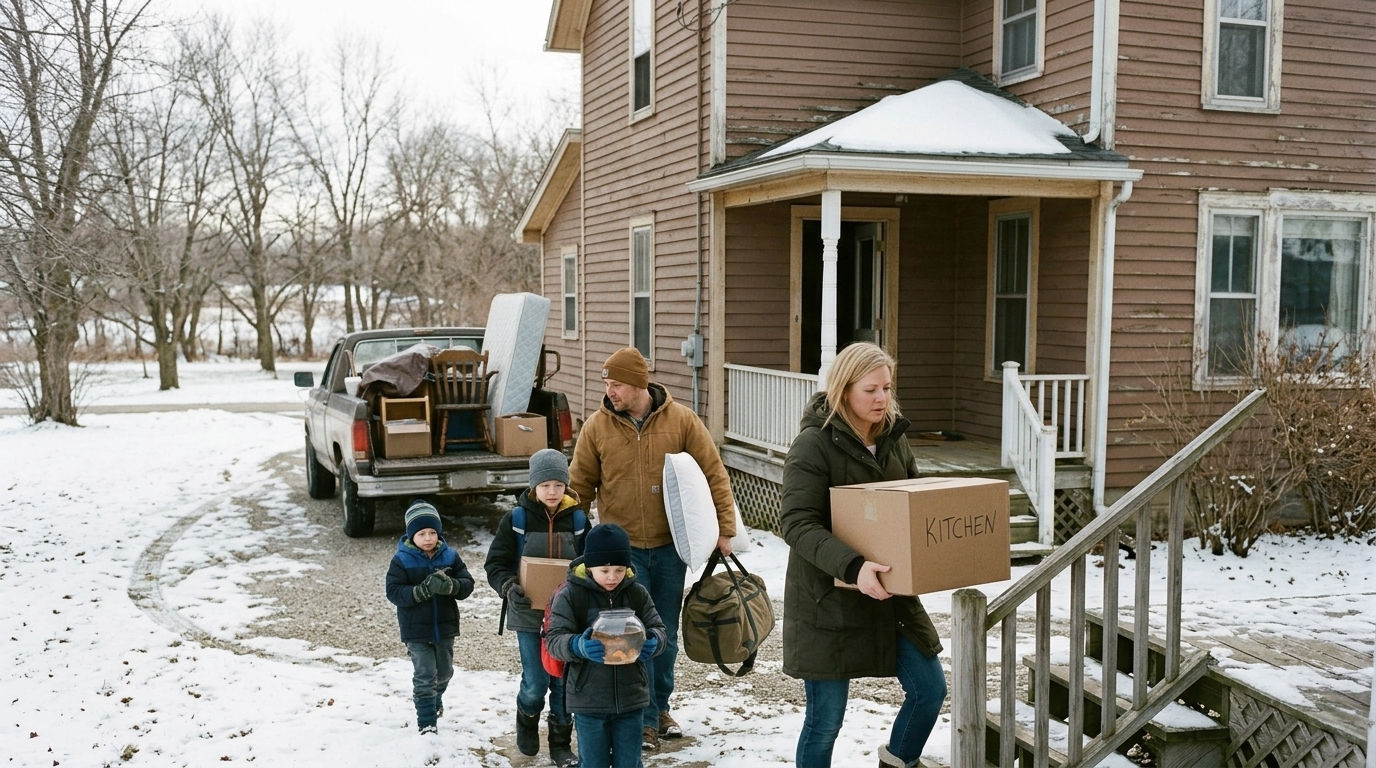
Moving day arrived on a Saturday in April.
The weather was warm.
Dale borrowed a trailer.
Dad brought his truck.
Hannah helped Kenzie pack.
Brody carried boxes down the stairs.
And Cole supervised the transportation of Pickles.
He insisted the fish travel in the front seat.
Jeff looked at me helplessly.
“Apparently Pickles outranks me.”
I laughed.
“Obviously.”
By noon, the upstairs rooms were nearly empty.
I stood in the hallway watching Jeff carry the last suitcase.
For a moment, sadness caught me by surprise.
Eleven months earlier, I’d opened those rooms because my brother’s children needed somewhere to sleep.
Now they were leaving because they had a home of their own.
I should have been happy.
I was happy.
But I would miss them.
Before leaving, Jeff came into the kitchen.
He handed me an envelope.
I frowned.
“What’s this?”
He smiled.
“Open it.”
Inside was a handwritten letter.
And a check.
I stared at the amount.
“Jeff, what is this?”
He shrugged.
“Some money toward the extra expenses.”
I shook my head.
“You don’t need to—”
He interrupted gently.
“Tam.”
I looked at him.
“Please.”
I swallowed.
He continued.
“You gave us a place to land when everything fell apart. I know I can never repay that.”
My eyes filled.
“But I want you to know I didn’t take it for granted.”
I looked at the check.
Then at my brother.
I smiled.
“Thank you.”
He hugged me.
Then whispered, “You saved us.”
I shook my head.
“No.”
He pulled back.
I looked toward the driveway, where his children were climbing into the truck.
“You did the hard part, Jeff.”
He frowned.
I continued.
“You got up every morning. You went to work. You took care of those kids. You rebuilt your life.”
My voice trembled.
“We just gave you room to do it.”
Jeff began crying.
Then he hugged me again.
That evening, after everyone had gone, the farmhouse felt strangely quiet.
Dale and I sat at the kitchen table.
Hannah was upstairs studying.
The dishwasher hummed.
The clock ticked.
I looked toward the staircase.
“I miss them already.”
Dale smiled.
“Me too.”
I sighed.
“Can you believe how much happened in one year?”
He laughed.
“Not really.”
I looked around the kitchen.
The same kitchen where Mom had demanded the house back.
The same table where Dad had revealed the ten-thousand-dollar deposit.
The same room where Jeff had cried because he thought he was a burden.
And the same place where seven people had shared meals, arguments, laughter, and ordinary life.
I smiled.
“I’m glad we didn’t give it away.”
Dale reached for my hand.
“So am I.”
Three months later, Mom invited the entire family to dinner.
It was the first time she’d hosted everyone since Jeff’s divorce.
Her little house in town was crowded.
The children filled the living room.
Dad grilled hamburgers.
Hannah helped set the table.
And Mom looked happier than I’d seen her in years.
After dinner, she asked everyone to sit down.
I felt a familiar nervousness.
Mom cleared her throat.
“I have something I want to say.”
Jeff looked at me.
I raised my eyebrows.
Mom took a breath.
“A little over a year ago, I made a terrible mistake.”
The room grew quiet.
She looked toward me.
“I asked Tammy to give me back the farmhouse for one dollar.”
Brody frowned.
Kenzie looked confused.
Mom continued.
“I told myself I was doing it to help Jeff and the children.”
Her voice shook.
“But the truth is, I was trying to solve my own problems by taking something that wasn’t mine.”
Dad reached for her hand.
Mom looked at Jeff.
“I used your difficult situation as an excuse.”
Then she looked at me.
“And I treated your kindness like something I had a right to demand.”
My eyes filled.
She swallowed.
“I’m sorry.”
Nobody spoke.
Then she smiled through her tears.
“But Tammy did something I should have thought of myself.”
She looked toward Jeff’s children.
“She opened the upstairs bedrooms.”
Cole grinned.
“And Pickles lived there!”
Everyone laughed.
Mom smiled.
“Yes, sweetheart. Pickles too.”
Then she looked at me.
“Tammy showed me that helping family doesn’t always mean giving them what they ask for.”
She paused.
“Sometimes it means finding a better way.”
I wiped my eyes.
Mom continued.
“And sometimes it means telling the truth, even when the truth is uncomfortable.”
Dad squeezed her hand.
Then Mom raised her glass.
“To Tammy and Dale.”
I shook my head.
“Mom—”
She smiled.
“Let me finish.”
I laughed softly.
She looked around the room.
“To the people who reminded us that family should be a place where everyone can find shelter without someone else losing theirs.”
We raised our glasses.
And for the first time in a long time, our family felt honest.
The farmhouse is still ours.
Dale and I recently replaced the old porch railing.
Hannah is preparing for college.
Jeff and his children come over most Sundays.
Brody still helps Dale in the barn.
Kenzie still asks Hannah to braid her hair.
And Cole continues to insist that Pickles is the most important member of the family.
Mom and Dad visit regularly.
Things aren’t perfect.
Sometimes old habits return.
Mom still tries to take charge.
Dad still hesitates before disagreeing.
Jeff still worries about asking for help.
And I still have moments when I feel guilty for saying no.
But we’re learning.
Slowly.
Imperfectly.
Together.
Last week, I found my old spiral-bound notebook while cleaning the dining room hutch.
I sat at the kitchen table and turned through the pages.
Roof repairs.
Heating system.
Electrical work.
Plumbing.
Windows.
Insulation.
Sixty thousand three hundred forty dollars.
I smiled.
Then I turned to a blank page at the back.
And wrote something new.
March — Prepared upstairs bedrooms for Jeff and the children.
Below it, I added:
Cost: A few hundred dollars in paint, bedding, and supplies.
Then I paused.
And wrote one final line.
Value: Impossible to calculate.
I closed the notebook.
Outside, the evening sun settled over the fields.
The farmhouse stood warm and steady behind me.
More than a century old.
Weathered.
Repaired.
Loved.
And still full of room for the people who mattered.
When my parents asked me to surrender my home for one dollar, they expected a simple answer.
Yes or no.
Give it back or refuse.
Be generous or be selfish.
But life isn’t always that simple.
I could refuse to give away my home and still help my brother.
I could love my parents and still hold them accountable.
I could protect everything Dale and I had built without turning my back on three children who needed somewhere safe to sleep.
I didn’t have to choose between kindness and boundaries.
I could have both.
And that was the lesson our family needed most.
People sometimes ask whether I regret not giving the farmhouse back.
I always smile.
Because the answer is easy.
No.
Not for a single second.
The farmhouse was never just a building.
It was twenty years of hard work.
A lifetime of memories.
A place where my daughter grew up.
A place where my husband and I built a marriage.
And for eleven months, it became the place where my brother and his children found their footing again.
If I’d surrendered it, I might have lost all of that.
Instead, I opened the upstairs rooms.
And somehow, by refusing to give away my home, I helped save my family.
One Sunday afternoon, Cole ran into the kitchen carrying Pickles’ bowl.
“Aunt Tammy!”
I turned.
“What is it, sweetheart?”
He grinned.
“Can Pickles come stay here for the weekend?”
I laughed.
“Of course.”
He looked delighted.
Then he asked, “Can I stay too?”
I smiled.
“There’s always room for you.”
He threw his arms around my waist.
And as I hugged him, I looked toward the staircase.
The upstairs bedrooms were empty again.
But they weren’t forgotten.
They were ready.
Not because anyone had the right to take them.
Not because I owed the house to someone else.
But because Dale and I had built a home where love could be offered freely.
And that made all the difference.
THE END THANK YOU FOR READING !!!



