PART 3
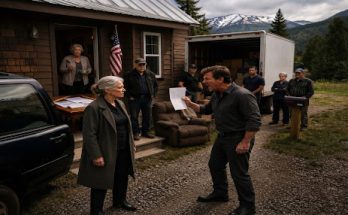
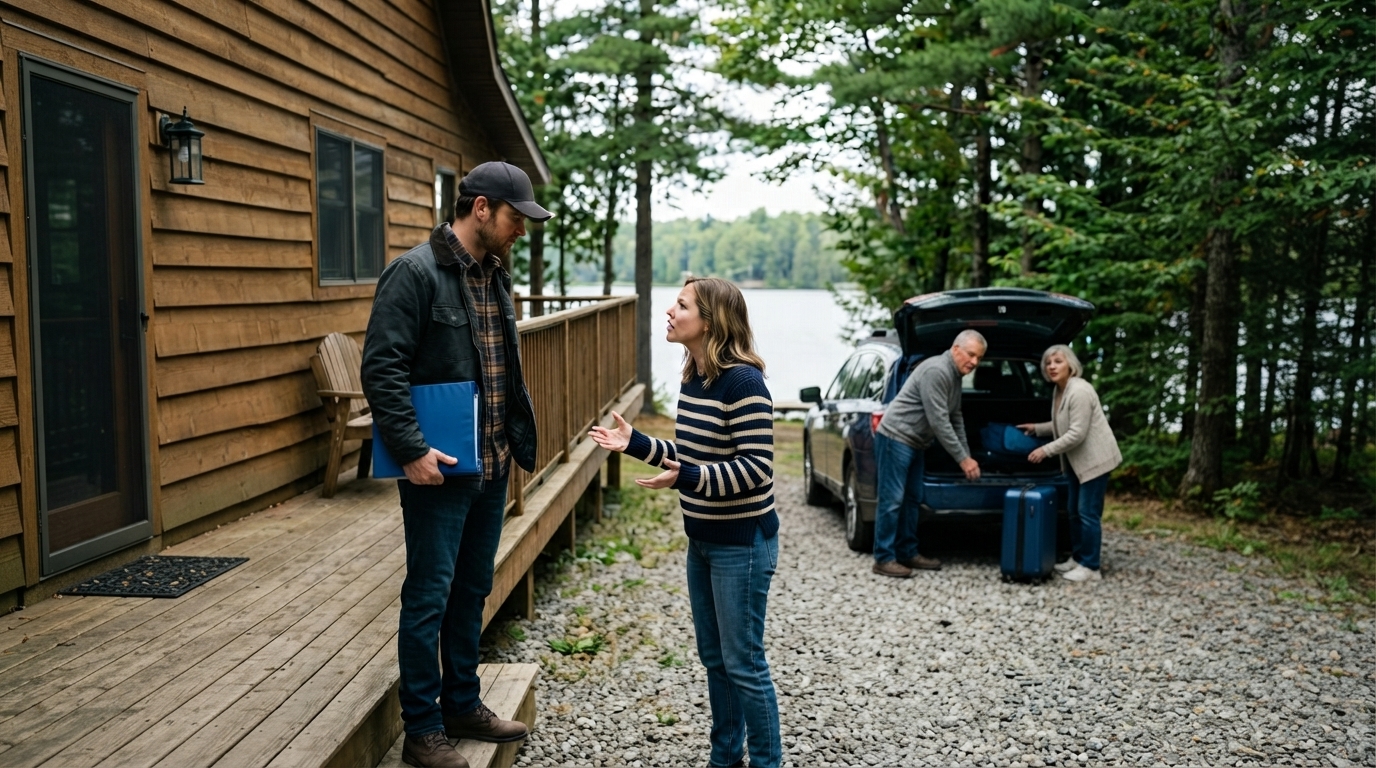
I stared at the paper in Sienna’s trembling hand.
For a moment, nobody spoke.
The lake breeze lifted one corner of the document,
and she quickly pressed it against
her chest as though hiding it might
somehow change what I had already seen.
“Give me that,” I said.
Sienna looked at Gordon.
Gordon looked at Beverly.
And Beverly suddenly became
very interested in the gravel beneath her shoes.
“Dad?” Elliot’s voice came through the phone. “What’s happening?”
I held out my hand.
Sienna has a document with my name on it.
Apparently, it gives somebody permission to occupy my house.
“That’s ridiculous,” Sienna snapped.
“Then you won’t mind letting me read it.”
She hesitated.
Gordon cleared his throat.
“Now, there’s no reason to get hostile. This is simply a family arrangement.”
“Then why does it require my signature?”
His expression changed.
Just a little.
But after forty-one years working around men who lied about broken equipment,
missing inventory, and mistakes that could get somebody killed, I knew that expression.
It was the face of someone realizing the story was no longer under his control.
Sienna finally handed me the paper.
Across the top, in bold letters, were the words:
TEMPORARY PROPERTY OCCUPANCY AUTHORIZATION.
Below that was my full legal name.
My cabin’s address.
A statement claiming I had voluntarily granted Beverly and Gordon exclusive use of the property from June through September.
And near the bottom, beside the words Property Owner, was a signature.
Mine.
Except it wasn’t.
Whoever had copied my signature had made one small mistake.
They had written the final letter of my last name with a flourish.
I never did that.
Not on checks.
Not on contracts.
Not on the mortgage papers for my first house.
Not even when I signed Elliot’s report cards.
Years of wearing thick work gloves had left my fingers stiff, and my signature had become short, plain, and almost ugly.
This one looked like somebody had practiced it in front of a mirror.
I read the document twice.
Then I looked at my daughter-in-law.
“Where did you get this?”
Sienna folded her arms.
“Elliot arranged it.”
The phone went silent.
I turned toward the screen.
“Elliot?”
My son answered immediately.
“I didn’t sign anything, Dad.”
Sienna’s head snapped around.
“Elliot!”
“I told you I didn’t want to do this.”
“You agreed your father had plenty of room!”
“I agreed we could ask him!”
Her face twisted.
“That is not what you said!”
I raised one hand.
“Enough.”
Something about my voice stopped them both.
I had spent my working life around molten steel. When something dangerous started happening, shouting usually made things worse.
You shut down the equipment.
You identified the problem.
And you made certain nobody else got hurt.
I laid the paper beside the blue folder.
“Who signed my name?”
Nobody answered.
“I’m asking once more.”
Gordon stepped forward.
“Perhaps the signature was added as a formality.”
I looked directly at him.
“A formality?”
“Families make informal arrangements all the time.”
“Not with somebody else’s signature.”
Beverly finally spoke.
“Please, let’s not turn this into something ugly. My back has been hurting terribly, and we’ve driven nearly four hours.”
I glanced at the two suitcases.
Then at the banker’s box.
Then at the SUV.
“You drove four hours because somebody promised you something they had no right to promise.”
Beverly’s eyes filled with tears.
“Are you seriously sending us away?”
“I never invited you here.”
She looked toward Sienna.
“But you told us he wanted us to come!”
Sienna closed her eyes.
And there it was.
The first crack.
Not in the paper.
In the story.
I turned toward Beverly.
“Did she tell you I had agreed to give up my bedroom?”
Beverly hesitated.
“Yes.”
“Did she tell you I would move into the small room beside the laundry area?”
“Yes.”
“Did she tell you I would cook your meals and drive you to appointments?”
Gordon looked away.
Beverly whispered, “She said you were lonely.”
I felt something cold settle inside my chest.
Lonely.
That was the word she had used.
Not retired.
Not peaceful.
Not finally resting.
Lonely.
As though a man choosing quiet after decades of noise must be waiting for somebody to give his life purpose.
I looked at Sienna.
“You told them I needed company?”
She lifted her chin.
“Well, you do spend an awful lot of time alone.”
“I spent thirty-six hours here before you decided what was missing from my life.”
“You’re being dramatic.”
“No,” I said. “I’m being clear.”
Elliot spoke again.
“Dad, I’m coming over.”
“How far away are you?”
“About forty minutes.”
“Then drive carefully.”
I ended the call.
Sienna stared at me.
“You hung up on your own son?”
“I told him to drive carefully. That’s more consideration than anybody showed me before loading this car.”
Gordon slammed his banker’s box onto the hood of the SUV.
“This is absurd! We sold our summer rental because Sienna assured us this place was available!”
I looked at him.
“You gave up another place?”
“Yes!”
“Then you should discuss that with the person who made the promise.”
He pointed toward the cabin.
“There are three bedrooms in there!”
“And I own all three.”
“You can’t possibly need that much space.”
“I don’t have to need it.”
The words came out quieter than I expected.
But they landed.
Gordon opened his mouth.
I continued.
“I don’t need to explain why I want my own bedroom, my own kitchen, or my own porch. I worked for this property. I paid for it. And I decide who enters it.”
Sienna stepped closer.
“You’re going to destroy your relationship with Elliot over a few empty rooms.”
That hurt.
More than I wanted her to know.
Because Elliot was the one person I had always feared losing.
When his mother left, he was thirteen.
He stood in the kitchen holding a baseball glove, asking whether she would be home for dinner.
I still remembered the sound of his voice.
Not angry.
Not even frightened.
Just confused.
I had knelt in front of him and promised that whatever happened, he would always have a home with me.
And I had kept that promise.
Through high school.
Through college applications.
Through the first heartbreak.
Through the wedding where I watched him smile at Sienna as though the entire world had finally become safe.
I loved my son.
But love was not the same as surrender.
I looked at Sienna.
“If Elliot wants a relationship with me, he knows where to find me. But that relationship cannot depend on me handing over the keys to my house.”
She said nothing.
I picked up the forged authorization.
“I’m keeping this.”
Her eyes widened.
“You can’t!”
“Why not?”
“Because it’s ours!”
I almost laughed.
“It’s a document claiming to contain my signature. I think I have a reasonable interest in it.”
Gordon reached toward the paper.
I stepped back.
“Don’t.”
He stopped.
I placed it inside the folder.
Then I took out my phone and photographed the document.
Sienna watched every movement.
“Are you threatening us?”
“No. I’m preserving evidence.”
That was when she started crying.
Not the quiet kind.
The kind with shaking shoulders and dramatic breaths.
She turned toward Beverly.
“See? I told you he hated me!”
Beverly put an arm around her daughter.
I stood there, feeling the old familiar pressure to make everybody comfortable.
For years, that pressure had worked.
When Sienna criticized my furniture, I smiled.
When she suggested I dress differently for family photographs, I changed shirts.
When she complained that my birthday dinners were too simple, I let her choose the restaurant.
Every small concession had seemed harmless.
But now I understood what those concessions had taught her.
That my discomfort was negotiable.
And hers was an emergency.
I closed the folder.
“You have until Elliot gets here to decide where you’re staying tonight. You can wait in the driveway, but nobody is entering the cabin.”
Beverly began protesting.
Gordon muttered something about lawyers.
Sienna kept crying.
I walked back onto my porch.
And sat in the wooden chair I had repaired two days earlier.
For the first time since buying the cabin, I wished the lake were louder.
Elliot arrived forty-three minutes later.
He pulled up behind the SUV, stepped out, and stood beside his car for several seconds.
He looked exhausted.
His shirt was wrinkled.
His face was pale.
And when he saw the blue folder on my lap, something in his expression told me he already knew more than he had admitted.
“Dad,” he said.
I stood.
“Son.”
Sienna hurried toward him.
“Tell him!”
Elliot didn’t move.
“Tell him what?”
“That we agreed my parents could stay here!”
He looked at her.
“We agreed to ask.”
“You knew they were coming!”
“I knew you were talking about it. I didn’t know you told them Dad had already said yes.”
Gordon stepped between them.
“Now hold on. You told us this cabin would solve our problem.”
Elliot rubbed his forehead.
“I said Dad had bought a cabin with extra bedrooms.”
“And what did you expect us to think?” Beverly demanded.
“That you would wait until he invited you!”
Sienna’s face hardened.
“You’re choosing him over me?”
Elliot stared at her.
“No. I’m telling the truth.”
I watched my son carefully.
There was fear in his eyes.
Not fear of me.
Fear of what telling the truth might cost him.
I recognized it because I had lived with that fear during the last years of my marriage.
The fear that one honest sentence could turn an ordinary evening into a battlefield.
I picked up the forged paper.
“Elliot, did you know about this?”
He took it.
Read the heading.
Then his eyes moved to the signature.
His face changed.
“What is this?”
Sienna reached for his arm.
“It’s just something Dad put together.”
Gordon stiffened.
I noticed.
So did Elliot.
“Dad?” Elliot asked, looking at his father-in-law.
Gordon straightened his shoulders.
“I prepared a simple authorization based on what Sienna told me.”
“Did you sign my father’s name?”
“No.”
The answer came too quickly.
Elliot turned toward Sienna.
“Did you?”
She looked down.
“Sienna,” he repeated.
Her voice dropped.
“I didn’t think it mattered.”
The silence that followed was terrible.
Even Beverly stopped crying.
Elliot took one step backward.
“You signed his name?”
“It was only for the summer!”
“That’s not what I asked!”
She flinched.
I had never heard my son speak to her that way.
Not once in seven years.
Sienna looked at me with something close to hatred.
“You’ve turned him against me.”
I shook my head.
“No, Sienna. You made a decision. Now he knows about it.”
She wiped her cheeks angrily.
“Fine! I signed it! Happy?”
I looked at the paper.
Then at my son.
Then back at her.
“Why?”
“Because I knew you’d say no!”
There it was.
Not confusion.
Not a misunderstanding.
Not a poorly communicated family plan.
She knew.
She knew exactly what my answer would be.
So she had decided my answer didn’t matter.
Elliot sat down heavily on the porch step.
He covered his face with both hands.
I wanted to reach for him.
The father in me still saw the thirteen-year-old boy with the baseball glove.
But I stayed where I was.
Because sometimes loving your child means letting him see the consequences of the life he has chosen.
After a long moment, Elliot looked up.
“Dad, there’s something else.”
Sienna went completely still.
“Elliot,” she whispered.
He ignored her.
“I found out yesterday.”
My stomach tightened.
“Found out what?”
He looked toward the SUV.
Then toward the cabin.
And finally at me.
“Sienna didn’t just promise them the summer.”
He swallowed.
“She promised them they could stay here permanently.”
Beverly gasped.
Gordon shouted his name.
But Elliot kept looking at me.
“And Dad… they already gave notice on their apartment.”
For several seconds, I heard nothing.
Not the birds.
Not the lake.
Not even the old ringing in my ears.
Then Elliot said the words that made everything suddenly much worse.
“They were planning to change their mailing address to yours next week.”
I looked at the suitcases.
The banker’s box.
The confident way Sienna had stepped out of the SUV.
They hadn’t arrived for a visit.
They had arrived expecting to take possession of my home.
And my daughter-in-law had counted on me being too afraid of losing my son to stop them.
PART 4
I looked at Elliot for a long time.
My boy.
The child I had raised alone.
The man whose first bicycle I had repaired with parts salvaged from the mill’s maintenance shop.
The son whose college tuition I had helped pay with overtime shifts that left my hands trembling when I finally came home.
He sat on my porch step, staring at the ground.
And I realized something that hurt more than Sienna’s forged signature.
He had known his wife was pushing toward this arrangement.
He had known her parents expected something.
He had known I was being discussed like an obstacle.
And he had said nothing until the problem reached my driveway.
“Elliot,” I said quietly, “look at me.”
He raised his head.
“Did you ever tell Sienna she could offer my house to her parents?”
“No, Dad.”
“Did you tell her I would probably agree?”
He hesitated.
That hesitation answered more than words could.
“Elliot.”
He swallowed.
“I told her you were generous.”
I nodded slowly.
“And?”
“And that you’ve always helped family.”
I looked toward the lake.
A small fishing boat was crossing the water, its wake spreading gently behind it.
For forty-one years, I had been generous with my strength.
With my money.
With my weekends.
With the parts of my life nobody noticed until they needed something.
But generosity had somehow become an obligation.
“Son,” I said, “there is a difference between telling someone I’m generous and telling them I’m available for whatever they want.”
His eyes filled.
“I know.”
“Do you?”
He didn’t answer.
Sienna stepped forward.
“Oh, this is unbelievable. We’re standing here discussing philosophy while my parents have nowhere to sleep!”
I turned toward her.
“Your parents had somewhere to sleep until you told them to give it up.”
“You’re heartless.”
“No. I’m finished being manipulated.”
Gordon grabbed his banker’s box.
“We’ll remember this.”
I looked at him.
“That’s your choice.”
“You’ve embarrassed us.”
“I didn’t invite you here.”
“You could have handled this privately!”
“You arrived with suitcases and a document bearing a signature I didn’t write.”
His jaw tightened.
For a moment, I thought he might argue again.
Instead, he turned toward Beverly.
“Get in the car.”
Beverly looked devastated.
But then something unexpected happened.
She walked toward me.
Not confidently.
Not angrily.
She approached slowly, holding her travel pillow against her chest.
“I owe you an apology,” she said.
Sienna stared at her.
“Mom!”
Beverly ignored her.
“We were told you wanted us here. That you were having trouble adjusting to retirement. That having people around would be good for you.”
I listened.
She continued.
“I should have called you myself.”
“Yes,” I said. “You should have.”
Her eyes dropped.
“And I should have questioned why you weren’t here helping us plan.”
That surprised me.
Not because it erased what had happened.
It didn’t.
But because she was the first person that afternoon to admit she had made a mistake without attaching an excuse.
“I appreciate you saying that,” I told her.
She nodded.
Then she turned toward Sienna.
“You told us he asked for company.”
Sienna folded her arms.
“He needs it!”
Beverly shook her head.
“No, sweetheart. You needed him to agree.”
Those words landed harder than anything I could have said.
Sienna stared at her mother.
“You’re taking his side?”
“I’m taking responsibility for believing something I should have checked.”
Gordon called from the SUV.
“Beverly!”
She turned and walked away.
I watched them load the suitcases back into the trunk.
One wheel on the largest suitcase kept catching on the gravel.
For some reason, that small sound nearly broke me.
Because I had spent my whole life fixing things.
A broken hinge.
A leaking faucet.
A car that wouldn’t start.
A frightened child.
A family short on money.
Every problem had always looked like something I was supposed to solve.
And here was another problem.
Three people stranded with their luggage.
A son caught between his father and wife.
A marriage beginning to crack.
The old version of me would have opened the door.
He would have said, “Just for tonight.”
Then tomorrow would have become a week.
A week would have become a summer.
And summer would have become another year of my life spent keeping everybody comfortable except myself.
So I stayed on the porch.
And let them leave.
Elliot didn’t leave with them.
Sienna demanded that he get into the car.
He refused.
She called him selfish.
He said they needed to talk later.
She accused me of destroying their marriage.
I said nothing.
Eventually, she climbed into the passenger seat, slammed the door, and Gordon drove away.
The tires scattered gravel across my driveway.
Then they were gone.
The cabin fell quiet.
Not peaceful quiet.
Not yet.
The kind of quiet that follows an argument when everybody is still hearing the things they wish they hadn’t said.
Elliot remained on the porch step.
I sat beside him.
For a long time, neither of us spoke.
Then he said, “I should’ve stopped this.”
“Yes.”
“I knew she was pushing too hard.”
“Yes.”
“I just thought if I kept everybody calm, things would work out.”
I looked at him.
“That’s what I thought for years.”
He turned toward me.
“With Mom?”
I nodded.
His mother had left our marriage long before she physically left the house.
We had spent years avoiding difficult conversations.
Years pretending silence meant agreement.
Years teaching our son that peace came from never upsetting the loudest person in the room.
I had never wanted him to carry that lesson into adulthood.
But somehow, he had.
“I thought I was protecting you,” he whispered.
“By not telling me?”
He lowered his head.
“I was afraid you’d hate Sienna.”
“Elliot, I don’t hate your wife.”
He looked surprised.
“I’m angry with her. I’m disappointed. And I don’t trust her right now. But hatred isn’t what I’m feeling.”
“What are you feeling?”
I looked through the screen door.
At my little kitchen.
At the worn pine floors.
At the coffee cup beside the sink.
At the home I had worked so hard to buy.
“I’m tired,” I said.
His face crumpled.
Not because I shouted.
Because I didn’t.
“Dad, I’m sorry.”
I put a hand on his shoulder.
“I know.”
He began crying.
Quietly at first.
Then harder.
He was thirty-six years old, but for a moment I could see the little boy who used to wait by the front window for me to come home from the mill.
“I thought if I said no to her, she’d leave,” he whispered.
I felt my chest tighten.
There it was.
The real fear.
Not her parents.
Not the cabin.
Not even the argument.
Abandonment.
His mother had left when he was thirteen.
And some part of him had spent the next twenty-three years trying to make sure nobody else ever walked away.
I pulled him into an embrace.
“Listen to me, son.”
He leaned against my shoulder.
“You cannot keep somebody by giving away pieces of yourself until there’s nothing left.”
He cried harder.
I held him.
And for the first time in years, I didn’t try to fix everything with a promise.
I simply stayed.
The next morning, I called a local attorney.
Her name was Margaret Ellis.
She had gray hair, sharp eyes, and the calm manner of someone who had spent thirty years listening to people explain why their relatives deserved property they didn’t own.
I brought the blue folder.
She examined the forged authorization carefully.
Then she asked whether I had ever signed it.
“No.”
“Did you give anyone permission to sign for you?”
“No.”
“Did you agree to let these people occupy your home?”
“Absolutely not.”
She nodded.
“Then we need to document what happened and make certain nobody attempts to use this paper to claim rights they don’t have.”
She explained that the document’s legal effect would depend on the applicable law and circumstances, but the false signature was serious.
She advised me to preserve the original paper, messages, photographs, and a written timeline.
We discussed reporting the suspected forgery to law enforcement.
We also arranged for a formal notice stating that Beverly and Gordon had no permission to occupy the property.
I asked her whether changing the locks was necessary.
“Does anyone else have a key?”
I thought about it.
Elliot had one.
I had given it to him the day I closed on the cabin.
Just in case.
Margaret watched my expression.
“Do you trust that key has remained in his possession?”
I didn’t know.
And not knowing hurt.
That afternoon, I called a locksmith.
He changed the locks on both doors.
I installed a camera facing the driveway.
Then I placed the new keys on my kitchen table.
There were two.
One for me.
One spare.
For the first time in my life, I didn’t immediately decide who should have the spare.
Three days later, Elliot came back.
Alone.
He looked like he hadn’t slept.
He carried a grocery bag containing bread, eggs, bacon, and the dark-roast coffee I had been drinking for twenty years.
“Peace offering,” he said.
I opened the screen door.
“Coffee doesn’t solve everything.”
“I know.”
“But it helps.”
He smiled faintly.
We made breakfast together.
He cooked the bacon too fast.
I complained.
He told me I was still impossible in the kitchen.
For twenty minutes, we were simply father and son.
Then he sat across from me.
“Sienna and I had a long talk.”
I waited.
“She admitted she’d been planning this for months.”
I set down my coffee.
“Months?”
He nodded.
“Her parents were struggling financially. Gordon had made some bad investment decisions. They wanted to reduce their expenses, and Sienna thought moving them into your cabin would solve everything.”
I stared at him.
“Why didn’t they ask for help?”
“They were embarrassed.”
“So they decided to take my house instead?”
Elliot closed his eyes.
“I know how it sounds.”
“Son, that’s how it is.”
He nodded.
“She thought once they were settled here, you’d never make them leave.”
That sentence sat between us.
Cold.
Ugly.
Undeniable.
I remembered Sienna’s smile when the SUV arrived.
The confidence in her voice.
The way she said, “Good. You’re ready.”
She hadn’t expected permission.
She had expected surrender.
“What happened when you confronted her?” I asked.
Elliot looked toward the window.
“She said I should’ve supported her.”
“And?”
“I told her supporting her didn’t mean helping her take advantage of you.”
I felt something shift inside me.
Small.
But important.
He continued.
“I told her we need marriage counseling. I told her she has to take responsibility for the forged signature. And I told her I’m not going to pretend this was a misunderstanding.”
“Did she agree?”
“Not at first.”
He gave a sad little laugh.
“She said you’d poisoned me against her.”
I sighed.
“Of course.”
“But yesterday she admitted she knew it was wrong.”
“That’s a beginning,” I said.
“Is it enough?”
“No.”
He looked at me.
“Dad, will you ever forgive her?”
I considered the question.
Then I answered carefully.
“Maybe. But forgiveness and trust aren’t the same thing.”
He nodded.
“I know.”
“And even if I forgive her, that doesn’t mean she gets a key.”
For the first time that morning, Elliot smiled.
A real smile.
“Fair enough.”
Two weeks later, Sienna wrote me a letter.
Not a text.
Not an email.
A handwritten letter on three sheets of plain white paper.
I found it in my mailbox after spending the morning sanding the dock.
At first, I considered leaving it unopened.
But I carried it inside.
Made coffee.
And read it at the kitchen table.
She apologized for signing my name.
For lying to her parents.
For treating my retirement home as something she could assign to other people.
She wrote that she had grown accustomed to Elliot solving problems by sacrificing his own comfort.
And that somewhere along the way, she had begun expecting the same thing from me.
One sentence caught my attention.
I thought because you never complained, you didn’t mind.
I read it twice.
Then a third time.
Because that was the truth of what had happened.
My silence had not caused her dishonesty.
That responsibility belonged to her.
But I had allowed my own boundaries to become invisible.
I had confused avoiding conflict with building respect.
At the bottom, she wrote:
I understand if you don’t want to see me for a long time. I won’t ask to come to the cabin. I just wanted you to know I was wrong.
I folded the letter.
Placed it in the blue folder.
And went back outside.
I didn’t answer that day.
Or the next.
Some apologies deserve consideration.
They do not automatically deserve immediate access.
A month passed.
The dock was finally sanded and sealed.
The boathouse door opened without sticking.
I stained the porch railings.
I replaced the loose screen-door spring.
And every morning, I drank coffee while the lake changed colors beneath the rising sun.
Some days, Elliot visited.
Sometimes we fished.
Sometimes we worked on the cabin.
Sometimes we sat in silence.
The silence between us was different now.
It no longer felt like something dangerous waiting to happen.
One Saturday, while we were repairing a section of the dock, he told me he and Sienna had started counseling.
He said they were learning how often fear had shaped their decisions.
His fear of abandonment.
Her fear of financial instability.
Their shared habit of avoiding difficult conversations until those conversations became crises.
I listened.
Then I handed him another screw.
“Hold that board steady.”
He laughed.
“That’s all you’re going to say?”
“What do you want me to say?”
“I don’t know. Something wise.”
I tightened the screw.
“Don’t build a marriage where one person has to disappear to keep the other happy.”
He grew quiet.
Then nodded.
“That’s pretty wise.”
“Costs extra.”
He laughed again.
And I realized how much I had missed hearing that sound.
Near the end of summer, Beverly called me.
I almost didn’t answer.
But I did.
She wanted to apologize again.
She told me she and Gordon had found a smaller apartment closer to their doctors.
They had also begun working with a financial adviser to sort through their expenses.
It wasn’t the summer they had imagined.
But they were managing.
Then she said something unexpected.
“I’ve been thinking about what you said on the porch.”
“What part?”
“That you don’t have to explain why you want your own home.”
I waited.
She sighed.
“My husband and I spent years telling our daughter what we needed. Somewhere along the way, we stopped asking whether she could give it.”
I looked out over the lake.
“That’s something you can still change.”
“I know.”
She paused.
“Would it be all right if I sent you a Christmas card?”
I smiled faintly.
“A card would be fine.”
“Thank you.”
“But Beverly?”
“Yes?”
“Don’t put any moving announcements inside it.”
She laughed.
A genuine laugh.
And somehow, that felt like the first normal conversation we had ever had.
By October, the trees around the lake had turned gold and red.
The air smelled of damp leaves and woodsmoke.
I had begun stacking firewood beside the cabin when Elliot arrived one Sunday afternoon.
Sienna was with him.
I saw her through the kitchen window.
For a moment, my stomach tightened.
Old habits.
Old expectations.
But then I noticed something.
They weren’t carrying luggage.
No boxes.
No folders.
Just a small paper bag.
Elliot knocked.
I opened the door.
“Dad,” he said, “we were nearby. Is this a bad time?”
I looked at Sienna.
She stood a few steps behind him.
No sunglasses.
No confident smile.
No instructions.
Just a woman who looked nervous.
“We brought apple pie,” she said.
I glanced at the bag.
“Homemade?”
She shook her head.
“Bakery.”
“Good. Nobody should lie about pie.”
Elliot laughed.
Even Sienna smiled.
Then she looked directly at me.
“I know I don’t deserve an invitation,” she said. “And I understand if you want us to leave.”
I studied her face.
Months earlier, she had stood in this same driveway and told me how my own home would be used.
Now she was waiting for an answer.
That difference mattered.
Not because everything was repaired.
It wasn’t.
Not because trust had returned.
It hadn’t.
But because she was finally asking.
I stepped aside.
“You can come in for coffee.”
Her eyes filled.
“Thank you.”
I held up one finger.
“Coffee. Not summer residency.”
Elliot laughed so hard he had to lean against the doorframe.
Sienna gave a small, embarrassed smile.
“Understood.”
We sat at the kitchen table.
Ate apple pie.
Talked about ordinary things.
The weather.
Elliot’s job.
A leaking faucet at their house.
Nobody mentioned bedrooms.
Nobody suggested I should move.
Nobody told me what I needed.
And for one afternoon, that was enough.
After they left, I walked down to the dock.
The sun was setting behind the trees.
The water was smooth.
A loon called from the far side of the lake.
I sat in the same chair where I had been sitting when Sienna first called to announce that her parents were moving into my cabin.
It seemed impossible that so much could have changed in a few months.
I had almost lost my peace.
I had nearly lost my son.
And for a while, I had feared that protecting one would mean sacrificing the other.
But something unexpected had happened.
By refusing to surrender my home, I had finally shown Elliot that love could survive an honest no.
And by telling the truth, he had begun learning that keeping a marriage together should not require helping someone hurt the people who love you.
I thought about the blue folder.
It was still in my desk drawer.
The deed.
The tax receipt.
The forged authorization.
The messages.
The attorney’s correspondence.
All the evidence of a battle I had never wanted.
I hoped I would never need to open it again.
But I would keep it.
Not because I wanted revenge.
Because remembering the truth was part of protecting the future.
I looked at my hands.
Scarred knuckles.
Stiff fingers.
Old burns that would never completely fade.
For forty-one years, those hands had helped turn raw metal into something useful.
They had held a frightened boy after his mother left.
They had repaired broken engines, carried groceries, paid bills, and built a life out of long shifts and small sacrifices.
Now, finally, they belonged to a man who was allowed to rest.
I lifted my coffee.
It was still warm.
The porch light glowed behind me.
The cabin stood quiet among the trees.
And for the first time in longer than I could remember, I felt no obligation to explain why I deserved any of it.
Because the most important thing I learned after forty-one years of hard work wasn’t how to make money.
It wasn’t how to buy a house.
And it wasn’t even how to survive disappointment.
It was this:
You can love your family with your whole heart without handing them the keys to your entire life.
Sometimes the kindest thing you can do is help.
Sometimes it’s forgive.
And sometimes it’s standing on your own porch, looking people you love directly in the eyes, and saying:
“No. This is my home. And this time, my answer matters.”
I finished my coffee as the last sunlight disappeared across the lake.
Then I went inside.
Closed the screen door.
Turned the lock.
And slept through the night without hearing a single whistle.
THE END THANK YOU FOR READING !!!