PART 3
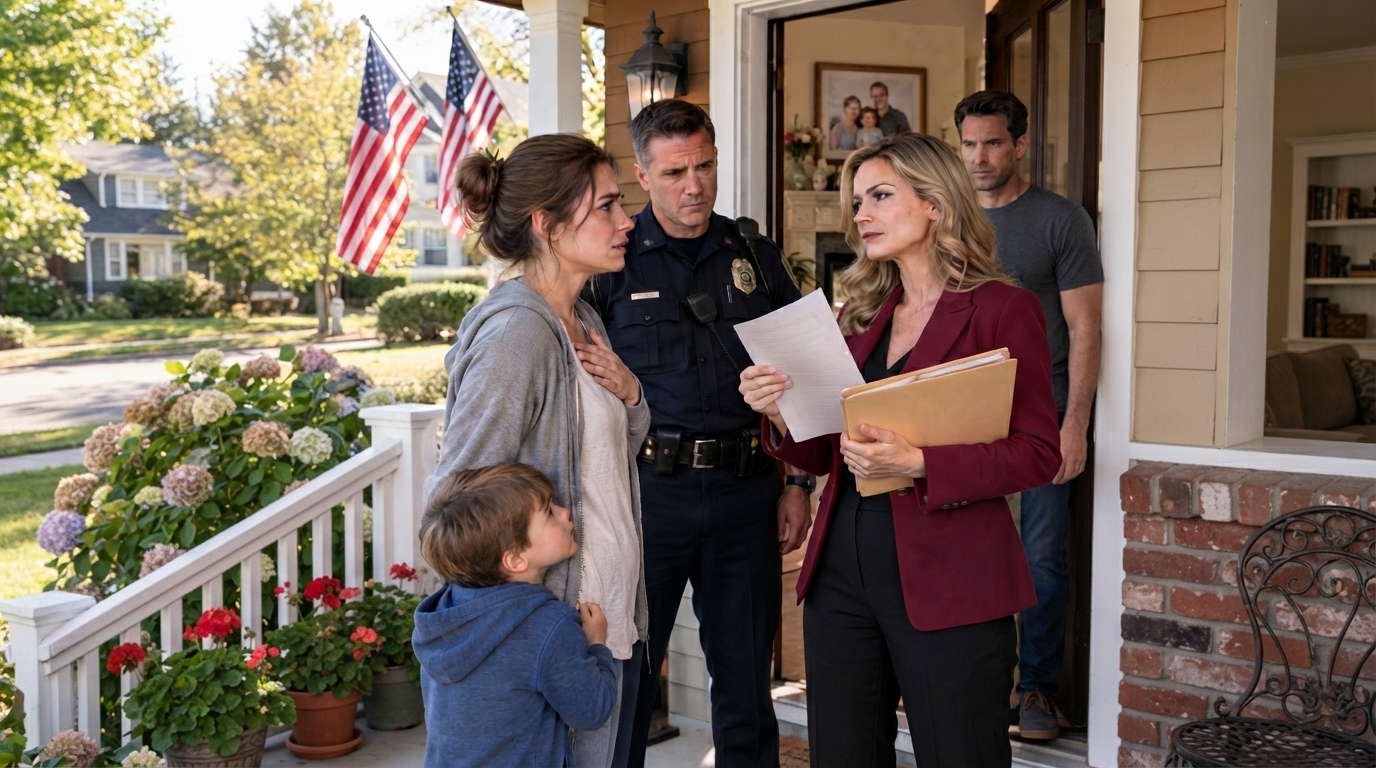
Officer Sandival stared at the document.
Then he looked at me.
“Ma’am, what day is this dated?”
I gave him the date.
My voice sounded strangely calm.
“That was the fourth day after my heart stopped.”
He looked toward Vanessa.
“Is that correct?”
Vanessa folded her arms.
“She was in the hospital.”
“Unconscious?”
“She was under sedation.”
“Could she have signed a document?”
Vanessa hesitated.
“That’s not for me to say.”
Officer Sandival looked down at the paper again.
I stepped closer.
“I can say it.”
He looked at me.
“I couldn’t even feed myself.”
My hands began trembling.
“I couldn’t sit up. I couldn’t speak. I was attached to machines.”
Vanessa shook her head.
“She had periods where she was responsive.”
“No,” I said.
She looked at me.
“You weren’t there.”
“I was.”
“No.”
“You weren’t in that hospital room.”
Her voice hardened.
“I was there every day.”
“Were you there when they restarted my heart?”
She said nothing.
“Were you there when I was intubated?”
Nothing.
“Were you there when I was transported to the ICU?”
Nothing.
I looked at the officer.
“I have medical records.”
Vanessa’s face tightened.
“So do I.”
She pulled another sheet from the folder.
“This is the temporary guardianship agreement.”
Officer Sandival accepted it.
He studied the form.
Then he asked a question that neither of us expected.
“Who notarized this?”
Vanessa answered immediately.
“A mobile notary.”
“Name?”
She gave it.
He wrote it down.
“Where was this signed?”
“At my house.”
“When?”
Vanessa told him the date.
It was the same date.
The same day I had been on life support.
Officer Sandival looked at me.
Then at Vanessa.
Then at Curtis.
“I’m going to need both of you to step back.”
Vanessa frowned.
“Why?”
“Because this is no longer a simple family dispute.”
Her expression changed.
“What are you implying?”
“Nothing yet.”
He turned to me.
“Do you have proof you were hospitalized on that date?”
“Yes.”
“Keep it ready.”
Then he turned back to Vanessa.
“Who has physical custody of the child right now?”
“I do.”
“Where is he?”
“In the house.”
“Is he safe?”
“Yes.”
“Has he been enrolled in school under your name?”
“Yes.”
“Has any court given you legal custody?”
“No.”
She paused.
“I submitted paperwork.”
“That isn’t what I asked.”
Vanessa stared at him.
“No.”
Officer Sandival took a slow breath.
“I need everyone to stay calm.”
Then he asked:
“Ms. Carter, do you want your son returned to you?”
I almost laughed through my tears.
“Yes.”
“Then we’re going to handle this correctly.”
Vanessa stepped forward.
“You don’t understand.”
“I understand enough to know that paperwork doesn’t become a custody order because someone says it does.”
Her face reddened.
“He can’t just be taken from the only stable home he has known for weeks.”
“Two weeks,” I whispered.
She turned toward me.
“Two weeks when you couldn’t be his mother.”
“I was his mother before I got sick.”
“You weren’t there.”
“I was unconscious.”
“Exactly.”
She said it like she had won.
Officer Sandival stared at her.
“That isn’t abandonment.”
Vanessa’s jaw tightened.
“I have evidence.”
“So do we all.”
Then he asked her:
“Is Eli calling you Mom?”
She went silent.
Curtis looked at the floor.
Officer Sandival noticed.
“Is he?”
“Yes,” Vanessa finally said.
“Did you instruct him to?”
She didn’t answer.
I did.
“She told him to.”
Vanessa snapped.
“He needed consistency.”
“You told him his mother was too sick to care for him.”
“I told him the truth.”
“You told him I might never come home.”
She looked at Curtis.
He closed his eyes.
Officer Sandival asked:
“Mr. Curtis, is that true?”
Curtis looked like a man who wished the floor would open.
“She was scared,” he said.
“That wasn’t my question.”
Curtis swallowed.
“Yes.”
Vanessa turned on him.
“Curtis!”
He flinched.
Officer Sandival raised a hand.
“Enough.”
Then he looked toward the hallway.
“Eli.”
I heard the name and my entire body reacted.
My son appeared at the end of the hall.
He was wearing a blue sweatshirt I didn’t recognize.
His hair had been cut shorter.
He looked thinner.
For a second, he didn’t move.
Then he saw me.
“Mom?”
That single word shattered me.
I dropped to my knees.
“Eli.”
He ran.
Vanessa tried to stop him.
“Eli, stay here.”
He ignored her.
He crossed the room and threw himself into my arms.
I cried into his hair.
He smelled different.
New soap.
New shampoo.
A stranger’s house.
But underneath all of that, he was still my little boy.
He wrapped his arms around my neck.
“You’re home.”
“Yes.”
“You came back.”
“I told you I would.”
He started crying.
“Mom, she said you were sick forever.”
I looked at Vanessa.
She didn’t meet my eyes.
“She said you couldn’t take care of me anymore.”
I hugged him tighter.
“I’m here.”
Officer Sandival crouched nearby.
“Eli, do you want to go home with your mom?”
Eli nodded.
“Yes.”
Vanessa stepped forward.
“He’s confused.”
Officer Sandival stood.
“He seems very clear.”
“He has bonded with us.”
“That’s not a reason to keep him.”
“He needs stability.”
“So does his mother.”
Vanessa stared at me.
“You can’t just walk in here and take him after I did everything.”
I stood carefully.
My legs were weak.
But I was standing.
“I didn’t ask you to replace me.”
She laughed bitterly.
“You asked me to take care of him.”
“For a couple of days.”
“And I did.”
“You turned it into a custody battle.”
“No.”
She pointed at Eli.
“I became the parent he needed.”
Eli buried his face in my side.
Officer Sandival noticed.
He looked at Vanessa.
“Ma’am, I need you to understand that the child doesn’t belong to the person who cared for him during a medical emergency.”
Vanessa’s face hardened.
“That sounds very convenient.”
“It isn’t about convenience.”
He looked at me.
“Can you safely care for him tonight?”
I answered honestly.
“Yes.”
My doctors had discharged me with restrictions.
I had home nursing support for the first week.
My sister had been told.
She knew.
She simply hadn’t expected me to come home so soon.
Officer Sandival asked to see my discharge papers.
I showed them.
He reviewed the medications.
He looked at the medical instructions.
Then he nodded.
“Based on what you’ve shown me, I’m not seeing abandonment.”
Vanessa stepped forward.
“What about the guardianship?”
“We will verify it.”
She looked relieved.
Until he added:
“And if the signature was obtained fraudulently, that’s a completely different issue.”
Her face went pale.
I looked at Curtis.
He looked sick.
Officer Sandival asked:
“Where did you say the notary was?”
Vanessa gave the name again.
“Good.”
He wrote it down.
“I’m going to verify the notarization.”
Then he asked me for the hospital records.
I handed them over.
He looked at the date.
His eyebrows rose.
“Ms. Carter, you were medically incapable of signing anything on this date.”
I nodded.
“I know.”
He looked at Vanessa.
“Did you witness her sign this?”
“Yes.”
“Where?”
“At the hospital.”
I stared at her.
“You just said it was signed at your house.”
She froze.
For the first time, she realized what she had done.
Officer Sandival looked at her.
“You said it was signed at your house.”
Vanessa’s mouth opened.
No sound came out.
“And now you say it was witnessed at the hospital?”
“I—”
He held up the paper.
“Which is it?”
She looked at Curtis.
He whispered:
“Vanessa.”
She ignored him.
“It was complicated.”
Officer Sandival took the document.
“I’ll be taking this as evidence.”
Her face changed completely.
“You can’t.”
“I can.”
She stepped forward.
“This is mine.”
“No.”
He handed it to another officer who had just arrived.
“This may be evidence of fraud.”
The word hung in the room.
Fraud.
My sister had created a legal-looking version of the life she wanted.
She had filled a folder.
She had gathered school records.
She had bought clothes.
She had painted a room.
She had changed what my son called her.
She had taken photographs.
She had rewritten the story.
And the entire time, she had been building a case.
Not for a temporary arrangement.
For replacement.
Eli squeezed my hand.
“Can we go home?”
I nodded.
“Yes.”
Vanessa started crying.
“Please don’t take him.”
I looked at her.
For a second, I saw my sister.
The little girl I grew up with.
The teenager who used to sleep in my room after nightmares.
The woman who had held my hand at our mother’s funeral.
And then I looked at the folder.
The forged date.
The false signature.
The photograph over the fireplace.
My son’s new school.
His new name for her.
I realized grief had changed her.
But grief didn’t excuse this.
I couldn’t hate her.
But I couldn’t trust her.
Officer Sandival walked us outside.
Eli climbed into the car.
Before closing the door, he looked at me.
“Are we going home?”
“Yes.”
He smiled.
I shut the door.
Then I turned around.
Vanessa was standing on the porch.
Curtis stood beside her.
She looked at me.
“You’re going to regret this.”
I stared at her.
“You already made me regret trusting you.”
Then I got into the car.
As we drove away, Eli leaned against me.
After several minutes, he whispered:
“Mom?”
“Yes?”
“Did I do something wrong?”
My heart broke.
“No.”
“Did I make Aunt Vanessa mad?”
“No.”
“Why did she say I was her son?”
I looked out the window.
Because the truth was too complicated for a five-year-old.
“She was confused.”
“About what?”
I looked down at him.
“About who you belong with.”
He thought about that.
Then he hugged me.
“I belong with you.”
I held him.
“Yes.”
And for the first time since my heart had stopped, I allowed myself to believe I would be okay.
But when we reached home, there was already a message waiting.
From Detective Sandival.
Do not confront your sister. We found something else.
I stared at the screen.
Then another message appeared.
You need to come to the station tomorrow morning.
PART 4
The next morning, I sat across from Detective Sandival.
He placed a folder on the table.
“We verified the notary.”
“And?”
“The notary’s records show that the document was signed in person.”
I stared at him.
“By me?”
“No.”
“Then by whom?”
He slid the next page across the table.
“Your sister.”
My stomach dropped.
“She used your name?”
“Yes.”
“Did she admit it?”
“She said she was helping complete emergency paperwork.”
I shook my head.
“There was no emergency paperwork.”
“We know.”
He opened another file.
“There’s more.”
Inside were messages between Vanessa and the notary.
The first message was from Vanessa.
My sister is unconscious, but we need guardianship immediately. Can you help?
The notary had asked whether I could be present.
Vanessa wrote:
No. She’s heavily sedated.
The notary should have refused.
Instead, according to the records, Vanessa showed identification, provided forms, and told the notary that I had given verbal consent before being sedated.
The notary accepted her explanation.
That created a serious problem.
But Detective Sandival wasn’t finished.
“We found a second document.”
He placed it in front of me.
A temporary medical authorization.
It gave Vanessa authority to make medical decisions for Eli.
The signature was mine.
Again.
“The date?”
I asked.
“The same.”
I shook my head.
“Someone had access to my bag.”
“Your purse?”
“Yes.”
“Who had it?”
I thought.
“Vanessa.”
He nodded.
“She visited you in the ICU.”
“I don’t remember.”
“You weren’t conscious.”
“That doesn’t make sense.”
“She had access.”
My hands went cold.
“She could have taken anything.”
“That’s our concern.”
I looked at him.
“What did she use the medical authorization for?”
“We’re still checking.”
I waited.
“There’s more.”
Of course there was.
He placed photographs on the table.
Vanessa’s house.
Eli’s room.
The new blue walls.
The matching shirts.
The framed family photo.
I looked at the photograph again.
It wasn’t just a casual picture.
It had been professionally staged.
The photographer had captured Vanessa, Curtis, and Eli in matching clothes.
Eli stood between them.
Behind them, the nursery was decorated like a permanent child’s bedroom.
There was something wrong with the photograph.
Not technically.
Emotionally.
It looked like a family portrait.
My son was being presented as someone else’s child.
Detective Sandival said:
“When did the room get painted?”
“About ten days into your coma.”
“Who did it?”
“Vanessa hired a contractor.”
“What about the furniture?”
“Purchased online.”
“What about the school?”
“She enrolled him during your hospitalization.”
I stared at the documents.
“How could a school accept her?”
“She presented herself as the temporary caregiver.”
“Not the parent?”
“No.”
“She told neighbors she was his mother.”
“Yes.”
I closed my eyes.
It wasn’t spontaneous.
It was planned.
“How long had she been preparing?”
“We don’t know.”
Then he handed me a notebook.
I recognized it.
Vanessa’s handwriting.
Inside were entries.
Monday — Eli likes dinosaurs.
Tuesday — He asked about Mom.
Wednesday — Tell him she needs rest.
Thursday — Start using Mom slowly.
My fingers went numb.
I turned the page.
Week Two — School forms.
Week Two — New clothes.
Week Two — Remove old photographs.
My breath caught.
“What photographs?”
He looked at me.
“Your photographs.”
The next page contained a list.
“Family photo from kitchen.”
“Birthday pictures.”
“School drawings.”
“Mother’s Day card.”
Then one sentence:
He needs to stop comparing this house to hers.
I covered my mouth.
She had been intentionally dismantling my son’s connection to me.
Detective Sandival waited.
I continued turning pages.
Then I found the most disturbing entry.
If she survives, she may fight.
Underneath:
Need a record showing I provided stable care.
Another:
Document every meal.
Another:
Keep all medical appointments.
Another:
School testimony will help.
I looked up.
“She was building a case.”
“Yes.”
“From the beginning.”
“Yes.”
“Why didn’t anyone stop her?”
“Because she was telling everyone the same story.”
“What story?”
“That you were critically ill and unable to care for your son.”
I shook my head.
“I was recovering.”
“She told people you might have permanent cognitive problems.”
I stared at him.
“She said that?”
“Yes.”
“Based on what?”
“Nothing medical.”
The detective slid another document forward.
It was a statement Vanessa had drafted.
It claimed I had “long-term instability” and “difficulty maintaining consistent parenting due to health and employment issues.”
I almost laughed.
“Employment issues?”
“You work full-time.”
“I’ve been working since Eli was born.”
“I know.”
“I’ve never missed a pediatric appointment.”
“I know.”
“I’ve never been hospitalized before.”
“We know.”
“Then what was she trying to prove?”
Detective Sandival leaned back.
“That you were incapable.”
I stared at him.
“And if she couldn’t prove I was incapable?”
“She could attempt to establish that Eli had become settled in her care.”
I thought about the school.
The clothes.
The photographs.
The blue room.
The words.
He needs to stop comparing this house to hers.
She wasn’t waiting for me to die.
She was waiting for me to come back.
And she planned to win anyway.
That realization frightened me more than the forged signature.
“What about the court?”
“She filed a petition.”
“When?”
“Three days before you woke.”
My entire body went cold.
“She was already trying to get custody before I was conscious.”
“Yes.”
“What did the judge do?”
“No final order yet.”
I exhaled.
“Thank God.”
“But there is a hearing scheduled.”
“When?”
“Soon.”
“How soon?”
“Forty-eight hours.”
I stared at him.
“Why didn’t anyone tell me?”
“Because we wanted you medically stable before you got involved.”
I understood.
But I also realized something.
Vanessa had two weeks of preparation.
I had two days.
That didn’t scare me.
Because now I had something she didn’t.
The truth.
I asked:
“Can I see the full file?”
“Yes.”
“Everything?”
“Everything we can lawfully provide.”
I read for hours.
School records.
Text messages.
Photographs.
Medical forms.
Notary records.
The guardianship filing.
Then I found a note from a school administrator.
Mrs. Vanessa Carter has demonstrated exceptional consistency in the child’s routine.
I stared at it.
Of course.
Consistency.
That was the word Vanessa had built her whole case around.
She had taken a five-year-old child during his mother’s medical crisis.
She had kept him for two weeks.
Then she had documented every meal she fed him as evidence of parenting.
She wasn’t measuring love.
She was measuring paperwork.
And for a moment, I was terrified.
What if a judge actually believed her?
What if my medical emergency became evidence against me?
What if the fact that I had been unconscious was somehow turned into a weakness?
Then I remembered something else.
I had been unconscious.
Not absent.
Not neglectful.
Not abandoning my child.
Sick.
There was a difference.
A very important one.
That evening, my attorney came to my house.
She reviewed every document.
Then she looked at me.
“You need to hear this.”
“What?”
“Don’t let Vanessa define the story.”
“I won’t.”
“Your sister will focus on the two weeks.”
“I know.”
“We will focus on the five years.”
She opened a folder.
Pediatric records.
School records.
Daycare records.
Tax documents.
Medical appointments.
Photographs.
Birthday invitations.
Teacher notes.
Everything.
“Your son has lived with you for his entire life.”
I nodded.
“That’s the foundation.”
She placed another file beside it.
“My sister says I was too sick.”
“Then we’ll show the discharge plan.”
“She says he bonded with her.”
“Of course he did. He was placed with a trusted relative.”
“She says he’s settled.”
“He can be settled with his aunt and still belong with his mother.”
I exhaled.
She continued.
“Your strongest evidence may be his own experience.”
“Eli?”
“Yes.”
“I don’t want to put him through this.”
“You won’t.”
“What happens?”
“The court will determine what is appropriate.”
I looked at her.
“I just want him safe.”
“That should be your entire message.”
I nodded.
Then she said:
“There’s one more thing.”
“What?”
“Vanessa has been telling people your medical condition is ongoing.”
“It isn’t.”
“I know.”
“What can I do?”
“Keep every doctor’s report.”
I did.
The hearing came two days later.
Vanessa arrived with Curtis.
She wore a conservative suit.
No jewelry.
No makeup.
She looked like a grieving parent.
That was deliberate.
I knew it.
She had spent years learning how to look vulnerable when she wanted something.
I had spent years learning how to stay quiet when I was hurt.
But this time, I wasn’t alone.
My attorney sat beside me.
Eli was with a court-appointed advocate.
We entered.
The judge reviewed the custody petition.
Vanessa’s attorney spoke first.
He described my medical emergency.
He described two weeks of uninterrupted care.
He described school enrollment.
He described stability.
Then he said:
“Your Honor, our concern is not punishment. It is continuity.”
I stared straight ahead.
He continued:
“The child has formed a strong attachment in my client’s home.”
Then my attorney stood.
She didn’t attack Vanessa.
She simply presented the timeline.
Five years of parenting.
Five years of medical records.
Five years of school records.
Five years of housing.
Five years of consistent care.
Then the hospitalization.
Two weeks.
Temporary emergency care.
And immediately afterward:
A guardianship document signed during a period when I was medically incapable of signing.
The courtroom went silent.
The judge examined the document.
Then asked Vanessa:
“Did you assist in obtaining this form?”
“Yes.”
“Did the mother sign it?”
Vanessa hesitated.
“She consented verbally.”
“That isn’t what I asked.”
“No.”
“She did not physically sign?”
“I don’t remember.”
My attorney looked toward me.
I kept my expression neutral.
The judge examined the hospital record.
“Ms. Carter was sedated and intubated on this date.”
Vanessa’s attorney attempted to argue that medical incapacity did not automatically invalidate every communication.
The judge agreed.
But then came the notary records.
And the contradiction.
Signed at the house.
Witnessed at the hospital.
The date never changed.
The story did.
The judge looked at Vanessa.
“Which location is accurate?”
Vanessa’s face went pale.
“I don’t know.”
The judge frowned.
“You don’t know where a document central to your custody petition was signed?”
Vanessa started crying.
“I was trying to protect Eli.”
My attorney stood.
“Your Honor, protection does not require fabricating a legal document.”
Vanessa turned toward me.
“You don’t understand what I was trying to do.”
I looked at her.
“I understand exactly.”
She whispered:
“I lost Caleb.”
The courtroom became still.
I knew this was the part she had been carrying for years.
She looked at the judge.
“I lost my baby.”
Her voice broke.
“I couldn’t survive losing another child.”
No one spoke.
Even I felt the pain in her words.
For a moment, I didn’t see a rival.
I saw my sister.
A woman who had lost her own baby and never recovered.
But grief does not grant ownership.
And love does not erase another parent’s rights.
My attorney didn’t challenge her grief.
She challenged her actions.
“You lost your child,” she said gently. “That was devastating. But Eli is not Caleb.”
Vanessa started crying harder.
“I know.”
“Then why did you replace him?”
Vanessa stared at the floor.
“I didn’t mean to.”
My voice finally broke through.
“You moved his picture.”
She looked at me.
“You painted his room.”
She said nothing.
“You told him to call you Mom.”
Silence.
“You threw away his shirt.”
Curtis closed his eyes.
“You told him I was too sick to be his mother.”
Vanessa looked at me.
“I was scared.”
“So was I.”
She shook her head.
“You don’t understand.”
I stepped closer.
“I was the one dying.”
That sentence ended everything.
The judge ordered a temporary return of Eli to me subject to appropriate medical and family-services review.
Vanessa was ordered not to remove him from my care.
The guardianship document was referred for further investigation.
The school was instructed to restore the correct parental records.
And the court appointed a neutral evaluator to assess the circumstances.
As we left the courthouse, Vanessa stood on the steps.
She looked at Eli.
“I’m sorry.”
Eli held my hand.
He didn’t move.
She cried.
Then she looked at me.
“I never wanted to hurt him.”
“You hurt me too.”
“I know.”
“And you scared him.”
“I know.”
I almost walked away.
But then she said:
“Can I see him sometime?”
I looked at Eli.
Then at Vanessa.
“That depends on the court.”
She nodded.
No argument.
No rage.
For the first time, she accepted a boundary.
We walked to the car.
Eli climbed in.
I sat beside him.
He looked at me.
“Is Aunt Vanessa my aunt again?”
I smiled sadly.
“Yes.”
“Not Mom?”
“No.”
He thought for a moment.
“Okay.”
Then he asked:
“Can we go home?”
I kissed his forehead.
“Yes.”
We drove home.
That night, I tucked him into his own bed.
His dinosaur shirt was gone.
So I ordered three new ones.
He picked the green one.
Then he looked at me.
“Mom?”
“Yes?”
“Are you going to die?”
I froze.
“No.”
“You promise?”
“I promise I’ll do everything my doctors tell me.”
He nodded.
“Good.”
Then he smiled.
“I missed you.”
“I missed you too.”
He closed his eyes.
For the first time in weeks, I sat beside him without machines beeping around us.
I listened to his breathing.
And I realized that surviving wasn’t just about my heart continuing to beat.
It was about getting back to the people my heart had been beating for.
But there was still one thing I needed to understand.
Why had Vanessa been so certain she could take my son?
The answer was in a box I found the next morning.
It had been delivered to my house.
The return address was Vanessa’s attorney.
Inside was a copy of a document Vanessa had prepared months before my medical emergency.
The title was simple.
Contingency Guardianship Plan.
The date was seven months earlier.
I stared at the page.
She hadn’t started planning when I went into the coma.
She had been planning before I ever got sick.
PART 5
I called my attorney immediately.
She arrived within the hour.
We placed the document on the table.
She read it once.
Then again.
“This changes the timeline.”
“How?”
“It shows premeditation.”
I stared at the page.
“Why would she make this months before I got sick?”
“We don’t know.”
I thought about the past.
Vanessa volunteering to babysit.
Vanessa insisting on taking Eli overnight.
Vanessa buying him gifts.
Vanessa asking detailed questions about my work schedule.
Vanessa wanting copies of his medical information.
Vanessa telling me she could take him “anytime.”
I had thought she was being helpful.
Now every memory looked different.
My attorney turned another page.
There were questions written in Vanessa’s handwriting.
What happens if mother is hospitalized?
Who makes school decisions?
How quickly can emergency custody be filed?
What evidence establishes continuity?
What if child refuses to return?
My hands trembled.
“She had a plan.”
“Yes.”
“For months.”
“Yes.”
I sat back.
“Did she expect me to die?”
“Maybe.”
“Or did she just expect an opportunity?”
My attorney looked at me.
“That distinction may matter legally. But emotionally, I understand why it feels enormous.”
I stared at the document.
I wasn’t angry anymore.
I was heartbroken.
Because my sister had not simply stepped in during a crisis.
She had been waiting for a crisis.
The investigation continued.
The police interviewed the notary.
They examined the signatures.
They reviewed the medical records.
They looked at Vanessa’s texts.
They analyzed the photographs.
They spoke to the school.
They spoke to neighbors.
They reviewed the home-security footage from Vanessa’s house.
And slowly, the entire picture emerged.
The blue room had been painted before my heart attack.
Not afterward.
The furniture had been purchased weeks earlier.
The matching shirts had been ordered a month earlier.
The photographer had been booked before my hospitalization.
The school enrollment paperwork had been started before I went into the ICU.
She had not been improvising.
She had been preparing.
And then I found one more piece.
An email from Vanessa to a realtor.
The subject line said:
If Eli stays, I need to modify the house.
The email was dated six weeks before my emergency.
I stared at it.
The implication was clear.
She had imagined a future where Eli lived with her.
Maybe she had convinced herself it was because she loved him.
Maybe because she believed I was incapable.
Maybe because she couldn’t bear another loss.
But the result was the same.
She had planned for my absence.
Not for a weekend.
For permanence.
That was the part I couldn’t forgive easily.
Not the grief.
Not the fear.
The planning.
The certainty.
The decision to tell a child his mother could no longer care for him while his mother was unconscious.
Months later, the investigation concluded that the guardianship document contained a signature attributed to me that I had not authorized.
The authorities handled the matter according to the applicable laws and evidence.
I didn’t celebrate.
I didn’t ask for the maximum punishment.
I didn’t want Vanessa destroyed.
I wanted the truth established.
That distinction mattered to me.
Vanessa entered into legal proceedings related to the falsified document and other conduct uncovered during the investigation.
Curtis cooperated with investigators.
He admitted he had known Vanessa was preparing for the possibility that Eli would remain with them.
He said he had been afraid to stop her because he knew how deeply she was grieving Caleb.
That didn’t excuse him.
But it explained his silence.
And again, I saw how dangerous silence could be.
One person lies.
Another person stays quiet.
A third person accepts the lie.
Soon the lie becomes a family system.
I had seen it with Vanessa.
I had seen it in myself.
For years, I had mistaken her constant babysitting for generosity.
I had accepted her growing involvement because I was exhausted.
I had overlooked little things.
The way she corrected Eli when he called me.
The way she occasionally said he would be “better off with a more stable schedule.”
The way she asked about my finances.
The way she kept a copy of his medical information.
The way she once joked:
“You know, if anything happened to you, he’d basically be mine.”
I had laughed.
She hadn’t.
That memory haunted me.
But I refused to let it define the rest of my life.
I focused on Eli.
His school.
His therapy.
His routines.
His questions.
For months after the incident, he became clingier.
He wanted me within sight.
At bedtime, he would ask:
“You’re still here?”
“Yes.”
“When I wake up?”
“I’ll be here.”
“Promise?”
“Promise.”
Then one afternoon, he asked something that stopped me.
“Mom?”
“Yes?”
“Can I still visit Aunt Vanessa?”
I looked at him.
“That depends on what the judge says.”
“Why?”
“Because adults have to make sure you’re safe.”
He thought about it.
“She loved me.”
I swallowed.
“I believe she loved you.”
“Then why did she do bad things?”
That was the hardest question.
I crouched beside him.
“Sometimes people can love someone and still make very wrong choices.”
“Like lying?”
“Yes.”
“Like pretending?”
“Yes.”
He thought for a moment.
“I don’t want her to lie anymore.”
“Neither do I.”
He nodded.
That was it.
Children can understand complicated truths when you stop insulting them with simple lies.
Eventually, Vanessa was allowed supervised visits under the court’s conditions.
The first one was difficult.
Eli was nervous.
So was I.
Vanessa sat across from him.
She looked thinner.
Tired.
She hadn’t worn her usual jewelry.
Eli held a small dinosaur in his hand.
“Hi,” Vanessa whispered.
“Hi.”
“I’m sorry.”
Eli looked at her.
“For what?”
She started crying.
“For making things confusing.”
He looked down at the dinosaur.
“You told me to call you Mom.”
“I know.”
“That wasn’t right.”
“No.”
“Mom is my mom.”
Vanessa nodded.
“Yes.”
Silence.
Then Eli said:
“You can be Aunt Vanessa.”
She covered her face and cried.
I looked away.
That moment wasn’t mine.
It belonged to them.
After the visit, Vanessa came to me.
“I don’t deserve another chance.”
I didn’t answer.
“But I want to earn one.”
“You can’t earn back what happened.”
“I know.”
“You can only choose what you do next.”
She nodded.
“I will.”
We never became what we were before.
That wasn’t possible.
Trust doesn’t return because someone apologizes.
It returns slowly, if at all, through consistent behavior.
Months passed.
Vanessa complied with the visitation terms.
She respected boundaries.
She stopped calling herself Eli’s mother.
She returned his things.
Every dinosaur.
Every photograph.
Even the blue sweatshirt she had bought him.
She gave me the room key to the blue bedroom.
“I don’t need it anymore,” she said.
I took it.
Not as a trophy.
As a reminder.
The room eventually became empty.
Curtis removed the decorations.
The photograph above the fireplace came down.
Caleb’s picture returned to its original place.
One day Vanessa invited me inside.
I stood in the doorway.
She looked at the wall.
“I should never have taken his picture down.”
“No.”
“I thought I could fix something.”
“What?”
She stared at Caleb’s photograph.
“My grief.”
I understood.
She had tried to put my living son into the empty space left by her dead baby.
That was the tragedy.
Eli had never been the person who could fill that space.
No child could.
She looked at me.
“I kept trying to make motherhood feel like it could happen again.”
I nodded.
“But you already knew motherhood.”
She looked at me.
“You were a mother.”
“Yes.”
“And you were his aunt.”
“Yes.”
She cried.
“I just couldn’t accept that those were enough.”
I didn’t hug her.
Not yet.
But I sat beside her.
Sometimes presence is the first thing you can offer.
Years later, when I think about those weeks, I don’t remember the courtroom first.
I remember waking up in the hospital.
The first question I asked.
“Where’s my son?”
I remember being told he was safe.
I remember believing my sister would protect him.
I remember how good it felt to hear his voice again.
And I remember the terror of realizing that the person I trusted most had been quietly preparing to replace me.
That experience changed me.
I became more careful.
But I didn’t become cold.
I learned the difference between boundaries and walls.
A wall says nobody gets in.
A boundary says you may come close, but you do not get to decide who I am.
Vanessa taught me that.
So did the people who helped her.
The notary.
The people at the school who never questioned the paperwork deeply enough.
The relatives who believed her version because it was easier.
Even me.
Because I had helped create the conditions that allowed her to step in so completely.
I had been exhausted.
I had accepted free childcare.
I had trusted family.
None of that made me responsible for what she did.
But it taught me something.
Love still requires attention.
Trust still requires verification.
And when something feels slightly wrong, ignoring it does not make it safer.
Years later, Eli still remembers the blue room.
He brings it up sometimes.
“Remember when Aunt Vanessa had that room?”
“Yes.”
“Why was it blue?”
“She liked blue.”
He laughs.
“I like green.”
“I know.”
His favorite dinosaur shirt is still green.
The one I bought after the hospital.
He has outgrown it now.
I kept it anyway.
Not because I’m afraid of losing him.
Because I remember what it felt like to think I might.
He is older now.
He knows the full story in age-appropriate pieces.
He knows I got very sick.
He knows Aunt Vanessa took care of him.
He knows she made some choices that were wrong.
He knows those choices had consequences.
He also knows that people are more complicated than their worst mistakes.
That lesson matters.
Because I don’t want him growing up believing forgiveness means forgetting.
And I don’t want him growing up believing one mistake makes someone irredeemable.
I want him to understand accountability.
I want him to know that love is not ownership.
That caring for someone doesn’t give you the right to replace someone else.
That family means support.
Not control.
And that when someone is vulnerable, the answer is not to take advantage of it.
My sister lost a child.
I almost lost my life.
My son almost lost his sense of security.
All because grief, fear, and opportunity collided at the same moment.
But we survived it.
Not perfectly.
Not without scars.
But together.
And there is one sentence Vanessa said that I still remember.
“Two weeks made me the real mother.”
It was wrong.
Two weeks can create memories.
Two weeks can create attachment.
Two weeks can create routines.
Two weeks can make someone feel important.
But two weeks cannot erase five years of bedtime stories.
Five years of fevers.
Five years of school lunches.
Five years of scraped knees.
Five years of holding a child’s hand when he was afraid.
Five years of being there before he knew how to say the word mother.
Motherhood wasn’t something Vanessa could inherit by waiting in a hospital hallway.
It wasn’t something she could prove with a folder.
It wasn’t something a photograph could manufacture.
And it certainly wasn’t something a signature could steal.
I spent two weeks unconscious.
She spent two weeks trying to become someone she wasn’t.
I spent two weeks fighting to come back.
And when I opened my eyes, I didn’t need a court document to know who my son was.
I knew because my first thought was him.
Before the doctors.
Before my own body.
Before anything else.
“Where’s Eli?”
That’s what a mother does.
She worries about her child even when she doesn’t know whether she’ll survive the night.
So when my sister announced that two weeks had made her the real mother, she was right about one thing.
Those two weeks changed everything.
They changed how I trusted.
They changed how I protected my son.
They changed how I saw my sister.
But they never changed one simple truth.
Eli was my son.
And when I woke up, I came for him.
I didn’t scream.
I didn’t fight her in the driveway.
I didn’t make threats.
I simply walked into that house with my medical records in one hand and my son’s name in the other.
And when she placed that forged guardianship document in front of the officer, she thought she had finally found the piece of paper that could turn her into his mother.
Instead, it became the piece of paper that exposed everything.
Today, I keep one copy of it in a locked drawer.
Not because I need it.
Because I never want to forget what almost happened.
Sometimes I look at that false signature.
It resembles mine.
But it isn’t.
And there is something strangely comforting about that.
Because it reminds me that my life cannot be rewritten simply because someone else wants a different story.
My son cannot be reassigned.
My memories cannot be erased.
My motherhood cannot be transferred.
And neither can the truth.
Eli once asked me:
“Mom, why did you come get me?”
I smiled.
“Because you’re my son.”
He thought about that.
Then he asked:
“Would you always come?”
I hugged him.
“Always.”
He smiled.
“Good.”
Then he ran outside to play.
I watched him through the window.
And I realized that surviving had given me something I never expected.
Not just another chance at life.
A clearer understanding of what mattered.
People can change.
Families can fracture.
Trust can break.
Grief can distort judgment.
But love does not become stronger by taking another person’s place.
It becomes stronger by knowing where you belong.
Eli knew where he belonged.
So did I.
And after everything, that was enough.
THE END THANK YOU FOR READING !!!