PART 3
I stared at the document Mr. Dalton had placed in front of me.
Across the top, in bold letters, were five words.
IMMEDIATE TERMINATION UPON FRAUDULENT CLAIM.
Below that was my grandfather’s signature.
And beneath his signature was my sister’s full name.
Chloe Elizabeth Whitaker.
For several seconds,
I couldn’t understand why she was mentioned
in a document written nearly twelve years earlier.
Captain Morales leaned forward.
“Mr. Dalton, would you explain what we’re looking at?”
The attorney adjusted his glasses.
Your grandfather established this property trust when you were twenty-three.
The original arrangement protected the house for your
benefit while allowing certain family members
temporary occupancy under specific conditions.
I nodded.
I remembered Grandpa telling me that the house would always be mine.
He’d purchased it after retiring from the railroad.
When his health began failing, he moved into a smaller apartment and asked me to take care of the property.
I’d been stationed overseas at the time.
He told me not to worry about the legal details.
“Just promise me one thing, sweetheart,” he’d said.
“What’s that, Grandpa?”
“Never let anyone convince you that you don’t belong in your own home.”
I’d promised.
But now I understood why he’d been so serious.
Mr. Dalton continued.
“The trust amendment identifies your sister as someone who previously attempted to obtain an ownership interest through a misleading representation.”
I looked up.
“What?”
He turned another page.
“According to these records, Chloe approached your grandfather shortly before his death. She claimed your parents had promised her the property and asked him to sign a transfer.”
My stomach tightened.
“She never told me that.”
“Apparently, your grandfather refused.”
Captain Morales studied the document.
“And the termination provision?”
Mr. Dalton pointed to the paragraph.
“It allows the trustee to terminate certain discretionary occupancy permissions when an occupant attempts to obtain the property through fraud or coercion, subject to the trust terms and applicable law.”
I stared at him.
“So my grandfather knew this might happen?”
“He was concerned enough to put safeguards in writing.”
My throat tightened.
For years, I’d believed Grandpa had simply favored me because I’d helped care for him during his final illness.
But perhaps he’d seen something I hadn’t.
Perhaps he’d understood that my parents and sister viewed the house as something they were entitled to claim.
Mr. Dalton turned to the next page.
“There’s also a letter.”
He handed me an envelope.
My name was written across the front in Grandpa’s familiar handwriting.
I opened it carefully.
My dearest girl,
If you’re reading this, someone has probably made you feel guilty for owning what I chose to leave you.
I want you to remember something.
Your mother and father have had many opportunities to build their own security. Your sister has had opportunities too.
I didn’t leave you this house because I loved them less.
I left it to you because I watched you work for everything you had while others expected you to sacrifice it.
I know how often you’ve been told to be the bigger person.
But being the bigger person doesn’t mean allowing someone to take what belongs to you.
Stand tall, sweetheart.
You earned your place in this world.
And nobody gets to pack your life into garbage bags and tell you that you no longer belong.
Love, Grandpa.
I couldn’t breathe.
That final sentence felt almost impossible.
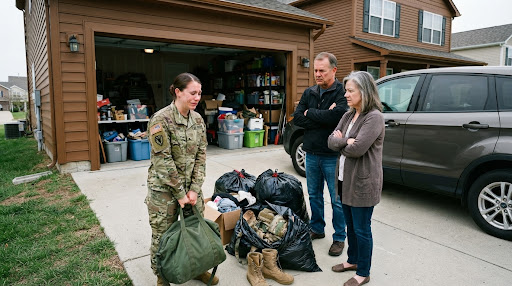
He’d written it years before my family actually packed my belongings into garbage bags.
Yet somehow, he’d described exactly what they’d done.
Captain Morales quietly handed me a tissue.
I hadn’t realized I was crying.
“I’m sorry,” I whispered.
She shook her head.
“There’s nothing to apologize for.”
Mr. Dalton waited until I folded the letter.
Then he said something that made me sit straighter.
“There’s another issue.”
I looked at him.
“What?”
“The trust documents show that your parents’ permission to occupy the property was limited. It never gave them ownership or authority to transfer the house.”
I frowned.
“They’ve been living there for years.”
“Yes. But permission to live somewhere isn’t the same as owning it.”
He tapped the deed.
“The title history confirms the trust arrangement. Your parents cannot simply sign your property over to Chloe.”
I felt relief.
Then I remembered the forged power of attorney.
“What if they use that?”
Captain Morales answered.
“That’s why we need to address it immediately.”
She opened another folder.
“We’ll preserve the records, document your disputed signature, and coordinate with the appropriate investigative authorities.”
Mr. Dalton nodded.
“I’ll also take the necessary steps to protect the property records and notify relevant parties that you dispute any purported authorization.”
I looked between them.
“Can they be arrested?”
Captain Morales spoke carefully.
“That depends on what the investigation establishes. We shouldn’t assume the outcome before the evidence is reviewed.”
I nodded.
I wasn’t looking for revenge.
At least, that’s what I told myself.
But when I remembered my mother smiling while telling me to sleep in the basement, I felt something sharp twist inside my chest.
Forty-five thousand dollars.
Nine months of deployment.
And a family that had apparently decided my absence meant everything I owned was available for them to take.
Mr. Dalton leaned forward.
“There’s something else you should know.”
I looked up.
“Your grandfather appointed an independent successor trustee if certain conflicts arose.”
“Who?”
“His longtime attorney, Harold Bennett. Mr. Bennett has since retired, but the trust provides for a professional replacement.”
I frowned.
“Why would that matter?”
“Because it means the trust administration doesn’t have to depend on your parents’ cooperation. We can establish who currently has authority and proceed properly.”
I exhaled.
For the first time since coming home, I felt as though the ground beneath my feet was solid again.
Captain Morales closed the bank records.
“Now let’s discuss the missing money.”
She had already helped me contact my bank’s fraud department.
The suspicious transfers had been made over several months.
Some went into an account connected to my mother.
Others went toward payments associated with Chloe and Vance.
There were also large withdrawals labeled as household expenses.
I stared at the transaction list.
“Household expenses?”
Captain Morales looked at me.
“Do you recognize any of these payments?”
I shook my head.
One payment was for twelve thousand dollars.
Another was for eight thousand five hundred.
Several smaller transfers followed.
Then I noticed a payment to a furniture store.
I remembered the new furniture in my living room.
The expensive sectional sofa.
The enormous television.
The decorative cabinets Rebecca—no, Chloe—had apparently chosen for my house.
They hadn’t merely taken my bedroom.
They had used my deployment money to redecorate it.
My stomach turned.
“That furniture,” I whispered.
Captain Morales looked up.
“What furniture?”
I explained what I’d seen when I returned.
The new decorations.
The rearranged rooms.
The master bedroom Chloe and Vance had taken over.
Mr. Dalton wrote something down.
“Photograph everything as soon as possible. Don’t remove or destroy anything. We need an accurate record.”
I nodded.
Then Captain Morales asked a question.
“Did you ever grant your mother any legitimate power of attorney?”
“No.”
“Did you authorize her to access your bank account?”
“Never.”
“Did you share your online banking credentials?”
I hesitated.
Years earlier, before my first overseas assignment, I’d asked my mother to keep a folder containing emergency contact information.
It included copies of some personal documents.
But I’d never given her permission to manage my finances.
Captain Morales nodded.
“We’ll document that distinction.”
I looked at the forged signature again.
It resembled mine.
But the final letter was wrong.
My mother had copied my handwriting.
And the thought hurt more than I expected.
That afternoon, I returned to the house.
My father’s truck was in the driveway.
Chloe’s SUV occupied the garage.
Vance’s motorcycle stood beside the front steps.
Apparently, everyone had settled comfortably into the home they believed I’d surrendered.
I walked inside.
Mom was in the kitchen.
She looked surprised.
“You’re back.”
“Yes.”
“Did you handle the paperwork?”
I placed my keys on the counter.
“It’s being handled.”
She smiled.
“Good. Your father will be relieved.”
I looked at her.
“Mom, where did the new living room furniture come from?”
Her smile faltered.
“What?”
“The sofa. The television. The cabinets.”
She shrugged.
“We needed to make the house comfortable.”
“Who paid for it?”
She turned toward the refrigerator.
“Your father handled that.”
I watched her carefully.
“With whose money?”
She stopped moving.
For a moment, the kitchen was completely silent.
Then she turned around.
“Why are you asking questions like that?”
“Because I want to know.”
Her expression hardened.
“You’re acting very suspicious.”
I almost laughed.
Suspicious.
I’d returned from nine months overseas to find my belongings in garbage bags and forty-five thousand dollars missing.
Apparently, asking questions was unreasonable.
“Mom,” I said quietly, “did you access my bank account while I was deployed?”
She stared at me.
Then she folded her arms.
“We’re family.”
That was her answer.
Not yes.
Not no.
Just those two words.
We’re family.
I looked at her.
“That doesn’t answer my question.”
She raised her voice.
“After everything we’ve done for you, you’re going to interrogate me about money?”
I thought about Grandpa’s letter.
Being the bigger person doesn’t mean allowing someone to take what belongs to you.
I took a slow breath.
“I’m not discussing this without the appropriate people present.”
Mom’s eyes narrowed.
“What appropriate people?”
I picked up my keys.
“You’ll find out.”
Then I walked away.
That evening, I photographed the house.
Every room.
Every piece of furniture.
Every trash bag containing my belongings.
I documented the condition of the basement, the master bedroom, and the areas where my possessions had been moved.
I also photographed several documents left on the dining room table.
One was a property-transfer form.
Another was a handwritten list of expenses.
At the bottom of that list was a note.
Once the deed is changed, refinance.
My hands went cold.
They hadn’t merely wanted the house.
They planned to borrow against it.
I photographed the note.
Then I sent the image to Mr. Dalton.
His response arrived minutes later.
Do not sign anything. Preserve the original if it can be done safely and lawfully. We need to discuss this immediately.
I put the phone away.
Then I heard footsteps behind me.
Chloe stood in the doorway.
She wore one of my old sweatshirts.
My sweatshirt.
The one Grandpa had bought me after I completed my first military training course.
She looked at the phone in my hand.
“What are you doing?”
“Taking pictures.”
“Of what?”
“My house.”
She laughed.
“You’re being dramatic.”
I looked at her.
“Chloe, did you know Mom was using my money?”
Her smile disappeared.
“What money?”
“The forty-five thousand dollars transferred while I was deployed.”
She looked toward the hallway.
Then she said something I’ll never forget.
“Well, you weren’t using it.”
I stared at her.
She shrugged.
“You were overseas. We had expenses.”
“That was my deployment pay.”
“So?”
I felt my chest tighten.
“So I earned it.”
She rolled her eyes.
“You always make everything about yourself.”
I looked at the sweatshirt she was wearing.
“Take that off.”
She blinked.
“What?”
“That’s mine.”
Her expression turned ugly.
“You’re seriously fighting over a sweatshirt?”
“No,” I said quietly. “I’m finally drawing a line.”
She laughed.
“Mom and Dad are right. You’ve changed.”
I looked directly at her.
“Yes, Chloe. I have.”
Then I walked downstairs.
I slept in the basement that night.
Not because I accepted their decision.
But because I wanted to avoid a confrontation while the legal process moved forward.
At 6:14 the next morning, my phone rang.
It was Mr. Dalton.
“Good morning,” he said.
“Morning.”
“We’ve confirmed something important.”
I sat up.
“What?”
“The purported power of attorney appears to have been submitted in connection with more than your bank account.”
My stomach tightened.
“What else?”
“Your parents have apparently attempted to use it to support a proposed property transaction.”
I stared at the basement wall.
He continued.
“We’ve notified the relevant parties that you dispute the document’s authenticity. The proposed transfer has not been completed.”
I closed my eyes.
Then he said, “But there’s one more thing.”
“What?”
“Your father has an appointment with a title company tomorrow morning.”
I sat completely still.
“To transfer the house?”
“That’s what the available information suggests.”
I looked toward the ceiling.
Upstairs, I could hear my family moving around.
My mother was laughing.
Chloe was playing music.
Dad was speaking loudly on the telephone.
They believed tomorrow would be the day they finally took everything.
I looked at Grandpa’s letter beside me.
Then I answered.
“Mr. Dalton, I think it’s time they learned who actually owns this house.”
PART 4
The next morning, my father walked into the kitchen wearing a freshly pressed shirt and carrying a leather folder.
He looked pleased with himself.
Mom stood beside the stove making coffee.
Chloe and Vance were already dressed.
Apparently, the entire family planned to attend the appointment.
Dad noticed me standing near the counter.
“Good. You’re awake.”
I nodded.
“Morning.”
He placed the folder on the table.
“We’re leaving in twenty minutes.”
“Where?”
He frowned.
“Don’t start.”
“I’m asking a question.”
“The title office. We’re finalizing the house transfer.”
Mom smiled.
“Then everyone can finally relax.”
I looked at her.
“Everyone?”
She ignored me.
Chloe entered carrying her handbag.
“Can we hurry? Vance has a meeting later.”
Dad turned toward me.
“Get your identification.”
I picked up my coffee.
“I won’t be signing anything.”
The room went silent.
Dad’s expression darkened.
“We discussed this.”
“No. You told me what you wanted.”
His jaw tightened.
“Don’t embarrass this family.”
I looked at him.
“Funny. I was thinking the same thing.”
He stepped closer.
“You’re making a mistake.”
I met his eyes.
“Then let’s go to the appointment and find out.”
For a moment, he looked confused.
Then he smiled.
“Finally. Some sense.”
I didn’t correct him.
At 9:30, we arrived at the title company’s office.
Dad walked through the entrance as though he owned the building.
Mom followed with Chloe and Vance.
I came last.
But I wasn’t alone.
Mr. Dalton was waiting in the conference room.
Beside him sat Captain Morales.
And across the table was a representative of the trust’s professional administration company.
Dad stopped in the doorway.
“What is this?”
Mr. Dalton stood.
“Good morning, Mr. Whitaker.”
Dad looked at me.
“Why is your lawyer here?”
I pulled out a chair.
“Because we’re discussing my property.”
Chloe laughed nervously.
“Oh, come on.”
The title company representative cleared her throat.
“Before any transaction can proceed, we need to address several discrepancies in the documents submitted.”
Dad frowned.
“What discrepancies?”
Mr. Dalton opened a folder.
“First, the property is held under a trust established by your late father.”
Dad waved his hand.
“We know that.”
“Then you also know you do not hold title to the property.”
Dad’s face changed.
“I’ve lived there for years.”
“Occupancy does not establish ownership.”
Mom leaned forward.
“Her grandfather wanted the family to have the house.”
Mr. Dalton nodded.
“He wanted his granddaughter to have the house. That’s why he established the trust.”
Chloe crossed her arms.
“Grandpa loved all of us.”
I looked at her.
“Nobody said he didn’t.”
Mr. Dalton continued.
“The trust documents identify my client as the primary beneficiary and provide specific conditions concerning occupancy and property management.”
Dad stared at the papers.
“Those are old documents.”
“They remain legally relevant.”
Then Mr. Dalton placed another page on the table.
“This is the amendment your father executed before his death.”
Chloe leaned forward.
I watched her face as she recognized the date.
Her expression changed.
Mr. Dalton looked directly at her.
“Ms. Whitaker, according to these records, you previously requested that your grandfather transfer the property to you.”
Chloe’s mouth opened.
“What?”
“Do you recall that conversation?”
She looked at Dad.
Then Mom.
Then back at the attorney.
“I was young.”
I felt my stomach tighten.
“So it’s true?”
Chloe stared at me.
“I didn’t do anything wrong.”
Mr. Dalton continued.
“Your grandfather declined the request and added protections against attempts to obtain ownership through fraudulent claims or coercion.”
Dad slammed his palm against the table.
“This is ridiculous!”
Captain Morales spoke calmly.
“Mr. Whitaker, please remain seated.”
He turned toward her.
“Who are you?”
She introduced herself and explained that she was assisting with matters involving my reported financial concerns and disputed documents.
Dad looked at me.
“You brought the military into a family disagreement?”
I shook my head.
“No, Dad. I reported suspected misuse of my money and a document bearing a signature I didn’t authorize.”
Mom’s face went pale.
“What document?”
Mr. Dalton placed the power of attorney on the table.
“This one.”
For several seconds, nobody moved.
Then Mom whispered, “That’s private.”
I looked at her.
“Yes. My private financial information.”
She turned toward Dad.
“Richard, say something.”
Dad stared at the paper.
Mr. Dalton continued.
“My client disputes this signature. The document has been referred for appropriate examination and investigation.”
Chloe looked frightened.
“Wait. What does that mean?”
Captain Morales answered.
“It means the circumstances surrounding the document and the financial transfers need to be established through the proper process.”
Mom’s hands began shaking.
“We were only helping.”
I looked at her.
“Helping whom?”
She stared at me.
“Your sister needed a place to live.”
“So you moved her into my bedroom.”
“She has a husband!”
“And I have a home.”
Mom’s eyes filled.
“You’re never there.”
I leaned forward.
“Because I was deployed, Mom. Serving my country. Doing my job.”
She looked away.
“And while I was gone, you packed my belongings into garbage bags, took forty-five thousand dollars from my account, and tried to transfer my house.”
Dad stood.
“Enough!”
I looked up at him.
“No. Not this time.”
He pointed at me.
“I am your father!”
I felt something inside me finally settle.
“Yes, you are.”
My voice remained calm.
“And that makes what you did hurt even more.”
He stared at me.
For the first time in my life, I didn’t lower my eyes.
I didn’t apologize.
I didn’t try to make him comfortable.
I simply waited.
Mr. Dalton turned toward the title company representative.
“Given the disputed authorization and the existing trust ownership, no transfer should proceed on the documents presented today.”
She nodded.
“The transaction will not proceed.”
Chloe gasped.
“What?”
Vance leaned forward.
“Wait, we already made plans.”
I turned toward him.
“What plans?”
He looked at Chloe.
She shook her head.
But he continued.
“We were going to refinance after the transfer.”
My chest tightened.
“Refinance?”
He swallowed.
“We needed money for the business.”
I looked at my sister.
“Your business?”
She said nothing.
Then I remembered the handwritten note on the dining room table.
Once the deed is changed, refinance.
I stared at her.
“You were going to borrow against my house.”
Chloe’s eyes filled.
“We were going to pay it back.”
I shook my head.
“You didn’t even ask me.”
Dad stepped forward.
“We were trying to keep the family together.”
I looked at him.
“No. You were trying to keep everyone comfortable at my expense.”
Silence filled the room.
Then Mr. Dalton spoke.
“There’s another matter. The trust administrator has begun reviewing the family’s occupancy arrangements in light of the reported conduct.”
Mom looked up.
“What does that mean?”
“It means the current permissions and agreements must be examined, and any lawful notices or proceedings will be handled through the appropriate process.”
Dad laughed bitterly.
“You’re throwing your own parents onto the street?”
I shook my head.
“No, Dad. I’m not doing anything overnight. You’ll receive proper notice and time to make arrangements according to the law.”
Mom began crying.
“How could you?”
I looked at her.
“How could you put my boots in a garbage bag and tell me to sleep in an unfinished basement?”
She covered her mouth.
I continued.
“How could you look me in the eye and tell me to be a good sister while you were helping Chloe take my home?”
Her shoulders shook.
“And how could you use money I earned while deployed without asking me?”
Nobody answered.
For years, my family had relied on one thing.
My silence.
They believed I would always give in because I hated conflict.
They believed being the responsible daughter meant sacrificing whatever they demanded.
But that morning, sitting in a conference room with the documents spread across the table, I finally understood something.
Peace purchased with your own dignity isn’t peace.
It’s surrender.
The meeting ended without a transfer.
Mr. Dalton explained the next steps.
The bank would continue reviewing the disputed transactions.
The appropriate authorities would examine the power of attorney.
The trust administrator would address the occupancy arrangements through lawful procedures.
And my family would have to make plans that didn’t depend on taking my property.
I walked out of the office alone.
The morning sun felt unusually bright.
For a moment, I stood beside my car and simply breathed.
Then my phone rang.
It was Captain Morales.
She’d remained inside to finish discussing the documents.
“How are you doing?” she asked.
I looked toward the building.
“I’m not sure.”
“That’s understandable.”
I swallowed.
“I thought I’d feel happy.”
She was quiet for a moment.
“Protecting yourself doesn’t always feel good immediately.”
I nodded.
“I know.”
Then she said something I’ll never forget.
“You did the right thing by asking for help instead of trying to handle everything alone.”
I thanked her.
And for the first time since coming home, I believed I might actually be okay.
The following weeks were exhausting.
My parents hired an attorney.
Chloe and Vance moved out of the master bedroom after receiving formal notice concerning the property arrangements.
Eventually, they relocated to a rented apartment.
My parents also found a smaller place nearby.
The trust administrator handled the required notices and transition arrangements.
Nothing happened overnight.
There were documents.
Meetings.
Deadlines.
And difficult conversations.
But eventually, the house was empty.
My house.
The house Grandpa had left me.
The first evening I walked through it alone, I didn’t turn on the television.
I didn’t play music.
I simply stood in the living room and listened.
Silence.
For nine months, I’d dreamed of coming home.
I’d imagined opening the front door, dropping my duffel bag, and sleeping in my own bed.
Instead, I’d returned to garbage bags and betrayal.
Now, at last, I was standing in a home where nobody could order me into the basement.
I walked upstairs.
The master bedroom was empty.
Chloe had taken the furniture she’d purchased.
The walls were marked where she’d hung decorations.
I sat on the floor.
Then I cried.
Not because I regretted protecting my property.
But because I had finally accepted something painful.
The family I’d spent my life trying to please had never understood how much they’d hurt me.
A few days later, the bank completed its initial fraud review.
Some transfers were reversed through the bank’s recovery process.
Other amounts required further investigation and recovery efforts.
The disputed power of attorney was formally challenged, and the matter was referred to the appropriate authorities.
I cooperated with every request for information.
I provided my deployment records.
My financial statements.
The documents showing when and where I had been serving.
And the photographs I’d taken after returning home.
Eventually, the investigation established that my mother had submitted the unauthorized document and used it to gain access to my finances.
The consequences were serious.
The matter proceeded through the appropriate legal channels, and restitution became part of the resolution.
I didn’t celebrate.
Seeing my mother’s name attached to an official investigation was one of the most painful experiences of my life.
But I also refused to pretend it hadn’t happened.
My parents had made choices.
Those choices had consequences.
And loving them didn’t mean erasing the truth.
Chloe stopped speaking to me for several months.
When she finally called, her first words were predictable.
“You ruined everything.”
I sat at my kitchen table.
“Hello to you too, Chloe.”
She sighed.
“We had to move into a tiny apartment.”
I looked out at the backyard.
“I’m sorry you’re having a difficult time.”
“You’re not sorry.”
I remained quiet.
Then she said, “You could have just let us keep the house.”
I closed my eyes.
There it was.
After everything, she still believed my home was something I should have handed over.
“Chloe,” I said, “why do you think I owe you my house?”
She hesitated.
“Because we’re family.”
I took a slow breath.
“Family isn’t a reason to take from someone. It’s a reason to respect them.”
She said nothing.
I continued.
“I would have helped you find somewhere to live. I would have listened if you’d told me you were struggling. But you didn’t ask for help.”
My voice tightened.
“You waited until I was overseas and moved into my home.”
She started crying.
“We thought you’d understand.”
“No,” I said quietly. “You thought I’d surrender.”
For a long moment, neither of us spoke.
Then she whispered, “I’m sorry about the garbage bags.”
I stared at the wall.
It was such a small apology compared with everything that had happened.
But it was the first apology she’d offered.
“Thank you,” I said.
She sniffled.
“Can we ever be sisters again?”
I looked toward Grandpa’s photograph on the mantel.
“I hope so.”
Her voice broke.
“But things have to change.”
“I know.”
I wasn’t certain she truly understood.
But I was willing to let time show me.
My father took longer.
He refused to speak to me after the title company meeting.
He told relatives I’d humiliated him.
He claimed I’d chosen a house over my family.
Some believed him.
Others called to ask what had really happened.
I didn’t argue with anyone.
I simply told them that the house belonged to me, my financial accounts had been accessed without authorization, and the matter was being handled through proper channels.
People could decide what they wanted to believe.
I had stopped trying to manage everyone’s opinion.
Then, one rainy afternoon, Dad appeared at my front door.
He looked older than I remembered.
His shoulders were slightly stooped.
He held a small cardboard box.
I opened the door.
“Dad.”
He nodded.
“Can I come in?”
I hesitated.
Then stepped aside.
We sat in the living room.
He placed the box on the coffee table.
“These were in the garage.”
I opened it.
Inside were my childhood photographs.
My high school graduation picture.
A small trophy from a science competition.
And a folded American flag Grandpa had given me when I enlisted.
My throat tightened.
“I thought you’d want them.”
I nodded.
“Thank you.”
Dad looked around the room.
“You’ve changed the furniture.”
“Yes.”
“It looks nice.”
“Thanks.”
Silence settled between us.
Then he spoke.
“I was wrong.”
I looked at him.
He stared at his hands.
“I thought because I was your father, I could decide what was best.”
I said nothing.
“And when you joined the military, I kept thinking of you as the little girl who needed someone to tell her what to do.”
He swallowed.
“But you’re not that little girl anymore.”
I felt tears gathering.
“No, Dad. I’m not.”
He nodded slowly.
“I should have been proud of you.”
My throat tightened.
“Instead, you threatened my career.”
He closed his eyes.
“I know.”
For a long moment, neither of us spoke.
Then he whispered, “I’m sorry.”
I looked at the man who had taught me to ride a bicycle.
The man who had attended my graduation.
The man who had once carried me to the car after I broke my ankle.
I loved him.
But love didn’t erase what he’d done.
“I appreciate the apology,” I said.
He looked up.
“Can you forgive me?”
I took a slow breath.
“I want to. But forgiveness isn’t the same as pretending nothing happened.”
He nodded.
“I understand.”
“And I need you to respect my decisions from now on.”
“I will.”
I studied his face.
“That means no more threats. No more guilt. No more telling me I owe Chloe everything.”
He swallowed.
“All right.”
Then he stood.
Before leaving, he looked at Grandpa’s photograph.
“Your grandfather always knew you were strong.”
I smiled sadly.
“He taught me.”
Dad nodded.
Then he walked out.
I didn’t know whether our relationship would ever become what it had been.
But for the first time, he’d spoken to me like an adult.
And that mattered.
Six months after I returned from deployment, I finally finished restoring the house.
I repainted the master bedroom.
I replaced the old curtains.
I repaired the basement.
And I brought Grandpa’s wooden rocking chair upstairs from storage.
Every Sunday morning, I sat in that chair with coffee and watched sunlight move across the backyard.
Sometimes I thought about my family.
Sometimes I thought about the soldiers I’d served beside.
And sometimes I thought about the woman I’d been when I first came home.
She’d been exhausted.
Confused.
And desperate to understand why the people she loved had treated her like an inconvenience.
I wished I could tell her something.
You don’t have to fight every battle with shouting.
Sometimes the strongest thing you can do is gather the facts, ask for help, and refuse to surrender what belongs to you.
One afternoon, I received a letter from my commanding officer.
My promotion review had been completed.
The concerns my father had threatened to raise had not derailed my career.
My record had been evaluated through the proper process.
And I had been selected for promotion to major.
I sat at my kitchen table staring at the letter.
Then I started crying.
Not because I had doubted my abilities.
But because I’d spent months afraid my father’s threats might somehow destroy everything I’d worked for.
I called Captain Morales.
“I got it,” I said.
She laughed.
“Congratulations, Major.”
I smiled through my tears.
“Thank you for helping me.”
“You did the hard part.”
After we hung up, I walked to Grandpa’s photograph.
“Well, Grandpa,” I whispered, “I made it.”
I touched the frame.
“And I kept the house.”
That evening, I invited a few close friends over for dinner.
No elaborate decorations.
No expensive furniture.
No people demanding bedrooms.
Just laughter, good food, and the comfort of knowing everyone at my table actually wanted to be there.
Before dessert, one of my friends raised a glass.
“To Major Whitaker.”
Everyone cheered.
I laughed.
Then I looked around the room.
For the first time in a very long time, I felt completely at home.
A year after that terrible homecoming, I found the original trash bags in the back of my garage.
I’d forgotten they were there.
I stood looking at them.
Black plastic.
Twisted handles.
The same bags my mother had used to pack away my life.
I opened one.
Inside was an old PT shirt.
Another contained photographs.
And at the bottom of the third bag, I found a small wooden box.
Grandpa had made it for me when I was twelve.
I opened it.
Inside was a folded piece of paper.
His handwriting.
To my brave girl,
Never forget that your worth is not measured by how much you give other people.
The people who truly love you will never require you to disappear so they can feel important.
Love, Grandpa.
I sat on the garage floor and cried.
Then I carried the box upstairs.
I placed it beside his photograph.
And I finally threw the garbage bags away.
Not because I wanted to forget what happened.
But because I no longer needed them to remind me who I was.
My parents had tried to make me feel like a guest in my own home.
My sister had treated my sacrifice as an opportunity.
And my father had believed he could threaten the career I’d spent years building.
But none of them understood what Grandpa had left me.
It wasn’t simply a house.
It was security.
It was independence.
It was the freedom to decide what happened to my own life.
And when I finally stood up for myself, I didn’t lose everything.
I discovered what had been mine all along.
Sometimes the people who tell you to be a good daughter or a good sister are really asking you to stop being good to yourself.
I still love my family.
I hope we continue finding ways to repair what happened.
But I will never again confuse love with obedience.
And I will never apologize for protecting the life I’ve worked so hard to build.
Because after nine months of deployment, forty-five thousand dollars in missing money, a forged signature, and a family that tried to take my home, I learned one lesson I will carry forever.
You can forgive the people who hurt you without handing them the keys to hurt you again.
And every night, when I lock my front door, I remember Grandpa’s words.
Never let anyone convince you that you don’t belong in your own home.
He was right.
I belong here.
I always did.
THE END THANK YOU FOR READING !!!



