PART 3
The second document was titled
Family Financial Support Agreement.
I stared at the words on my laptop screen,
trying to understand what I was looking at.
My name appeared at the top.
Donald James Mercer.
My parents’ names were underneath.
And below them was a paragraph stating
that I had agreed to provide
continuing financial assistance toward their mortgage,
property taxes, insurance, and necessary home maintenance.
There was even a sentence describing those
contributions as voluntary,
nonrefundable family support.
At the bottom was my signature.
Or something that looked like it.
I sat completely still.
The date was March 14.
I remembered March 14 because it was Sophie’s birthday.
That afternoon, I’d taken the kids to my parents’ house for cake.
My mother had handed me several pages,
explaining that their insurance company needed updated emergency contact information.
I signed two forms while Leo sat on my lap, trying to steal the frosting from Sophie’s cake.
I hadn’t agreed to anything about their mortgage.
I certainly hadn’t agreed to support them indefinitely.
But there it was.
My name.
My signature.
My supposed promise.
I called the mortgage company again.
A different representative answered.
I explained that the documents were disputed and asked how they had been obtained.
She reviewed the account notes.
“Mr. Mercer, I want to clarify something. You are not a borrower on this loan.”
“I understand.”
“And this agreement doesn’t make you legally responsible for the mortgage.”
I closed my eyes.
“Thank God.”
“But the documents were submitted to explain the recurring third-party payments.”
“By whom?”
“I can’t disclose everything from the account without authorization, but I can refer your report to our fraud department.”
I swallowed.
“Please do.”
She gave me a case number and explained how to submit a written dispute.
When I ended the call, I sat staring at the screen.
My parents hadn’t merely accepted my help.
They had created paperwork to make it look as though I had promised to keep giving it.
And they had done it while my daughter was celebrating her eighth birthday.
Dad was still standing outside my apartment when I opened the door again.
He had stopped pounding.
Now he looked worried.
I held up my phone.
“What’s this agreement?”
His eyes moved toward the screen.
“What agreement?”
“The one saying I’ll pay your mortgage indefinitely.”
He swallowed.
“Your mother handled that.”
“You keep saying that.”
“Because she did.”
I stared at him.
“Did you know she submitted it?”
He rubbed his forehead.
“Don, we needed to show the bank where the money was coming from.”
“Then you could have shown them the transfers.”
“It wasn’t that simple.”
“Why?”
He didn’t answer.
I stepped closer.
“Dad, why would you need a signed agreement from me if I’m not responsible for your mortgage?”
He looked toward the parking lot.
Then said quietly, “We were trying to qualify for a modification.”
I felt my stomach tighten.
“What modification?”
He sighed.
“We fell behind last year.”
I stared at him.
“How far behind?”
“Three payments.”
My mouth went dry.
“You told me everything was current.”
“We caught up.”
“With whose money?”
Silence.
Then I remembered.
Last October, Mom had called crying because their property taxes were supposedly due immediately.
I’d sent $7,800.
Two weeks later, Dad needed another $3,200 for an insurance adjustment.
I had postponed buying a new laptop for work.
I’d taken an extra script-polishing assignment.
I’d worked until three in the morning while my children slept.
And all that time, my parents had been hiding the true state of their finances.
“Dad,” I whispered, “how much trouble are you in?”
He stared at the ground.
“More than you know.”
I closed the apartment door behind me.
Sophie and Leo were still asleep.
I didn’t want them hearing any of this.
“Tell me.”
Dad took a breath.
“The mortgage is behind again.”
“How much?”
“Almost fourteen thousand.”
I stared at him.
“Fourteen thousand dollars?”
He nodded.
“And the property taxes?”
He didn’t answer.
“Dad.”
“There’s an outstanding balance.”
I felt dizzy.
For years, I’d sent money whenever they asked.
Sometimes hundreds.
Sometimes thousands.
I’d assumed those payments were solving problems.
Instead, the problems had continued growing.
“Where did my money go?”
Dad looked miserable.
“Some went toward the house.”
“Some?”
He rubbed his hands together.
“Your mother helped Mark.”
I felt something cold spread through my chest.
“How much?”
He shook his head.
“I don’t know exactly.”
I stared at him.
“You’re telling me I sent money to keep a roof over your heads, and Mom gave it to Mark?”
“He’s been struggling.”
I laughed.
Not because anything was funny.
Because I couldn’t believe those words were still coming out of his mouth.
“He’s been struggling?”
Dad nodded weakly.
“His commissions haven’t been what he expected.”
“And mine have?”
He looked away.
I continued.
“I have two children. I pay rent. I buy groceries. I pay for school supplies. I have months when I don’t know when my next contract will come.”
“Don—”
“And you took money I earned and gave it to a grown man who drives a car worth more than mine?”
Dad’s eyes filled.
“We didn’t want you to worry.”
I shook my head.
“No. You didn’t want me to stop paying.”
He didn’t argue.
After Dad left, I called my friend Rachel.
Rachel was an attorney who specialized in consumer and financial disputes.
We’d known each other since college, back when she wanted to become a judge and I thought I’d write the next great American screenplay.
She answered on the second ring.
“Don? Everything okay?”
“No.”
I told her everything.
The party.
The photograph.
The comment.
The ninety missed calls.
The forged-looking documents.
And Dad’s admission that some of my money had gone to Mark.
Rachel was quiet for several seconds.
Then she said, “First, breathe. Second, don’t send anyone another dollar until you’ve reviewed your own obligations and the documents.”
“I already canceled the transfers.”
“Good. But make sure you understand which payments were authorized through your bank and whether anything else has access to your account.”
I nodded.
She continued.
“Preserve every message, statement, and document. Submit the dispute in writing. And don’t assume the family agreement is enforceable just because someone typed it.”
I looked toward the kitchen.
“What about my signature?”
“That needs to be investigated. Don’t accuse anyone of a specific crime based only on how it looks. We need to establish what was signed, what was altered, and who submitted it.”
I swallowed.
“Can you help?”
“Yes.”
For the first time that morning, I felt something resembling relief.
That afternoon, I created a spreadsheet.
I went back five years.
Every mortgage transfer.
Every property tax payment.
Every insurance bill.
Every repair.
Every emergency.
I found receipts for a replacement furnace.
A roof repair.
A plumbing bill.
Two months of mortgage payments after Dad’s surgery.
And countless smaller transfers labeled simply help.
When I finally added everything, I stared at the total.
$128,460.
I checked the formula.
Then checked it again.
One hundred and twenty-eight thousand, four hundred and sixty dollars.
Over five years.
I leaned back in my chair.
That was more than I’d spent on my own rent during some of those years.
More than the money I’d managed to save for my children’s education.
More than I’d ever admitted to myself.
And not once had my parents sat me down and said, “Don, you’ve done enough.”
Instead, they’d told me my children were too loud for a year-end party.
At four o’clock, Mark called from an unfamiliar number.
I answered.
“What?”
“Nice stunt on Facebook.”
I closed my eyes.
“Hello to you too.”
“You humiliated Mom and Dad.”
I laughed bitterly.
“Your caption said family only.”
“It was a joke.”
“About my children?”
He sighed.
“You’re being sensitive.”
“Then explain why Mom liked it.”
Silence.
Then he snapped, “You didn’t have to announce the mortgage situation publicly.”
I stared at the wall.
“You mean the mortgage I’ve been helping pay?”
“Exactly.”
“How much have you contributed, Mark?”
He scoffed.
“That’s none of your business.”
“Then my finances are none of yours.”
He lowered his voice.
“Listen, Mom and Dad are freaking out. Just restart the payments.”
“No.”
“Don.”
“No.”
He sighed.
“You know Dad’s health isn’t great.”
I gripped the phone.
“Then maybe you should help him.”
“I have expenses.”
“So do I.”
“You don’t understand. Elise and I are saving for a house.”
I stared at the ceiling.
My younger brother was saving for a house while expecting me to pay for our parents’ house.
And my children were being excluded from the family celebration because I had started asking questions.
I spoke slowly.
“Mark, I have spent five years helping everyone else afford their lives. I’m done sacrificing my children’s future to protect your lifestyle.”
He went quiet.
Then he said something I hadn’t expected.
“Mom told me you offered.”
I froze.
“What?”
“She said you promised to cover the house because you made more money.”
I swallowed.
“I never promised that.”
He hesitated.
“She said it was in writing.”
My stomach dropped.
“The agreement?”
“Yeah.”
I closed my eyes.
Then Mark whispered, “Wait. Are you saying you didn’t sign it?”
I didn’t answer immediately.
Because for the first time, my brother sounded genuinely uncertain.
“No, Mark. I didn’t.”
Silence.
Then he said, “I need to call you back.”
And hung up.
Two days later, Rachel and I met with my parents.
Not at their house.
Not in their dining room, where every disagreement somehow became a lecture about gratitude.
We met in Rachel’s office.
Mom arrived carrying tissues.
Dad looked exhausted.
Mark came too.
He sat at the far end of the table.
Rachel began calmly.
“Mr. and Mrs. Mercer, Don is disputing the authenticity and scope of these documents. We’d like to understand how they were prepared.”
Mom immediately began crying.
“Why are you doing this to us?”
I looked at her.
“Mom, please answer the question.”
She wiped her eyes.
“We were only trying to keep the house.”
Rachel nodded.
“Who prepared the agreement?”
Mom looked toward Dad.
He stared at the table.
Then she whispered, “I did.”
My heart sank.
Rachel continued.
“Did Don sign it?”
Mom hesitated.
“He signed paperwork.”
“What paperwork?”
“Insurance forms.”
I felt my chest tighten.
Rachel leaned forward.
“Did he sign this agreement?”
Mom began crying harder.
“Not exactly.”
The room went silent.
I stared at her.
“Not exactly?”
She covered her face.
“I copied his signature from another page.”
For a moment, I couldn’t hear anything.
Then I whispered, “You forged my signature.”
Mom shook her head.
“I didn’t think of it like that.”
I stared at her.
“How else could you think of it?”
She looked at me desperately.
“We needed the bank to believe the support would continue.”
I felt tears sting my eyes.
“So you made a promise for me.”
She nodded.
And then Mark spoke.
“Mom, you told me Don agreed.”
She looked at him.
“Mark, sweetheart—”
“No.”
His voice rose.
“You told me he volunteered.”
I turned toward him.
He stared at our mother.
Then said quietly, “You told me he didn’t mind helping.”
Mom began sobbing.
And for the first time in my life, I watched my brother look at our parents as though he didn’t recognize them.
But the worst revelation was still coming.
Because when Rachel asked for the complete mortgage history, Dad finally admitted that there was another reason they’d been desperate to keep my payments coming.
The house wasn’t simply behind on its mortgage.
My parents had already promised Mark the property after their deaths, and they’d been using my money to protect an inheritance they never intended to share with me.
PART 4
I looked at my father.
For a moment, I thought I’d misunderstood.
“You promised Mark the house?”
Dad closed his eyes.
“Don—”
“Answer me.”
He nodded.
My mother began crying again.
I stared at them.
The room felt smaller.
The air felt heavier.
Five years.
Five years of payments.
Five years of postponed vacations.
Five years of telling Sophie we couldn’t afford certain things.
Five years of working late while Leo slept on the couch waiting for me to finish.
And the house I’d helped keep standing was apparently destined for my brother.
I laughed once.
A short, broken sound.
“Of course.”
Mom reached toward me.
“Don, it’s not what you think.”
I pulled my hand away.
“Then tell me what it is.”
Dad rubbed his forehead.
“Mark has always wanted the family home.”
I stared at him.
“And?”
“And you already have your own place.”
I blinked.
“My own place?”
He nodded.
“You have your apartment.”
I looked at Rachel.
She was watching my parents with an expression of professional restraint.
I turned back to Dad.
“I rent that apartment.”
He shifted.
“I know.”
“I don’t own it.”
“I understand.”
“No, Dad. You don’t.”
My voice rose.
“I rent a two-bedroom apartment because I can’t afford a down payment while I’m paying your mortgage!”
Mom began crying harder.
“Please don’t shout.”
I looked at her.
“You excluded my children from your party because you said they were troublemakers. You forged my signature. You gave money meant for your bills to Mark. And now you’re telling me the house I’ve helped save belongs to him?”
Dad whispered, “We thought you’d understand.”
I stared at him.
Then I said something I’d never said before.
“I don’t think you’ve ever understood me.”
Rachel gently interrupted.
“Don, let’s clarify something.”
I turned toward her.
She looked at my parents.
“Have you transferred ownership of the property?”
Dad shook his head.
“No.”
“Have you signed a deed?”
“No.”
“Have you created a trust?”
My mother looked confused.
“We made a will.”
Rachel nodded.
“Then the house remains yours while you own it. A will generally doesn’t transfer ownership during your lifetime, and any future inheritance depends on the valid estate documents and circumstances at death.”
Dad nodded weakly.
Rachel continued.
“But the more immediate issue is that Don has been contributing substantial money toward a property he does not own, and an agreement was created using a signature he disputes.”
My mother wiped her face.
“We weren’t trying to hurt him.”
I looked at her.
“That doesn’t change what you did.”
She began crying again.
For years, her tears had ended every argument.
If Mom cried, I apologized.
If Mom looked upset, I gave in.
If Mom said she couldn’t sleep, I sent money.
But that afternoon, I sat quietly.
And let her cry.
Mark finally spoke.
“How much has Don paid?”
Dad looked down.
I answered.
“One hundred and twenty-eight thousand, four hundred and sixty dollars.”
My brother stared at me.
“What?”
I repeated the number.
He turned toward Mom.
“You told me he helped occasionally.”
She whispered, “He did.”
I laughed bitterly.
“Occasionally?”
I opened my laptop.
Then turned the screen toward him.
There were the transfers.
The dates.
The amounts.
The receipts.
Five years of evidence.
Mark scrolled silently.
His face changed.
Then he stopped at a payment from the previous Christmas.
“$4,600?”
I nodded.
“Roof repair.”
He looked up.
“Mom told me Dad’s insurance covered that.”
I shook my head.
“No.”
He scrolled farther.
“$7,800?”
“Property taxes.”
Another payment.
“$3,200?”
“Insurance.”
He looked at our parents.
“Where did all this money go?”
Dad covered his face.
Mom whispered, “We had expenses.”
Mark stared at her.
“What expenses?”
She didn’t answer.
Then he said something that surprised me.
“Did you use Don’s money to help me?”
Mom began crying.
Dad nodded.
Mark sat back.
For the first time since I could remember, my younger brother had nothing clever to say.
We ended the meeting with several things clear.
I would not restart the automatic transfers.
I would not sign any new financial support agreement.
I would formally dispute the document bearing my copied signature.
And my parents would need to work directly with their lender, a qualified housing counselor, and their own attorney to address the mortgage arrears.
Rachel explained that my previous voluntary payments did not automatically make me responsible for future ones.
She also made it clear that recovering past contributions would depend on the evidence, the nature of each payment, and any applicable legal claims.
I wasn’t going to pretend every dollar I’d given my parents was a loan.
Some of it had been a gift.
Some of it had been emergency help.
Some of it had been given because I believed they needed it.
But I was finished allowing them to rewrite the history of my generosity.
That evening, I picked Sophie and Leo up from their mother’s house.
My ex-wife, Hannah, and I had learned how to co-parent without turning every disagreement into a battle.
We weren’t married anymore.
But we both loved our children.
Hannah noticed my expression immediately.
“Rough day?”
I nodded.
“Very.”
She looked toward the kids.
“Want me to keep them another night?”
I smiled sadly.
“No. I need them.”
She squeezed my shoulder.
“Call if you need anything.”
I nodded.
And drove home.
That night, Sophie asked whether Grandma was still angry.
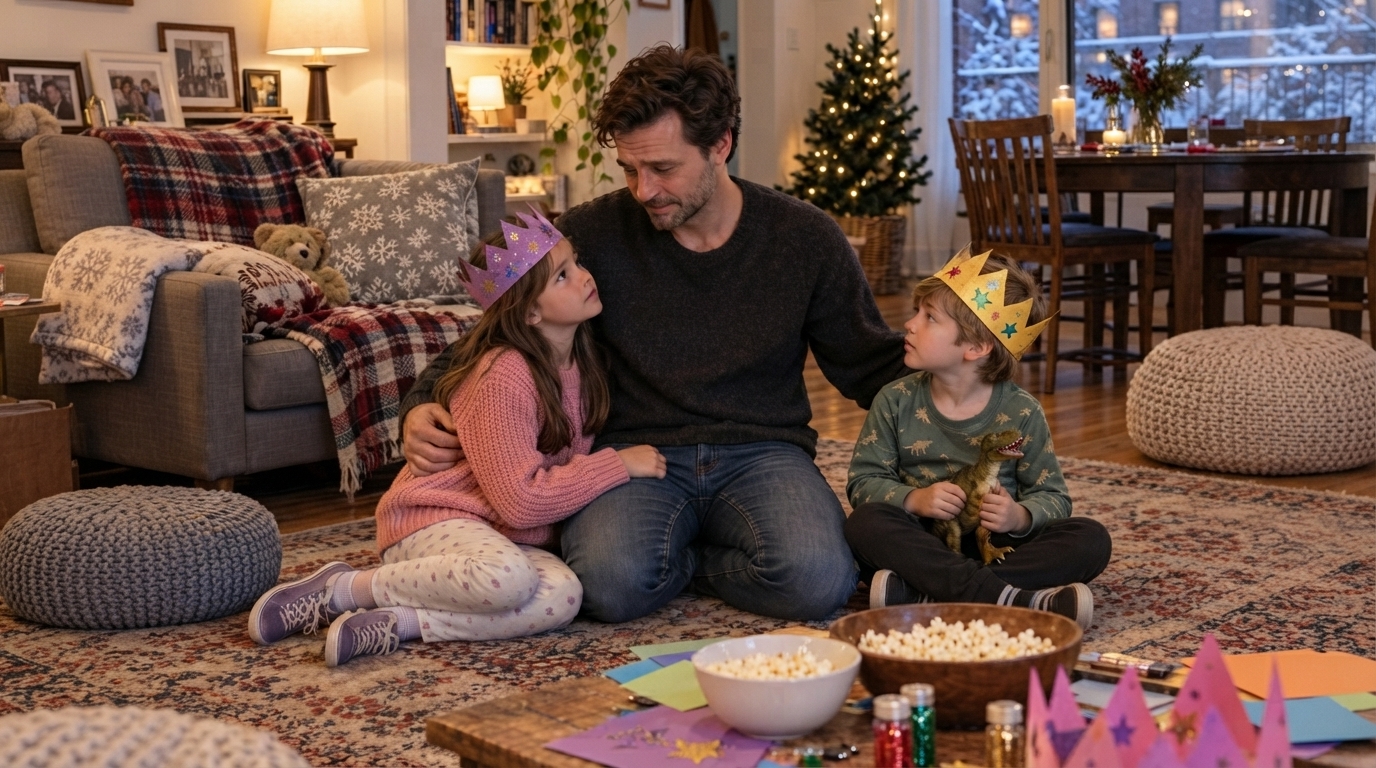
We were sitting at the kitchen table making paper snowflakes.
Leo had managed to cover himself in glue.
I looked at my daughter.
“Why do you ask?”
She shrugged.
“Because we didn’t go to the party.”
My heart tightened.
“Sophie, you and Leo didn’t do anything wrong.”
She nodded.
“I know.”
But her voice told me she wasn’t entirely convinced.
I put down the scissors.
“Sometimes grown-ups make choices that hurt people. And sometimes they need time to understand why those choices were wrong.”
She thought about that.
“Even grandparents?”
I nodded.
“Even grandparents.”
Leo looked up.
“Can grandparents get timeout?”
I laughed.
Sophie giggled.
I smiled.
“Sometimes adults need a little space to think.”
Leo nodded seriously.
“Grandma needs a big timeout.”
I laughed so hard I nearly cried.
And for a moment, the heaviness lifted.
Over the next month, my parents tried every argument they knew.
Mom said I was abandoning them.
Dad said the bank would take the house.
Mark called twice, asking whether I would reconsider helping just until they worked things out.
But I kept saying the same thing.
“I can help you understand your options. I will not pay the mortgage.”
Eventually, Dad agreed to meet with a housing counselor.
They reviewed the loan.
Their income.
Their expenses.
The missed payments.
And the possibility of a repayment arrangement or modification.
The counselor explained that any assistance would depend on the lender’s requirements and their actual financial situation.
There were no miracles.
No instant solution.
Just difficult decisions they’d postponed for years.
Then something unexpected happened.
Mark sold his expensive SUV.
I found out when he called me one evening.
“Hey, Don.”
I was washing dishes.
“Hey.”
He hesitated.
“I sold the car.”
I nearly dropped a plate.
“What?”
“The SUV.”
I stared at the wall.
“Why?”
He sighed.
“Because I can’t keep pretending everything’s fine.”
I said nothing.
He continued.
“I’ve been spending money I don’t have for years.”
I leaned against the counter.
“Okay.”
He swallowed.
“And Mom and Dad kept bailing me out.”
I closed my eyes.
He continued.
“I thought they had savings. I didn’t know some of it was coming from you.”
I took a breath.
“Mark, you still borrowed money from me directly.”
“I know.”
“You owe me almost six thousand dollars.”
“I know.”
Silence.
Then he said, “I want to pay it back.”
I looked down.
“That would be a start.”
He nodded.
“I’ve made a budget. I can send you five hundred a month.”
I didn’t answer immediately.
Because I’d heard promises from Mark before.
But this time, he sounded different.
Less confident.
Less polished.
More like someone who had finally run out of excuses.
“Put it in writing,” I said.
He sighed.
“Fair.”
Two weeks later, the first five hundred dollars arrived.
I stared at the notification.
Then transferred it into the children’s savings account.
For years, money had flowed out of my life toward everyone else’s emergencies.
That day, something came back.
It wasn’t much compared with what I’d given.
But it mattered.
The mortgage situation took several months to stabilize.
My parents worked with their lender and made changes to their spending.
Mark began contributing directly toward their household expenses.
He and Elise postponed their plans to buy a house.
My parents also sold a second vehicle they rarely used.
The lender eventually approved a repayment arrangement they could manage, provided they kept up with its terms.
I didn’t guarantee anything.
I didn’t sign anything.
I didn’t resume the automatic transfers.
And the house remained theirs.
That was important.
I hadn’t wanted them homeless.
I’d wanted them responsible.
There was a difference.
The disputed documents were another matter.
Rachel helped me submit the written fraud report and preserve the evidence.
The mortgage company reviewed how the documents had entered its files.
My bank confirmed that I had authorized certain recurring transfers myself, but that did not establish that I’d signed the broader family support agreement.
My mother’s admission became part of the record.
The company removed the disputed agreement from the materials it would rely on as evidence of my consent to future support.
It also confirmed in writing that I had no borrower obligation under my parents’ mortgage.
The matter was referred for further review.
I didn’t receive a dramatic phone call announcing that justice had been served.
Real life rarely works that way.
But I had something more important.
Written confirmation that my parents’ financial obligations were not mine.
In March, my mother sent me a letter.
Not a text.
Not a voicemail.
A handwritten letter.
I recognized her handwriting immediately.
I sat at the kitchen table and opened it.
Dear Don,
I have spent weeks trying to write this without making excuses.
I told myself that everything I did was for the family.
But I was wrong.
I treated your help as something we were entitled to.
I made decisions about your money without your permission.
And I used your signature because I was afraid you would stop helping if you knew the truth.
I stopped reading.
My eyes filled.
I took a breath.
Then continued.
The worst part is that I hurt Sophie and Leo.
They should never have been excluded from our celebration.
I was angry with you for asking questions, and I allowed that anger to affect how I treated your children.
I am ashamed of that.
I don’t expect you to forgive me because I wrote a letter.
I only want you to know that I understand now why you stopped.
Love, Mom.
I read it twice.
Then placed it beside my coffee.
For a long time, I sat quietly.
Because it was the first apology I’d received from my mother that didn’t contain the word but.
I didn’t call her immediately.
I needed time.
But I eventually agreed to meet her and Dad at a small café.
No Mark.
No Elise.
No audience.
Just the three of us.
Mom cried when she saw me.
Dad hugged me awkwardly.
We sat near the window.
For a while, we talked about ordinary things.
The weather.
Dad’s garden.
My latest script.
Then Mom asked about the children.
I looked at her.
“They’re doing well.”
She smiled sadly.
“I miss them.”
I nodded.
“I know.”
She looked down.
“Do you think they’ll ever want to see us again?”
I took a breath.
“Mom, they love you. But they were hurt.”
Her eyes filled.
“I know.”
I continued.
“If we’re going to rebuild anything, you need to understand that you can’t use access to the family as a way to punish me.”
She nodded.
“And you can’t make Sophie and Leo feel responsible for adult disagreements.”
“I won’t.”
I studied her face.
“I need to see that over time.”
She nodded again.
“I understand.”
We began slowly.
A phone call.
A birthday card.
A short visit at the park.
The first time Sophie saw Grandma again, she ran toward her.
Then stopped.
“Grandma?”
Mom knelt.
“Yes, sweetheart?”
“Are we family again?”
I felt my heart break.
Mom began crying.
“Oh, Sophie.”
She opened her arms.
“You were always family.”
Sophie frowned.
“Then why couldn’t we come to the party?”
Mom looked at me.
I stayed quiet.
This was her answer to give.
She took a shaky breath.
“Because Grandma made a very unkind decision.”
Sophie stared at her.
Mom continued.
“It wasn’t your fault. And I’m sorry.”
Sophie thought about that.
Then whispered, “You hurt my feelings.”
Mom nodded.
“I know.”
Sophie stepped forward.
And hugged her.
I looked away.
Because I didn’t want my daughter to see me cry.
By summer, things were different.
Not perfect.
Different.
My parents no longer called me whenever a bill arrived.
Mark continued making payments toward the money he owed me.
He missed one month, then called to explain and arranged to catch up.
I appreciated the honesty more than another empty promise.
And I began doing something I hadn’t done in years.
Saving money.
Real savings.
Not money waiting to rescue someone else.
Money for Sophie and Leo.
Money for emergencies.
Money for the future.
I even started looking at small houses near their school.
Nothing fancy.
Just a place with a backyard.
A room where I could write.
And enough space for the children to grow.
One afternoon, I found Sophie sitting at the kitchen table drawing a picture.
It showed a house with a red roof.
Two children.
One man.
And a very large dog.
I smiled.
“Who’s that?”
She pointed.
“Me.”
“And that?”
“Leo.”
“And the tall guy?”
She grinned.
“You, Daddy.”
I laughed.
“And the dog?”
She looked offended.
“Our future dog.”
I smiled.
“Of course.”
Then she pointed to the house.
“This is where we’re going to live someday.”
I sat beside her.
“Maybe.”
She looked at me.
“Will it be ours?”
My throat tightened.
I nodded.
“That’s the plan.”
She smiled.
“Good.”
Then she went back to coloring.
And I realized that was what all of this had really been about.
Not revenge.
Not humiliating my parents.
Not proving Mark wrong.
It was about making sure my children had the security I’d been sacrificing to maintain everyone else’s.
The following December, my parents invited us to their year-end party.
This time, the invitation came directly to me.
Mom called.
“Don, we’d love for you, Sophie, and Leo to come.”
I smiled.
“Thank you.”
She hesitated.
“And if you can’t make it, we understand.”
I paused.
That was new.
No pressure.
No guilt.
No suggestion that love depended on obedience.
“We’ll come for a little while,” I said.
She sounded relieved.
“That would be wonderful.”
On December 29, almost exactly one year after the message that changed everything, I drove Sophie and Leo to my parents’ house.
The same string lights glowed along the porch.
The same wreath hung on the door.
But something felt different.
Sophie wore a red dress.
Leo carried a plastic dinosaur.
I rang the bell.
Mom opened the door.
And before she said anything else, she knelt in front of the children.
“My favorite grandchildren!”
Leo grinned.
“We’re your only grandchildren.”
Mom laughed.
“Then you’re still my favorites.”
Sophie hugged her.
Dad appeared behind her.
“Come in, everyone.”
Everyone.
Such a small word.
Such a different feeling.
Dinner was warm and noisy.
Sophie spilled juice.
Leo knocked over a paper decoration.
Nobody complained.
Nobody called them troublemakers.
Mark helped clean the spill.
Elise laughed when Leo explained that his dinosaur needed its own chair.
Aunt Carol hugged me.
Jana asked about my latest script.
For once, nobody asked whether I’d brought money.
Nobody mentioned the mortgage.
Nobody expected me to solve anything.
We were simply together.
Later that evening, Mark approached me on the porch.
He held two glasses of sparkling cider.
“Peace offering?”
I took one.
“Thanks.”
We stood quietly.
Then he said, “I still think about that Facebook post.”
I looked at him.
He smiled awkwardly.
“Pretty stupid.”
I nodded.
“Very.”
He laughed.
Then grew serious.
“I was cruel.”
I looked toward the yard.
He continued.
“I knew Mom and Dad had excluded you. And I made a joke out of it.”
I swallowed.
“Your niece saw that post eventually.”
His face changed.
“What?”
“Sophie saw a screenshot someone sent around.”
He looked devastated.
“Don, I didn’t know.”
I nodded.
“That’s why it matters what we say about people, even online.”
He stared at the ground.
Then whispered, “I’m sorry.”
I looked at him.
“Thank you.”
He hesitated.
“Can I ask you something?”
“Sure.”
“Do you regret posting that comment?”
I thought for a moment.
Then shook my head.
“No.”
He smiled sadly.
“Fair enough.”
I continued.
“I regret that it took something so public for anyone to listen.”
He nodded.
“Yeah.”
Then we stood quietly, watching the lights reflect off the windows.
When it was time to leave, Dad walked us to the car.
He helped Leo buckle his seat belt.
Mom hugged Sophie.
Then Dad turned to me.
“Don.”
“Yeah?”
He looked uncomfortable.
“Thank you for coming.”
I smiled.
“You’re welcome.”
He hesitated.
Then said, “And thank you for everything you did for us.”
My throat tightened.
He continued.
“We should have said that years ago.”
I nodded.
“Yes. You should have.”
He smiled sadly.
“I know.”
Then he hugged me.
And for once, I didn’t feel like I was carrying the weight of the entire family.
I simply felt like a son.
On the drive home, Sophie fell asleep.
Leo was already snoring.
The car was quiet.
I stopped at a red light and looked at them in the rearview mirror.
Two children.
Two small lives.
Two people who depended on me to teach them what love should look like.
For years, I’d believed being a good son meant never saying no.
Never asking questions.
Never keeping score.
Never making anyone uncomfortable.
But I’d been wrong.
Being a good son didn’t mean abandoning my responsibilities as a father.
And being a good father meant showing my children that love should never require them to surrender their dignity.
I still help my parents sometimes.
Not with automatic mortgage payments.
Not with secret transfers.
Not with money I can’t afford to lose.
I help them carry groceries.
I visit.
I listen.
I bring the children over when everyone wants to spend time together.
And when they need financial advice, I encourage them to speak with the people qualified to give it.
My relationship with Mark is improving too.
Slowly.
Carefully.
With accountability instead of excuses.
We’re not the family we used to pretend to be.
We’re something better.
A family learning that boundaries don’t destroy love.
They reveal whether respect was there in the first place.
Sometimes I still think about that photograph.
My parents smiling beside Mark and Elise.
The beautiful table.
The string lights I’d hung myself.
And the caption:
Family only. No troublemakers.
I remember how much it hurt.
Not because I wanted an expensive dinner.
Not because I needed a party.
But because my children had been told they didn’t belong.
And I had spent years paying to keep the very house they were excluded from.
That night, I clicked Like.
Then I wrote one comment.
“Congratulations. Mortgage, insurance, and property taxes are all yours now.”
Ten minutes later, the post disappeared.
Ninety missed calls appeared.
And for the first time in five years, I didn’t rush to rescue everyone.
I chose my children.
I chose my future.
I chose peace.
My parents thought excluding me from their party would teach me a lesson.
Instead, it taught me that paying for a place at the family table isn’t the same as being loved.
And the moment I stopped paying, I finally learned who was willing to make room for me without expecting anything in return.
THE END THANK YOU FOR READING !!!



