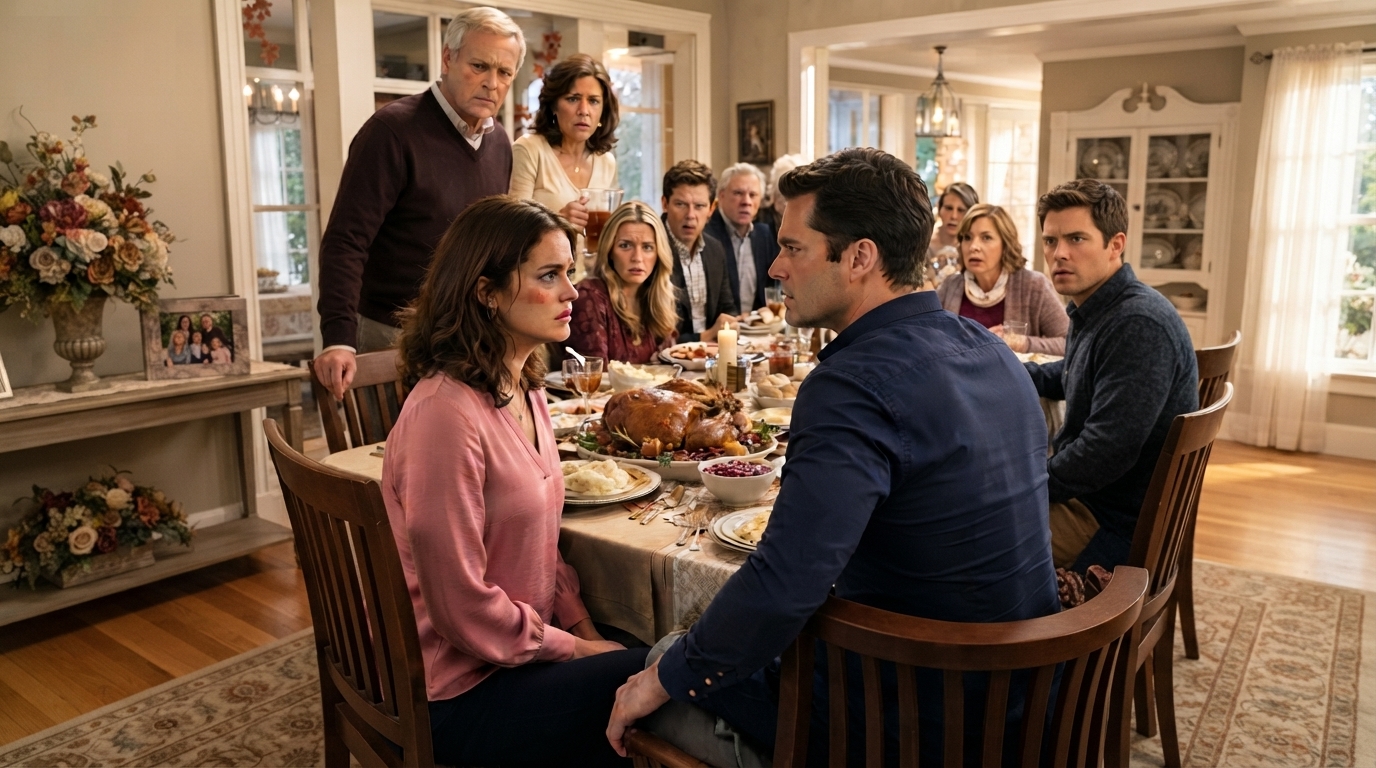
PART 3
I stared at the date.
Eleven months earlier.
Eleven months.
Not eleven days.
Not a few weeks.
Eleven months.
I looked at Patricia.
“What happened eleven months ago?”
She didn’t answer immediately.
She turned the next page.
It was a screenshot of a message from Cassie to Grant.
Cassie:
“She still has no idea.”
Grant replied:
“She won’t. Lily trusts you more than anyone.”
My hands went cold.
I read it again.
Then the next message.
Cassie:
“What if she finds out?”
Grant:
“She won’t look. She never does.”
I swallowed.
Patricia slid another page toward me.
Grant:
“Once the papers are signed, the house is ours to deal with.”
I stared at the words.
“The house?”
Patricia nodded.
“That was one of the reasons I told you not to touch anything.”
I looked up.
“What’s wrong with the house?”
“Who is listed on the deed?”
“Grant and me.”
“No.”
Her answer came so quickly that I didn’t understand it.
“What?”
Patricia pulled a certified property record from the file.
“Your house was never jointly titled the way you believe.”
I felt my stomach twist.
“That’s impossible.”
“Read it.”
I took the page.
There it was.
The original deed.
My name.
Only my name.
The house had been purchased almost a year before I married Grant.
I’d forgotten that because, after the wedding, we refinanced the property together to pay for renovations.
But the original ownership had never changed.
Grant had a financial interest in certain marital improvements and obligations.
He did not own the house.
Not legally.
I stared at Patricia.
“Why were they talking about it?”
“Because they thought it was theirs.”
I looked back at the messages.
More pages followed.
Cassie had asked how quickly Grant could move into the house after our divorce.
Grant had discussed whether I would “fight over the property.”
Cassie said:
“She won’t. She hates conflict.”
Grant replied:
“Exactly.”
I sat back.
For years, my husband had watched me avoid confrontation.
He had learned that I would rather absorb pain than create a scene.
He had mistaken that for weakness.
Then Patricia placed another page in front of me.
It was an email from Grant to an accountant.
The subject line was:
POST-DIVORCE STRUCTURE
I read the first paragraph.
Grant had been planning to move certain savings accounts.
He had already discussed dividing assets before the divorce had been filed.
But something else stood out.
There was a transfer scheduled from our joint investment account.
A large transfer.
To a newly formed LLC.
The LLC was controlled by Cassie.
I looked at Patricia.
“Did he take the money already?”
“We’re checking.”
“Then why hasn’t the account been emptied?”
“Because your signature was required on the transfer.”
I stared at her.
“And I didn’t sign it.”
“No.”
I remembered the strange conversation Grant had had with me three months earlier.
“Can you sign these investment forms?”
“What are they?”
“Tax stuff.”
I had told him I’d look at them later.
Apparently later had protected me.
Without realizing it.
Patricia leaned forward.
“Did Grant ever ask to use your phone?”
“Yes.”
“Your passwords?”
“Yes.”
“Your email?”
“Sometimes.”
She nodded.
“Did Cassie ever have access to your house?”
I almost laughed.
“She practically lived there when she was single.”
“How often?”
“Several times a week.”
“And after her breakup?”
“More.”
Patricia wrote something down.
Then she looked at me.
“Lily, there’s something else.”
I waited.
“Your sister wasn’t just having an affair with your husband.”
My throat tightened.
“What?”
“She was involved in a financial arrangement with him.”
“What kind?”
Patricia opened another folder.
Cassie had a debt problem.
A serious one.
Credit cards.
Personal loans.
A failed business.
Unpaid taxes.
And a lawsuit from a former business partner.
Grant had been quietly paying some of Cassie’s debts.
Using money from accounts connected to our marriage.
“How much?”
Patricia gave me the number.
I stared at her.
“I never knew.”
“You weren’t supposed to.”
Then she said:
“Your parents knew.”
My head snapped up.
“What?”
“Not everything. But enough.”
I felt the room shift.
“My mother knew?”
“Yes.”
“And my father?”
“He appears in several emails.”
I couldn’t speak.
Patricia turned the monitor toward me.
There was an email chain between my mother and Grant.
The subject was:
LILY
I read it.
My mother wrote:
“She’ll be devastated, but she’ll recover.”
Grant answered:
“I know.”
Then my mother wrote:
“Cassie has wanted him for a long time.”
Grant replied:
“She’s better suited to this family.”
I looked away.
The same words Grant had said at Thanksgiving.
“You were never enough.”
He hadn’t invented them that night.
Someone had been feeding that narrative for months.
My mother.
My sister.
My husband.
All three.
Patricia watched me carefully.
“You don’t have to make a decision today.”
I looked at her.
“I’ve already made one.”
“What?”
“I am not going to help them hide.”
She nodded.
“Good.”
I took out my phone.
“I want every message.”
“We’re preserving them.”
“Every account.”
“We are tracing them.”
“Every transfer.”
“Yes.”
“And every document.”
“Yes.”
I took a slow breath.
“Then let’s see how deep it goes.”
It went deeper.
Far deeper.
Over the next week, Patricia worked with a forensic financial specialist.
I learned that Grant had been moving money in small amounts for nearly a year.
Nothing dramatic.
$1,200.
$2,700.
$4,500.
$1,900.
Repeatedly.
He would label the transfers:
“consulting.”
“reimbursement.”
“business expense.”
“travel.”
Some went directly to Cassie.
Others went to businesses connected to her.
Still others went to an account controlled by my mother.
I stared at the spreadsheet.
“How much?”
The specialist answered.
“Just over one hundred eighty thousand.”
I nearly dropped the paper.
“From our accounts?”
“Some from joint accounts.”
“Some?”
“Some came from your business.”
My heart stopped.
“My business?”
“Yes.”
Grant had access to the company’s secondary operating account.
I had given him access years earlier because he helped me with payroll during my firm’s early expansion.
He had been taking money.
Not enough to make the company collapse.
Enough to keep me from noticing.
I called my accountant.
She was stunned.
“Lily, I thought those were transfers you approved.”
“I didn’t.”
There was silence.
Then:
“I have to ask you something.”
“What?”
“Did you approve the new vendor?”
“What vendor?”
She gave me a company name.
I had never heard of it.
It had billed my business for consulting services.
For months.
The vendor address traced back to Cassie’s apartment.
I closed my eyes.
“They’ve been billing my company.”
“Yes.”
“For work they never performed.”
“Yes.”
I sat down.
For years, I had thought Cassie was simply reckless.
Now I understood.
She wasn’t just trying to take my husband.
She was building herself a financial bridge.
And Grant was helping her construct it.
Patricia told me to stop communicating with them about money.
I did.
I moved nothing without legal advice.
I changed nothing without documentation.
I answered every message as if I were still the woman they thought I was.
That was difficult.
Grant still texted.
“Can we talk?”
I replied:
“About what?”
He said:
“About us.”
I wrote:
“We can talk when we’re both ready.”
He believed I was grieving.
He didn’t know I was building a file.
Cassie sent me a message too.
“I’m so sorry about what happened.”
I stared at it.
Then she sent another.
“I never wanted to hurt you.”
I didn’t answer.
Then:
“I hope you understand that feelings aren’t something you can control.”
That one almost made me laugh.
Feelings weren’t what I was investigating.
Choices were.
I saved the message.
Three days later, Patricia called.
“Come in.”
I did.
She had a look on her face I had never seen before.
“What happened?”
She pushed a document toward me.
“Grant and Cassie have already created a company together.”
I stared at the registration.
The name was C&G Hospitality Group.
The registered business address was our home.
My home.
“How?”
“They used your mailing address without your permission.”
“Why?”
“Because it made the company appear established.”
I felt sick.
“What does the company own?”
“Nothing yet.”
“Yet?”
Patricia nodded.
“They were preparing to transfer assets.”
I looked at her.
“Which assets?”
“The investment account.”
“The house?”
“Potentially.”
“My business?”
“Potentially.”
“Anything else?”
She hesitated.
“There is one more.”
“What?”
“Life insurance.”
I stared at her.
“Whose?”
“Yours.”
My throat closed.
Grant had apparently contacted an insurance broker asking about policies where I was the insured and he would receive a portion of the benefit.
Patricia couldn’t yet establish whether anything had been issued.
But the inquiry existed.
The inquiry had been made months before Thanksgiving.
I thought about that dinner.
My mother.
My father.
My brother.
My grandparents.
My entire family watching Grant tell me he loved my sister.
And Cassie had sat there calmly.
She wasn’t hearing it for the first time.
She knew.
I wondered how long she had known.
Then I remembered something.
A conversation from six months earlier.
Cassie had asked me:
“If anything ever happened to you, who would get the house?”
I had laughed.
“Why would you ask that?”
She had smiled.
“Just curious.”
I had forgotten it.
Until now.
The next morning, Patricia called again.
“We found the account.”
“What account?”
“The one Grant used to transfer money to Cassie.”
“How much?”
She told me.
Then:
“It isn’t the biggest amount.”
My blood ran cold.
“What is?”
“The account they were preparing to move the investment portfolio into.”
“Whose name?”
She hesitated.
“Cassie.”
I closed my eyes.
“Is it active?”
“Yes.”
“And how much is sitting there?”
Patricia gave me the figure.
I stood up so fast my chair fell backward.
They had already moved a substantial amount.
My money.
Money I had believed was protected.
Money I had never authorized them to touch.
And now it was in an account controlled by my sister.
I called the bank immediately.
They couldn’t discuss the account with me because it was not in my name.
But they could confirm that a transfer had been requested from my investment account.
A transfer I had never approved.
The bank had flagged it.
A signature discrepancy.
For the second time in my life, a forged signature had saved me.
I went back to Patricia.
“Freeze everything.”
“We already started.”
“Good.”
She nodded.
Then she looked at me.
“There is one problem.”
“What?”
“The court won’t freeze everything simply because you suspect misconduct.”
“I know.”
“We need evidence.”
I smiled.
“We have evidence.”
“No.”
She looked at me carefully.
“We have enough evidence to investigate.”
“But?”
She pointed to the file.
“To destroy their story, we need the part they think is safe.”
“What part?”
“The conversation between Grant and Cassie after Thanksgiving.”
My heart stopped.
“They probably have more messages.”
“Yes.”
“Can we get them?”
“We may be able to.”
“How?”
“Your divorce hasn’t been filed yet.”
I waited.
“They think they have time.”
I understood.
Patricia’s eyes sharpened.
“We’re going to let them think that.”
PART 4
For two weeks, I played the role they expected.
Heartbroken wife.
Confused sister.
Quiet daughter.
Grant came home twice.
The first time, he stood in the doorway and said:
“I’m sorry.”
I looked at him.
“For what?”
“For the way I handled everything.”
“You mean Thanksgiving?”
He nodded.
“It wasn’t fair.”
“No.”
“I should have told you privately.”
“You should have told me before you slept with my sister.”
He flinched.
“We weren’t planning for this to happen.”
“That isn’t better.”
“I know.”
He looked exhausted.
“What do you want?”
I almost said the truth.
Everything.
Instead, I said:
“I don’t know yet.”
He nodded.
Then he asked:
“Can I see the financial documents?”
I looked at him.
“Why?”
“For the divorce.”
“There is no divorce filing yet.”
“I know.”
“Then why do you need them?”
He stared at me.
“Because I need to know where we stand.”
I smiled faintly.
“I’ll let my attorney handle it.”
His expression changed.
Just slightly.
He had expected me to trust him.
I didn’t.
After he left, Patricia called.
“He asked about the documents?”
“Yes.”
“Good.”
“Why?”
“Because it means he’s worried.”
The next week, Grant’s attorney sent a letter.
They were proposing an immediate separation agreement.
The house would be sold.
The investment accounts divided.
Personal property split.
My business considered “marital in nature” because Grant had contributed administrative support.
I read it twice.
Then handed it to Patricia.
She laughed.
“They really think you’re still the same person who walked into Thanksgiving.”
“What do we do?”
“Counter.”
“How?”
“With facts.”
We rejected every unfair provision.
We demanded a complete financial disclosure.
Every account.
Every transfer.
Every business.
Every liability.
Every property.
Every insurance policy.
Every benefit.
Grant’s attorney objected.
Patricia didn’t care.
The process continued.
Then Cassie made a mistake.
She posted a photograph.
It showed a wine glass.
A restaurant table.
A man’s hand.
A caption:
“Sometimes the right person arrives after the wrong one.”
It wasn’t proof of anything.
But then another photo appeared two hours later.
The same watch Grant wore.
The same restaurant.
The caption:
“Finally choosing happiness.”
I saved it.
The internet might call it coincidence.
I called it evidence of a timeline.
The next day, I learned the restaurant had security cameras.
Patricia sent a preservation request.
Then another.
We were no longer investigating only money.
We were establishing dates.
When had the affair begun?
When had the financial transfers begun?
When had the property discussions begun?
When had my family known?
Everything mattered.
The answers formed a timeline.
The affair had begun months before Thanksgiving.
The financial transfers had started three months before that.
The business had been created afterward.
The house discussion came shortly after.
The insurance inquiry came after that.
And then there was the divorce planning.
It wasn’t a spontaneous affair.
It was a transition.
They had been preparing a life together while I was still living mine.
The worst part wasn’t that Grant fell in love with Cassie.
People can fall out of love.
Marriages end.
People make choices.
What destroyed me was the coordination.
The lies.
The money.
The planning.
The assumption that I would simply accept the version of events they presented.
That was the betrayal.
Then my father called.
“Lily.”
“Yes?”
“Your mother and I think you should meet with us.”
“Why?”
“We want to help.”
I laughed softly.
“Help with what?”
“The divorce.”
“I have an attorney.”
“You don’t have to be hostile.”
“I’m not.”
“Then come over.”
I agreed.
Not because I trusted them.
Because I wanted to know what they knew.
My parents’ house was exactly as I remembered it.
Family photographs.
Thanksgiving decorations.
The same dining room where Grant had left me.
My father sat at the head of the table.
My mother sat beside him.
Cassie wasn’t there.
“Where is she?”
My mother frowned.
“This isn’t about Cassie.”
“It is.”
My father sighed.
“Your sister made a mistake.”
I stared at him.
“My husband made a choice.”
“They both did.”
“And you knew?”
Silence.
My mother looked at my father.
Then at me.
“Knew what?”
I laughed.
“Don’t.”
My father looked down.
“How long?”
He didn’t answer.
My mother began crying.
“Please.”
“How long?”
My father finally spoke.
“Months.”
I closed my eyes.
“How many?”
“Seven.”
Seven months.
I had been sitting at this table for Thanksgiving while my husband and my sister had already been together for seven months.
My mother said:
“We thought you’d eventually understand.”
“Understand what?”
“That people can’t help who they love.”
I looked at her.
“Did you know about the money?”
My father stopped breathing.
I knew.
The silence was enough.
“So you did.”
My mother whispered:
“We were trying to keep the family from falling apart.”
“You knew they were taking money.”
“It wasn’t like that.”
“How was it?”
My father said:
“Your sister was in trouble.”
“So you used my marriage to rescue her.”
“No.”
“Then what?”
My mother stared at me.
“She said she deserved a chance.”
I shook my head.
“What about me?”
She started crying.
“You’re strong.”
That sentence was the family excuse for everything.
You’re strong.
You’ll recover.
You don’t need help.
You always land on your feet.
I finally said:
“I wish someone had asked whether I wanted to keep falling.”
My father looked ashamed.
Then he said something unexpected.
“Grant asked me for your financial statements.”
My body went cold.
“When?”
“Months ago.”
“Why?”
“He said he needed them for tax purposes.”
“Did you give them to him?”
He nodded.
“How many?”
“Several.”
I stared at my mother.
“Did you?”
She looked down.
“Yes.”
They had given Grant access.
And they had given my sister information.
My financial information.
My accounts.
My assets.
They had helped the people who were preparing to separate me from my own life.
I stood.
“I have nothing else to say.”
My father reached for me.
“Lily.”
I stepped back.
“No.”
He stopped.
“I loved you.”
I believed him.
That was the tragedy.
People can love you and still betray you.
I walked out.
The next morning, Patricia called.
“We found something.”
“What?”
“Grant’s cloud storage.”
I froze.
“How?”
“Discovery request.”
“What was in it?”
“Draft divorce documents.”
I sat down.
“Anything else?”
“Yes.”
She paused.
“A spreadsheet.”
“What kind?”
“Projected assets after divorce.”
I closed my eyes.
“Who created it?”
“Grant.”
“And?”
“Cassie.”
They had made a budget.
A life plan.
Monthly expenses.
Housing.
Travel.
Business investments.
They had even calculated how much they would have after selling my house.
I stared at the spreadsheet.
It had a title.
OUR NEW LIFE
I couldn’t breathe.
Then I saw my own name.
Under liabilities.
Not person.
Liability.
I read the row twice.
They had reduced me to a number.
A problem to solve.
A cost to remove.
Patricia closed the document.
“There’s more.”
“Of course there is.”
She handed me a second spreadsheet.
It showed Cassie’s debt.
Then my assets.
Then Grant’s contributions.
Then a projected “settlement.”
My house.
My investment account.
My business.
My retirement.
They expected to walk away with enough to start over.
And they had planned it before even telling me the marriage was over.
The final line said:
“She’ll sign if we make her feel guilty.”
I stared at Patricia.
My hands were trembling.
“They really know me.”
“Yes.”
“That sentence…”
She nodded.
“They’ve been studying you.”
I understood then.
My entire marriage had become a behavioral profile.
What made me hesitate.
What made me feel guilty.
What made me apologize.
What made me avoid conflict.
They weren’t just cheating on me.
They were using what they knew about me as leverage.
I looked at the folder.
“What do we do?”
Patricia smiled.
“Now we file.”
I nodded.
The divorce petition was filed two days later.
Grant was served at work.
Cassie wasn’t there.
But the same afternoon, her attorney contacted Patricia.
Apparently, Cassie had received a demand for repayment related to company funds.
She denied wrongdoing.
Then she did something unbelievable.
She called me.
“Lily.”
I answered.
“What?”
“Please don’t destroy my life.”
I closed my eyes.
“You did that yourself.”
“It wasn’t supposed to go this far.”
“How far?”
“I thought Grant loved me.”
“He chose you.”
“I know.”
“Then why are you scared?”
She cried.
“Because my father cut me off.”
I sat very still.
“Your father?”
“He said I wasn’t getting another dollar.”
That explained part of it.
She had thought Grant would bring money.
The money had come from me instead.
I asked:
“Did you ever love me?”
She was silent.
“Yes.”
“Then why?”
“I wanted what you had.”
I closed my eyes.
“What?”
“The stability.”
“You wanted my husband.”
“I wanted your life.”
The honesty was devastating.
She wanted the house.
The security.
The family.
The marriage.
The approval.
She believed my life was a prize she could claim if she simply removed me from it.
I asked one final question.
“Did you think I’d disappear?”
She whispered:
“I thought you’d eventually forgive me.”
I ended the call.
Not because I was angry.
Because I finally understood.
She had never imagined me as someone with boundaries.
She had imagined me as someone who would always return.
She was wrong.
The court proceedings moved forward.
Financial disclosures revealed the transfers.
The unauthorized vendor was exposed.
The investment transfer was blocked.
The joint account was separated.
My business records were audited.
Grant disputed nearly everything.
But the paper trail was stronger than his explanations.
He claimed the transfers were loans.
The documents showed no repayment plan.
He claimed the vendor performed work.
There were no invoices matching any real projects.
He claimed Cassie was only a friend.
Messages said otherwise.
He claimed the divorce had been spontaneous.
The spreadsheet said otherwise.
He claimed he had not intended to take the house.
The property calculations said otherwise.
Every lie had a corresponding document.
Eventually, the story became impossible to maintain.
But there was still one final reveal.
Patricia called me late one Friday.
“Lily.”
“Yes?”
“You need to come in tomorrow.”
“Why?”
“Because we found what happened to the money they already moved.”
I held my breath.
“Where did it go?”
She answered.
“Not to Cassie.”
“Then where?”
“To an account controlled by your mother.”
I sat down.
My mother.
The person who had told me Cassie and Grant were simply following their hearts.
The person who had watched me walk out of Thanksgiving alone.
She had received part of the money.
“Why?”
Patricia said:
“We don’t know yet.”
I stared at the wall.
Then another thought hit me.
“What about my father?”
“We’re checking.”
The next morning, we found it.
Transfers from Grant.
To my mother.
Then from my mother.
To my father.
Then into another account.
The amount was smaller than the others.
But the pattern was obvious.
The family had not only helped Grant and Cassie.
They had benefited too.
I felt sick.
“They all knew.”
Patricia shook her head.
“Some knew more than others.”
I stared at the records.
“Enough.”
“Yes.”
I closed the file.
“I want the truth in court.”
“You’ll get it.”
PART 5
The final hearing was held nearly a year after Thanksgiving.
By then, the affair was over.
Grant and Cassie had separated.
Not because they found morality.
Because they had finally discovered what happens when a relationship built around another person’s destruction has to survive without the person being destroyed.
Cassie blamed Grant.
Grant blamed Cassie.
Each claimed the other had promised everything would work out.
Neither wanted to admit they had been counting on me to make their transition easy.
The court didn’t care about their romance.
It cared about evidence.
The financial records were reviewed.
The disputed transfers were addressed.
The house remained mine because it had been mine before the marriage and was not legally transferred.
Certain marital obligations were divided according to the applicable records.
My business remained separate.
The unauthorized transactions were pursued separately.
And the money that had been moved had to be accounted for.
My mother was required to disclose her financial involvement.
My father was required to explain his transfers.
My sister had to answer questions about the shell companies.
And Grant had to explain why he had prepared a life after me while still living beside me.
On the second day of the hearing, Patricia presented the spreadsheet.
OUR NEW LIFE.
She placed it on the projector.
Grant’s attorney objected.
Patricia responded:
“It establishes chronology, intention, and proposed asset distribution.”
The judge reviewed it.
Then she looked toward Grant.
“Did you create this?”
He hesitated.
“Yes.”
“Did Ms. Cassie Vale contribute to it?”
He looked toward his attorney.
“Yes.”
“And this document predates your separation announcement?”
“Yes.”
The judge asked:
“How far?”
Grant answered quietly.
“Six months.”
I closed my eyes.
Six months.
Six months before Thanksgiving.
Six months before he looked across that table and announced he loved my sister.
Six months before my family watched me be humiliated.
The life they were announcing as new had already been planned.
Then Patricia presented the messages.
The dates.
The money.
The house.
The transfers.
The vendor.
The proposed sale.
The insurance inquiry.
The communication with my parents.
Piece by piece.
The picture became complete.
At one point, the judge looked at Grant.
“You represented to your spouse that this separation was sudden.”
He swallowed.
“Yes.”
“It was not.”
“No.”
The judge looked at Cassie.
“You were aware of these plans?”
Cassie nodded.
“Yes.”
“Did you participate financially?”
She whispered:
“Yes.”
Then my mother was called.
She sat at the witness table.
She looked older than she had at Thanksgiving.
The judge asked:
“Did you know about the relationship before the separation announcement?”
“Yes.”
“How long?”
“Several months.”
“Did you know your daughter and Mr. Grant were discussing your other daughter’s assets?”
My mother looked down.
“Yes.”
“Did you provide financial information?”
“Yes.”
My mother started crying.
The judge did not soften.
“Did you receive any funds?”
A long silence.
“Yes.”
“For what purpose?”
My mother couldn’t answer.
Patricia asked:
“Did you receive money from Grant?”
“Yes.”
“Did you return it?”
“No.”
I stared at her.
There was no shouting.
No dramatic outburst.
Just the slow realization that the woman who had raised me had been willing to profit from my pain.
Then my father testified.
He admitted providing some records.
He admitted he believed Cassie and Grant would eventually create a family business.
He claimed he had not understood the extent of the deception.
Patricia asked one question.
“Did you believe Lily would agree to sell her home?”
My father hesitated.
“Yes.”
“Why?”
“Because she avoids conflict.”
The courtroom went completely quiet.
My father lowered his head.
The sentence wasn’t meant to hurt me.
It was simply the truth of what they had counted on.
My weakness was never that I was quiet.
Their mistake was assuming quiet meant blind.
When it was my turn to speak, Patricia asked me one question.
“What did you think when you learned they had planned your future without you?”
I looked at the judge.
“I realized they had never been planning a future with me.”
I paused.
“They had been planning around me.”
That was all.
I didn’t cry.
I didn’t look at Grant.
I didn’t look at Cassie.
I looked forward.
The court proceedings resolved the disputed financial matters according to the evidence.
The house remained mine.
The questionable transfers were addressed.
The accounts were separated.
My business was protected from claims that weren’t supported by the records.
The fraudulent vendor arrangement was referred for further investigation.
And the parties moved on with separate lives.
But the emotional consequences lasted much longer.
Grant moved into a small apartment.
Cassie left town.
My parents sold their house.
Not because the court ordered them to.
Because they couldn’t continue pretending the family had remained intact.
My brother Rey stopped speaking to everyone for a while.
Eventually, he called me.
“I should have stood up that night.”
I sat at my kitchen table.
“Yes.”
“I was shocked.”
“So was I.”
“I thought they’d calm down.”
“They didn’t.”
He sighed.
“I should’ve followed you.”
I smiled faintly.
“You did.”
He looked confused.
“What?”
“You called me the next morning.”
“That’s not enough.”
“No.”
“It isn’t.”
We were quiet.
Then he said:
“But I’m here now.”
I nodded.
“That matters.”
It did.
Not everything could be repaired.
But some things could.
My relationship with my father remained strained.
My mother wrote long letters.
Some were apologies.
Some were explanations.
Some were both.
I read them all.
I answered very few.
Cassie sent one.
It was only one page.
She didn’t ask for forgiveness.
She didn’t blame Grant.
She admitted she had wanted my life.
“I thought you had everything.”
I read that line three times.
Then:
“I didn’t see how much work went into building it.”
I folded the letter.
That was probably the closest she could come to understanding.
People look at someone else’s life and see the finished house.
They don’t see the years of construction.
The sacrifices.
The maintenance.
The quiet work.
They simply see something they want.
Grant had done the same.
He had looked at my marriage and seen stability.
He had looked at my home and seen security.
He had looked at my business and seen resources.
Cassie looked at me and saw a life she wanted to step into.
Neither understood that you can’t inherit someone else’s life by removing them.
You only inherit the consequences of what you did to get there.
Months later, I sold one investment property.
Not because I had to.
Because I wanted to simplify.
I used part of the money to create a scholarship fund in memory of my grandmother, who had always believed sisters should protect one another.
The first scholarship went to a young woman starting her own business.
She reminded me of myself at twenty-four.
Ambitious.
Tired.
Hopeful.
She asked me why I created the fund.
I smiled.
“To help women build something nobody can take from them.”
She laughed.
“What should I build?”
I thought about everything.
“A life you don’t have to apologize for.”
She wrote it down.
I kept thinking about that sentence.
A life you don’t have to apologize for.
That was what I’d been missing.
Not money.
Not Grant.
Not Cassie.
Permission.
I had spent too many years seeking permission from people who never intended to give it.
Permission to succeed.
Permission to be loved.
Permission to own my home.
Permission to say no.
Permission to walk away.
I didn’t need it anymore.
A year after the divorce, I hosted Thanksgiving.
Not because I wanted to recreate the past.
Because I wanted to rewrite the meaning of the holiday.
The table was smaller.
My brother came.
A few cousins.
Friends.
Neighbors.
No Grant.
No Cassie.
No parents.
At first, I didn’t know if I could sit at that table.
Then I did.
My brother raised his glass.
“To new traditions.”
Everyone smiled.
I looked around.
No one was measuring me.
No one was comparing sisters.
No one was waiting for me to react.
No one was secretly planning another life.
For the first time, Thanksgiving felt like food and warmth rather than betrayal.
After dinner, I went into the kitchen.
I washed the dishes.
My brother came in.
“You okay?”
“Yes.”
“You sure?”
I smiled.
“Better than okay.”
He nodded.
Then he said:
“You know what I keep thinking about?”
“What?”
“That night, Grant said you were never enough.”
I froze.
He continued.
“I think he was telling you what they wanted you to believe.”
I looked at him.
“And what do you believe?”
He smiled.
“I think they underestimated you.”
I laughed.
“I wasn’t exactly powerful that night.”
“You didn’t need to be.”
“What do you mean?”
“You stayed.”
I frowned.
“What?”
“You stayed sitting there.”
I looked at him.
“You didn’t chase them.”
“You didn’t beg.”
“You didn’t fight for a man who had already chosen someone else.”
“You just went home and figured out what to do.”
He smiled.
“That’s power.”
I thought about that.
Maybe he was right.
Power doesn’t always look like shouting.
Sometimes it looks like getting up the next morning.
Making one phone call.
Showing up at an attorney’s office.
Reading the documents.
Saving the messages.
Protecting what is yours.
Building again.
I never got an apology from Grant that felt complete.
Not really.
His final message said:
“I ruined everything.”
I replied once.
“No.”
He asked:
“What?”
“You made choices.”
Then I blocked him.
I never heard from him again.
Cassie eventually remarried.
I heard through a cousin.
I didn’t feel anything.
That surprised me.
For so long, I had imagined seeing her again.
I thought I’d scream.
Cry.
Demand answers.
Instead, I realized I no longer needed anything from her.
No explanation could give me back those seven years.
No apology could erase Thanksgiving.
No confession could make my family trustworthy again.
But none of that meant I was still trapped.
I had moved on.
That was the final victory.
Not winning the divorce.
Not keeping the house.
Not exposing the money.
Not watching their plans collapse.
Moving on.
One evening, I stood on the front porch of my Craftsman bungalow.
The same porch where Cassie and I had once shared coffee.
The same porch where Grant had once kissed my forehead and promised forever.
I looked at the house.
It was quiet.
Mine.
Every part of it felt different.
Not because the walls had changed.
Because I had.
I thought about the Thanksgiving dinner.
The sweet tea.
My mother’s frozen face.
My father’s silence.
Rey’s chair scraping the floor.
Cassie’s folded hands.
Grant’s voice.
“You were never enough.”
I smiled.
Because the sentence had once sounded like a verdict.
Now it sounded like evidence of how little they understood me.
I was enough.
I had always been enough.
The problem wasn’t that I wasn’t enough.
The problem was that I had spent years trying to be enough for people who had already decided to take whatever they could get.
So I stopped.
I stopped explaining.
Stopped proving.
Stopped asking.
Stopped shrinking.
And I built my life again.
Better.
Quieter.
More honest.
A year later, I took a trip to the town where my grandmother grew up.
She had once told me:
“When someone leaves your table, don’t chase them down the road. Look at the people who stayed.”
I hadn’t understood that when she said it.
Now I did.
Not everyone who shares your blood deserves access to your life.
Not everyone who says “I love you” knows how to love you.
Not everyone who walks out is taking something valuable with them.
Sometimes they are taking only the version of your life that no longer belongs to them.
And sometimes the moment they leave is the first moment you become free.
I thought Thanksgiving would always remind me of betrayal.
It doesn’t anymore.
It reminds me of the morning after.
The morning I made one phone call.
The morning I stopped begging reality to be different.
The morning I chose facts over fear.
Patricia once told me that my greatest protection was documentation.
She was right.
But documentation wasn’t what saved me.
The decision to believe what I saw did.
I had spent years explaining away the signs.
The secretive conversations.
The financial transfers.
The strange pauses.
The lies.
The distance.
I had called them misunderstandings because I wanted them to be.
Until Thanksgiving forced the truth into the open.
And once I knew, I couldn’t unknow it.
So I acted.
Not loudly.
Not recklessly.
Carefully.
The way you rebuild after a storm.
One piece at a time.
Today, my house has a new dining table.
It is larger than the old one.
There are eight chairs.
Sometimes only two are occupied.
Sometimes all eight are full.
Friends.
My brother.
My employees.
My nieces.
People I trust.
And every Thanksgiving, I put out the good dishes.
Not because they are expensive.
Because nobody in my home needs to earn the right to use them.
Everyone who sits down belongs there.
I learned that after spending years at a table where I didn’t.
And that is the irony of the whole story.
Grant left me because he thought my sister was better.
Cassie took him because she thought my life was better.
My parents helped them because they thought I would recover quietly.
They all made the same mistake.
They looked at me and saw someone they could replace.
They didn’t realize I wasn’t a chair.
I wasn’t a position.
I wasn’t a house.
I wasn’t an account.
I wasn’t a wife they could trade for someone else.
I was a person.
And when people stop treating you like one, you are allowed to leave the table.
You are allowed to walk away.
You are allowed to build another one.
So if I remember Thanksgiving at all now, I don’t remember the words that destroyed me.
I remember what came the next morning.
The phone call.
The attorney.
The folder.
The first date.
The first message.
The first piece of evidence.
The moment I stopped asking whether I was enough and started asking what they had done.
And once I started asking the right questions, the entire truth came apart.
Grant didn’t destroy me.
Cassie didn’t replace me.
My parents didn’t erase me.
They only showed me exactly who they were.
And knowing that changed everything.
I kept my house.
I kept my business.
I kept my dignity.
Most importantly, I kept myself.
And years later, when someone asks me what happened after my husband left me for my sister at Thanksgiving, I don’t tell them about the shouting.
There wasn’t much.
I don’t tell them about revenge.
There wasn’t any.
I tell them about the morning after.
Because that was the real beginning.
I woke up.
I made one phone call.
And I stopped letting other people write the story of my life.
They walked out together that night believing they were choosing each other.
They had no idea what they were leaving behind.
Not a desperate woman.
Not a broken wife.
Not someone waiting to be rescued.
They left behind a woman who finally knew her worth.
And once I knew that, there was nothing left for either of them to take.
THE END THANK YOU FOR READING !!!