PART 3
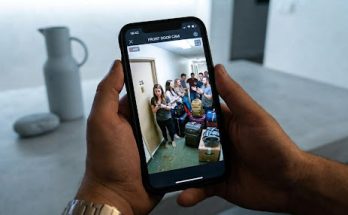
The television flickered twice.
Then the hallway appeared.
Nobody spoke.
The footage was black-and-white,
grainy around the edges,
but clear enough that nobody could
pretend they didn’t recognize our house.
The timestamp in the bottom corner read 6:42 p.m.
The night I had been thrown out.
Dad stepped closer to the screen.
Mom folded her arms.
Dylan didn’t move.
Grandpa pressed play.
For several seconds, nothing happened.
Then someone walked into frame.
Me.
I was wearing my gas-station uniform and carrying my backpack over one shoulder.
The footage showed me coming through the front door,
kicking off my shoes, and walking directly toward my bedroom.
Grandpa paused it.
“What time did you say Kyle stole the money?” he asked.
Dylan swallowed.
“I don’t remember.”
Mom answered for him.
“You said sometime after six.”
Grandpa looked at her.
“More specific.”
She hesitated.
“Between six and seven.”
Grandpa nodded.
Then he pressed play again.
On the screen, I disappeared into my bedroom.
Thirty seconds later, another figure entered the hallway.
Dylan.
He looked toward my door.
Then toward the stairs.
Then directly toward the security camera.
The real Dylan standing beside us went completely still.
Video Dylan disappeared into his bedroom.
A minute passed.
Then he came back out holding something in his hand.
Grandpa froze the frame.
Even with the low-quality footage, I could see what it was.
My backpack.
The same backpack Dylan later claimed he had found in his room.
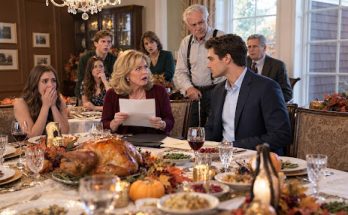
A murmur moved through the patio.
Mom’s arms dropped.
Dad stared at the screen.
Dylan finally spoke.
“That doesn’t prove anything.”
Grandpa looked at him.
“You’re carrying Kyle’s backpack into your room.”
“I borrowed it.”
“For what?”
“I don’t remember.”
Grandpa pressed play.
Dylan disappeared into his room with my backpack.
Three minutes later, he emerged.
Still carrying it.
He walked down the hallway and placed it just outside my bedroom door.
Then he walked downstairs.
Grandpa stopped the footage again.
Nobody said anything.
I could hear the wind moving through Grandma’s trees.
A paper plate slid slightly across the table.
Mom looked at me.
Then at Dylan.
“What were you doing with his backpack?”
Dylan rubbed the back of his neck.
“I told you. I don’t remember.”
Dad’s voice hardened.
“You remembered three weeks ago.”
Dylan looked at him.
“What?”
“You remembered exactly where you supposedly saw Kyle’s backpack.”
“I was confused.”
“Confused?”
“It was weeks ago.”
“It was three weeks ago.”
Dylan glanced toward me.
I didn’t help him.
Grandpa pressed another button.
The footage jumped ahead.
7:11 p.m.
Mom appeared.
She walked down the hallway toward Dylan’s room.
A few seconds later, she came back with Dylan behind her.
They were talking.
There was no audio.
Then Mom walked toward my room.
The footage showed her knocking once.
She entered.
Seconds later, I came out behind her.
Even without sound, I remembered every word.
“Don’t lie to me, Kyle.”
“I’m not lying.”
“Dylan says three hundred dollars is missing.”
“I just got home.”
“He says your backpack was in his room.”
“My backpack is in my room.”
“He saw it.”
“Then he’s lying.”
“Why would your brother lie?”
That question had stayed with me.
Not because it was complicated.
Because nobody had asked the opposite one.
Why would I steal?
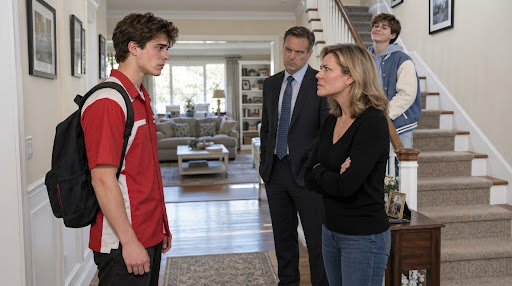
On the television, Dad arrived home at 7:19.
He entered the hallway.
Mom spoke to him.
Dylan stood behind her.
I stood alone near my bedroom door.
The footage had no sound, but everybody watching knew what happened next.
Dad pointed toward the stairs.
Then toward the front door.
I remembered his words perfectly.
“You need to leave.”
Grandpa paused the video.
Dad’s face had changed.
He was staring at his own frozen image.
Grandpa looked at him.
“How long did you talk to Kyle before throwing him out?”
Dad didn’t answer.
“Five minutes?”
Silence.
“Three?”
Dad looked down.
Grandpa turned toward Mom.
“Did either of you check Dylan’s story?”
She whispered, “We thought—”
“I didn’t ask what you thought.”
Grandma quietly said, “Frank.”
Grandpa looked at her.
She gave him a small nod.
Keep going.
So he did.
“Did you check?”
Mom shook her head.
“No.”
“Did you search Kyle’s room?”
“No.”
“His backpack?”
“No.”
“Did you check the cameras?”
She looked at the television.
“No.”
“Did you ask Dylan to prove anything?”
“No.”
Grandpa turned to Dad.
“Did you?”
Dad’s jaw tightened.
“No.”
Grandpa nodded.
Then he looked at me.
“Where did you sleep that night?”
Every eye turned toward me.
I hated that.
I didn’t want their pity.
I didn’t want to become the center of Grandma’s birthday because my parents had failed me.
“Grandpa.”
“Tell them.”
I looked at Mom.
She already knew.
Or at least she knew now.
“The bus station.”
Grandma covered her mouth.
One of my aunts whispered, “What?”
I stared at the grass.
“I slept downtown.”
Mom’s voice cracked.
“You said you stayed with a friend.”
I looked at her.
“When?”
She blinked.
“What?”
“When did I say that?”
She opened her mouth.
Nothing came out.
“You never called me.”
Her face went white.
“You never asked where I was.”
“Kyle—”
“Neither of you did.”
Dad looked at me.
“We thought you needed space.”
I almost laughed.
“Space?”
Nobody moved.
“You threw me out with five dollars.”
Dad looked away.
“My car wasn’t working. You knew that.”
Silence.
“I walked four miles downtown because the bus station was open all night.”
Mom started crying.
I wish that made me feel better.
It didn’t.
Grandpa turned back toward the screen.
“We’re not finished.”
Dylan finally moved.
“Grandpa, enough.”
“No.”
“It was stupid. I admitted it was a prank.”
“You admitted nothing.”
“I literally just told everyone.”
Grandpa stared at him.
“You joked about it.”
Dylan’s face tightened.
“What difference does it make?”
That sentence changed the atmosphere completely.
Grandpa stepped toward him.
“The difference is that admitting what you did means accepting what it cost somebody else.”
Dylan rolled his eyes.
“Kyle came home.”
I felt something inside me snap.
Not violently.
Quietly.
I put my plate on the table.
“You think that makes it okay?”
Dylan looked at me.
“I said it was a joke.”
“You didn’t spend those nights there.”
“Oh, come on.”
“No.”
My voice surprised even me.
“You come on.”
Everyone went silent.
“You slept in your bed while I was sitting beside a vending machine trying not to fall asleep because some drunk guy kept staring at my backpack.”
Dylan’s expression changed.
“You ate dinner while I had crackers from a machine because that was what I could afford.”
Mom started crying harder.
I kept going.
“And you knew.”
Dylan looked down.
“You knew exactly where I was?”
He shook his head.
“No.”
“But you knew I wasn’t home.”
He didn’t answer.
“You knew Mom and Dad threw me out because of your lie.”
Still nothing.
“And you said nothing.”
Grandpa’s voice cut through the silence.
“That’s not the worst part.”
I looked at him.
He was watching Dylan.
Dylan’s face went pale again.
Grandpa picked up the remote.
“There’s another recording.”
Dylan took one step backward.
“What recording?”
Grandpa didn’t answer.
He changed the timestamp.
The screen jumped to earlier that afternoon.
3:26 p.m.
Dylan appeared in the hallway.
He entered his bedroom.
A minute later, he came out holding three bills.
Grandpa zoomed as far as the system allowed.
Dylan walked downstairs.
The camera switched.
Now we were looking at the garage.
Dylan entered.
He moved toward an old cabinet beside Dad’s workbench.
Then he pulled something from his pocket.
A lighter.
Dad stepped forward.
“What the hell?”
On the screen, Dylan held one of the bills over a metal bucket.
He lit the corner.
The paper burned.
Then he dropped it.
Another bill followed.
Then another.
Mom stared at him.
“You burned the money?”
Dylan shook his head rapidly.
“It wasn’t real.”
Grandpa paused.
“What?”
“It wasn’t real money.”
Everyone stared at him.
He exhaled.
“It was fake.”
Dad looked confused.
“Then where was the real three hundred dollars?”
Dylan’s mouth closed.
Grandpa didn’t need him to answer.
He switched to another clip.
This one was from two days earlier.
Dylan came into the garage.
He looked around.
Then he reached behind an old toolbox.
He pulled out an envelope.
Dad whispered, “No.”
I looked at him.
He recognized it.
Apparently Mom did too.
“What is that?” Aunt Maria asked.
Dad didn’t answer.
Grandpa did.
“Money from Frank’s emergency fund.”
Dad’s face turned red.
Dylan backed away from the television.
“It wasn’t like that.”
Grandpa pressed play.
On-screen Dylan opened the envelope.
Counted bills.
Put several into his pocket.
Then returned the envelope.
Dad turned toward him.
“You stole from me?”
Dylan’s eyes filled.
“I was going to put it back.”
Three hundred dollars.
There it was.
The truth.
Dylan had stolen three hundred dollars from Dad’s emergency cash.
Then he had apparently panicked.
He created fake bills.
Burned them.
Moved my backpack into his room.
And told our parents I had stolen money from him.
It wasn’t a prank.
It was a plan.
And I had spent two nights in a bus station because it worked.
Dad looked like he might be sick.
Mom sat down.
Grandma stared at Dylan with an expression I had never seen before.
Disappointment.
Dylan looked around for someone to rescue him.
Nobody moved.
Finally, his eyes landed on me.
“Kyle.”
I said nothing.
“I can explain.”
Grandpa looked at me.
For the first time that day, he didn’t tell me what to do.
He let me choose.
I looked at my brother.
“Then explain.”
Dylan swallowed.
And for the first time in his life, everybody waited for his version second.
PART 4
Dylan sat down.
The confidence was gone.
His shoulders folded inward.
His hands shook.
“I owed somebody money.”
Dad stared at him.
“Who?”
Dylan looked toward the cousins.
Nobody spoke.
“Some guys from school.”
“For what?”
Dylan hesitated.
Dad’s voice rose.
“For what, Dylan?”
“Stuff.”
“What stuff?”
Dylan looked at the ground.
“Shoes. Food. Going out.”
Dad blinked.
“You stole three hundred dollars because you wanted shoes?”
“It wasn’t just shoes.”
“Then what?”
“I was trying to keep up.”
The sentence sounded ridiculous at first.
Then I saw his face.
He wasn’t joking anymore.
“All my friends had money,” he said. “They were always going places. Buying things. I kept telling them I could afford it.”
Mom wiped her eyes.
“Why didn’t you ask us?”
“Because you would’ve said no.”
Dad laughed bitterly.
“So you stole it.”
“I thought I could replace it.”
“With what?”
“I don’t know.”
That was the answer.
He had never had a plan beyond not getting caught.
Then Dad asked the question I had been waiting for.
“Why blame Kyle?”
Dylan didn’t answer.
Dad stepped closer.
“Why your brother?”
Dylan looked at me.
And I already knew.
Because it was easy.
Because they would believe him.
Because years of little comparisons had taught him exactly which son would be questioned first.
Finally, Dylan said it.
“Because I knew you’d believe me.”
Mom started crying again.
Dad stared at him.
Dylan continued.
“You always believe me.”
That hurt them more than anything Grandpa could have said.
Mom whispered, “We trusted you.”
“No,” Dylan said.
He looked at me.
“You trusted me more than him.”
Nobody spoke.
I expected satisfaction.
I had imagined moments like this during those nights downtown.
Not this exact scene, obviously.
But some version of the truth finally coming out.
I thought it would feel good.
It didn’t.
It felt empty.
Because knowing why they had failed me didn’t undo the fact that they had.
Grandma walked toward me.
She took my hand.
“Why didn’t you call me?”
My throat tightened.
“I didn’t want you involved.”
“You were eighteen.”
“I know.”
“You could have come here.”
“I know.”
She squeezed my hand.
“I would’ve come to get you.”
That almost broke me.
Because I believed her.
Grandpa looked at Mom and Dad.
“Did you know he had nowhere to go?”
Mom whispered, “I thought he’d stay with Marcus.”
Marcus was a friend from work.
His parents barely knew me.
“You thought,” Grandpa said.
She nodded.
“Did you call Marcus?”
“No.”
“Did you call Kyle?”
“No.”
“Did you text him?”
She shook her head.
Grandpa looked at Dad.
“You?”
“No.”
Grandpa nodded slowly.
Then he said something I never forgot.
“You punished him before you knew whether he was guilty, and then you abandoned him before you knew whether he was safe.”
Dad flinched.
Grandpa wasn’t finished.
“You don’t get to call that discipline.”
Dad’s eyes hardened.
“I made a mistake.”
“Yes.”
“I said I made a mistake.”
“And?”
Dad looked confused.
“And what?”
Grandpa pointed toward me.
“Tell him.”
Dad turned.
Every person in the backyard watched him.
I hated that too.
I didn’t want an apology performed for an audience.
Dad seemed to realize it.
He walked toward me.
“Kyle.”
I looked at him.
“I’m sorry.”
I waited.
“I should have listened.”
“Yes.”
“I should have checked.”
“Yes.”
“I should never have thrown you out.”
That one took longer.
Finally, I nodded.
“No. You shouldn’t have.”
His eyes filled.
“I don’t know how to fix that.”
“You can’t.”
Mom made a small sound.
Dad stared at me.
I continued.
“You can apologize. You can change. But you can’t fix those nights.”
He nodded slowly.
“I know.”
“No, I need you to understand.”
I looked at Mom too.
“When I was sitting in that station, I kept expecting my phone to ring.”
Mom covered her mouth.
“I thought eventually one of you would get angry enough to call.”
My voice started shaking.
“Then I thought maybe you’d call because you were worried.”
I swallowed.
“Then midnight came.”
Nobody moved.
“Then one.”
Mom cried silently.
“Then two.”
I stared at the grass.
“And eventually I realized neither of you was coming.”
Grandma squeezed my arm.
“That’s what I remember.”
Mom stepped toward me.
I stepped back.
She stopped immediately.
That hurt her.
I could see it.
But I wasn’t ready.
“I’m sorry,” she whispered.
“I know.”
“I love you.”
I looked at her.
“I needed you to act like it.”
She closed her eyes.
That was the hardest sentence I had ever said to my mother.
Dylan stood.
“This is all my fault.”
Grandpa looked at him.
“It started with you.”
Dylan nodded.
“But?”
Grandpa glanced at my parents.
“You lied. They chose what to do with the lie.”
That mattered.
For three weeks, I had blamed Dylan for everything.
But Grandpa was right.
Dylan had framed me.
He had done something cruel.
But Mom and Dad were adults.
They had made their own decision.
They could have asked questions.
They could have checked.
They could have called me afterward.
They didn’t.
Dylan looked at me.
“I’m sorry.”
I said nothing.
“I mean it.”
“I know.”
“Can you forgive me?”
That question made me angry.
Not because he asked.
Because he wanted the answer immediately.
Three weeks of pain.
Ten minutes of truth.
And now forgiveness?
“I don’t know.”
His face fell.
“What does that mean?”
“It means I don’t know.”
“But I apologized.”
Grandpa interrupted.
“An apology isn’t a receipt.”
Dylan looked at him.
“What?”
“You don’t hand somebody an apology and receive forgiveness as change.”
Nobody spoke.
Grandpa continued.
“You apologize because it’s right. What they do with it belongs to them.”
Dylan looked back at me.
For once, he didn’t argue.
“Okay.”
Grandma finally remembered that it was her birthday.
Or maybe she just decided we needed air.
She clapped her hands once.
“Everybody eat before the food goes bad.”
Nobody laughed.
But people slowly started moving.
Plates were picked up.
Chairs scraped.
Conversations restarted in whispers.
Grandpa disconnected the DVR.
I walked toward the side gate.
He followed me.
“Going somewhere?”
“Just walking.”
He nodded.
Then he held out his keys.
“What?”
“Take my truck.”
“I’m fine.”
“I know.”
“Then why?”
“Because your car is still dead.”
I laughed for the first time all afternoon.
He smiled.
“Bring it back tomorrow.”
I took the keys.
Then I looked at him.
“Why did you check the footage?”
His smile disappeared.
“Because your mother told me what happened.”
“When?”
“Two days after they threw you out.”
I stared at him.
“You knew?”
“I knew their version.”
“Why didn’t you call me?”
Pain crossed his face.
“I did.”
I pulled out my phone.
Grandpa shook his head.
“Your old number.”
Then I remembered.
My phone plan had changed that week.
He continued.
“I drove to your house.”
“Why didn’t anyone tell me?”
“I don’t know.”
That answer sounded familiar.
Grandpa looked toward the patio.
“I asked where you were. Your father said you were staying with a friend and needed time.”
My jaw tightened.
Dad had told everyone I was safe.
Without knowing whether I was.
Grandpa continued.
“I believed him.”
I looked down.
“Then why check the cameras?”
“Because something bothered me.”
“What?”
“Dylan.”
I waited.
“He told the story differently twice.”
Of course he had.
“The first time, he said he saw your backpack in his room before you came home.”
Grandpa paused.
“The second time, he said he saw it after.”
“So you checked.”
“I installed those cameras. I remembered the hallway camera covered both bedroom doors.”
“When did you find the footage?”
“Last week.”
“Why wait until today?”
He looked embarrassed.
“I wasn’t planning this.”
I raised an eyebrow.
“You brought a DVR to a birthday party.”
“Fair point.”
I almost smiled.
“I wanted to talk to your parents privately.”
“What changed?”
He looked toward Dylan.
“I heard him laughing.”
That was all.
He had heard Dylan turn it into a joke.
And Grandpa decided silence had lasted long enough.
I looked at the truck keys.
“Thanks.”
“For what?”
“Believing me.”
He shook his head.
“No.”
I frowned.
“I didn’t believe you.”
“What?”
“I checked.”
He put a hand on my shoulder.
“That’s what your parents should’ve done.”
That stayed with me.
Believing someone blindly wasn’t the lesson.
Checking before condemning them was.
I drove away from the barbecue.
But I didn’t go home.
I drove downtown.
Back to the bus station.
I don’t know why.
Maybe I needed to see it in daylight.
I parked across the street and walked inside.
Same fluorescent lights.
Same vending machines.
Same plastic seats.
People coming.
People going.
For everyone else, it was just a building.
For me, it was the place where something had changed.
I walked toward the bench where I had slept.
Someone else was sitting there.
A kid.
Maybe nineteen.
Backpack between his shoes.
Phone in his hand.
He looked exhausted.
For a second, I saw myself.
Then my phone buzzed.
Mom.
I let it ring.
Another call.
Dad.
I let that one ring too.
Then a text from Dylan.
I’m sorry.
Another.
I know that doesn’t fix it.
Then another.
I’ll tell anyone you want. School, family, everybody. I’ll tell them I lied.
I stared at the message.
That was different.
Not “please forgive me.”
Not “tell me we’re okay.”
He was offering to repair what he could.
I typed:
Start with Mom and Dad.
His reply came quickly.
I already did.
Then another message arrived.
From Dad.
You don’t have to come home tonight. But if you do, the door is open. It should never have been closed.
I read it twice.
Then I put my phone away.
I didn’t go home.
Not that night.
Instead, I drove Grandpa’s truck to Grandma’s.
And when she opened the door, she didn’t ask me any questions.
She just hugged me.
PART 5
I stayed with my grandparents for six weeks.
Mom hated it.
Dad hated it too.
But for once, neither tried to force me into doing what made them comfortable.
Grandma gave me the guest room.
Grandpa helped me fix my car.
The problem turned out to be a bad alternator.
We spent a Saturday replacing it in his driveway.
He refused to let me pay for the part.
So I started mowing their lawn.
He complained.
I ignored him.
That became our arrangement.
Mom called every few days.
Sometimes I answered.
Sometimes I didn’t.
Dad texted more than he called.
His messages were awkward.
Need anything?
Car running okay?
Grandpa treating you alright?
That last one made me laugh.
I replied:
He makes terrible coffee.
Dad wrote:
That’s genetic.
It was the first normal conversation we’d had since I was thrown out.
Dylan was different.
He stopped joking.
Stopped performing.
For the first week, he texted me every day.
Then Grandpa apparently talked to him because the messages slowed down.
Later, I learned what Grandpa had said.
“Stop making Kyle responsible for making you feel forgiven.”
That was exactly what Dylan had been doing.
Every apology had secretly contained a question.
Are we okay now?
Eventually, he stopped asking.
He started doing things instead.
He sold the shoes he’d bought.
He paid Dad back.
He took a weekend job washing dishes.
And he told the family exactly what he had done.
Not the edited version.
Not “a prank that got out of hand.”
The truth.
I stole money.
I framed Kyle.
He was thrown out because of my lie.
That mattered.
Not enough to erase what happened.
But enough to show me he understood it.
My parents changed too.
Slowly.
Mom started seeing a counselor.
Dad did something even more surprising.
He apologized to Grandpa.
I happened to hear part of it from the kitchen one afternoon.
“I failed him.”
Grandpa didn’t comfort him.
“Yes.”
Dad went quiet.
Then he said, “I keep thinking about those two nights.”
“You should.”
“I don’t know how to live with that.”
Grandpa answered, “By making sure there’s never a third.”
That was Grandpa.
He didn’t soften truth to make people feel better.
But he didn’t use truth as a weapon either.
A month after the barbecue, Dad asked me to meet him for breakfast.
I almost said no.
Then I went.
We sat in a diner near the highway.
For the first ten minutes, we talked about nothing.
Work.
Cars.
Baseball.
Finally, Dad put down his coffee.
“I owe you more than an apology.”
I waited.
“When Dylan accused you, I believed him because the story fit something I’d already decided about you.”
That hurt.
But I wanted to hear it.
“What had you decided?”
“That you were irresponsible.”
“Why?”
He sighed.
“You changed jobs twice.”
“I was eighteen.”
“I know.”
“You hated my friends.”
“I didn’t understand them.”
“My car broke.”
“I treated that like a character flaw.”
I looked at him.
“Yeah.”
He nodded.
“I did.”
There was no defense.
No “but.”
That helped more than I expected.
Dad continued.
“Dylan got good grades. Teachers liked him. He knew how to talk to adults.”
“And I didn’t.”
“You were quieter.”
“I was working thirty hours a week.”
“I know that now.”
“You knew it then.”
He looked down.
That was true.
He had known.
He just hadn’t counted it as evidence in my favor.
“I saw what I expected to see,” he said.
I didn’t respond.
“That’s not an excuse.”
“No.”
“I know.”
We sat quietly.
Then Dad slid something across the table.
An envelope.
My stomach tightened.
“What’s this?”
“Open it.”
Inside was money.
Three hundred dollars.
I looked at him.
“No.”
“It’s not payment.”
“It feels like payment.”
“It’s not.”
“Then what is it?”
He struggled for the words.
Finally, he said, “You lost two nights of work after I threw you out.”
I had.
“And you spent money getting around because your car was dead.”
I pushed the envelope back.
“Keep it.”
“Kyle.”
“I don’t want money.”
“What do you want?”
That question stopped me.
Three weeks earlier, I would have said an apology.
Now I had one.
Six weeks earlier, I would have said for them to believe me.
But that wasn’t quite right either.
“I want you to ask me next time.”
Dad frowned.
“Ask you what?”
“Anything.”
I leaned forward.
“If somebody tells you something about me, ask me.”
He nodded.
“If you think I screwed up, ask.”
“Okay.”
“If you’re angry, ask.”
“I will.”
“Don’t decide who I am before I get into the room.”
Dad’s eyes filled.
“I won’t.”
I left the money.
He didn’t argue.
That mattered too.
Two weeks later, Mom asked me to come home for dinner.
I agreed.
The house felt smaller.
My room was exactly how I had left it.
Except there was something on my desk.
A new lock.
Still in the package.
I picked it up.
Dylan appeared in the doorway.
“That was Dad.”
“What is it?”
“A lock for your door.”
“I can see that.”
Dylan shoved his hands into his pockets.
“He said you should have somewhere in the house that’s yours.”
I put the package down.
“That’s new.”
“Yeah.”
Silence.
Then Dylan said, “I got fired.”
I looked at him.
“What?”
“From the restaurant.”
“Why?”
“Late twice.”
I almost smiled.
“Congratulations.”
He laughed.
“I probably deserved that.”
“Probably.”
Then he got serious.
“I found another job.”
“Where?”
“Grocery store.”
“Try showing up.”
“I plan to.”
Another silence.
Then he looked at the floor.
“I’m not going to ask if you forgive me.”
“Good.”
“Grandpa told me not to.”
“Smart man.”
“He also called me an idiot.”
“That sounds like him.”
Dylan smiled.
Then it disappeared.
“I really am sorry.”
“I know.”
“I was jealous of you.”
That surprised me.
“Of me?”
“Yeah.”
“Why?”
He shrugged.
“You worked.”
“So?”
“You had your own money.”
“Five dollars, apparently.”
He laughed once.
Then shook his head.
“I mean before that. You had people at work who liked you. You were making plans.”
“What plans?”
“Getting out.”
I stared at him.
“I wasn’t trying to get away from you.”
“I know.”
“Then why?”
“Because everybody treated me like I was supposed to be the good one.”
I frowned.
“That sounds terrible.”
“It was sometimes.”
I didn’t feel sorry for him exactly.
But I understood something I hadn’t before.
Being the golden child had damaged him too.
It taught him that being loved meant maintaining an image.
And when that image was threatened, he protected it by sacrificing me.
That didn’t excuse him.
Understanding isn’t the same as excusing.
But it explained why a sixteen-year-old kid had been terrified enough to create such a stupid, cruel plan.
“You could’ve just told me,” I said.
“I know.”
“I probably would’ve given you money.”
“I know.”
“That makes this even dumber.”
“I know.”
I laughed.
He laughed too.
Then Mom called us downstairs.
Dinner was uncomfortable.
But normal uncomfortable.
Not dangerous uncomfortable.
Nobody pretended nothing had happened.
That was important.
After dinner, Dad asked whether I was coming home permanently.
“No.”
Mom looked disappointed.
“Why?”
“I like staying with Grandma and Grandpa.”
“For how long?”
“I don’t know.”
Mom nodded.
“Okay.”
No guilt.
No argument.
Just okay.
Three months later, I moved into a small apartment with Marcus.
It wasn’t glamorous.
Two bedrooms.
Old carpet.
A refrigerator that made noises like it was haunted.
But it was mine.
My parents helped carry furniture.
Dylan carried the couch up three flights of stairs and complained the entire time.
Grandpa supervised from below.
“Lift with your legs!”
Dylan shouted down, “You could help!”
“I’m management.”
Grandma laughed so hard she had to sit down.
Something had changed.
Not disappeared.
Changed.
The story of what happened didn’t become forbidden.
But it stopped being a weapon.
Mom never told me to get over it.
Dad never said, “We apologized, what else do you want?”
Dylan never called it a prank again.
A year passed.
Then two.
I finished community college.
Transferred.
Got a job working in logistics.
Dylan finished high school.
He went to a state university.
And slowly, strangely, we became brothers again.
Not because I forgot.
Because he changed.
There’s a difference.
Five years after Grandma’s seventieth birthday, we were back in that same backyard.
Another barbecue.
This time it was Grandpa’s birthday.
He was seventy-eight.
The television was on the patio again.
Dylan noticed it.
He pointed.
“Absolutely not.”
Everybody laughed.
Grandpa grinned.
“What?”
“No security footage at birthdays.”
Grandpa looked offended.
“I have no idea what you mean.”
“You ruined DVRs for me.”
“You ruined stealing for yourself.”
Grandma slapped Grandpa’s arm.
“Frank.”
“What?”
Even Dad laughed.
Dylan shook his head.
Then he walked over to me.
He handed me a beer.
“You know something weird?”
“What?”
“That was probably the worst day of my life.”
“The barbecue?”
“Yeah.”
I looked at him.
“It was one of the best days of mine.”
He nodded.
“I figured.”
“Not because you got caught.”
“I know.”
“Because somebody finally checked.”
Dylan stared at his bottle.
“Grandpa saved us.”
I thought about that.
Maybe he had.
But not because of the footage.
The footage proved I hadn’t done it.
That was important.
But Grandpa did something bigger.
He refused to let the family replace truth with convenience.
He didn’t say I was perfect.
He didn’t say Dylan was evil.
He didn’t pretend Mom and Dad were monsters.
He simply forced everyone to take responsibility for their own decisions.
Dylan lied.
My parents didn’t investigate.
I stopped trusting them.
Those were separate truths.
And each one required a separate repair.
Grandpa walked toward us.
“What are you two whispering about?”
“You,” Dylan said.
“Then say something flattering.”
“We were saying you’re nosy.”
“Good.”
He took a drink.
“Nosy people discover things.”
Dylan groaned.
“Here we go.”
Grandpa looked at me.
“You doing okay?”
“Yeah.”
He nodded.
That was all.
He didn’t ask whether I had forgiven everyone.
He didn’t ask whether I was over it.
He never did.
Maybe that was another reason I trusted him.
He understood that healing wasn’t a performance.
Later that evening, Mom found me alone near the fence.
She stood beside me.
“You know, I still think about that night.”
“So do I.”
“I wish I could change it.”
“I know.”
She looked toward Dylan.
“Do you hate me for it?”
Years earlier, that question would have made me angry.
Now I understood what she was really asking.
“Mom.”
She looked at me.
“I love you.”
Her eyes filled.
“But I don’t trust you the same way I did before.”
She nodded.
“I understand.”
“And that’s okay.”
“Is it?”
“It has to be.”
She looked confused.
I tried to explain.
“Trust isn’t either there or gone.”
She listened.
“It comes back in pieces.”
Mom looked down.
“Do I have any pieces?”
I smiled slightly.
“Yeah.”
She laughed through her tears.
“How many?”
“Don’t push it.”
She laughed harder.
Then she hugged me.
This time, I hugged her back.
Across the yard, Dylan shouted, “Family moment! Everybody look uncomfortable!”
I raised one hand without turning around.
He laughed.
Mom whispered, “He’s still an idiot.”
“Definitely.”
When the sun went down, Grandpa lit the firepit.
We sat around it telling stories.
Eventually somebody brought up childhood disasters.
Broken windows.
Ruined vacations.
Dylan setting Grandma’s curtains on fire when he was eight.
Then Uncle Rob looked at Dylan.
“What about the three hundred dollars?”
The circle went quiet.
Years earlier, that silence would have terrified me.
Dylan looked at me.
Not asking permission exactly.
Checking.
I nodded.
He took a breath.
“I stole it.”
Uncle Rob blinked.
“Wait, seriously?”
“Yeah.”
“And blamed Kyle?”
“Yeah.”
“You idiot.”
“Correct.”
Everyone laughed.
Dylan continued.
“And Kyle got thrown out because of it.”
The laughter stopped.
“But that part wasn’t funny.”
He looked at me.
“I used to tell the story like it was a prank because that made it easier for me to live with.”
Nobody spoke.
“It wasn’t a prank.”
He looked around the fire.
“I lied because I was scared. Kyle paid for it. Mom and Dad believed me because I knew they would.”
Dad nodded.
No defensiveness.
Mom did too.
Then Dylan shrugged.
“That’s the story.”
No excuse.
No punchline.
Just the truth.
Grandpa smiled.
Not because the story was happy.
Because Dylan finally knew how to tell it.
Later, when everyone had gone inside, I stayed near the fire.
Grandpa sat beside me.
“You know,” he said, “I almost deleted that footage.”
I turned toward him.
“What?”
“Storage was getting full.”
“You’re joking.”
“No.”
“When?”
“The week before the barbecue.”
I stared at him.
“You almost deleted the only proof I had?”
“I didn’t know it was proof.”
“What stopped you?”
He shrugged.
“Got lazy.”
I laughed so hard I nearly dropped my drink.
“That’s your lesson?”
“Sometimes procrastination saves families.”
“Please never put that on a T-shirt.”
“I might.”
We sat quietly.
Then Grandpa looked at me.
“You would’ve been okay without that footage.”
I frowned.
“How?”
“You would’ve built a life.”
“Maybe.”
“Not maybe.”
He pointed toward the house.
“The recording changed what they knew.”
Then he tapped my chest.
“But it didn’t change what happened.”
I understood.
I had been innocent before the video played.
I was innocent when I walked into the bus station.
I was innocent while Mom and Dad believed Dylan.
Evidence didn’t create the truth.
It revealed it.
That mattered because for a long time I had secretly wondered whether I had somehow caused everything.
Maybe I was too difficult.
Maybe I had been too defensive.
Maybe my parents had reasons not to trust me.
But no.
I hadn’t stolen the money.
And even if I had been difficult, that wouldn’t have made it reasonable to throw an eighteen-year-old into the street without knowing whether he had somewhere safe to sleep.
Grandpa stood.
“My knees are done.”
“Need help?”
“I’m old, not helpless.”
“You complain about your knees every ten minutes.”
“That’s because complaining is free.”
He walked toward the house.
Then stopped.
“Kyle.”
“Yeah?”
“I’m proud of you.”
I smiled.
“Thanks.”
He went inside.
I stayed by the fire until only glowing embers remained.
I thought about that first night at the station.
Eighteen years old.
Five dollars.
Dead car.
Phone silent.
I had believed being abandoned meant I wasn’t worth coming back for.
I knew better now.
Sometimes people fail you because of their own blindness.
Sometimes they choose the easy story.
Sometimes they trust the charming person.
Sometimes they see what they expect to see.
Their failure can hurt you.
It can change you.
But it doesn’t define you.
The next morning, Dylan texted me.
Grandpa is actually making the shirt.
I replied:
What shirt?
A picture arrived.
Grandpa was standing in the kitchen wearing a white T-shirt.
Across the chest, in enormous black letters, it said:
PROCRASTINATION SAVES FAMILIES.
I stared at the picture.
Then I laughed.
Five years earlier, the sight of a security-camera box on Grandma’s patio had exposed the worst lie my brother had ever told.
But the footage wasn’t what repaired our family.
Truth only opened the door.
What came afterward mattered more.
Dylan stopped demanding forgiveness and started becoming someone I could trust.
Mom learned that love without listening could still cause damage.
Dad learned that authority didn’t make his assumptions correct.
And I learned that forgiveness didn’t require pretending the bus station never happened.
I could forgive them and still remember.
I could love them and still have boundaries.
I could rebuild trust without handing it back all at once.
Most importantly, I learned that I didn’t need anyone else’s belief to make the truth true.
That night, when they threw me out, I had walked away thinking I had lost my family.
Years later, I understood something different.
That was the night my family almost lost me.
And the reason we found our way back wasn’t because somebody produced a perfect apology.
It wasn’t because Grandpa had security footage.
It wasn’t because time magically healed everything.
We found our way back because eventually, everybody stopped asking me to carry the consequences of decisions I hadn’t made.
Dylan carried his.
Mom and Dad carried theirs.
And I finally put down mine.
I was never responsible for their mistake.
I was only responsible for what I built afterward.
And once I understood that, the memory of that cold plastic bench finally stopped feeling like the place where my life fell apart.
It became the place where another life began.
One where I knew exactly what I deserved from the people who claimed to love me.
Not blind loyalty.
Not automatic belief.
Just something much simpler.
A question before a verdict.
A phone call before abandonment.
And when the truth finally arrived—
the courage to admit they had been wrong.
THE END THANK YOU FOR READING !!!