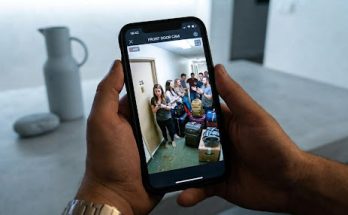
The knock came again.
Three slow taps.
Not loud.
Not aggressive.
But deliberate.
Ryan stood in the foyer staring at the door as if
he suddenly couldn’t decide whether he wanted it opened.
Daniel’s hand remained on the handle.
My mother had stopped breathing.
My father sat rigidly in his chair.
Behind us, thirty minutes earlier, there had been laughter,
music, barbecue smoke, birthday cake,
and the easy noise of relatives who had known one another for decades.
Now there was nothing.
Just the hum of the refrigerator.
The ticking wall clock.
And the faint sound of engines outside.
Daniel opened the door.
A woman in a dark suit stood on the porch.
She was in her early fifties, with silver beginning to show at her temples.
Beside her stood a younger man carrying a thin black case.
Neither wore a uniform.
But the way they stood told me immediately that
they were accustomed to rooms becoming quiet when they entered them.
The woman looked past Daniel.
Her eyes found me.
She stopped.
For half a second, her expression changed.
Not surprise.
Recognition.
Then she said,
“Captain Cooper?”
The room behind me seemed to tilt.
I hadn’t heard anyone call me that in years.
I looked at her carefully.
“Yes.”
She nodded.
“Ma’am.”
Then she stepped inside.
Ryan finally found his voice.
“Who the hell are you?”
The woman looked at him.
“My name is Evelyn Hart.”
Ryan’s face remained suspicious.
“And why are you in my parents’ house?”
She didn’t answer him.
Instead, she looked at my father.
“Mr. Cooper?”
My father slowly stood.
“Yes.”
“I’m sorry to arrive without notice.”
My father glanced at Daniel.
“What is this?”
Evelyn looked back at me.
“Your daughter has been nominated for the Meridian Service Award.”
My mother’s hand flew to her mouth.
Ryan laughed.
Actually laughed.
“Wait.”
He looked at me.
“Her?”
Evelyn’s eyes sharpened.
Ryan stopped.
She continued.
“The award is being presented next month to individuals whose actions during overseas service materially contributed to the survival of other personnel.”
My father sat down again.
My mother began crying.
Ryan stared at me.
“Why didn’t you tell us?”
I looked at him.
Because that was the question, wasn’t it?
Why hadn’t I told them?
Why had I come home after nine months away and allowed my brother to tell everyone I was living off our parents?
Why had I stayed quiet while he mocked my career?
Why had I never corrected him?
The answer was complicated.
And the real story had started eight years earlier.
Before Ryan’s company.
Before the birthday party.
Before Daniel’s phone call.
Before the scar.
It started on a road in Afghanistan.
I was twenty-nine.
I was a logistics officer attached to a sustainment brigade.
My job wasn’t glamorous.
I coordinated movement.
Supplies.
Equipment.
Personnel.
Fuel.
Medical resources.
Convoy schedules.
The things people rarely talked about when they talked about military service.
I wasn’t the person kicking down doors.
I was the person making sure the people who did dangerous work had what they needed to come back.
That distinction mattered to me.
I wasn’t ashamed of it.
But Ryan had never understood it.
He thought if you weren’t carrying a rifle through a television-worthy battlefield, you weren’t really doing anything.
He had said it before.
Years ago.
At Thanksgiving.
“You basically manage spreadsheets.”
I had laughed then.
Because explaining would have required telling him things I wasn’t ready to say.
The convoy incident changed everything.
We were moving between two locations when the second vehicle was struck.
I remember the sound.
Not the explosion itself.
The sound after.
Metal.
Glass.
People shouting.
Then silence.
The first vehicle kept moving.
The third vehicle stopped.
I was in the lead support vehicle.
Our radio erupted.
I remember someone shouting that the second vehicle was disabled.
I remember the word “casualties.”
Then I remember making a decision.
A decision that still visits me sometimes in dreams.
I went back.
Not because I was fearless.
I wasn’t.
I was terrified.
But two soldiers were trapped.
One was conscious.
One wasn’t.
I don’t remember every detail.
I remember heat.
Smoke.
The smell of burned rubber.
Someone screaming.
My gloves slipping.
I remember getting the first soldier out.
Then realizing the second was still inside.
Someone yelled at me to move.
I went back.
The second time, the vehicle shifted.
Something tore across my wrist.
I didn’t notice it immediately.
I pulled the soldier clear.
Then I collapsed.
I woke up in a field hospital.
My wrist had been stitched.
I had a fractured rib.
Concussion symptoms.
And a memory I didn’t know how to carry.
The two soldiers survived.
One returned home.
The other spent months recovering.
I visited him later.
He hugged me without saying anything.
That meant more than any medal.
But the incident had another consequence.
During the evacuation, I had discovered something.
A discrepancy.
A shipment that was supposed to be on the convoy wasn’t where the records said it was.
At first, I thought it was an administrative error.
Then I found another.
And another.
Equipment marked as delivered had never arrived.
Medical supplies were listed as transferred but couldn’t be accounted for.
Fuel records didn’t match movement logs.
None of it made sense.
I reported it.
An investigation followed.
I wasn’t the person who solved the entire case.
I wasn’t some secret intelligence operative.
I was simply one officer who noticed that the numbers didn’t match.
And sometimes that’s enough to make powerful people uncomfortable.
The investigation eventually uncovered contracting irregularities involving several civilian vendors.
Some people were disciplined.
Some contracts were terminated.
Some cases went nowhere.
I was told to keep my head down.
I did.
Then I came home.
And I stopped talking about it.
Not because I was ashamed.
Because I was tired.
The scar remained.
The memories remained.
But life moved forward.
I met my husband.
We divorced years later.
I went back to school.
I worked in logistics consulting.
Then I accepted a federal contracting position.
Nine months before my father’s birthday, I had been assigned overseas again.
That’s why I had been gone.
Not because I was unemployed.
Not because I lived off my parents.
Not because I played soldier on weekends.
But because I had spent years building a career that didn’t need to be explained to someone who had already decided it wasn’t impressive.
And Ryan had never cared enough to ask.
He only cared that I wasn’t working at Cooper Builders.
That company was Father’s legacy.
Ryan had inherited the day-to-day operation.
At least that’s how everyone saw it.
Our father had started Cooper Builders thirty-four years earlier.
One truck.
Two employees.
A borrowed garage.
He built it into a regional construction company.
Ryan had joined after college.
I hadn’t.
That became the great divide between us.
Ryan believed I had rejected the family.
I believed I had simply chosen a different life.
But underneath that disagreement was something neither of us said aloud.
Dad trusted Ryan with the company.
And Ryan needed that trust more than he admitted.
The problem was that Cooper Builders had begun struggling.
Contracts were delayed.
Margins were shrinking.
There were disputes with subcontractors.
And six months before my father’s seventieth birthday, an auditor had discovered irregularities.
Payments had been made to a consulting company with no clear services attached.
Several invoices were unusually high.
One vendor had received more than $600,000 over eighteen months.
Another had been paid twice for the same work.
Dad had asked Ryan about it.
Ryan said everything was normal.
Dad believed him.
Until he didn’t.
That’s where Daniel came in.
I didn’t know any of this at the party.
I only knew Daniel as Ryan’s best friend.
But Daniel had been watching the company from the outside.
He had helped Ryan build it years earlier.
He’d worked on some security and operations contracts.
And unlike Ryan, Daniel knew how to recognize a financial pattern.
When he saw my scar, he remembered my name.
Then he remembered the convoy.
Then he remembered something else.
A report he’d read years earlier.
A contracting investigation.
A vendor called Meridian Logistics.
The same vendor name that had recently appeared in Cooper Builders’ records.
That’s why Daniel made the call.
And that’s why Evelyn Hart was standing in my parents’ foyer.
Ryan still didn’t understand.
“What award?” he asked.
Evelyn turned toward him.
“The Meridian Service Award.”
Ryan shook his head.
“This is ridiculous.”
Daniel finally spoke.
“Ryan.”
“What?”
“Stop.”
Ryan stared at him.
“You called these people?”
Daniel didn’t answer.
Ryan stepped closer.
“Why?”
Daniel looked at me.
“Because I remembered her.”
My mother started crying again.
My father whispered,
“I knew she did something important.”
I looked at him.
“You knew?”
He nodded.
“I just didn’t know how much.”
Ryan laughed bitterly.
“Of course.”
He looked around the room.
“Everyone knew except me.”
“No,” I said quietly.
“Nobody knew everything.”
Evelyn placed the black case on the table.
She opened it.
Inside was a framed photograph.
It showed a convoy.
The image was grainy.
Military vehicles.
Dust.
A stretch of road.
And in the corner—
me.
Standing beside a damaged vehicle.
My wrist wrapped in bloodied gauze.
My father covered his mouth.
Ryan stared.
Daniel lowered his head.
Evelyn said,
“This photograph was taken shortly after the incident.”
She turned toward me.
“You never requested recognition.”
I shrugged.
“I was doing my job.”
“You declined the original recommendation.”
“I didn’t think I deserved it.”
Evelyn looked at me for a moment.
“That’s not how the review board saw it.”
Ryan’s expression changed.
He looked embarrassed.
But the story didn’t end there.
Because Daniel’s phone buzzed.
He checked it.
Then looked at me.
“We need to talk.”
“About what?”
He glanced toward my father.
“About Cooper Builders.”
Ryan immediately stiffened.
“What about it?”
Daniel looked at him.
“The company is about to be investigated.”
Silence.
My father’s face went pale.
“What?”
Daniel swallowed.
“I got a call from someone I know in federal contracting oversight.”
Ryan stepped toward him.
“Why would they call you?”
“Because your company is connected to a vendor under investigation.”
Ryan shook his head.
“That’s impossible.”
Daniel’s expression hardened.
“No. It isn’t.”
He looked at me.
“The vendor is Meridian Logistics.”
My stomach tightened.
The name.
The same name from years ago.
The same contracting company involved in the overseas investigation that had followed my convoy incident.
I stared at him.
“Are you sure?”
Daniel nodded.
“They’ve been moving money through subcontractors.”
My father sat down.
Ryan said,
“That’s not our problem.”
Daniel looked at him.
“It becomes your problem if Cooper Builders paid them.”
Ryan didn’t respond.
Daniel continued.
“And they did.”
My mother looked at Ryan.
“Ryan?”
He stared at the floor.
“I can explain.”
Dad’s voice shook.
“Then explain.”
Ryan didn’t.
Instead, he looked at me.
“You knew about this?”
“No.”
“You expect me to believe that?”
“I just learned about it.”
He laughed.
“You always think you’re smarter than everyone.”
That sentence changed something in me.
Not anger.
Clarity.
I looked at him.
“No, Ryan.”
I pointed toward the framed photograph.
“I just stopped pretending not to see things.”
Daniel walked toward the table.
“I’ve been reviewing the vendor records for two weeks.”
Ryan stared at him.
“You’ve been investigating me?”
“No.”
Daniel looked exhausted.
“I’ve been trying to understand what happened to the company your father built.”
Dad stood.
“What did you find?”
Daniel hesitated.
Then he opened his laptop.
“There are payments to Meridian Logistics totaling $1.8 million.”
My father’s face drained.
Ryan shook his head.
“Those are legitimate contracts.”
Daniel clicked another file.
“Then why did $420,000 go from Meridian to a company owned by your construction manager’s brother?”
Ryan said nothing.
Daniel clicked again.
“Why did $180,000 go to a consulting company registered to your former CFO’s wife?”
Nothing.
“And why did $75,000 go to an account that eventually paid for a private vehicle?”
Ryan’s voice became defensive.
“Those aren’t my transactions.”
Daniel looked at him.
“They were approved using your credentials.”
The room went silent.
Ryan’s face changed.
“I didn’t approve those.”
Daniel turned the laptop toward him.
“Then someone had access to your account.”
My father stared at Ryan.
“Who?”
Ryan looked away.
I already knew the answer.
Or at least I thought I did.
“Who has access to the company systems?” I asked.
Ryan didn’t answer.
Daniel did.
“Four people.”
“Who?”
“Ryan. The CFO. The office manager. And a third-party IT administrator.”
I looked at Daniel.
“Who is the IT administrator?”
He gave me a name.
My stomach dropped.
Steven Cross.
The same man who had once handled my father’s company accounting.
The same man who had recently been hired as a financial consultant.
The same man who had been involved in the vendor contracts.
And the same name appeared in my old military investigation.
Not as a criminal.
Not as a suspect.
As a subcontractor.
I looked at Daniel.
“How long have you known?”
“Two days.”
“Why didn’t you tell me?”
“Because I wasn’t sure.”
I nodded.
That was fair.
Evidence mattered.
Not suspicion.
Not family gossip.
Evidence.
Evelyn Hart stepped closer.
“I think there’s something you need to see.”
She pulled another document from the black case.
It was an old government report.
My name was highlighted.
I read the page.
Then another.
The report described the convoy incident.
It also described the contracting investigation.
And one sentence near the end made my blood run cold.
A discrepancy in supply records was first reported by Lieutenant Audrey Cooper. Subsequent review identified possible fraudulent invoicing involving Meridian Logistics and associated subcontractors.
I looked at Ryan.
He was staring at the document.
“You knew about this?”
“No.”
He looked genuinely confused.
Then Daniel said,
“Ryan didn’t.”
I turned toward him.
“What do you mean?”
“Your brother wasn’t involved in the original case.”
“Then why is Meridian connected to his company?”
“Because someone reactivated the old network.”
I felt the room grow colder.
The old network.
The same people?
Maybe.
But there was no proof yet.
Daniel continued.
“Someone has been using Cooper Builders as a new financial channel.”
My father whispered,
“Who?”
Daniel looked toward Ryan.
“That’s what we’re trying to determine.”
Ryan suddenly became furious.
“You think I stole from Dad?”
“No.”
“Then what are you saying?”
“I’m saying someone used your access.”
Ryan looked at me.
“And she knows about this.”
I stared at him.
“I know because Daniel told me.”
“You expect me to believe that?”
“I don’t care what you believe.”
The words came out quietly.
But they landed harder than shouting would have.
Ryan stopped.
Because for the first time in our lives, I wasn’t trying to win an argument with him.
I was simply done participating in it.
That night, after the guests left, my father asked me to stay.
The house was quiet.
Birthday decorations remained hanging from the ceiling.
Half-empty wine glasses sat on the tables.
My mother was upstairs.
Ryan had left without saying goodbye.
Dad sat across from me.
“I’m sorry.”
I looked at him.
“For what?”
“For not asking.”
I didn’t answer.
He continued.
“I thought you wanted distance.”
“I did.”
“But I thought distance meant you didn’t need us.”
I smiled sadly.
“Sometimes distance means someone is trying to breathe.”
He nodded.
“I should have known.”
I looked at my scar.
“I didn’t want anyone treating me differently.”
Dad’s eyes became wet.
“Why?”
“Because every time someone learns what happened, they look at me like I’m broken.”
He reached across the table.
“You aren’t broken.”
“I know that now.”
He squeezed my hand.
Then he said something that surprised me.
“Ryan has been struggling.”
“I know.”
“No, you don’t.”
I looked at him.
“He borrowed money from the company.”
My heart sank.
“How much?”
Dad hesitated.
“Nearly $300,000.”
“Why?”
“Debts.”
“Gambling?”
Dad nodded.
“Some.”
I closed my eyes.
The pattern.
My brother had been mocking me for living off our parents while secretly borrowing hundreds of thousands from the same parents.
But there was more.
Dad handed me a folder.
“These are the documents.”
I opened it.
Ryan had taken personal loans.
He had used company funds.
He had guaranteed debts.
And some of those debts had been used to cover losses created by the vendor scheme.
I looked up.
“Why didn’t you tell me?”
“Because I was ashamed.”
I understood.
Parents often protect their children long after protection becomes harmful.
Dad whispered,
“I thought I could fix it.”
“You can’t fix something you won’t name.”
He nodded.
That sentence became the beginning of everything.
The next morning, federal investigators arrived at Cooper Builders.
Not dramatic.
No shouting.
No television-style raid.
Just people with credentials and warrants.
They collected computers.
Accounting records.
Contracts.
Phones.
The company was temporarily restricted from certain financial activity while the investigation proceeded.
Employees were interviewed.
Banks were notified.
The board appointed an interim manager.
Ryan was asked to step away.
He blamed me.
Of course he did.
He called me that night.
“You ruined everything.”
“No.”
“You brought them here.”
“No.”
“You always hated me.”
“No.”
He was silent.
Then I said,
“You did this.”
He started crying.
That was the first time I’d ever heard my brother cry.
“I was trying to save the company.”
“By hiding the losses?”
“I thought I could fix it.”
“You should have told Dad.”
“I was afraid.”
I closed my eyes.
“So was I.”
He didn’t respond.
Then he whispered,
“Why didn’t you tell me about the convoy?”
“Because you never asked.”
“I would have listened.”
“No.”
He became quiet.
“You wouldn’t have.”
The call ended.
Three days later, Daniel came to see me.
He looked exhausted.
“There’s something else.”
I sat down.
“What?”
He handed me a folder.
Inside was a list of names.
At the top:
Meridian Logistics.
Below it were several subcontractors.
One of them was familiar.
Hale Strategic Consulting.
Daniel looked at me.
“Remember when I asked about your convoy?”
“Yes.”
“Your injury wasn’t the only thing I remembered.”
“What else?”
“After the investigation, there was a whistleblower.”
“Who?”
“An accountant.”
“Name?”
“Marcus Hale.”
I stared at him.
“Is he related to Steven?”
“Brother.”
The room went silent.
Daniel continued.
“Marcus disappeared after reporting the fraudulent invoices.”
“What happened to him?”
“He wasn’t killed.”
I exhaled.
“He left the country.”
“Why?”
“Threats.”
I looked at the documents.
“So this has been going on for years.”
“Possibly.”
Then Daniel pointed to one name.
“There’s your connection.”
Steven Cross.
He had worked with Meridian years ago.
Later, he became connected to Cooper Builders.
And then he began manipulating Ryan’s financial weaknesses.
Ryan wasn’t the mastermind.
But he wasn’t innocent either.
He had knowingly moved money to cover gambling debts.
He had lied to our father.
He had approved questionable transactions without asking enough questions.
He had allowed a vendor relationship to continue because it benefited him personally.
But he hadn’t created the larger network.
The investigation eventually established that several people had used Cooper Builders as a conduit for fraudulent payments.
Ryan cooperated.
His cooperation didn’t erase what he had done.
He faced financial consequences.
Civil penalties.
Losses.
A negotiated departure from the company.
But he wasn’t charged with crimes he hadn’t committed.
That mattered to me.
Truth wasn’t about destroying everyone.
It was about separating what each person actually did.
My father rebuilt the company slowly.
He brought in independent accountants.
New financial controls.
Separate approval processes.
No single executive could approve a vendor and authorize payment.
Related-party transactions required disclosure.
Employees had a confidential reporting channel.
And my father finally stopped pretending family loyalty was a substitute for governance.
As for Daniel—
he became something more than my brother’s best friend.
Not romantic.
Not complicated.
Just someone who had recognized me before my family did.
Someone who understood why I kept my silence.
Months later, he invited me to a small ceremony.
The Meridian Service Award.
I almost declined.
Then I remembered my father.
I went.
The room wasn’t enormous.
There were veterans.
Families.
Former officers.
Civilians.
People who had survived things nobody outside their circles would ever understand.
When they called my name, I walked onto the stage.
Daniel stood near the back.
My father sat beside my mother.
Ryan was not there.
I didn’t expect him to be.
The presenter talked about the convoy.
The two soldiers.
The injury.
The decision.
But I didn’t think of the award as a medal for bravery.
I thought about the two men who survived.
That was enough.
After the ceremony, my father hugged me.
“I should have been there.”
I smiled.
“You are now.”
He cried.
So did I.
A few months later, Ryan came to my house.
He stood on the porch holding a paper bag.
“I brought Mom’s pie.”
I laughed.
“That’s a peace offering?”
“It’s all I could think of.”
I let him inside.
We sat at the kitchen table.
For a while, neither of us spoke.
Then he said,
“I was jealous.”
I looked at him.
“Of what?”
“Everything.”
I waited.
“You had something I didn’t.”
“What?”
“You knew who you were.”
I didn’t expect that.
He stared at the table.
“I built the company because Dad wanted me to. Then I spent years pretending I wanted it too.”
“Did you?”
“Sometimes.”
“And the rest?”
“I hated feeling like the family success story was supposed to be me.”
I looked at him.
“It doesn’t have to be.”
He smiled sadly.
“I know that now.”
He looked at my wrist.
“Does it still hurt?”
“Sometimes.”
“Physically?”
“Sometimes.”
He nodded.
“Other ways?”
I looked at him.
“Yes.”
He swallowed.
“I’m sorry.”
It wasn’t enough to erase anything.
But it was honest.
So I accepted it.
Not because forgiveness means pretending nothing happened.
Because carrying anger forever would have made his choices part of my future too.
Years later, I still have the scar.
It has faded.
Sometimes people ask about it.
I usually say,
“Old injury.”
Most don’t ask further.
And that’s fine.
I don’t owe everyone my history.
But occasionally, someone asks with genuine respect.
When that happens, I tell them the truth.
I tell them I was a logistics officer.
I tell them I went back for two soldiers.
I tell them I was scared.
Because bravery isn’t the absence of fear.
It’s deciding what matters more than the fear.
And sometimes, bravery isn’t running toward an explosion.
Sometimes it’s walking into your parents’ house after nine months away and refusing to let someone else’s ignorance define you.
Sometimes it’s telling your family the truth.
Sometimes it’s admitting you need help.
Sometimes it’s recognizing that the person shouting the loudest isn’t necessarily the strongest person in the room.
And sometimes—
it’s simply rolling your sleeve back down.
Not to hide the scar.
But because you no longer need anyone to understand it.
A year after the birthday party, my father sold Cooper Builders.
Not because the company failed.
Because he wanted to retire.
The buyer kept most of the employees.
The company survived.
My father finally spent his mornings fishing instead of answering construction calls.
My mother started traveling.
Ryan moved into a smaller company of his own.
He started over.
Slowly.
Honestly.
Daniel remained in our lives.
At my father’s seventy-second birthday, he stood beside me near the grill.
Ryan walked over.
He looked at my sleeve.
Then at Daniel.
“You know,” Ryan said, “I still can’t believe that one scar changed everything.”
Daniel smiled.
“It didn’t.”
Ryan looked confused.
Daniel nodded toward me.
“She did.”
I looked at them both.
For once, I didn’t feel the need to correct anyone.
The scar hadn’t changed my life.
It had only reminded someone else of what I had survived.
Daniel had made the call.
Evelyn had opened the door.
The investigators had uncovered the fraud.
The company had changed.
My brother had been forced to face himself.
My father had finally learned to ask questions.
But none of those things happened because I was secretly some legendary hero.
They happened because the truth finally had enough witnesses.
And that was the lesson I carried with me.
You never know what someone has survived just because they don’t talk about it.
You never know what someone sacrificed because they don’t display the evidence.
You never know how much strength is sitting quietly at the edge of the room while everyone else is laughing.
Ryan had looked at my silence and seen weakness.
Daniel had looked at the same silence and recognized discipline.
My father had looked at my absence and eventually learned it wasn’t rejection.
And I finally looked at myself and stopped needing anyone else to decide whether I was enough.
The night of my father’s seventieth birthday, Ryan had held my arm up in front of everyone and mocked me.
“She lives off Mom and Dad.”
He thought he was exposing me.
Instead, he exposed how little he knew about his own sister.
He thought the scar was evidence that I was damaged.
Daniel knew it was evidence that I had survived.
He thought my military career was something to laugh about.
Daniel knew exactly what it had cost.
He thought my quietness meant I had nothing to say.
He never understood that sometimes silence is a choice.
Not fear.
Not weakness.
A choice.
And when that knock came at the door, Ryan thought someone had arrived to embarrass me.
He had no idea the person standing on the other side was carrying a story about me that I had spent years refusing to tell.
The story wasn’t that I was a hero.
The story wasn’t that I was better than my brother.
The story wasn’t even about the scar.
It was about two soldiers who came home because someone went back for them.
It was about a family business almost destroyed by secrets.
It was about a brother who confused money with success.
It was about a father who learned that protecting a child can sometimes mean letting the truth hurt.
And it was about a woman who spent years believing that keeping quiet meant disappearing.
Until one afternoon, someone finally looked at the scar on her wrist and asked the right question.
“Was that you?”
And for the first time, I answered without hiding.
“Yes.”
That single word opened the door.
Not just to the house.
To everything I had spent years keeping locked away.
And once the truth came out, my brother could no longer tell everyone who I was.
My family couldn’t either.
Because I finally understood something I wish I had learned much earlier.
You don’t have to announce your worth.
You don’t have to win every argument.
You don’t have to prove your scars to people who only want to mock them.
You don’t have to explain your life to someone committed to misunderstanding it.
Sometimes you simply stand there.
Let them talk.
Let them laugh.
Let them assume.
And when the truth finally arrives—
you don’t need to say much.
You just roll your sleeve down.
Look them in the eye.
And let the truth speak for itself.
THE END THANK YOU FOR READING !!