PART 3
By the next morning,
I had twenty-three missed calls.
Nine from Mom.
Five from Dad.
Four from Camille.
The rest came from relatives who apparently had not been
concerned enough to call when I was excluded from
my sister’s engagement party but suddenly
considered my wedding a family emergency.
I listened to exactly one voicemail.
Mom’s.
Elias, please. This is getting ridiculous.
Call me so we can fix this before you do something you regret.
I played it again.
Not because I wanted to hear her voice.
Because I wanted to make sure I had heard correctly.
Before you do something you regret.
Even now, she couldn’t say:
I’m sorry.
She couldn’t say:
We hurt you.
She couldn’t say:
You should have been at Camille’s party.
Instead, my decision was the problem.
I was the person creating damage.
I deleted the voicemail.
Mariah came into the kitchen wearing one of my old college shirts.
“Your phone has been vibrating for ten minutes.”
“I know.”
“Your mom?”
“Mostly.”
She poured coffee.
“Want me to hide it?”
“My phone?”
“Yes.”
I smiled.
“Tempting.”
Mariah sat across from me.
She didn’t tell me what to do.
That was one of the things I loved most about her.
She never confused supporting me with deciding for me.
After a minute she said, “Do you want them there?”
The question hurt because the answer wasn’t simple.
“I want parents there.”
Mariah waited.
“I’m not sure I want mine.”
She reached across the table.
I took her hand.
“I keep imagining Dad helping me with my tie,” I said. “Mom crying when she sees you. Family pictures. All that normal stuff.”
“You’re allowed to want that.”
“But wanting it doesn’t make them those people.”
“No.”
That was the problem.
I had spent years loving my parents partly for who they were and partly for who I kept hoping they might become.
Every Christmas, every birthday, every graduation, I thought maybe this time.
Maybe this time Mom would notice that Camille had interrupted me.
Maybe this time Dad would say something.
Maybe this time I wouldn’t be expected to surrender because I was “the mature one.”
Maybe this time being easy wouldn’t mean being ignored.
It always did.
My phone buzzed again.
Camille.
Please answer me.
I stared at it.
Mariah noticed.
“You can talk to her without changing your mind.”
“I know.”
I called.
Camille answered before the first full ring.
“Elias?”
“Hi.”
“Oh my God. Finally.”
I almost hung up.
Then she exhaled.
“Sorry. Sorry. I’m just… Mom is losing it.”
“Why?”
“You know why.”
“I want to hear you say it.”
Silence.
“Because she isn’t invited to your wedding.”
“Correct.”
“Dad too?”
“Yes.”
Another pause.
“Am I?”
I leaned back.
“I haven’t decided.”
“That’s fair.”
That surprised me.
I had expected outrage.
Instead, Camille sounded tired.
“I need to tell you something,” she said.
“Okay.”
“Mom said you knew about my engagement party.”
I went still.
“What?”
“She told me you weren’t coming.”
“Why?”
“She said you had a work thing.”
I laughed once.
There was nothing funny about it.
“Camille, I called Mom after I saw the pictures.”
“I know that now.”
“Didn’t you wonder why I never congratulated you at the party?”
“I thought you were upset about something.”
“I didn’t know there was a party.”
She became quiet.
Then she said, “I should have called you.”
“Yes.”
“I know.”
“Everyone keeps saying they thought I wouldn’t care. You’re all apparently very comfortable deciding what I feel without asking me.”
“I know.”
There was something different in her voice.
Not defensive.
Ashamed.
“Did you ask Mom why she lied to you?”
“Yes.”
“What did she say?”
Camille hesitated.
“She said she was protecting my day.”
“From me.”
“Yes.”
“Because I’m jealous.”
Another silence.
“She said you’ve always had an issue with attention being on me.”
I stood and walked toward the window.
For years, my mother had been writing a version of me behind my back.
Jealous.
Sensitive.
Difficult.
Independent when she needed an excuse not to include me.
Dramatic when I objected.
I wondered how many family moments had been shaped by a story about me that I never knew existed.
“Do you believe her?” I asked.
Camille didn’t answer immediately.
“I used to.”
That hurt.
“Why?”
“Because she’s Mom.”
“That isn’t an answer.”
“I know.”
Her voice cracked.
“Because it was convenient.”
I closed my eyes.
Finally.
Someone had said it.
Convenient.
It had been convenient for Camille to believe I was jealous.
That way, she never had to wonder why everything revolved around her.
Convenient for Dad to believe I was independent.
That way, he never had to defend me.
Convenient for Mom to believe I was difficult.
That way, excluding me became protection instead of cruelty.
“What changed?” I asked.
“Your wedding.”
I almost laughed.
“Of course.”
“No, Elias. Listen.”
I waited.
“Mom came over last night. She was furious. She kept saying you were humiliating her.”
“Interesting choice of word.”
“I know.”
Camille took a breath.
“I asked her whether she ever apologized to you for my engagement party.”
“What did she say?”
“She said she had nothing to apologize for.”
That sounded like Mom.
“Then she said something else.”
“What?”
“She said, ‘Elias needs to learn that family decisions aren’t about him.’”
I stared out the window.
Mariah was quietly washing her coffee cup behind me.
Camille continued.
“And I asked her, ‘Isn’t his wedding a family decision that actually is about him?’”
Despite everything, I smiled.
“What happened?”
“She told me not to be smart.”
“That also sounds like Mom.”
Camille laughed softly.
Then the laugh disappeared.
“I’m sorry.”
I swallowed.
“For what?”
“For not noticing.”
That was harder to hear than I expected.
“You noticed sometimes.”
“No. I noticed when you got quiet. I just thought that was who you were.”
“Maybe it became who I was.”
She started crying.
“I should have stood up for you.”
I didn’t tell her it was okay.
But I didn’t punish her either.
“You can start now.”
We hung up twenty minutes later.
Nothing was fixed.
But something had shifted.
For the first time, Camille had looked at the family story from outside the role Mom had assigned her.
That afternoon, Dad showed up at my office.
He didn’t call first.
He waited near reception until I came out.
“Five minutes,” he said.
I checked the time.
“Fine.”
We went downstairs to the café.
Dad sat across from me.
“You need to call your mother.”
“No.”
“Elias.”
“You asked for five minutes.”
His jaw tightened.
“This wedding situation has gotten out of hand.”
“My wedding planning is actually going well.”
“You know what I mean.”
“Yes.”
He leaned forward.
“Your mother made a mistake.”
“Which one?”
He blinked.
“Not inviting you.”
“Why did she do it?”
“She thought Camille would be more comfortable.”
“Why?”
Dad sighed.
“Because you and your sister have always had tension.”
“Have we?”
He frowned.
“What does that mean?”
“It means I’d like you to name one scene I’ve caused at one of Camille’s events.”
He opened his mouth.
Nothing came out.
“Graduation?”
Silence.
“Birthdays?”
Nothing.
“Her college send-off?”
Nothing.
“Christmas when she announced her engagement while I was announcing my promotion?”
Dad looked uncomfortable.
“You’re still upset about that?”
I laughed.
“That’s your answer?”
“I’m saying families interrupt each other.”
“I’m asking when I became the jealous one.”
Dad stared at the table.
“You know your mother.”
There it was.
The sentence he had used my entire life.
You know your mother.
Translation:
She won’t change.
So you have to.
I leaned back.
“No.”
He looked at me.
“What?”
“I’m done knowing Mom in a way that requires me to accept everything she does.”
“Elias.”
“Why didn’t you invite me?”
He looked away.
“Your mother handled the guest list.”
“You were there.”
“Yes.”
“You saw I wasn’t.”
“Yes.”
“Did you ask why?”
“I knew why.”
My chest tightened.
“So you agreed.”
“I didn’t say that.”
“You went.”
“That doesn’t mean I agreed.”
“It means you agreed enough.”
Dad looked hurt.
Good.
Not because I wanted to hurt him.
Because for once, he needed to feel the weight of his own neutrality.
He had spent years believing silence made him innocent.
It didn’t.
Sometimes silence simply helps the loudest person win.
Dad rubbed his forehead.
“What do you want us to do?”
“Nothing.”
“That’s not reasonable.”
“It’s very reasonable.”
“You’re getting married. Family should be there.”
I stared at him.
“Engagement parties are family events too.”
He looked away.
I stood.
Our five minutes were over.
Dad caught my wrist lightly.
“Son.”
I stopped.
He released me immediately.
“What if I apologize?”
“For what?”
His eyes met mine.
That question mattered.
Because “sorry” is easy when you don’t have to identify the damage.
Dad looked down.
“For letting your mother make you the problem because confronting her was harder.”
I sat back down.
He swallowed.
“I knew you weren’t jealous.”
My chest tightened.
“What?”
“I knew.”
“Then why didn’t you say anything?”
“Because your mother gets defensive about Camille.”
“So?”
“I didn’t want the argument.”
I stared at him.
“You traded me for peace.”
He closed his eyes.
When he opened them, they were wet.
“I suppose I did.”
That was the first honest conversation my father and I had ever had about our family.
But honesty did not magically create an invitation.
When he finally asked, “Can we come to the wedding?” I gave him the only answer I had.
“I don’t know.”
He nodded.
For once, he accepted uncertainty.
Then, three days later, Mom made everything worse.
Mariah showed me the Facebook post.
Mom had uploaded a photograph of our family from Christmas two years earlier.
Camille stood beside me.
Dad behind us.
Mom in front.
The caption read:
“When your only son decides to exclude his family from the happiest day of his life, you have to wonder where you went wrong. A mother’s heart can only take so much.”
There were forty-three comments.
Aunt Denise:
Praying for reconciliation.
A cousin I had spoken to twice in ten years:
Life is too short. Forgive your mother.
Someone from Mom’s church:
Children can be so cruel when they grow up.
I felt my face burning.
Mariah sat beside me.
“Don’t respond while you’re angry.”
“I’m not angry.”
She looked at me.
“Okay. Don’t respond while you’re whatever this is.”
I laughed despite myself.
Then my phone rang.
Camille.
“Did you see it?”
“Yes.”
“She promised me she wouldn’t post anything.”
“I believe you.”
“I’m going over there.”
“Don’t.”
“What?”
“Don’t fight my battle.”
“Elias—”
“I mean it.”
There was a pause.
Then I said, “But if anyone asks you directly what happened, tell the truth.”
Camille understood.
“You sure?”
“Yes.”
That night, Aunt Selene commented beneath Mom’s post.
I know there are two sides here. Elias was not invited to Camille’s engagement party. Perhaps this conversation belongs offline.
Then Lily commented:
He found out about the party through Facebook.
Then Ray:
Yeah, I was told Elias couldn’t make it. Didn’t know he wasn’t invited.
The story began changing in public.
Mom deleted the post within an hour.
But screenshots already existed.
And for the first time in my life, she couldn’t completely control the narrative.
Two days later, she called from Dad’s phone.
I answered because I thought it was him.
“Elias.”
I nearly hung up.
“Please,” she said.
Her voice sounded different.
Not angry.
Not crying.
Small.
“What do you want?”
“To see you.”
“I’m busy.”
“Ten minutes.”
I looked at Mariah.
She nodded.
“Tomorrow. Noon. The florist on Mercer.”
“Why there?”
“Because Mariah and I have an appointment afterward.”
Silence.
Then:
“Okay.”
Mom never came.
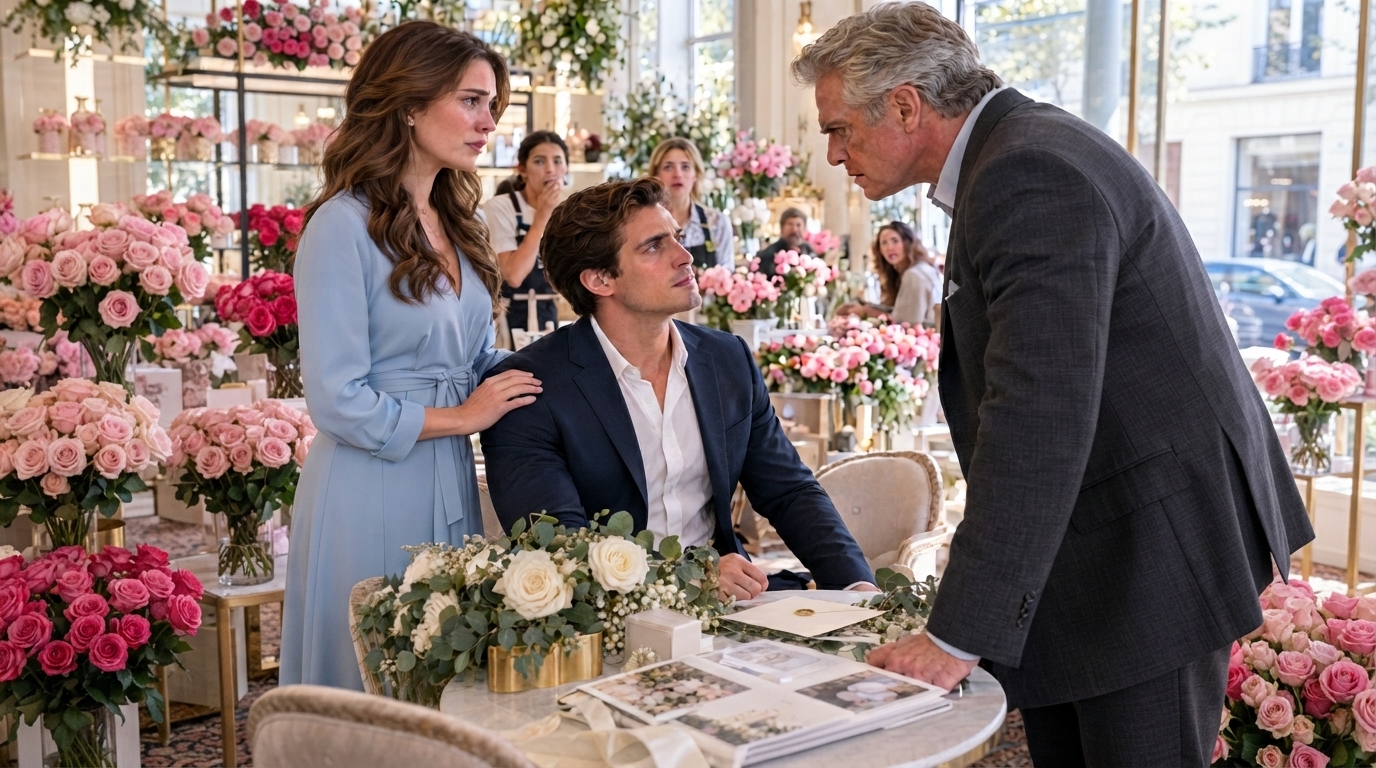
Dad did.
He entered the florist alone while Mariah and I were reviewing centerpieces.
He stopped beside our table.
“This has gone far enough, Elias.”
And suddenly we were back where everything had begun.
Except this time, I wasn’t the son trying to earn a place in his own family.
I was a man deciding who deserved a place in the family I was building.
PART 4
Dad stood beside the table while Mariah quietly excused herself.
I loved her for that.
Not because I needed rescuing.
Because she understood this conversation belonged to me.
Dad watched her walk toward the front counter.
“She seems good for you.”
“She is.”
He nodded.
Then he sat.
“Your mother couldn’t come.”
“Why?”
“She said she wasn’t ready.”
I almost laughed.
“She asked to meet.”
“I know.”
“So she sent you.”
“Yes.”
Nothing had changed.
Mom created the crisis.
Dad managed the consequences.
“What does she want?”
“She wants to come to the wedding.”
“I know.”
“She’s devastated.”
“I know.”
“She’s barely sleeping.”
I looked at him.
“Dad, do you hear yourself?”
“What?”
“You’re telling me how Mom feels.”
“Yes.”
“Have you asked how I feel?”
He stopped.
I let the silence do its work.
Finally he said, “How do you feel?”
“Tired.”
That wasn’t the answer he expected.
“Not angry?”
“That too.”
I looked around the florist.
White roses.
Greenery.
Samples of ribbon.
A little card with M + E written in Mariah’s handwriting.
“I’m tired of every important moment in my life becoming a management exercise.”
Dad frowned.
“What do you mean?”
“My promotion became Camille’s engagement.”
“My wedding became Mom’s heartbreak.”
“My exclusion from Camille’s party became a debate about whether I’m jealous.”
“Even this florist appointment is now about Mom.”
Dad looked around.
He finally seemed to understand where he was.
“You’re supposed to be choosing flowers.”
“Yes.”
“And I came here to argue.”
“Yes.”
He looked ashamed.
“I’m sorry.”
I nodded.
Then he noticed the invitation beside my hand.
A spare.
Cream paper.
Dark green lettering.
He stared at it.
“Is that one of them?”
“Yes.”
He reached toward it.
Then stopped.
“Can I?”
I handed it to him.
He read our names.
Elias Bennett and Mariah Cole request the pleasure of your company…
He ran his thumb across the edge.
“Your mother would love this.”
I didn’t respond.
He looked at the date.
“Can we at least come?”
I wanted to say yes.
I hated that I wanted to say yes.
Because beneath all the boundaries, beneath the anger, beneath twenty-eight years of being the easy child, I was still somebody’s son.
I still wanted my father there.
I still imagined Mom crying when Mariah walked down the aisle.
But I had finally learned that wanting people in your life and trusting them with important moments are different things.
“I don’t trust Mom not to make the wedding about this.”
“She wouldn’t.”
I gave him a look.
He sighed.
“You’re right. I can’t promise that.”
“Exactly.”
“What about me?”
The question surprised me.
“You?”
“Am I being punished for what she did?”
“No.”
“Then why am I not invited?”
I considered the question.
“Because you keep showing up as her representative instead of my father.”
His face changed.
“That’s not fair.”
“It’s completely fair.”
“I apologized.”
“You did.”
“I admitted I was wrong.”
“Yes.”
“What else do you want?”
“I want to know whether you’re capable of disagreeing with Mom when it costs you something.”
He stared at me.
“I have.”
“When?”
Silence.
I leaned forward.
“You knew I wasn’t jealous.”
“Yes.”
“You let her call me jealous anyway.”
“Yes.”
“You knew excluding me was wrong.”
“Yes.”
“You attended the party anyway.”
“Yes.”
“She made a public post attacking me.”
“Yes.”
“Did you tell her to take it down?”
He hesitated.
“No.”
“Then you came here because she sent you.”
He looked at the invitation.
I could see the truth settling over him.
“You think I’m weak.”
“No.”
I shook my head.
“I think you’ve spent years choosing the easiest person to disappoint.”
His eyes filled.
“And that person was me.”
He folded the invitation carefully.
Then placed it back on the table.
“I understand.”
I didn’t believe him.
Not yet.
But he stood.
Before leaving, he looked toward Mariah.
“Tell her I’m sorry I interrupted.”
“You can tell her.”
He walked over.
I couldn’t hear what he said.
Mariah smiled politely.
Dad shook her hand.
Then left.
That evening, Camille appeared at our apartment.
Alone.
No Mom.
No Dad.
No speech prepared.
She sat at our kitchen counter while Mariah ordered Thai food.
“I saw Dad.”
I nodded.
“He came home looking like someone kicked him.”
“He’ll survive.”
Camille smiled.
Then became serious.
“I want to ask you something.”
“Okay.”
“Was I invited?”
I took a breath.
“At first, no.”
She nodded.
“And now?”
“I’m considering it.”
“That’s fair.”
She stared at her hands.
“I didn’t know Mom excluded you from the engagement party.”
“I believe you.”
“But I knew you weren’t there.”
“Yes.”
“And I didn’t ask.”
“No.”
She looked at me.
“That makes me part of it.”
“Yes.”
Her eyes filled.
“Okay.”
I respected her for not arguing.
Then she said something unexpected.
“I think Mom likes us better when we’re competing.”
I frowned.
“What?”
“She tells me you think you’re smarter than me.”
I stared at her.
“She tells me you think I’m irresponsible.”
“I’ve never said that.”
“I know.”
“How?”
“Because I finally asked.”
That sentence hit me.
She continued.
“She told me you resented how much attention I got growing up.”
“Did you?”
“What?”
“Get more attention?”
She laughed sadly.
“Obviously.”
I laughed too.
It was the first time we’d ever acknowledged it together.
“She used to tell me you didn’t need as much because you were stronger.”
“Independent.”
“Yes.”
“That word again.”
Camille nodded.
“And whenever I felt guilty about something, she’d say, ‘Don’t worry about Elias. He likes being alone.’”
I stared at her.
“I don’t.”
“I know that now.”
We sat quietly.
Then she said, “I’m sorry about Christmas.”
“Which one?”
“The promotion.”
I smiled.
“You remember?”
“Of course I remember.”
“You interrupted me.”
“I know.”
“You literally raised your hand and said, ‘Sorry, but this can’t wait.’”
She covered her face.
“Oh God.”
“Then you shoved the ring under Mom’s nose.”
“I was excited.”
“I know.”
“Still awful.”
“Pretty awful.”
She lowered her hands.
“Congratulations on the promotion.”
I stared at her.
“It was three years ago.”
“I know.”
I laughed.
Then she did.
Something loosened between us.
Not healed.
Loosened.
Before leaving, Camille hugged me.
At the door, I said, “Camille.”
She turned.
“You can come.”
Her eyes widened.
“To the wedding?”
“Yes.”
She started crying.
“Don’t make me regret it.”
“I won’t.”
“And Camille?”
“What?”
“You’re coming as my sister. Not Mom’s representative.”
She nodded.
“I understand.”
The next morning, I mailed her invitation.
When Mom found out, she exploded.
I knew because Aunt Selene called me.
“Your mother thinks you’re trying to divide the family.”
“I’m not.”
“I know.”
“She says letting Camille attend while excluding her is cruel.”
“Okay.”
Aunt Selene sighed.
“You sound exhausted.”
“I am.”
“Want advice?”
“Sure.”
“Stop explaining.”
I smiled.
“That’s your advice?”
“Yes. People who respect a boundary don’t need a dissertation. People who don’t respect it won’t be convinced by one.”
I wrote that down.
For the next month, I stopped explaining.
When cousins asked whether Mom was invited, I said no.
When they asked why, I said, “It’s private.”
When someone told me I would regret it, I said, “Maybe.”
When Mom sent a six-paragraph email, I didn’t answer.
When Dad texted:
I understand your decision.
I simply replied:
Thank you.
Then something happened I hadn’t expected.
Dad stopped pushing.
He didn’t call for two weeks.
Then he sent:
Hope wedding planning is going well.
No mention of Mom.
I replied:
It is.
A week later:
How’s Mariah?
Good.
Another week:
Need help with anything?
I stared at that one.
My instinct was to say no.
Then I thought about what I had told him.
Show up as my father.
Not Mom’s representative.
So I wrote:
Actually, yes. I need someone to pick up rented chairs Thursday morning.
His reply came immediately.
What time?
Dad picked up the chairs.
He didn’t mention the wedding invitation.
He didn’t mention Mom.
He loaded seventy-two chairs into a rented truck, delivered them to the manor, helped stack them, then left.
The next day, he texted:
Anything else?
I asked him to pick up wine.
He did.
Then table linens.
He did.
No speeches.
No pressure.
Just help.
Two weeks before the wedding, Dad came to my apartment.
“I want you to know something.”
“What?”
“I told your mother I’m done asking you.”
I stared at him.
“How did that go?”
“Badly.”
I almost smiled.
“She said I was choosing you over her.”
“And?”
“I told her this isn’t a competition.”
Something in my chest shifted.
It was a sentence he should have said twenty years earlier.
But late isn’t always meaningless.
“Thank you.”
He nodded.
Then he left.
I still didn’t invite him.
That surprised even me.
But I needed to know that his change wasn’t a transaction.
Good behavior in exchange for access.
Three days before the wedding, I drove to my parents’ house.
Mom answered.
Her face changed when she saw me.
“Elias.”
“Can I come in?”
She stepped aside.
Dad wasn’t home.
We sat in the living room.
The same room where Camille had announced her engagement over my promotion.
Mom folded her hands.
“Are you here to give me an invitation?”
“No.”
Her face hardened immediately.
“Then why are you here?”
“Because I don’t want to get married carrying this conversation around.”
She crossed her arms.
“You’ve made your feelings very clear.”
“No. I’ve made my boundary clear.”
“Same thing.”
“It isn’t.”
She looked away.
I continued.
“Why didn’t you invite me to Camille’s engagement party?”
“We’ve been through this.”
“I want the real answer.”
“I told you.”
“You said I’m jealous.”
“You are.”
“Give me an example.”
She stared at me.
“One example.”
Nothing.
“Tell me about one scene I caused.”
Silence.
“One time I ruined Camille’s birthday.”
Nothing.
“One time I tried to sabotage her.”
Her face tightened.
“You always make her feel guilty.”
“How?”
“By being so perfect.”
I froze.
There it was.
Not jealousy.
Not drama.
Resentment.
Mom continued before she could stop herself.
“You got better grades. You never got into trouble. You got scholarships. You got the good job. Everything came easily to you.”
I almost laughed.
“Easily?”
“You know what I mean.”
“No, Mom. I don’t.”
“You didn’t need us the way Camille did.”
My throat tightened.
“I needed you.”
She looked at me.
“I just learned early that needing you didn’t guarantee you’d show up.”
Her face crumpled.
For one second, I saw something real.
Then she defended herself.
“You were always so capable.”
“I was a child.”
She started crying.
I didn’t move.
“I thought I was helping your sister.”
“By making me smaller.”
“I never meant—”
“But you did.”
She covered her face.
I waited.
Eventually she whispered, “What do you want from me?”
“The truth.”
“I don’t know what that means.”
“It means stop telling people I was jealous. Stop telling yourself I didn’t care. Stop turning my wedding into something being done to you.”
She looked at me.
“And if I do?”
There it was.
The transaction.
“If I do, can I come?”
I stood.
“No.”
Her face hardened.
“Then what’s the point?”
I looked at my mother.
And suddenly I understood why the wedding invitation mattered so much to her.
Not because she wanted to witness my happiness.
Because she wanted proof that consequences could always be negotiated away.
“The point is having a relationship with me after the wedding.”
She stared.
“If that’s something you want.”
Then I left.
The next morning, Dad called.
“Your mother told me you came over.”
“Yes.”
“She’s upset.”
“I know.”
“She also told me what she said.”
I waited.
“About you being perfect.”
“Yes.”
Dad sighed.
“She did that for years.”
“You knew?”
“Not all of it.”
I closed my eyes.
Then he said, “I’m sorry.”
“I know.”
There was a long silence.
Finally I said, “Dad.”
“Yes?”
“Do you still have your suit from Camille’s engagement party?”
He went quiet.
“Yes.”
“Have it cleaned.”
He didn’t speak.
“Dad?”
His voice cracked.
“Are you sure?”
“No.”
I smiled.
“But I want my father at my wedding.”
He started crying.
So did I.
“Thank you.”
“One condition.”
“Anything.”
“You come alone.”
He understood immediately.
“I will.”
I didn’t tell Mom.
Neither did he.
And three days later, I married Mariah beneath an arch covered in white roses.
Dad sat in the second row.
Camille sat beside Aunt Selene.
Mom’s chair did not exist.
For the first time in my life, an empty place in our family wasn’t automatically mine.
PART 5
The ceremony was everything Mariah and I wanted.
Small.
Warm.
Simple.
No performances.
No speeches longer than five minutes.
No one fighting for the center.
When Mariah appeared at the end of the garden path, everything else disappeared.
She walked toward me beneath the trees with her father beside her.
I remember thinking:
This is what certainty feels like.
Not excitement.
Not perfection.
Certainty.
When she reached me, she squeezed my hand.
“You okay?”
“Perfect.”
“You’re crying.”
“So are you.”
“Fair.”
We laughed.
Our vows were short.
Mariah promised never to let me pretend I didn’t need people.
I promised never to confuse peace with silence.
Only a handful of people understood what that meant.
Dad did.
Camille definitely did.
After we kissed, everyone stood.
Dad was crying openly.
Camille hugged him.
Then she hugged me so hard I almost dropped my champagne.
“You did it.”
“We did.”
“No. You.”
She pulled back.
“You built something without waiting for Mom to approve it.”
I looked at Mariah across the lawn.
She was laughing with Aunt Selene.
“Yes.”
I had.
During dinner, Dad approached.
“I want you to know I didn’t tell her.”
“I know.”
“She guessed.”
My stomach tightened.
“What happened?”
“She asked where my suit was.”
“Of course.”
“I told her.”
“When?”
“This morning.”
I stared at him.
“How bad?”
“Bad.”
“Is she coming?”
“No.”
“You sure?”
“Yes.”
Dad held up his phone.
“I turned it off.”
I laughed.
“I didn’t know you knew how.”
“Very funny.”
Then his expression became serious.
“I told her if she showed up, I wouldn’t let her through the gate.”
That was the moment I knew Dad’s change was real.
Not because he had chosen me over Mom.
Because he had finally understood that supporting one person didn’t require surrendering to another.
“Thank you.”
He nodded.
“I should have done it years ago.”
“Yes.”
He smiled sadly.
“I know.”
The reception continued.
Dinner.
Music.
Cake.
Camille gave a toast.
I had been nervous about it.
She stood with a champagne glass in her hand.
“When we were kids, I thought my brother didn’t need anyone.”
I looked at her.
She continued.
“Turns out that was just a convenient story the rest of us told ourselves because Elias made being dependable look easy.”
Dad lowered his eyes.
Camille looked directly at me.
“I benefited from that story more than anyone.”
The room became quiet.
“I took up a lot of space because nobody ever asked me to make room for him. And sometimes, when I should have asked whether he was okay, I just assumed he was.”
Her voice broke.
“So this isn’t an apology because I’ve already given him that privately. This is me saying publicly what should have been said publicly a long time ago.”
She lifted her glass.
“Elias, you were never jealous of me. You were never the problem. And I’m very lucky you’re still willing to call me your sister.”
I couldn’t speak.
Mariah squeezed my hand.
Everyone raised their glasses.
I looked at Camille.
She smiled through tears.
For years, I had thought healing would require Mom finally admitting everything.
It didn’t.
Sometimes healing begins when one person stops participating in the lie.
After dinner, Mariah and I danced.
Dad danced with Aunt Selene.
Camille danced badly with Lily.
For a few hours, I forgot to monitor the gate.
Then, around nine thirty, a waiter approached.
“Mr. Bennett?”
“Yes?”
He held out a cream envelope.
“This was delivered at the front gate.”
My stomach dropped.
Mariah appeared beside me.
“Who?”
The waiter hesitated.
“An older woman. She asked me to make sure you received it.”
Dad saw the envelope from across the lawn.
His face changed.
Mom.
Of course.
I took it.
“Did she try to come inside?”
“No, sir.”
That surprised me.
“She handed it over and left.”
I looked at Dad.
He walked toward us.
“I’m sorry.”
“You didn’t know.”
“No.”
He looked toward the gate.
“She’s gone?”
The waiter nodded.
“Yes.”
I recognized Mom’s handwriting.
ELIAS.
Nothing else.
Mariah touched my arm.
“You don’t have to open it tonight.”
I almost agreed.
Then I thought about how many years I had spent avoiding difficult truths because somebody else wanted peace.
“No.”
I slid my finger beneath the flap.
Inside were two pages.
Handwritten.
The first sentence stopped me.
You were right: I did not exclude you because I thought you were jealous.
I read it again.
Dad looked at me.
“What?”
I handed him the first page.
His eyes widened.
I continued reading.
Mom wrote that Camille had struggled when we were young.
School.
Friends.
Confidence.
She compared herself to me constantly.
Mom had become so focused on protecting her that she began treating my successes like threats.
If I won something, Mom minimized it.
If Camille struggled, Mom amplified the struggle.
Over time, she began telling herself I didn’t need encouragement.
Then something uglier happened.
She began resenting me for not needing the attention she had withheld.
I had become evidence of a parenting mistake she didn’t want to face.
The letter said:
You were easier to disappoint because you stayed.
I stopped breathing for a second.
Mariah read over my shoulder.
Mom continued.
When Camille planned the engagement party, she had asked whether I was coming.
Mom told her I had work.
That part Camille had already told me.
But then Mom admitted something none of us knew.
She had intercepted the original invitation.
Camille had mailed one to me.
Mom had offered to address and send several invitations because Camille was overwhelmed.
Mine never left Mom’s kitchen.
I looked up.
“Camille.”
She came over.
“What?”
I handed her the letter.
She read the paragraph.
Her face went white.
“I invited you.”
“I know.”
“No, Elias. I swear.”
“I believe you.”
She covered her mouth.
Dad sat down.
“Oh my God.”
Camille kept reading.
Then she began crying.
Mom wrote that she had convinced herself the party would be easier without me.
She worried relatives would ask about my promotion.
She worried attention would shift.
She worried Camille would feel overshadowed.
So she removed me.
Then, when I discovered the party, Mom needed a justification.
She called me jealous.
She called me dramatic.
She made me responsible for a decision I hadn’t even known existed.
The letter continued:
When you said I could miss your wedding too, I laughed because I believed you would eventually do what you always did. I believed you would absorb the hurt so the rest of us could stay comfortable. When I saw Selene’s invitation, I realized you had stopped doing that. Instead of understanding why, I became angry that my actions finally had a consequence.
I sat down.
The music continued around us.
Guests laughed at another table.
The world hadn’t stopped because my mother had finally told the truth.
That felt strange.
For years, the truth had seemed enormous.
Now it fit on two sheets of paper.
At the bottom she had written:
I wanted to come tonight. I dressed for the wedding. I sat in the car for almost an hour. Then I realized showing up would prove I still believed my wishes mattered more than your boundary. So I left this letter instead. I am sorry. I will not ask you to forgive me tonight. I will not ask Mariah to forgive me. I will not ask your father to fix this. I hope someday you will let me know you as the man you became while I was busy telling myself you needed nothing. Congratulations, Elias. I love you. Mom.
I folded the letter.
Camille was crying.
Dad was crying.
I wasn’t.
Not yet.
Mariah sat beside me.
“What do you want to do?”
I looked toward the gate.
For one second, I imagined running after Mom.
Movie endings teach us to do that.
Run.
Stop the car.
Hug.
Forgive.
Music swells.
Everything becomes whole.
Real forgiveness doesn’t always happen on schedule.
Sometimes an apology is genuine and the hurt remains.
Sometimes someone finally says exactly what you needed to hear, and the healthiest response is still:
Not yet.
“I want to dance with my wife.”
Mariah smiled.
“Good answer.”
I put Mom’s letter inside my jacket.
Then we returned to the dance floor.
I didn’t call Mom that night.
Or the next morning.
Mariah and I left for our honeymoon.
We spent ten days in Portugal.
I turned my phone off more than I ever had in my life.
We walked through old streets.
Ate too much.
Got lost twice.
Sat near the ocean drinking wine.
For ten days, nobody in my family needed anything from me.
On our last evening, I read Mom’s letter again.
Then I called her.
She answered immediately.
“Elias?”
“Hi, Mom.”
She started crying.
I waited.
“Thank you for the letter.”
“You don’t have to say anything else.”
“I know.”
That mattered.
There was no demand hidden behind her apology.
No:
So can we move on?
No:
Now do you forgive me?
Just silence.
Finally I said, “Did you really dress for the wedding?”
She laughed through tears.
“Blue dress.”
“The one from Aunt Selene’s anniversary?”
“Yes.”
“You hate that dress.”
“I bought another one.”
I smiled.
“Of course you did.”
Another silence.
Then she said, “Was it beautiful?”
I looked across the hotel balcony.
Mariah was reading near the railing.
“Yes.”
“Was Mariah beautiful?”
“Very.”
“Was your father there?”
I hesitated.
“Yes.”
“I know.”
No anger.
That surprised me.
“He told me afterward.”
“Are you angry?”
“I was.”
She took a breath.
“Then I realized I was asking him to repeat the same mistake.”
“What mistake?”
“Choosing whoever was easiest to disappoint.”
I closed my eyes.
She understood.
Maybe not everything.
But enough to begin.
“I’m not ready for things to be normal,” I said.
“I know.”
“I don’t even know what normal would mean.”
“Neither do I.”
“I’m still angry.”
“You should be.”
That almost made me cry.
For years, Mom had treated my anger like evidence against me.
Now she allowed it to exist.
We spoke for eleven minutes.
Nothing was fixed.
But when I hung up, I felt lighter.
Over the next year, Mom changed slowly.
Not dramatically.
Slowly is harder to fake.
She stopped using Camille as a messenger.
Stopped asking Dad to call me for her.
When she wanted to speak to me, she called.
If I didn’t answer, she waited.
She apologized to Camille too.
That relationship needed repair in different ways.
Camille and I became closer.
Not instantly.
We had twenty-eight years of habits to unlearn.
Sometimes she interrupted me.
Then she’d stop herself.
“Sorry. Finish.”
The first few times, we both laughed.
Dad became strangely enthusiastic about boundaries.
Once at Thanksgiving, Mom started criticizing the amount of time Mariah and I planned to spend with her family over Christmas.
Dad looked up from his potatoes.
“Not your decision.”
The entire table froze.
Mom stared at him.
Then, unbelievably, she said:
“You’re right.”
Camille nearly choked on her drink.
We all laughed.
That Christmas, I finally told the family about another promotion.
Nobody interrupted.
Mom hugged me.
Dad opened champagne.
Camille waited until I finished talking before saying anything.
Then she smiled.
“Okay, now can I tell everyone my news?”
I laughed.
“Yes.”
She was pregnant.
Mom screamed.
Dad cried.
Everyone crowded around her.
And for the first time, watching attention move toward my sister didn’t hurt.
Because nobody had erased me to make room for her.
There was room for both of us.
That was all I had ever wanted.
Two years after our wedding, Mariah and I held an anniversary dinner at the same manor.
Nothing elaborate.
Just family and close friends.
Mom came.
When she arrived, she didn’t assume where she should sit.
She waited.
Mariah walked over.
“Linda?”
Mom smiled nervously.
“Yes?”
“We saved you a seat.”
Mom looked at me.
I nodded.
She sat beside Dad.
Not because the past had disappeared.
Because trust had been rebuilt carefully enough to hold the weight of the present.
Later that evening, Mom found me alone near the trees where Mariah and I had exchanged vows.
“I think about your wedding a lot,” she said.
“I know.”
“I wish I’d been here.”
“I know.”
She looked toward the manor.
“Sometimes I still want to say you should have invited me.”
I appreciated the honesty.
“What stops you?”
“The fact that I know why you didn’t.”
I nodded.
She touched my arm.
“I’m glad you did it.”
“What?”
“Left me out.”
I stared at her.
“I hated it.”
“I know.”
“I thought you were cruel.”
“I know.”
“But if you’d invited me after everything I did, I would have learned exactly the wrong lesson.”
My throat tightened.
She continued.
“I would have learned that I could hurt you and still expect access to every important part of your life.”
I looked at her.
“That was the lesson I had been teaching everyone.”
She nodded.
“Yes.”
We stood beneath the trees.
Then she said, “I am proud of you.”
There was a time those words would have meant everything.
Now they meant something healthier.
They were lovely to hear.
But I didn’t need them to know who I was.
“Thank you.”
She hugged me.
Then returned to the party.
I stayed beneath the trees for another minute.
Mariah eventually found me.
“You okay?”
“Yes.”
“Your mom?”
“Yeah.”
“Good conversation?”
“Very.”
She slipped her hand into mine.
Inside, Camille was laughing.
Dad was arguing with Aunt Selene about music.
Mom was helping carry dessert plates.
Ordinary family noise.
Messy.
Imperfect.
Real.
For most of my life, I believed being loved meant making myself easy to keep around.
Don’t complain.
Don’t interrupt.
Don’t need too much.
Don’t make anyone choose.
Then my family excluded me from an engagement party because they assumed I would absorb that too.
And when I said, “Then you won’t mind missing my wedding,” they thought it was a threat.
It wasn’t.
It was the first boundary I had ever kept.
That boundary cost me something.
My mother missed my wedding.
There are photographs she will never be in.
A moment she will never get back.
I don’t celebrate that.
Consequences aren’t always satisfying.
Sometimes they hurt everyone.
But that doesn’t make them wrong.
Mom’s letter is still in my desk.
I read it occasionally.
Not the part where she apologizes.
The line that matters most is this:
You were easier to disappoint because you stayed.
For years, I thought staying proved love.
Sometimes it does.
But staying without limits can teach people that hurting you has no cost.
I don’t live that way anymore.
Neither does Camille.
Neither does Dad.
Even Mom learned.
And when Mariah and I eventually had a daughter, I understood the lesson differently.
The first time I held that tiny girl, I made myself one promise.
I would never call her strong as an excuse to give her less.
I would never call her independent when what I meant was neglected.
And if she had a sibling someday, I would never make one child smaller so the other could feel bigger.
There would be room.
For every celebration.
Every success.
Every disappointment.
Every voice.
Because love isn’t deciding which person can tolerate being left outside.
Love is opening the door before they ever have to ask.
And sometimes, when a family forgets that, the person standing outside has to stop knocking.
My mother learned that when she didn’t receive a wedding invitation.
I learned something too.
Being excluded from Camille’s engagement party didn’t prove I was unimportant.
It proved I had spent too long accepting treatment that said I was.
My wedding was the first important day of my life when I stopped organizing my happiness around keeping everyone else comfortable.
And once I did that, something unexpected happened.
The people capable of loving me differently learned how.
The people willing to take responsibility stayed.
The relationships built only on my silence changed or disappeared.
And the family I ended up with wasn’t perfect.
But when there was a place at the table for me, I no longer had to wonder whether I had earned it.
I simply sat down.
THE END THANK YOU FOR READING !!!