PART 3
By the time our plane landed in Portland,
I had almost convinced myself that the worst part was over.
I was wrong.
The moment I switched off airplane mode, my phone exploded.
Twenty-seven messages.
Eight missed calls.
Three voicemails.
And one message from Melissa that made my stomach drop.
Mom, call me before you call Cody. There’s something you need to know.
Frank saw my face.
“What happened?”
“I don’t know.”
We were still sitting on the plane while passengers pulled bags from the overhead compartments.
I called Melissa.
She answered immediately.
“Mom?”
“What happened?”
There was a pause.
Then she said, “Cody brought Grandma into this.”
My mother was eighty-one years old and lived in an assisted-living apartment fifteen minutes from Cody’s house.
“What does Grandma have to do with babysitting?”
“Nothing. That’s the problem.”
Apparently, after realizing I had actually boarded the plane, Cody had started calling relatives.
He told them Frank and I had “abandoned the family during an emergency.”
My aunt called Melissa.
Then my cousin.
Then my mother.
Cody had told everyone Britney might lose her job because I had refused to help.
I closed my eyes.
“Britney isn’t losing her job.”
“I know.”
“She has training.”
“I know.”
“They had two weeks to arrange childcare.”
“I know, Mom.”
“Then why is everyone acting like I left three children alone beside the highway?”
Melissa became quiet.
“Because you’ve always fixed everything.”
That sentence followed me all the way through the airport.
Frank carried both suitcases while I walked beside him.
Outside, Oregon rain misted across the pavement.
Our rental car was waiting.
Our cottage at Cannon Beach was less than two hours away.
This was supposed to be the beginning of something beautiful.
Instead, guilt sat inside me like a stone.
Halfway to the coast, Cody called again.
This time, I answered.
“What?”
His voice was furious.
“Are you seriously in Oregon?”
“Yes.”
“I cannot believe you.”
“Believe it.”
“What are we supposed to do with the kids?”
“I don’t know, Cody.”
“You don’t know?”
“No. I don’t.”
I heard Britney in the background.
Then Cody said, “Mom, we need you.”
“No. You need childcare.”
“What’s the difference?”
The question stunned me.
I looked at Frank.
He heard it too.
“The difference,” I said slowly, “is that I am your mother, not your employee.”
Cody laughed bitterly.
“Nobody said you were.”
“You didn’t have to.”
“We’ve done plenty for you.”
I almost asked him to name one thing.
But I didn’t.
This wasn’t a competition.
“I love you,” I said. “I love Britney. I love the children. But I am not coming home.”
“So that’s it?”
“For this week? Yes.”
He hung up.
When we arrived at Cannon Beach, the cottage was even more beautiful than the photographs.
Gray cedar siding.
A stone fireplace.
Huge windows facing the ocean.
Frank carried our bags inside while I stood on the deck listening to the waves.
For five years, we had imagined this.
And somehow I was letting Cody sit beside me without even being there.
Frank came outside with two glasses of wine.
“Give me your phone.”
“What?”
“Give it to me.”
I handed it over.
He turned it off.
Then he put it inside a kitchen drawer.
“Frank.”
“For tonight.”
“What if something happens?”
“Something has been happening for thirty years.”
I stared at him.
He immediately looked guilty.
“I’m sorry.”
“No. Say it.”
Frank leaned against the railing.
“I love our children. You know that.”
“I do.”
“But every time they call, everything stops.”
I looked toward the ocean.
He continued.
“When Cody needed help with his first apartment, we canceled our anniversary dinner.”
I remembered.
“When Melissa’s car broke down, you missed your college reunion.”
“She needed someone.”
“She had roadside assistance.”
I almost smiled.
Frank wasn’t finished.
“When Cody and Britney bought their house, we spent six weekends helping them move, paint, and babysit.”
“That’s what parents do.”
“Sometimes.”
He reached for my hand.
“But, Ellen, when does being a parent stop meaning you’re not allowed to be a person?”
That question hurt.
Because I didn’t know the answer.
The next morning, we walked barefoot along Cannon Beach.
For two hours, I didn’t think about Cody.
Then we returned to the cottage.
I turned my phone on.
There was one voicemail from him.
His voice sounded different.
Not angry.
Panicked.
“Mom, call me.”
I called immediately.
Britney answered.
“Ellen?”
“What happened?”
She started crying.
My heart nearly stopped.
“Are the children okay?”
“Yes.”
“Is Cody okay?”
“Yes.”
“Then what happened?”
She took a breath.
“Cody did something stupid.”
Apparently, after our argument, Cody had decided to prove that Frank and I were selfish.
He opened an old family group chat that hadn’t been used in years.
Then he started posting screenshots.
Messages between him and me.
Messages about babysitting.
Messages where I had agreed to pick up the children.
Messages where I had canceled plans.
His goal was obvious.
He wanted everyone to see how much he “depended” on me.
But Cody had forgotten something.
The screenshots went back seven years.
And one of them contained a message I had never seen.
Because it hadn’t been sent to me.
It had been sent to Britney.
Cody had accidentally included it while scrolling through old conversations.
Melissa saw it first.
Then my aunt.
Then my mother.
By the time Cody realized what he had posted, six people had already taken screenshots.
Britney’s voice broke.
“I’m sorry, Ellen.”
“What did it say?”
Silence.
“Britney.”
“It was about your retirement party.”
My chest tightened.
Seven years earlier, I had retired from the medical billing office where I had worked for almost three decades.
Frank had planned a small party.
Cody and Britney canceled the morning of it.
They said their youngest had a stomach virus.
I remembered being disappointed.
But children got sick.
I understood.
Except apparently their daughter hadn’t been sick.
They had tickets to a football game.
The message Cody accidentally posted was from Britney.
Can your mom keep the kids Saturday? If we tell her about the tickets, she’ll say no because of her retirement thing. Just tell her Lily is sick and we need to stay home. She’ll understand.
Cody had replied:
Good idea. Mom always understands.
I sat down.
“Ellen?”
I couldn’t answer.
Britney continued.
“There’s more.”
Of course there was.
There always is.
The football game wasn’t the secret.
The secret was what happened afterward.
They realized how easily I would rearrange my life if they presented something as a family emergency.
So they kept doing it.
Not every time.
But often enough.
A dinner reservation became “something came up.”
A weekend away became “the sitter canceled.”
A date night became “Britney isn’t feeling well.”
Sometimes the problems were real.
Sometimes they weren’t.
They simply knew I wouldn’t ask questions.
Because Mom always understands.
I hung up without saying goodbye.
Frank found me sitting at the kitchen table.
“What happened?”
I told him.
He didn’t speak for a long time.
Then he sat across from me.
“You missed your own retirement party with your son because he went to a football game?”
I nodded.
Frank’s jaw tightened.
“I bought him those tickets.”
I looked up.
“What?”
“They were his birthday present.”
For some reason, that detail broke me.
I started laughing.
Then crying.
Frank came around the table and held me.
“I feel so stupid.”
“Don’t.”
“I kept thinking they needed me.”
“They did need you.”
“No.”
I wiped my face.
“They needed what I did for them.”
There was a difference.
And for the first time, I could see it.
That afternoon, Cody sent a message.
I’m sorry you saw that. It was years ago. Please don’t blow this out of proportion.
I stared at those words.
Then I typed something.
Deleted it.
Typed again.
Deleted that too.
Finally, I sent:
We’ll talk when I get home.
His response came immediately.
So you’re really staying the whole week?
I turned off my phone.
Yes.
I was.
And for the next six days, I did something I had almost forgotten how to do.
I lived my own life.
Frank and I watched storms roll across the Pacific.
We ate clam chowder beside a window overlooking the water.
We drove along the coast.
We took photographs.
We slept late.
On our anniversary, Frank gave me a small envelope.
Inside was the original itinerary he had printed five years earlier when we first started dreaming about Oregon.
At the bottom he had written:
Someday, Ellen and Frank choose themselves.
I cried again.
But those tears felt different.
They weren’t guilt.
They were relief.
PART 4
When our plane landed in Boise seven days later, Cody was waiting outside baggage claim.
I knew immediately this wasn’t an accident.
He stood beside a pillar with his hands in his pockets.
Frank saw him too.
“Want me to handle this?”
“No.”
For thirty years, someone else handling things was part of the problem.
I walked toward my son.
“Hi, Cody.”
“Mom.”
He looked tired.
For one second, I saw the little boy who used to climb into my bed during thunderstorms.
Then he spoke.
“We need to talk.”
“We do.”
“Can we go somewhere?”
“No.”
He looked around.
“Here?”
“Here is fine.”
Frank stepped several feet away to give us privacy.
Cody rubbed the back of his neck.
“I’m sorry about the message.”
“Which one?”
He looked confused.
“The one in the family chat.”
“The football game?”
“Yes.”
“What about the other ones?”
His eyes shifted.
So Britney had told him I knew.
“Mom, those weren’t all lies.”
“I know.”
“Sometimes we really did need help.”
“I know.”
“Then why are you acting like we used you?”
“Because sometimes you did.”
He looked down.
“That doesn’t mean we don’t love you.”
“I never said it did.”
“Then what do you want?”
There it was.
The question he had never needed to ask before.
What did I want?
“I want to be your mother.”
“You are.”
“No. I became your emergency contact, your free babysitter, your backup plan, your ride, your cook, your scheduler, and the person who solved whatever nobody else wanted to solve.”
“That’s not fair.”
“Neither was telling me your daughter was sick so you could skip my retirement celebration.”
His face reddened.
“That happened once.”
“No, Cody. Getting caught happened once.”
He went silent.
I continued.
“I don’t know how many times you lied. Maybe three. Maybe thirty. But that isn’t actually the part that hurts most.”
“What is?”
“You knew I would say yes.”
His expression softened.
“You knew that if you made something sound urgent enough, I would sacrifice whatever I was doing. And instead of protecting that kindness, you learned how to use it.”
His eyes filled.
“Mom…”
“I love you.”
That made him cry.
“I love you more than you understand. But loving you does not require me to remain useful every minute.”
He wiped his face.
“So what happens now?”
“Things change.”
“How?”
“You and Britney arrange regular childcare.”
He nodded slowly.
“I will babysit when I want to, when you ask in advance, and when I’m available.”
“What about emergencies?”
“Real emergencies?”
“Yes.”
“I’m your mother. Call me.”
He almost smiled.
“And fake emergencies?”
“Call a sitter.”
That actually made him laugh.
Then he surprised me.
“I was angry when you got on that plane.”
“I know.”
“I wanted the trip to go badly.”
“I know that too.”
“But around Tuesday, Lily asked why Grandma wasn’t there.”
My heart tightened.
“What did you tell her?”
“The truth.”
I raised an eyebrow.
“I said Grandma was on vacation with Grandpa.”
“And?”
“She said, ‘Good. Grandma does everything.’”
I stared at him.
Cody laughed through his tears.
“Apparently my nine-year-old understands boundaries better than I do.”
I smiled.
Then he became serious.
“We figured it out.”
“The childcare?”
“Yes. Britney’s coworker recommended someone. It cost money.”
I waited.
He sighed.
“A lot of money.”
“And?”
“And somehow civilization survived.”
I laughed.
For the first time since that phone call eleven hours before our flight, the anger inside me loosened.
But forgiveness wasn’t the same as returning to normal.
I didn’t want normal back.
Normal had exhausted me.
The first test came three weeks later.
Cody called on a Thursday.
“Mom, are you busy Saturday?”
“Yes.”
Pause.
“What are you doing?”
I smiled.
“That doesn’t matter.”
Another pause.
Old Cody would have pushed.
New Cody said, “Okay. We were wondering if you could watch the kids, but we’ll ask the sitter.”
I nearly said, “Actually, I can change my plans.”
The words rose automatically.
Thirty years of habit.
Then I stopped them.
“Thanks for understanding.”
“Sure.”
I hung up.
My hands shook.
Frank looked over from the couch.
“What happened?”
“I said no.”
“To what?”
“Babysitting.”
He stared at me.
Then stood and opened the refrigerator.
“What are you doing?”
“This deserves champagne.”
I laughed so loudly I startled myself.
Over the next year, something unexpected happened.
My relationship with my grandchildren improved.
When I saw them, I wasn’t exhausted.
I wasn’t watching the clock.
I wasn’t secretly resentful because I had canceled something else.
I took Lily to pottery classes because I wanted to.
I taught Mason how to make pancakes.
I attended school concerts as Grandma, not as the person responsible for transportation afterward.
And Cody changed too.
Slowly.
Imperfectly.
He apologized for the retirement party.
Then he did something I never expected.
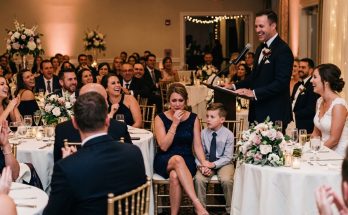
On the seventh anniversary of my retirement, he organized another one.
Same restaurant.
Same cake flavor.
He invited the same relatives he could find.
When Frank and I arrived, Cody stood beside the door.
“What is this?”
“A do-over.”
I looked around.
There were photographs from my career.
Flowers.
My grandchildren.
Melissa.
My mother.
Even some former coworkers.
Cody handed me a card.
Inside he had written:
Mom, I’m sorry I taught myself to measure your love by what you would give up for me. I’m learning to measure it by the fact that you’re here.
I couldn’t speak.
I hugged him.
That night, Cody raised a glass.
“My mother spent most of her life showing up for everybody else. So tonight nobody is allowed to ask her for anything.”
Everyone laughed.
Then Lily shouted, “Not even babysitting!”
We laughed harder.
Two years after Oregon, Frank and I booked another trip.
Hawaii.
We didn’t save for five years this time.
We simply decided we wanted to go.
A month before departure, Cody called.
“Britney has a conference that week.”
My stomach tightened from old habit.
Then he continued.
“Don’t worry. We already booked childcare. I was calling because Lily wants to know if you’ll bring her a shell.”
I smiled.
“Tell her I’ll find the best one on the beach.”
The morning we left, Cody drove us to the airport.
He unloaded our suitcases.
Then he hugged me.
“Have fun.”
“No emergency calls?”
He grinned.
“Unless the house is literally on fire.”
“And if it is?”
“I’ll call the fire department.”
“Look at you.”
He laughed.
Before I entered security, he called after me.
“Mom.”
I turned.
“I’m glad you got on that plane.”
I knew exactly which plane he meant.
Not Hawaii.
Oregon.
The flight I almost canceled.
The trip that nearly became another sacrifice nobody would remember a year later.
“I am too.”
Frank took my hand as we walked toward security.
That night eleven hours before our Oregon flight had once felt like a family crisis.
Now I understood it had been something completely different.
It was the moment I finally discovered that there is a difference between loving your family and surrendering your life to them.
For decades, I had believed a good mother always answered.
Always helped.
Always rearranged.
Always gave.
And when Cody wrote, “Family comes first,” he wasn’t inventing that belief.
I had taught it to him.
Every canceled dinner taught it.
Every abandoned plan taught it.
Every time I said, “It’s okay,” when it wasn’t okay taught it.
I had spent thirty years telling my children, without meaning to, that my life belonged at the bottom of the list.
So when I finally moved it higher, Cody thought I had changed.
Maybe I had.
But not in the way he feared.
I hadn’t become selfish.
I had finally become present in my own life.
Frank and I still help our children.
We still babysit.
We still show up when someone is sick.
We still drop everything when a real emergency happens.
But we no longer confuse inconvenience with emergency.
And my children no longer confuse my love with unlimited access to my time.
Sometimes Cody still asks for too much.
Sometimes I still almost say yes.
Then one of us catches ourselves.
“Real emergency?” I’ll ask.
And he’ll laugh.
“No. Never mind.”
The strangest thing is that saying no didn’t destroy my family.
It made our relationships more honest.
Cody learned that I could refuse him and still love him.
I learned that someone could be disappointed in me and I could survive it.
And Frank finally got a wife who could sit beside him on a beach without checking her phone every ten minutes.
On our thirty-fifth anniversary, we returned to Cannon Beach.
Same cottage.
Same gray ocean.
Same enormous rocks rising from the water.
On our final evening, Frank and I sat outside beneath a blanket.
My phone buzzed.
A message from Cody.
For one second, the old reflex returned.
My chest tightened.
I opened it.
There was a photograph of Lily holding a school certificate.
Underneath, Cody had written:
She wanted Grandma to see this. No need to call. Enjoy your anniversary. We love you.
I smiled.
Then I placed the phone facedown.
“What is it?” Frank asked.
“Nothing that can’t wait.”
He smiled.
We watched the sunset.
Thirty-five years of marriage.
Children.
Grandchildren.
Mistakes.
Forgiveness.
And finally, boundaries.
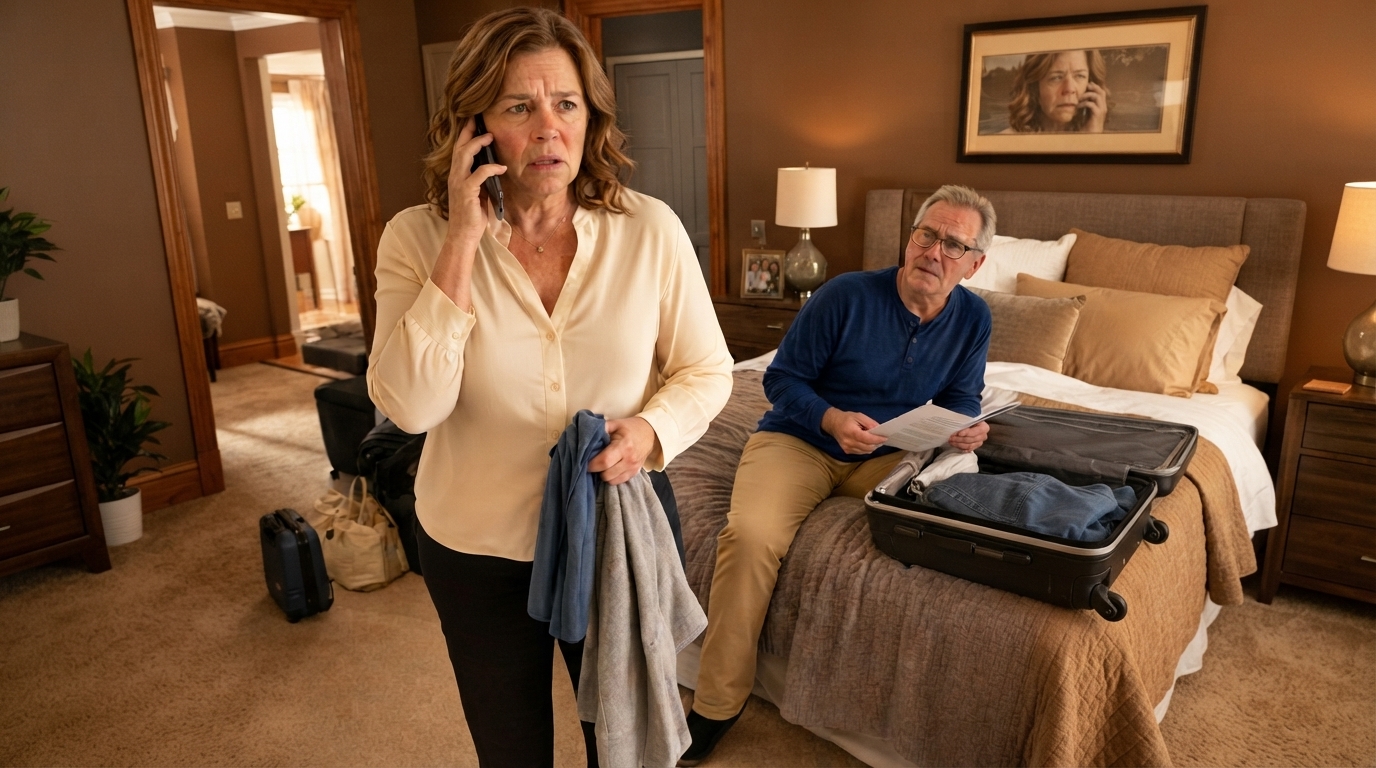
I thought about that first Oregon trip and the woman standing in her bedroom holding two cardigans while her adult son told her to cancel the dream she had saved five years to afford.
That woman had believed silence was cruel.
She thought saying no meant failing her family.
She thought love had to hurt a little to count.
I wanted to reach backward through time and tell her something.
Your children can love you and still take you for granted.
You can love them and still say no.
You can be a devoted mother and still board the plane.
And sometimes the healthiest thing you can give the people you love isn’t another sacrifice.
It’s the opportunity to solve their own problem.
Frank poured the last of our wine.
“To us,” he said.
I touched my glass to his.
“To us.”
The sun disappeared beneath the Pacific.
My phone remained facedown.
Nobody was angry.
Nobody was abandoned.
Nobody’s life had fallen apart because I wasn’t available.
And somewhere back in Boise, my son was taking care of his own family while I enjoyed the life I had spent decades earning.
For thirty years, whenever someone said, “Family comes first,” I assumed that meant I came last.
I know better now.
I am part of the family too.
Strengthen the opening conflictClarify the family timeline.
THE END THANK YOU FOR READING !!!