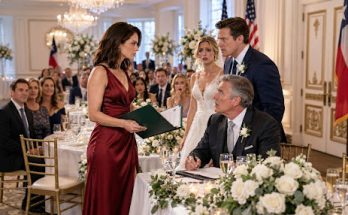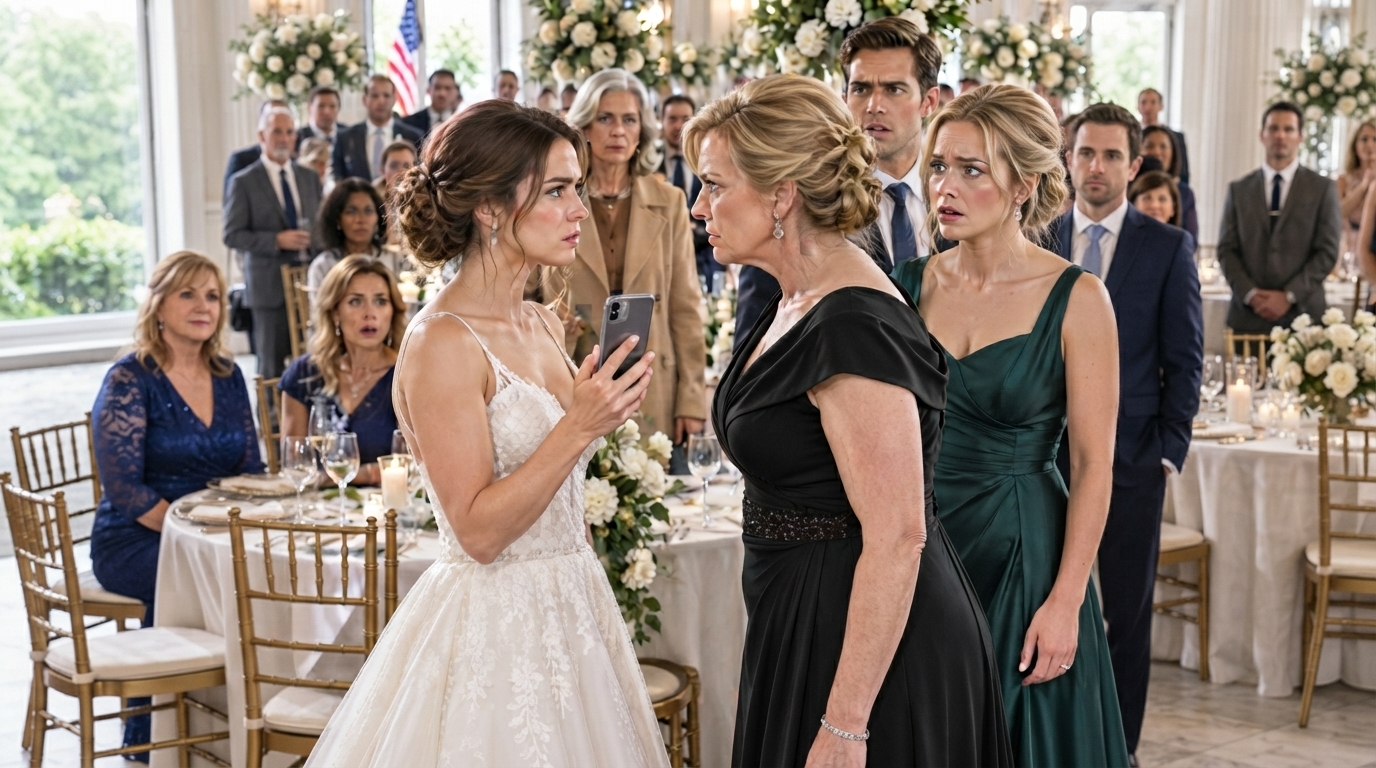
Eleanor stepped forward.
My mother finally turned.
And the first thing Eleanor said made Colette’s mouth fall open.
“Actually, Gloria is the reason I’m here.”
Silence.
Not the ordinary kind.
The kind that moves through a room when two hundred people realize they have been watching the wrong story.
My mother’s smile stayed on her face for another second.
Then it slipped.
Colette stared at Eleanor.
“What?”
Eleanor Ashford removed her gloves slowly.
She was in her early sixties, silver threaded through dark hair, camel coat fitted perfectly over a navy dress.
She didn’t need to raise her voice.
People like Eleanor rarely did.
My family knew exactly who she was.
Everybody did.
Ashford Hotels.
Ashford Vineyards.
Ashford Properties.
Her family owned luxury venues across three states, including Ivywood Hall—the building where Colette had just held her engagement party using half my wedding.
For almost a year, Colette and Spencer had been trying to impress Eleanor because Spencer worked for Ashford Properties.
My mother had mentioned Eleanor so often that I knew stories about the woman I had never asked to hear.
Eleanor this.
Mrs. Ashford that.
Spencer may be promoted.
Colette might be invited to the Ashford charity gala.
Wouldn’t it be wonderful if Spencer became regional director?
My parents treated the Ashford name like royalty.
And now Eleanor was standing at my wedding.
Looking at me.
My mother recovered first.
“Mrs. Ashford.”
She stepped forward.
“What a surprise.”
Eleanor looked at her.
“I imagine it is.”
Mom laughed nervously.
“We were just clearing up a little family misunderstanding.”
“I heard.”
Colette moved beside Spencer.
“Eleanor, I can explain.”
Eleanor’s eyes shifted toward her.
“I’m sure you can.”
Something about the way she said it made Spencer look at the floor.
I still didn’t understand why she was there.
Then Eleanor turned back to me.
“Gloria, I apologize for arriving uninvited.”
I blinked.
“You know my name?”
A small smile appeared.
“Yes.”
My mother looked between us.
“How?”
Eleanor didn’t answer her.
She answered me.
“Larkspur & Co. handled my foundation dinner last October.”
For a second, I didn’t understand.
Then I did.
Ashford Foundation.
Three hundred guests.
Historic conservatory.
Four-day setup.
I had never dealt directly with Eleanor.
Her executive assistant, Camille, had been my contact.
Eleanor continued.
“And my company has used Larkspur for six events since.”
Colette looked at me.
“You work for Eleanor?”
I almost corrected her.
Then Eleanor did it for me.
“No.”
She looked at Colette.
“Gloria owns the company we hire.”
That distinction landed exactly where it needed to.
My mother’s mouth opened.
Dad had always called Larkspur “the flower thing.”
Colette called it my little event business.
Apparently nobody had bothered to Google it.
Spencer finally looked at me differently.
Not like his fiancée’s dependable older sister.
Like a business owner he should have known about.
Eleanor continued.
“When Spencer mentioned an engagement celebration at Ivywood, he told my staff the event had been designed by a family friend.”
Colette went pale.
I said nothing.
Eleanor looked around my reception.
Her gaze moved over the flowers.
The tables.
The candles.
The cream tags.
Then she looked at Colette.
“I recognized the design when I saw photographs from Ivywood.”
My mother jumped in.
“Well, yes, Gloria helped.”
I turned toward her.
Helped.
Even now.
Eleanor’s expression hardened.
“I don’t believe you understand.”
Mom stopped.
Eleanor pointed toward one of the arrangements.
“That design belongs to Larkspur & Co.”
Then another.
“The inventory tags belong to Larkspur.”
She looked at Colette.
“And according to the venue manager at Ivywood, you represented the installation as your own engagement design.”
Colette swallowed.
“It was family stuff.”
“No.”
Eleanor’s voice remained calm.
“It was commercial inventory.”
Colette glanced at me.
“Gloria wasn’t using everything.”
I almost laughed.
“At my wedding?”
She looked away.
Mom immediately stepped between us.
“This has gotten completely out of proportion.”
Eleanor looked at her.
“I don’t think it has.”
Mom’s face tightened.
“With respect, Mrs. Ashford, this is a private family matter.”
“It stopped being private when property was transported onto one of my venues under false instructions.”
Nobody spoke.
Spencer looked at Colette.
“False instructions?”
She turned toward him.
“Don’t.”
“What did you tell Ivywood?”
“It doesn’t matter.”
“It matters to me.”
She lowered her voice.
“Spencer.”
“What did you tell them?”
Eleanor answered.
“She told my venue manager that Gloria had postponed her wedding due to an emergency and had gifted the existing design to the engagement party.”
Spencer stared at her.
“You said Gloria offered it.”
Colette’s eyes filled.
“I was going to explain.”
“When?”
“After tonight.”
I watched Spencer process it.
Then he looked toward my mother.
“Did you know?”
Mom hesitated.
That was enough.
His expression changed.
“You knew?”
Mom raised her hands.
“We knew Gloria would be able to handle it.”
There was that word.
Handle.
Understand.
Manage.
Fix.
Different words.
Same role.
Spencer looked at my father.
Dad had entered behind them without me noticing.
He stood near the doors.
His face was red.
“You drove the truck?”
Spencer asked.
Dad crossed his arms.
“This is family business.”
Spencer stared.
“So yes.”
Dad looked toward me.
“This didn’t need to become a public spectacle.”
I almost admired the consistency.
They had stolen my wedding setup.
But my response was the spectacle.
Eleanor stepped aside.
She didn’t need to defend me.
I appreciated that.
This was mine.
I looked at Dad.
“You’re right.”
He seemed surprised.
“This shouldn’t have been public.”
Mom nodded immediately.
“Exactly.”
“So why did you bring it here?”
She frowned.
“What?”
“You came to my reception.”
Nobody answered.
I continued.
“I didn’t go to Ivywood.”
I looked at Colette.
“I didn’t interrupt your party.”
Then Mom.
“I didn’t call your guests.”
Then Dad.
“I didn’t post anything online.”
I held up my phone.
“I redirected vendors whose contracts belong to me and got married.”
Dad shifted.
“You sent that photograph.”
“To my vendors.”
“You knew what would happen.”
“Yes.”
“What?”
“They would honor their contracts.”
Dad’s jaw tightened.
“You embarrassed your sister.”
“No.”
I looked at Colette.
“She promised people things she didn’t own.”
Colette suddenly snapped.
“Oh, please.”
Every head turned.
Tears ran down her face now.
“You always do this.”
I stared at her.
“Do what?”
“Make yourself look perfect.”
I almost laughed.
“Colette, someone removed the tables from my wedding.”
“You got them back!”
“That doesn’t erase what happened.”
“You always recover.”
There it was.
Maybe the most honest thing she had ever said to me.
I waited.
Colette wiped her face.
“You always figure everything out.”
Her voice cracked.
“You always have another vendor. Another idea. Another solution.”
“And that means you can take things from me?”
“No.”
“Then what does it mean?”
She looked around the room.
“I just wanted one night.”
I stared at her.
“You had one.”
“No.”
Her voice rose.
“I wanted one night that looked like this.”
She gestured around my reception.
The room I had designed.
The room my friends and vendors had rebuilt in less than an hour.
“I wanted people to walk in and think it was beautiful.”
“Then you could have hired someone.”
“I couldn’t afford this.”
There it was.
Not a misunderstanding.
Not a mix-up.
She wanted what I had built.
And because I was her sister, she believed wanting it was enough.
I spoke quietly.
“So you took mine.”
She looked down.
Mom rushed in.
“She didn’t take your wedding.”
I turned toward her.
“What would you call arriving thirty-seven minutes before my guests to an empty hall?”
“You still got married.”
I stared at her.
Nolan moved closer beside me.
He had been silent until then.
That was one of the things I loved about him.
He knew when I needed support.
And when I needed space to use my own voice.
Mom looked at him.
“Nolan, surely you understand.”
He smiled slightly.
“I understand perfectly.”
She looked relieved.
Then he continued.
“My wife arrived at our wedding and found that her family had removed nearly everything she paid for.”
Mom’s relief vanished.
Nolan looked at Dad.
“You took our chairs.”
Dad frowned.
“They were rentals.”
“That Gloria paid for.”
“They were coming back.”
“When?”
Dad didn’t answer.
Nolan nodded.
“Exactly.”
Mom looked at me.
“You’re really going to let this destroy the family?”
I felt something inside me settle.
“No.”
She blinked.
“You’re doing that yourselves.”
Silence.
Eleanor looked toward Spencer.
“I think you and I need to speak tomorrow.”
Spencer straightened.
“Yes, ma’am.”
Colette looked frightened.
“About what?”
Eleanor didn’t soften.
“Among other things, why an Ashford employee represented privately owned commercial property as a gift in order to secure preferential use of one of our venues.”
Spencer’s face went pale.
“I didn’t know.”
“I hope not.”
“I swear I didn’t.”
“That’s what tomorrow is for.”
Colette grabbed his arm.
“Spencer.”
He pulled away.
Not violently.
Just enough.
“Did you tell them Gloria gave us the decorations?”
Colette started crying harder.
“I was trying to make tonight special.”
“That isn’t what I asked.”
She looked at him.
“Yes.”
His eyes closed.
My anger disappeared for a second.
Not because I forgave her.
Because I suddenly saw the full wreckage.
She had wanted an impressive engagement party.
Mom wanted Colette happy.
Dad wanted to solve the problem.
So they found the easiest resource available.
Me.
Except this time, the resource had said no.
And everything built on the assumption that I would eventually surrender had collapsed.
Eleanor turned toward me.
“I’m sorry this happened.”
“Thank you.”
Then she surprised me.
“I also owe you an apology professionally.”
“You don’t.”
“I do.”
She gestured toward the room.
“My venue accepted property without confirming authorization from the owner.”
“You couldn’t have known.”
“My staff should have.”
She reached into her handbag.
“Camille will contact you Monday.”
“About what?”
“Compensation for the inconvenience.”
I shook my head.
“That isn’t necessary.”
“It is to me.”
I almost argued.
Then stopped.
Competent women recognizing other competent women sometimes meant allowing accountability to happen.
“Okay.”
Eleanor nodded.
Then she looked at Mom.
“One more thing.”
Mom straightened.
Eleanor’s voice was almost gentle.
“Your daughter’s company is very good.”
Mom glanced at me.
“I know.”
Eleanor shook her head.
“No.”
The room went quiet again.
“I don’t think you do.”
Mom froze.
Eleanor continued.
“Larkspur is one of the strongest independent event firms we’ve worked with.”
I stared at her.
That was news to me too.
“We are currently reviewing firms for a three-year preferred partnership across eleven properties.”
My heart stopped.
Camille had mentioned a proposal.
She had not mentioned eleven properties.
Eleanor smiled at me.
“Larkspur is on the final shortlist.”
Mom’s face changed.
Dad looked at me.
Colette stared.
Eleanor added, “Which is why I recognized the tags immediately.”
For thirty years, my family had treated my competence like free household infrastructure.
Need invitations?
Call Gloria.
Need flowers?
Gloria knows someone.
Need a birthday organized?
Gloria can handle it.
Need tables?
Gloria has tables.
Need an entire wedding dismantled and transported to Colette?
Gloria will understand.
But Eleanor had looked at the same thing and seen a business.
A real one.
One worth hiring.
One worth protecting.
One worth respecting.
I swallowed.
“Thank you.”
“You earned the consideration.”
Then she turned to leave.
At the door, she paused.
“Congratulations, Gloria.”
I smiled.
“Thank you.”
She looked at Nolan.
“And congratulations to you.”
He grinned.
“I mostly stayed out of the way.”
Eleanor smiled.
“A useful skill.”
A few people laughed.
The tension finally cracked.
Then Eleanor left.
For several seconds, nobody spoke.
Colette looked like she wanted the floor to open.
Mom stared at me.
“Eleven properties?”
I almost laughed.
Of course that was what she heard.
Dad frowned.
“How big is your company now?”
I looked at him.
“Not tonight.”
His face changed.
“What?”
“You don’t get to become interested because Eleanor Ashford said my company matters.”
He flinched.
“That’s not what I meant.”
“Maybe not.”
I nodded toward the room.
“But this is my wedding.”
I looked at Mom.
“And I’m done explaining my value tonight.”
Then I turned to Colette.
“I think you should leave.”
She stared.
“You’re kicking me out?”
“No.”
I shook my head.
“I’m asking you to leave.”
“But I’m your sister.”
“Yes.”
“I got engaged today.”
“And I got married.”
Her face crumpled.
For one second, the old Gloria almost returned.
The one who would see tears and immediately solve them.
Then Nolan touched the back of my hand.
Not holding me.
Just there.
I looked at Colette.
“We can talk another day.”
Mom started to object.
I stopped her.
“Not tonight.”
Something in my voice worked.
Dad took Mom’s arm.
“Come on.”
She stared at him.
“What?”
“Let’s go.”
“But—”
“Linda.”
For once, he wasn’t ordering me around.
He was stopping her from doing it.
She looked stunned.
Then she followed him.
Colette stayed.
Spencer was already walking toward the exit.
She watched him.
“Spencer.”
He stopped.
“Are you coming?”
She asked.
He turned.
“I need some space.”
Her face collapsed.
“Tonight?”
He looked around.
Then said quietly, “Apparently tonight is when everybody gets to find out what was really going on.”
He left.
Colette looked at me.
I expected anger.
Instead, she whispered, “What do I do?”
I stared at my little sister.
For most of my life, that question had automatically become my responsibility.
What do I do?
Fix it, Gloria.
Handle it.
Understand.
I took a breath.
“I don’t know.”
She blinked.
“What?”
“I don’t know what you should do.”
“You always know.”
“No.”
I shook my head.
“I usually figure it out because everyone expects me to.”
She stared.
“I can’t fix this for you.”
“I’m not asking you to.”
“You just did.”
Her eyes dropped.
“You’re right.”
That surprised me.
Then she wiped her cheeks.
“I’m sorry.”
I said nothing.
“I know that’s not enough.”
“No.”
“I really thought…”
She stopped.
“What?”
She looked at me.
“I thought you’d get there and be mad, but then you’d figure something out.”
I almost smiled because the honesty was brutal.
“You planned on my competence.”
“Yes.”
“Without my permission.”
“Yes.”
“And Mom and Dad?”
“They said you’d be upset.”
“But?”
She looked ashamed.
“Mom said once guests started arriving, you wouldn’t let the wedding fail.”
That hurt.
Because Mom knew me.
She knew exactly which part of me to exploit.
I would never leave guests standing in an empty hall.
I would never punish Nolan.
I would never allow employees and vendors to suffer because of family drama.
They hadn’t just stolen my things.
They had used my standards against me.
Colette whispered, “I’m sorry.”
I nodded.
“I hear you.”
She looked at me hopefully.
I didn’t say it was okay.
Because it wasn’t.
Eventually she left.
The doors closed.
I turned around.
My wedding guests were still there.
Watching.
Waiting.
And suddenly I wanted to disappear.
Then Nolan walked toward the DJ.
He took the microphone.
My stomach dropped.
“What are you doing?”
He smiled.
“Trust me.”
I narrowed my eyes.
“Dangerous phrase today.”
That got a laugh.
He raised the microphone.
“Okay.”
Everyone quieted.
“I think my wife has done enough event management for one day.”
More laughter.
“So from this moment forward, nobody is allowed to ask Gloria a question that includes the words table, flower, chair, cake, vendor, schedule, or family emergency.”
People applauded.
I covered my face.
Nolan continued.
“She arrived here expecting to marry me.”
He looked at me.
“And somehow, despite all of that, she did.”
I smiled.
“So I think we should get back to the important part.”
He held out his hand.
“Dance with me?”
The room applauded again.
This time, I let them.
I took his hand.
And for the first time that day, I stopped managing.
Someone else handled the music.
Someone else served dinner.
Someone else found the missing champagne glasses.
Someone else answered questions.
I danced with my husband.
The cake arrived slightly crooked.
It tasted perfect.
One centerpiece had garden branches sticking out at an angle.
I loved it.
We ran out of matching napkins.
Nobody died.
At 10:15, one of Nolan’s cousins found the cloudy glass bud vase.
It had been sitting inside a crate that Dad never unloaded at Ivywood.
He carried it toward me like an Olympic torch.
“Is this the famous vase?”
I laughed.
“That’s it.”
He placed it beside our cake.
I stared at it.
That ridiculous little cloudy vase.
Probably worth twelve dollars.
Maybe less.
And somehow it was the thing that nearly broke me.
Because it represented the part my family never understood.
Value wasn’t always price.
Sometimes value was history.
Choice.
Memory.
Ownership.
Sometimes a cheap glass vase mattered because it was yours.
And people who loved you were supposed to care when you said so.
The next morning, I woke up beside Nolan at the hotel.
For five glorious seconds, I remembered only that I was married.
Then my phone lit up.
Ninety-four messages.
I put it facedown.
Nolan opened one eye.
“Bad?”
“I don’t know.”
“Want coffee before civilization?”
“Yes.”
We ordered breakfast.
I didn’t check my phone until after pancakes.
There were messages from Mom.
Dad.
Colette.
Three aunts.
Two cousins.
Spencer.
And Eleanor’s assistant, Camille.
I opened Camille’s first.
Congratulations. Mrs. Ashford asked me to confirm that Monday’s partnership meeting remains scheduled. She also asked me to tell you that yesterday’s events will have no negative bearing on Larkspur’s proposal.
I exhaled.
Nolan watched me.
“Good?”
“Very.”
Then another message arrived.
Also, Mrs. Ashford would like to discuss expanding the scope from eleven properties to fourteen.
I stared.
Nolan leaned over.
“What?”
I showed him.
He whistled.
“Your little flower thing seems busy.”
I hit him with a pillow.
He laughed.
Then I opened Dad’s message.
I’m sorry. Not just for yesterday. I’m beginning to understand this didn’t start yesterday. Call when you’re ready.
That was all.
No demand.
No guilt.
No “your mother is devastated.”
I saved it.
Mom’s messages were longer.
The first defended herself.
The second defended Colette.
The third said I had embarrassed them.
The fourth arrived at 3:12 a.m.
I don’t know why I always assume you can take whatever we put on you.
I read that twice.
Then the next one.
I think I confused your strength with permission.
That one I saved too.
Colette had sent only one message.
I’m sorry I stole your wedding because I wanted my party to look like your life.
I stared at the screen.
Nolan didn’t ask.
Eventually I handed him the phone.
He read it.
“That’s pretty self-aware for 2:00 a.m.”
“Apparently catastrophe builds character.”
“Should we put that on a pillow?”
I laughed.
Then I cried.
Not dramatically.
Just quietly.
Nolan held my hand.
“I’m tired,” I whispered.
“I know.”
“I’m so tired of being the one who can handle it.”
“Then don’t.”
I looked at him.
“It’s not that easy.”
“No.”
He squeezed my hand.
“But maybe it starts with not handling this today.”
So I didn’t.
We turned our phones off.
And spent the first day of our marriage being married.
The family consequences unfolded without me.
That was new.
Spencer moved out of the apartment he shared with Colette.
He didn’t end the engagement immediately.
He postponed it.
Eleanor didn’t fire him.
I was glad.
From what I eventually learned, he truly hadn’t known where the wedding inventory came from.
But the incident damaged his standing because he had failed to verify what Colette told the venue.
He had also allowed personal relationships to blur company procedures.
Eleanor put him through the same internal review she would have used for anyone else.
No special treatment.
That impressed me.
Colette hated it.
At first.
She blamed me.
Then Eleanor.
Then Spencer.
Then Dad.
Then Mom.
Eventually, she ran out of people.
That was when she finally looked at herself.
Three weeks after the wedding, she came to my warehouse.
My assistant asked whether I wanted security to send her away.
I almost said yes.
Then I saw Colette through the office window.
No makeup.
Jeans.
Hair tied back.
No engagement ring.
“Give us twenty minutes,” I said.
She entered my office.
For a while, she just looked around.
Shelves of sample books.
Floor plans.
Vendor binders.
Photographs from events.
Employee schedules.
Certificates.
Awards.
She stopped at one framed photograph.
It was me beside my first hatchback.
Trunk open.
Buckets of flowers everywhere.
“You really started out of that car?”
“Yes.”
“I thought Mom was exaggerating.”
“Mom barely knew.”
Colette looked at me.
“I didn’t either.”
“No.”
She sat.
“I owe you money.”
I blinked.
“What?”
“For everything we used.”
“You don’t have enough.”
“I know.”
At least she understood that.
“I made a list.”
She placed a notebook on my desk.
Chairs.
Linens.
Arbor.
Transport.
Labor.
Damaged inventory.
Emergency setup fees.
Flowers.
Even the bud vase was listed.
I looked up.
“You put the vase at twelve dollars?”
She shrugged.
“I Googled similar ones.”
I almost laughed.
“Keep going.”
“I can pay you five hundred a month.”
“For how long?”
“Probably forever.”
“Colette.”
“I’m serious.”
“I know.”
I closed the notebook.
“I don’t want you paying me forever.”
Her face tightened.
“Then what do you want?”
That was a good question.
Once, I might have wanted her to suffer.
But sitting there, I realized suffering wasn’t useful.
Accountability was.
“I want you to pay for the actual losses.”
She nodded.
“Not the full retail cost of my wedding.”
She looked surprised.
“Why?”
“Because the vendors redirected everything. Most of it wasn’t lost.”
“But—”
“You’ll pay the emergency labor costs, damaged pieces, extra transport, and the venue charges.”
She swallowed.
“Okay.”
“And you’re going to apologize to my staff.”
Her eyes widened.
“What?”
“You lied to people who work for me.”
“I didn’t talk to all of them.”
“You created the situation they had to fix.”
She looked down.
“Okay.”
“And the vendors.”
“All of them?”
“All of them.”
She sighed.
“Okay.”
“And you’re going to stop telling people it was a misunderstanding.”
She nodded.
“It wasn’t.”
“No.”
She looked at me.
“I stole it.”
“Yes.”
The word hurt her.
It was supposed to.
Not because I wanted cruelty.
Because accurate words matter.
She had borrowed things before.
Borrowing requires permission.
This wasn’t borrowing.
She had stolen them.
Then she said something I didn’t expect.
“I was jealous of you.”
I leaned back.
“You always thought I was jealous of you.”
“I know.”
She smiled bitterly.
“Maybe that was convenient.”
“How?”
“If you were jealous, then I was winning.”
That sentence sat between us.
She continued.
“Mom and Dad always said you were difficult because you wanted what I had.”
I said nothing.
“But you didn’t.”
“No.”
“You left.”
“Yes.”
“And you built all this.”
She looked through the office window at my warehouse.
“I think I hated that.”
“Why?”
“Because I stayed.”
I frowned.
She continued.
“I did everything they wanted.”
“Colette—”
“I went to the college Dad liked. I moved back after graduation. I dated men Mom approved of. I went to every family dinner.”
She laughed sadly.
“And they called me the good daughter.”
I understood before she said it.
“But you had a company.”
She nodded.
“A life they couldn’t take credit for.”
I sat quietly.
“And when I got engaged, I wanted everyone to look at my party and think I had something you didn’t.”
“That’s why you wanted my design.”
“Yes.”
I appreciated the honesty.
I hated the reason.
But I appreciated the honesty.
“I’m sorry,” she said.
This time, I believed she understood the words.
“I’m not ready to pretend we’re fine.”
“I know.”
“I may not trust you for a long time.”
“I know.”
“You don’t get to ask Mom to pressure me.”
“I won’t.”
“And if you ever take one of my vases again—”
She laughed.
I did too.
It was small.
But it was the first time since the wedding that being her sister didn’t feel exhausting.
Colette kept her word.
She apologized to my employees.
Individually.
My warehouse manager made her wait twenty minutes on purpose.
I pretended not to notice.
She apologized to Hollis.
To Ruth Anne.
To the florist.
To Cedar and Oak.
Then she started making payments.
Not five hundred forever.
We calculated the actual losses.
$8,460.
She paid every dollar over fourteen months.
I didn’t remind her once.
Mom was harder.
For weeks, she kept trying to turn accountability into reconciliation.
“Colette apologized.”
“I know.”
“She’s paying you.”
“I know.”
“Spencer forgave her.”
“Good.”
“So when are you going to let this go?”
The third time she asked, I finally said, “Mom, do you know what forgiveness isn’t?”
She sighed.
“Here we go.”
“No.”
I kept my voice calm.
“Forgiveness isn’t a deadline you get to set because my boundaries make family dinners uncomfortable.”
She stared at me.
“I’m trying to keep us together.”
“No.”
I shook my head.
“You’re trying to make the consequences disappear.”
“That isn’t fair.”
“Neither was stealing my wedding.”
She flinched.
“Why do you keep saying it like that?”
“Because that’s what happened.”
“She made a mistake.”
“No.”
I looked at her.
“She made a plan.”
Mom stopped.
That distinction finally reached her.
A mistake would have been loading the wrong truck.
A mistake would have been confusing dates.
A mistake would have been sending six centerpieces instead of eight.
This involved trucks.
Messages.
Lies to vendors.
Instructions to Ivywood.
Dad arriving at nine in the morning to strip the venue.
Mom knowing.
Colette knowing.
Everybody assuming I would fix the aftermath.
That was not a mistake.
It was a plan built around my compliance.
Mom’s eyes filled.
“I helped.”
“Yes.”
“I thought you’d fix it.”
“I know.”
“You always fix things.”
“I know.”
She whispered, “That’s awful.”
I nodded.
“Yes.”
Then she cried.
And for once, I didn’t immediately make her feel better.
She needed to understand the weight of what she had admitted.
Eventually she said, “I’m sorry.”
“Thank you.”
“Can you forgive me?”
“I don’t know yet.”
Her face fell.
But she nodded.
That mattered.
Dad apologized differently.
He came to the warehouse on a Saturday.
He brought the cloudy bud vase.
I frowned.
“I already got that back.”
“This isn’t yours.”
He placed another cloudy vase beside it.
Almost identical.
I stared at him.
“What is this?”
“An apology.”
I laughed.
“Dad.”
“I know it’s stupid.”
“It’s very stupid.”
He smiled.
Then his expression changed.
“I drove the truck.”
“Yes.”
“I knew you said no.”
I looked at him.
That was new information.
“Colette told me you refused.”
I went still.
Dad continued.
“Your mother said you’d come around.”
“So you took it anyway.”
“Yes.”
“Why?”
He sat on a crate.
“Because I thought being your father gave me the right.”
At least he was honest.
“I thought everything in that warehouse was basically…”
He stopped.
“Family property?”
He winced.
“Yes.”
“It isn’t.”
“I know that now.”
“You should have known it then.”
“Yes.”
He looked around.
“I never understood this place.”
“You never tried.”
“No.”
He nodded.
“I called it the flower thing.”
“You did.”
“I thought it was a hobby that got out of hand.”
I laughed despite myself.
Dad smiled.
“Turns out it got very out of hand.”
“Thirty-four employees.”
His eyebrows rose.
“Thirty-four?”
“Thirty-eight during peak season.”
He whistled.
Then caught himself.
“That’s impressive.”
“Thank you.”
“I should have said that years ago.”
“Yes.”
He looked toward the loading dock.
“You know what I think I did?”
“What?”
“I made you responsible because you were responsible.”
I waited.
“And then I punished you with more responsibility.”
That was exactly it.
“You never needed rescuing,” he said.
“So we rescued Colette.”
I looked at him.
“She learned to need it.”
Dad nodded slowly.
“And you learned not to.”
“Yes.”
He looked at the two vases.
“I’m sorry.”
I believed him.
Not because of the vase.
Because he wasn’t asking me to erase what happened.
A year passed.
Larkspur got the Ashford contract.
Not eleven properties.
Fourteen.
The first year nearly broke us.
In the best way.
I hired nine people.
Promoted my warehouse manager.
Opened a second storage facility.
Nolan joked that he had married me just before I became impossible to schedule.
I reminded him he had signed legally binding paperwork.
Eleanor became a client.
Eventually, almost a mentor.
She never mentioned the wedding unless I did.
That was another thing I respected about her.
She didn’t turn my worst family moment into a story about how she rescued me.
She hadn’t.
She had simply witnessed the truth and refused to participate in the lie.
There’s a difference.
Colette and Spencer stayed together.
Barely.
They spent six months apart.
Then counseling.
Then another year engaged.
When they finally decided to marry, Colette called me.
I saw her name and almost laughed.
“Hello?”
“I have a question.”
“No.”
“You don’t know the question.”
“If it involves chairs, no.”
She laughed.
“It involves one chair.”
“Absolutely not.”
“Gloria.”
“What?”
“I want you beside me.”
I went quiet.
“At the wedding.”
“I understood that part.”
“I’m asking you to be my maid of honor.”
I didn’t answer immediately.
Two years earlier, that invitation would have felt like victory.
Now it felt like a question.
Which was healthier.
“Why?”
“Because you’re my sister.”
“That wasn’t enough before.”
“I know.”
She paused.
“And because I’m trying to become someone who deserves to have you standing there.”
That answer mattered.
I said yes.
But with conditions.
I was not planning the wedding.
I was not designing it.
I was not negotiating vendors.
I was not supplying inventory.
I was not making emergency calls.
I was showing up in a dress.
That was all.
Colette agreed.
Then broke the agreement exactly once.
She texted me a photograph of two napkin colors.
Which one?
I replied:
Therapy.
She sent back:
Fair.
The wedding was small.
Eighty guests.
Spencer looked more nervous than he had at the first engagement party.
Probably healthy.
Mom behaved.
Dad stayed away from trucks.
I gave a short speech.
I didn’t mention the stolen wedding.
I didn’t need to.
Near the end of the night, Colette found me alone on the terrace.
“You okay?”
“Yeah.”
She leaned against the railing.
“I kept expecting something to go wrong.”
“Something always does.”
“Nothing did.”
“The chicken was dry.”
She laughed.
“I knew it.”
We stood quietly.
Then she said, “I used to think you had everything.”
I looked at her.
“You had the company. Nolan. Your apartment. Friends.”
“So you stole my chairs?”
She covered her face.
“Can you let me have one serious moment?”
“Fine.”
She lowered her hands.
“I thought you had everything because I only noticed the things you built.”
I waited.
“I didn’t notice what you had to build them without.”
That one landed.
No parents financing my business.
No safety net.
No constant rescue.
No one saying, Gloria needs help.
Because Gloria always understands.
“I’m sorry,” she said.
“I know.”
“Do you forgive me?”
I looked through the glass doors.
Mom dancing badly.
Dad talking to Spencer.
Nolan stealing frosting from the cake.
Then I looked at my sister.
“Yes.”
She started crying.
I held up a finger.
“Do not make this weird.”
She laughed through the tears.
“I hate you.”
“No, you don’t.”
“No.”
She hugged me.
“I really don’t.”
Forgiveness didn’t mean I forgot.
That surprised Mom.
She thought forgiveness meant the old Gloria would return.
The automatic yes.
The unpaid labor.
The emergency fixer.
She was wrong.
I still helped my family.
But now I decided when.
When Dad turned sixty-five, Mom asked whether Larkspur could “just do something simple” for his party.
I sent her our family-and-friends rate sheet.
She stared at it.
“You’re charging me?”
“Yes.”
“I’m your mother.”
“Correct.”
She stared another second.
Then started laughing.
“You’re serious.”
“Very.”
She paid.
Dad’s party was beautiful.
At the end, Mom handed me a check.
“For the flower thing.”
I looked at her.
She smiled.
“Sorry. Larkspur & Co.”
“Better.”
Three years after my wedding, Cedar and Oak asked permission to use photographs from the reception in their promotional materials.
I opened the gallery.
There were hundreds.
Nolan and me under the rebuilt arbor.
Our first dance.
The crooked cake.
My friends carrying chairs.
The garden branches in mismatched vases.
One photograph stopped me.
It had been taken before the ceremony.
I was standing alone in the finished hall.
My dress on.
Bouquet in my hands.
Behind me, people were still adjusting tables.
My face looked calm.
I remembered that moment.
I had been anything but calm.
I had been furious.
Heartbroken.
Terrified.
And yet there I was.
Standing.
The caption Cedar and Oak suggested was:
A celebration rebuilt in thirty-seven minutes.
I asked them to change it.
The final caption said:
A celebration built by people who showed up.
That was the truth.
My family had spent years telling me I was independent.
They said it like a compliment when what they meant was:
She doesn’t need much.
But everybody needs something.
Respect.
Consideration.
Permission to have limits.
People who show up without asking what they can take.
On my wedding day, I learned exactly who those people were.
Hollis turned his truck around.
Ruth Anne turned her cake around.
My florist turned every stem around.
Nolan’s cousins carried tables.
Friends clipped branches.
Employees worked off the clock until I forced them to invoice me.
And Nolan stood in the middle of an empty hall and asked one question.
“What do you need?”
Not:
Why didn’t you prevent this?
Not:
Can’t you just understand?
Not:
What about Colette?
What do you need?
Four words.
Sometimes love is that simple.
Years later, people still occasionally tell the story of my wedding.
Usually they get details wrong.
They say my sister stole my entire wedding.
Not exactly.
She tried.
They say Eleanor Ashford saved the day.
She didn’t.
My vendors did.
My friends did.
Nolan did.
I did.
They say my parents learned their lesson because they were publicly embarrassed.
Maybe that started it.
But embarrassment fades.
The real change came afterward.
When Colette paid $8,460 she could barely afford.
When Mom stopped using my strength as an excuse to give me less.
When Dad finally understood that being welcome in my warehouse did not mean owning what was inside it.
When I learned that saying no did not make me selfish.
And when all of us stopped confusing family with unlimited access.
I still have the cloudy glass bud vase.
It sits in my office now.
Not at every event.
Not anymore.
It’s too fragile.
But whenever I have a difficult client or a week when everything goes wrong, I look at it.
It reminds me of the hatchback.
The first event.
The warehouse.
The empty wedding hall.
The three trucks turning around.
And the moment I stopped being the daughter who would understand anything.
Sometimes Eleanor visits the office.
The first time she noticed the vase, she asked about it.
“That caused half the emotional breakdown at my wedding.”
She looked confused.
So I told her.
When I finished, she stared at the little piece of cloudy glass.
“That?”
“Yes.”
“How much is it worth?”
“Maybe twelve dollars.”
She laughed.
Then she said, “No.”
I looked at her.
“What?”
“It’s worth whatever losing it would cost you.”
I smiled.
“That sounds suspiciously sentimental.”
“Don’t tell anyone.”
“I have a reputation to maintain.”
“So do I.”
She walked away.
I looked at the vase again.
She was right.
Value is not always the number on the invoice.
I knew that better than most.
My wedding cost sixty-two thousand dollars.
I paid forty-one thousand myself.
For years, that number was part of the story because it proved something.
The contracts were mine.
The deposits were mine.
The property was mine.
My family had no right to move it.
All true.
But eventually, another number mattered more.
Thirty-seven minutes.
That was how long I had until my first guest arrived.
Eleven minutes.
That was how long it took after one photograph for three trucks to turn around.
And one question.
That was all Nolan needed.
What do you need?
My mother had told me Colette would only get engaged once.
She was wrong about that, ironically.
Colette got engaged twice.
I only had one first wedding.
But that was never really the point.
The point was that something did not have to happen only once to deserve respect.
My work deserved respect.
My property deserved respect.
My boundaries deserved respect.
My no deserved respect.
And so did I.
For most of my life, my family loved telling people that Gloria always understands.
They still say it sometimes.
But the meaning has changed.
I understand why Colette did what she did.
I understand why Mom enabled her.
I understand why Dad loaded the truck.
I understand how a family can build roles around children and then keep treating those children according to the roles long after they become adults.
Understanding all of that helped me forgive them.
It did not make what they did acceptable.
That was the lesson they never expected me to learn.
Understanding is not surrender.
Compassion is not permission.
Strength is not an invitation to take more.
And being the person who can rebuild the room does not mean anyone has the right to empty it.
The last time Mom said, “Gloria will understand,” we were planning Christmas.
Colette wanted to move dinner from my house to hers at the last minute.
Mom looked at me automatically.
“Gloria will—”
Then she stopped.
Everyone looked at her.
Mom smiled sheepishly.
“Actually, I should ask.”
Colette laughed.
Dad nearly choked on his coffee.
Mom turned to me.
“Would you mind?”
I thought about it.
“No.”
She nodded.
“Okay.”
No guilt.
No argument.
No punishment.
Christmas stayed at my house.
Such a tiny thing.
Nobody outside our family would have understood why it mattered.
I did.
Because years earlier, “Gloria will understand” had meant my answer was irrelevant.
Now they asked.
And when I said no, the world kept turning.
That was the family I wanted.
Not perfect.
Not magically healed.
Just capable of hearing one another.
Capable of asking.
Capable of accepting no.
On our fifth anniversary, Nolan and I returned to Cedar and Oak.
No party.
No guests.
We brought sandwiches and a bottle of champagne.
The manager let us sit in the empty hall.
I stood in the same place where I had arrived five years earlier.
The room was empty again.
No tables.
No chairs.
No flowers.
No cake.
I laughed.
Nolan looked around.
“Getting flashbacks?”
“Terrible ones.”
He handed me champagne.
“Want me to call Hollis?”
“No.”
“Ruth Anne?”
“No.”
“Eleanor?”
“Absolutely not.”
He smiled.
Then we sat on the floor.
Five years earlier, an empty room had felt like proof that my family could take everything from me.
Now it was just a room.
That was the difference.
The things they had taken came back.
The chairs came back.
The flowers came back.
The cake came back.
Even the twelve-dollar vase came back.
But the most important thing I recovered that day had never been loaded onto Dad’s truck.
My right to stop understanding at my own expense.
My right to say, this belongs to me.
My right to protect something even when the person taking it was family.
I leaned against Nolan.
“You know what’s funny?”
“What?”
“Mom thought I could always do it again.”
“The wedding?”
“Yeah.”
He looked at me.
“Would you?”
“Marry you again?”
“Obviously.”
I pretended to consider it.
“The first one was a logistical nightmare.”
“Fair.”
“Family theft.”
“Also fair.”
“Cake almost collapsed.”
“But did it?”
“No.”
He grinned.
“So?”
I kissed him.
“Yes.”
“Yes what?”
“I’d marry you again.”
He smiled.
“Good.”
Then he raised his plastic cup.
“To Gloria.”
I raised mine.
“To what?”
“The woman who always understands.”
I narrowed my eyes.
He laughed.
Then added:
“And finally learned she doesn’t always have to.”
I touched my cup to his.
That one I could drink to.
Because in the end, my sister didn’t steal my wedding.
She accidentally gave me something I should have claimed years earlier.
A boundary.
And when my family finally learned that crossing it meant I would no longer quietly absorb the consequences, something remarkable happened.
They stopped asking me to be endlessly understanding.
They started learning how to understand me.
And that was the one thing I had wanted all along.
THE END THANK YOU FOR READING !!!