PART 3
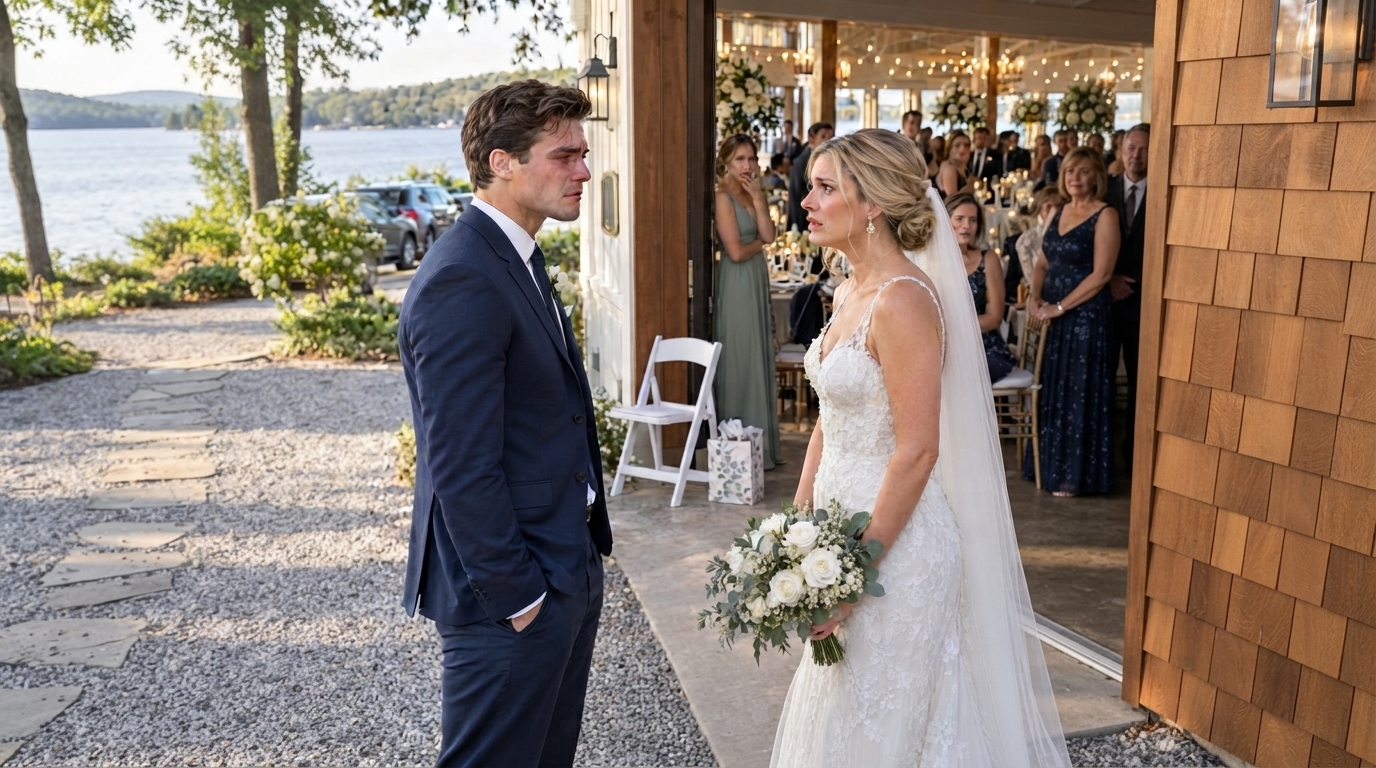
Amanda stared at me. For a moment, the noise from the reception seemed impossibly far away. Then she looked back toward the building. “Daniel, please.” “Please what?” “Just come inside.”
“Where am I supposed to sit?”
Her mouth opened.
Nothing came out.
That was answer enough.
“I can move someone.”
I shook my head.
“That isn’t the point.”
“I’ll have the planner fix it.”
“Amanda.”
“What?”
“You already planned it.”
Her expression changed.
“I didn’t personally make the seating chart.”
“Your maid of honor knew exactly where I was sitting.”
“She was helping.”
“She said you told her I’d be fine back there.”
Amanda looked away.
I waited.
Finally, she whispered, “We had to make some difficult choices.”
I almost laughed.
“So putting your brother beside the bathrooms was a difficult choice?”
“It wasn’t supposed to feel like that.”
“But it did.”
“I’m sorry.”
The apology came quickly.
Too quickly.
Like a key she expected to unlock the situation.
I nodded.
“Okay.”
Relief appeared on her face.
“Good. So come back inside.”
“No.”
The relief disappeared.
“But you said okay.”
“I heard your apology. That doesn’t mean I’m going back.”
Her eyes widened.
“Daniel, people are watching.”
There it was again.
People.
Always people.
I looked toward the reception windows.
Several faces immediately turned away.
“You should go back to your wedding.”
“I can’t go back in there while you’re doing this.”
“Doing what?”
“Leaving.”
“I’m walking to my car.”
“You know what I mean.”
Actually, I did.
My leaving was visible.
What she had done to me had been hidden in a hallway.
That was the difference.
Amanda could tolerate hurting me as long as nobody noticed.
She couldn’t tolerate me responding once people did.
“I’m not making a scene,” I said.
“You’re my brother. If you leave, everybody will ask why.”
“Then tell them.”
Her face tightened.
“What am I supposed to say?”
“The truth.”
She crossed her arms.
“You’re being unfair.”
I looked at her for several seconds.
Then I opened my car door.
“Have a good wedding, Amanda.”
Mom reached us before I could get inside.
“What is happening?”
Amanda immediately started crying.
Not quietly.
The full bridal breakdown.
Mom rushed toward her.
“Oh, honey.”
I stood beside my car.
Amanda pointed toward me.
“He’s leaving.”
Mom turned.
“What?”
“I’m going home.”
“Why?”
Amanda answered before I could.
“There was a problem with the seating.”
Mom looked confused.
“What problem?”
I said, “My seat is beside the bathrooms.”
Mom blinked.
“So?”
That one word told me everything.
Amanda stopped crying for half a second.
Mom realized too late what she had said.
“I mean, obviously that isn’t ideal, but it’s one night.”
I stared at her.
“Where are you sitting?”
“At the family table.”
“Dad?”
“Next to me.”
“Grandma?”
“With us.”
“Uncle Steven?”
“Daniel—”
“Where?”
She sighed.
“At table two.”
“And Amanda’s college roommate?”
“I don’t know.”
“Table six.”
Mom frowned.
“How do you know?”
“Because I walked past twenty tables looking for my name.”
She glanced toward Amanda.
For the first time, uncertainty crossed her face.
“Amanda, why wasn’t Daniel seated with us?”
Amanda wiped her cheeks.
“I told you. We ran out of room.”
“At the family table?”
“Yes.”
Mom looked toward the venue.
Then back at me.
“Fine. We’ll move a chair.”
I shook my head.
“Again, that isn’t the point.”
Mom’s expression hardened.
“Then what exactly do you want?”
I thought about that.
For years, that question had terrified me.
What did I want?
Because wanting something meant asking the family to change.
And asking the family to change usually ended with me being accused of creating drama.
But now the answer was simple.
“I wanted my sister to want me there.”
Amanda flinched.
“I did want you there.”
“No. You wanted me present.”
“That’s the same thing.”
“It isn’t.”
Mom looked exhausted already.
“Daniel, can we please handle this tomorrow?”
“That’s exactly what I’m doing.”
“What?”
“I’m leaving. We can handle it tomorrow.”
“No.”
She stepped in front of my car door.
“You are not walking out of your sister’s wedding because of a chair.”
I looked at her.
“I’m not leaving because of a chair.”
“Then why?”
“Because the chair is the first honest thing anyone in this family has given me.”
Mom stared at me.
I pointed toward the venue.
“That chair says exactly where I belong to all of you.”
Amanda started crying again.
“That’s so dramatic.”
I nodded.
“Maybe.”
Then I got into my car.
Mom stepped back.
Amanda stood in the parking lot holding her bouquet.
For one second, I almost changed my mind.
That was the old reflex.
Fix it.
Go back.
Make everybody comfortable.
Tell Amanda it didn’t matter.
Sit beside the bathrooms.
Smile for photographs.
Help clean up afterward.
Then drive home and hate myself for accepting it.
I started the engine.
And left.
By the time I reached my apartment, I had eleven missed calls.
By midnight, there were twenty-three.
By two in the morning, twenty-seven.
I turned off my phone.
The next morning, I woke up at nine.
For several seconds, I forgot.
Then I saw my suit jacket hanging over the chair.
My phone was still off.
I made coffee.
Took a shower.
Then finally turned it back on.
The messages arrived all at once.
Mom.
Dad.
Amanda.
Amanda’s husband, Tyler.
Two aunts.
Three cousins.
Even Grandma.
Most were some variation of the same thing.
You embarrassed Amanda.
You should have stayed.
It was her wedding day.
You could have dealt with it later.
Family makes sacrifices.
The only different message came from my cousin Riley.
I opened it.
I saw what happened. That was messed up. You didn’t deserve that.
I read it three times.
Then I saved it.
Dad called.
I answered.
“Hello?”
“What the hell was that?”
No hello.
No are you okay.
I almost smiled.
“Good morning.”
“Don’t get smart with me.”
“What do you want?”
“Your mother spent half the night trying to calm Amanda down.”
“That sounds exhausting.”
“This isn’t funny.”
“I agree.”
“You walked out of your sister’s wedding.”
“Yes.”
“Over a seating arrangement.”
“No.”
Dad exhaled loudly.
“You’ve always done this.”
I frowned.
“Done what?”
“Held onto things.”
That surprised me.
“Give me an example.”
Silence.
“What?”
“Give me one example.”
“You know what I mean.”
“I actually don’t.”
He became angry.
“You’ve always been sensitive about Amanda.”
There it was.
Not Amanda’s behavior.
My sensitivity.
“Dad, where were you sitting?”
He paused.
“What?”
“At the wedding.”
“You know where.”
“Family table?”
“Yes.”
“Why?”
“Because I’m the father of the bride.”
“Exactly.”
“So?”
“So where should the brother of the bride sit?”
Dad went quiet.
I continued.
“I’m not saying I needed the best seat in the room. I didn’t need to be in the wedding party. I didn’t need a speech. I needed a chair at a table.”
“You had a chair.”
“Beside the bathroom.”
“It was still inside the venue.”
That actually made me laugh.
Dad didn’t appreciate it.
“What’s funny?”
“Nothing.”
“You owe your sister an apology.”
“No.”
“You walked out.”
“Yes.”
“She cried.”
“I cried too.”
That stopped him.
I hadn’t planned to say it.
But it was true.
Not at the wedding.
Later.
Alone in my apartment.
Not because of the chair itself.
Because I finally understood how much energy I had spent pretending these things didn’t hurt.
Dad’s voice softened slightly.
“Daniel.”
“I have to go.”
“Wait.”
“What?”
Silence.
Then he said, “Your mother wants everyone over Sunday.”
“Why?”
“To talk.”
“I’ll think about it.”
I hung up.
Sunday came.
I didn’t go.
For once, they could have a family meeting without expecting me to make it easier.
Three weeks passed.
Amanda didn’t contact me.
Then one afternoon, Riley sent me a screenshot.
Amanda had posted online.
The caption was long.
She talked about how stressful weddings were.
How impossible it was to make everyone happy.
How one family member had “chosen to turn an innocent seating mistake into a public spectacle.”
She didn’t use my name.
She didn’t need to.
Half our extended family followed her.
Then came the line that made me stop reading.
I just wish some people were strong enough to understand that not everything is about them.
Strong enough.
I stared at those words.
For my entire life, being “strong” had meant accepting whatever Amanda did.
Being mature meant staying quiet.
Being easygoing meant having no needs.
Now she was doing it again.
Except this time, she had invited an audience.
I opened the comments.
People were sympathetic.
Weddings are stressful!
You did nothing wrong.
Some people love attention.
Your real family knows the truth.
That last one almost made me laugh.
I closed the app.
Then I opened my photographs.
There it was.
The folding chair.
My name taped to the back.
The restroom sign directly above it.
Kitchen doors beside it.
And through the doorway, visible in the background, rows of beautifully decorated tables.
I stared at the picture.
Then I opened my laptop.
For twenty-seven years, silence had kept the peace.
But I was beginning to understand whose peace it had protected.
Not mine.
I created a new post.
And for the first time, I told the story myself.
PART 4
I didn’t insult Amanda.
That was important.
I didn’t call her selfish.
I didn’t call my parents terrible.
I didn’t speculate about why they treated me differently.
I just posted the photograph.
Under it, I wrote:
“This was my assigned seat at my sister’s wedding. I left quietly. I didn’t interrupt the reception, make a speech, argue with guests, or demand anyone move. Since the story is now being discussed publicly, I think people deserve to see what actually happened.”
Then I added a second photograph.
The wedding gift confirmation.
Vitamix.
$579.99.
Not because the price made me a better brother.
But because Amanda had implied online that I barely cared enough to attend.
Then I posted one screenshot.
A message from her maid of honor sent two days before the wedding.
I had forgotten about it until I searched my phone.
Hey Daniel! Amanda says your seating is a little unconventional because we’re tight on space, but she knows you won’t mind. You’re always so chill lol.
That message changed everything.
Because it proved the seat wasn’t an accident.
They knew.
Before the wedding.
I finished with one sentence:
“I didn’t leave because somebody made a mistake. I left because they made a choice and counted on me being too ‘chill’ to object.”
Then I posted it.
I closed my laptop.
For an hour, nothing happened.
Then Riley texted.
Holy crap.
I replied:
What?
Check your post.
I did.
Hundreds of reactions.
Dozens of comments.
Some from people I didn’t know.
But the comments that mattered came from family.
One cousin wrote:
Wait. They knew beforehand?
Another:
I thought Daniel’s table had been accidentally removed.
Then Aunt Maria:
Amanda told us Daniel asked to sit somewhere quiet because he doesn’t like crowds.
I stared at that comment.
That was new.
I had never asked that.
Another cousin replied:
She told me the same thing.
Then Riley commented:
I was there when Daniel found the chair. He looked shocked. He definitely didn’t request it.
The story began falling apart.
Not because I attacked Amanda.
Because too many different explanations existed.
Accident.
No space.
I requested it.
Planner mistake.
I wanted somewhere quiet.
All of them couldn’t be true.
Mom called.
I didn’t answer.
Dad called.
I didn’t answer.
Amanda called six times.
Then she texted.
DELETE IT.
I looked at the message.
Another arrived.
You are humiliating me on purpose.
Then:
You’re making people think I’m some horrible person.
I replied:
I posted a picture of the seat you assigned me.
Three dots appeared immediately.
You’re twisting it.
How?
You know weddings are complicated.
Did you know where I was seated before the wedding?
No response.
I waited.
Five minutes.
Ten.
Then:
That’s not the point.
I typed:
It’s exactly the point.
She called again.
This time, I answered.
“What do you want, Amanda?”
She was crying.
“You need to take it down.”
“Why?”
“Tyler’s family is seeing it.”
Of course.
The audience.
Again.
“Did you know where I was sitting?”
“I already explained.”
“No. You gave me different explanations.”
“I knew the planner was having trouble.”
“That isn’t what I asked.”
Silence.
“Amanda.”
“Yes.”
One word.
Finally.
“You knew?”
“Yes.”
“How long?”
“A few days.”
“And you didn’t call me?”
“I didn’t think it mattered.”
There it was.
I closed my eyes.
Not maliciousness.
Something worse in a way.
I simply hadn’t mattered enough for her to consider it a problem.
“Why was there no place for me?”
“We had to add Tyler’s boss.”
I opened my eyes.
“What?”
“He decided to come at the last minute.”
I almost couldn’t process it.
“So you gave him my seat?”
“It wasn’t specifically your seat.”
“Then whose place did I have originally?”
She went quiet.
“Amanda.”
“Table four.”
“Who sat there?”
Another silence.
“Tyler’s boss?”
“Yes.”
I laughed once.
She started crying harder.
“You don’t understand the pressure we were under.”
“No, I understand perfectly.”
“His boss is important to his career.”
“And I’m your brother.”
“I know.”
“Apparently those two facts were weighed against each other.”
“That isn’t fair.”
“What isn’t fair is pretending this was an accident.”
She didn’t answer.
I continued.
“You chose his boss.”
“We thought you’d understand.”
“There it is.”
“What?”
“That sentence.”
She went quiet.
“You thought I’d understand because I always do.”
“I didn’t mean—”
“You never have to mean it, Amanda.”
That silenced her.
“You don’t have to wake up planning to hurt me. You just have to know I’ll accept being hurt.”
She whispered, “I’m sorry.”
This apology sounded different.
But I wasn’t ready to trust it.
“I have to go.”
“Are you deleting the post?”
“No.”
She started to protest.
“I’m not adding anything else either.”
“What does that mean?”
“It means I’ve told the truth. I’m done.”
I hung up.
The post stayed.
By the next morning, Amanda had deleted hers.
But screenshots existed.
The family group chat became chaos.
Mom finally sent:
This should have remained private.
I stared at that sentence.
Then replied:
Amanda made it public.
Mom:
Two wrongs don’t make a right.
Me:
Which part of my post is wrong?
She didn’t answer.
That afternoon, Dad came to my apartment.
He had never visited before.
Not once.
I almost didn’t open the door.
But I did.
He stood there holding nothing.
No peace offering.
No speech prepared.
“Can I come in?”
I stepped aside.
He sat on my couch.
I remained standing.
For a minute, he looked around.
“You’ve done well with this place.”
“Thanks.”
“I should’ve visited sooner.”
“Yes.”
He nodded.
Then he looked at me.
“I talked to Amanda.”
“Okay.”
“She admitted she knew.”
“I know.”
“She said Tyler’s boss got your seat.”
“I know that too.”
Dad rubbed his hands together.
“I didn’t know.”
I believed him.
But that didn’t absolve him.
“You knew where I was sitting once Mom came outside.”
He looked down.
“Yes.”
“And you still called me the next morning demanding an apology.”
His shoulders lowered.
“Yes.”
“Why?”
He took a long time to answer.
“Because Amanda was upset.”
I waited.
“And when Amanda is upset, your mother and I have always tried to fix it.”
“Even if fixing it means blaming me.”
Dad looked at me.
“Yes.”
It was the first time one of my parents had admitted it.
No excuses.
Just yes.
“Why?”
He sighed.
“Because you were easier.”
I almost laughed.
That word again.
Easygoing.
Understanding.
Strong.
Chill.
Different names for the same job.
The child who required less.
Dad continued.
“When you were upset, you went quiet. Amanda got louder.”
“So you responded to the louder child.”
“Yes.”
“And taught the quiet one that speaking up was the only way to matter.”
His face tightened.
“I suppose we did.”
I sat across from him.
“Dad, I don’t want to compete with Amanda.”
“I know.”
“I never did.”
“I know.”
“I just wanted you to notice when something hurt me without comparing it to how much worse she’d react.”
He nodded.
“I’m sorry.”
For once, I believed he understood what he was apologizing for.
That didn’t fix everything.
But it was a beginning.
Then Dad told me something I hadn’t expected.
“Your mother knew about the seating before the wedding.”
I stared at him.
“What?”
His eyes dropped.
“Amanda asked her what to do when Tyler’s boss confirmed.”
My chest tightened.
“What did Mom say?”
Dad looked miserable.
“She said you’d understand.”
I sat completely still.
There it was again.
Except this time, the sentence didn’t hurt.
It clarified.
This had never been one bad wedding decision.
It was a family system.
And for the first time, I was no longer willing to play my part in it.
PART 5
Mom came to my apartment three days later.
I knew why before she said anything.
Dad had told her what he’d admitted.
She stood in the hallway holding a container of lasagna.
I almost smiled.
Food was Mom’s preferred substitute for uncomfortable conversations.
“I brought dinner.”
“I already ate.”
“You can have it tomorrow.”
I let her inside.
She put the container in my refrigerator.
Then she stood in the kitchen like she had forgotten what came next.
Finally, she said, “Your father told me you know.”
“About the seating?”
She nodded.
“You told Amanda I’d understand.”
“Yes.”
“Why?”
Mom sighed.
“We were trying to solve a problem.”
“And I was the easiest solution.”
Her eyes filled.
“I suppose.”
“No.”
She looked at me.
“Don’t ‘suppose.’”
I kept my voice calm.
“That’s part of the problem. Everybody talks about these things like they just happen.”
She said nothing.
“You made a choice.”
“Yes.”
“You knew Amanda was taking my seat and giving it to Tyler’s boss.”
“Yes.”
“And you told her I’d accept it.”
“Yes.”
I nodded.
“Thank you.”
She looked confused.
“For what?”
“For finally saying yes.”
Mom sat at my kitchen table.
“I never meant to make you feel less important.”
“I believe you.”
That surprised her.
“You do?”
“Yes.”
Then I sat across from her.
“But intention doesn’t erase pattern.”
She looked down.
“You’re right.”
I wasn’t expecting that.
Mom continued.
“You were always easier.”
I almost corrected her.
Then she shook her head.
“No. That’s not fair.”
She looked at me.
“You weren’t easier. You just learned not to ask us for much.”
That sentence hit harder than anything else.
Because she was right.
I had learned.
Children learn what gets rewarded.
Amanda learned that making noise brought attention.
I learned that needing less brought praise.
“You were so independent,” Mom said.
“I wasn’t independent at ten.”
She closed her eyes.
“No.”
“I was adapting.”
“I know that now.”
We sat in silence.
Then she started talking.
Not defending.
Remembering.
My twelfth birthday.
Amanda had a dance competition the same weekend.
My party got moved.
Nobody rescheduled it.
My high school art exhibition.
Dad left halfway through because Amanda needed a ride.
My college graduation.
Mom spent dinner discussing Amanda’s engagement.
Small things.
Nothing dramatic enough to justify a family explosion.
But stacked together, they built a message.
Amanda mattered loudly.
I mattered conveniently.
Mom cried.
I didn’t comfort her immediately.
That was difficult.
My instinct was to reach across the table.
Tell her it was okay.
Release her from the discomfort.
But that would have been the same pattern.
So I let her feel it.
Eventually she said, “What do you need from me?”
I thought about it.
“Stop asking me to understand things you’d never ask Amanda to accept.”
She nodded.
“I can do that.”
“And don’t pressure me to forgive her on your schedule.”
“I won’t.”
“And stop calling what happened a seating mistake.”
Mom winced.
“Okay.”
“It was a choice.”
“Yes.”
That was enough for that day.
Amanda and I didn’t speak for nearly two months.
Then a package arrived.
Inside was the Vitamix.
Still unopened.
There was a letter taped to the box.
I almost laughed.
Then I read it.
Daniel,
I’m returning this because I finally understand how awful it was that you spent that much money celebrating me while I couldn’t even protect a seat for you.
I’m not asking you to forgive me.
I’m not asking you to delete anything.
I just want to say this without explaining myself.
I knew about the seat.
I chose Tyler’s boss because I thought you were the person least likely to complain.
Then when you did complain, I cared more about being embarrassed than about why you were hurt.
You were right.
I counted on you understanding.
I’m sorry.
Amanda.
I read the letter twice.
Then put it away.
I didn’t call.
Not yet.
But I kept the letter.
Three months later, Grandma turned eighty.
Family dinner.
I almost skipped it.
Riley convinced me to go.
“If it gets weird, we leave together.”
“Deal.”
I arrived late.
Old habits.
Walk in after everyone is settled.
Take whatever chair remains.
Cause no inconvenience.
Then I entered the restaurant.
And stopped.
There was an empty seat beside Grandma.
My name card was in front of it.
Amanda was sitting across the table.
She saw me notice.
She didn’t make a big deal out of it.
Didn’t smile dramatically.
Didn’t say, “See? I fixed it.”
She simply looked down at her menu.
I sat.
Grandma hugged me.
“You’re late.”
“Traffic.”
“You always blame traffic.”
“Because traffic can’t defend itself.”
She laughed.
Dinner went surprisingly well.
Amanda and I barely spoke.
But near dessert, she asked, “How’s work?”
“Busy.”
“The gallery project?”
I looked at her.
She remembered.
“Yeah.”
“How’s it going?”
“Good.”
“That’s good.”
Small.
Ordinary.
But different.
She was asking about my life.
Not because she needed something.
Not because someone was watching.
Just asking.
After dinner, I walked toward my car.
Amanda followed.
For half a second, I almost laughed at the similarity.
Months earlier, she had chased me through a wedding parking lot.
Now she stopped several feet away.
“Daniel.”
I turned.
“I wanted to ask you something.”
“Okay.”
“Can we start over?”
I thought about it.
“No.”
Her face fell.
Then I continued.
“But we can start from here.”
She looked at me.
I pointed between us.
“We don’t get to erase what happened.”
“I know.”
“I don’t want to pretend we suddenly have some perfect sibling relationship.”
“I don’t either.”
“Then maybe we start with coffee.”
A tiny smile appeared.
“I’d like that.”
We met the following Saturday.
It was awkward.
Then less awkward.
Then almost normal.
Amanda told me Tyler had been angry about the public post at first.
Then he learned the full story.
Apparently he had never known whose seat his boss received.
That mattered.
He apologized too.
Not because I needed one from him.
But because he wanted to make clear he hadn’t knowingly participated.
Months passed.
My parents changed in smaller ways.
Mom stopped volunteering me for things without asking.
Dad started calling about my work.
When family plans were made, nobody automatically assumed I would adapt.
Sometimes I still did.
But now it was my choice.
A year after the wedding, Amanda invited me to dinner.
Just me.
No parents.
No audience.
At the end, she pulled out her phone.
“I need to show you something.”
She opened a photograph.
It was from her wedding reception.
The cake table.
And sitting beside the cake was my wrapped gift.
“I saw it after you left.”
I nodded.
“I figured.”
“I opened every other gift that week.”
She paused.
“Not yours.”
“Why?”
“I couldn’t.”
She looked embarrassed.
“Every time I saw it, I thought about that chair.”
I smiled slightly.
“So you mailed it back a few months later.”
“Yeah.”
“I still have it.”
She laughed.
“You kept the Vitamix?”
“Of course.”
“You use it?”
“Every morning.”
She laughed harder.
“Good.”
Then she became serious.
“I used to think your leaving ruined my wedding.”
I waited.
“I don’t anymore.”
“What changed?”
She looked at me.
“I realized the wedding was the first time you stopped helping me pretend everything between us was fine.”
That was probably the most honest thing she had ever said.
“You know what the weird part is?” I asked.
“What?”
“If you’d just put a chair at table twelve, none of this would’ve happened.”
She smiled sadly.
“I know.”
“It didn’t even have to be a good table.”
“I know.”
“Could’ve put me with the weird cousins.”
“Daniel.”
“I like the weird cousins.”
She laughed.
So did I.
Then I thought about that photograph.
The folding chair.
The bathroom sign.
My name taped crookedly across the back.
For months, I had seen it as proof that my family didn’t value me.
Eventually, I started seeing it differently.
It was proof of the moment I finally valued myself enough to leave.
That distinction mattered.
I didn’t need Amanda’s apology to justify walking out.
I didn’t need the internet agreeing with me.
I didn’t need Dad admitting they had always responded to Amanda first.
I didn’t even need Mom acknowledging that she had helped make the seating decision.
Those things helped.
But they weren’t what made my choice valid.
The truth was simpler.
I had spent years teaching people that I would accept whatever place they gave me.
At twenty-seven, standing beside a restroom in my best suit, I finally stopped.
I didn’t demand the front row.
I didn’t demand somebody else lose their seat.
I simply refused the one that told me I should be grateful for being included at all.
And once I did that, something surprising happened.
The people who genuinely cared about me adjusted.
Riley never needed an explanation.
Dad eventually listened.
Mom learned to stop using my patience against me.
Amanda learned that an apology wasn’t about making the uncomfortable consequences disappear.
Not everyone understood.
A few relatives still thought I should have stayed at the wedding.
That was fine.
I stopped needing unanimous approval.
Two years later, Amanda and Tyler had their first child.
A girl.
They named her Sophie.
When Amanda called me from the hospital, she sounded exhausted.
“Do you want to meet your niece?”
“Of course.”
“Tomorrow?”
“I’ll be there.”
I arrived with flowers and a stuffed rabbit.
Amanda handed Sophie to me.
She was tiny.
I stared down at her.
Then Amanda said, “I want you in her life.”
I looked up.
“Really in it.”
I nodded.
“I’d like that.”
She smiled.
No speech.
No dramatic reconciliation.
Just a beginning.
Later, as I was leaving, Amanda called my name.
I turned.
She looked at me.
“I’m glad you walked out.”
I raised an eyebrow.
“Of your wedding?”
“Don’t make me say it twice.”
I laughed.
Then she smiled.
“If you hadn’t, I think I would’ve kept treating your understanding like something I was entitled to.”
I thought about that.
“Probably.”
“Thanks.”
“For leaving?”
“For finally not understanding.”
I smiled.
“Anytime.”
Years later, the wedding photograph still existed on my phone.
I never deleted it.
Not because I wanted to stay angry.
Because sometimes boundaries begin with remembering the exact moment you realized something had to change.
One white folding chair.
No table.
No centerpiece.
A restroom sign above it.
My name taped to the back.
For everyone else, it was just a bad seat.
For me, it was the last time I accepted being treated like an afterthought simply because I was the person least likely to complain.
Amanda had been right about one thing.
I had always been understanding.
I still was.
I understood weddings were stressful.
I understood families made mistakes.
I understood people sometimes hurt each other without intending to.
But I finally understood something else too.
Understanding someone’s reasons doesn’t require accepting their behavior.
Forgiving someone doesn’t require returning to the same role.
And loving your family doesn’t mean sitting quietly wherever they decide to put you.
Sometimes the most important seat at the table is the one you finally realize you don’t have to beg for.
And sometimes the moment your family finally learns your value begins when you stand up from the chair they thought you would accept forever.
THE END THANK YOU FOR READING !!!